
Kenya Aviation Workers Suspend Strike: Flight Operations Resume at JKIA and Major Regional Hubs in 2026
Flight operations are restarting across Kenya's primary airports after the Kenya Aviation Workers Union (KAWU) suspended a disruptive strike following a return-to-work agreement with the Ministry of Transport.

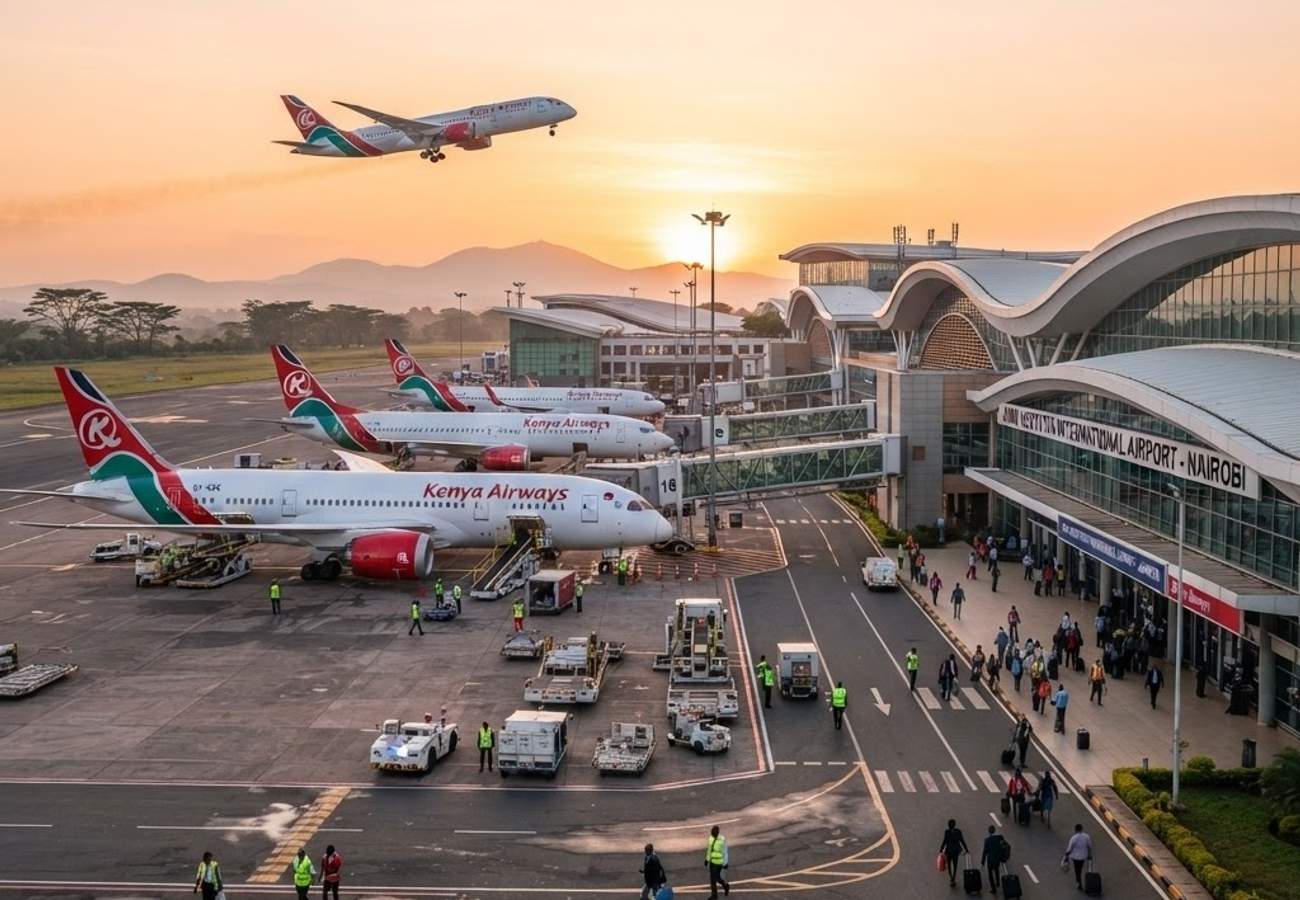
Image generated by AI
Flight operations across Kenya’s primary aviation gateways are resuming after a high-stakes industrial action was halted. The suspension of the strike provides immediate relief to thousands of stranded passengers and airlines struggling with network stability.
The Kenya Aviation Workers Union (KAWU) officially signed a return-to-work agreement on Tuesday, September 1, 2026. This accord, reached with the Ministry of Transport and various aviation agencies, ends a period of significant volatility that began on Sunday, paralyzing key transport links across the country.
The labor dispute caused systemic failures at Jomo Kenyatta International Airport (JKIA) in Nairobi, as well as Moi International Airport in Mombasa, Eldoret International Airport, and Kisumu International Airport. Travelers encountered a wave of cancellations, missed connections, and severe congestion within terminal areas.
Terms of the Return-to-Work Agreement
The settlement mandates an immediate return to duty for all striking staff. While the walkout has ended, the agreement establishes a framework for structured negotiations to resolve the underlying grievances.
The dispute primarily involved the Kenya Civil Aviation Authority (KCAA), the Kenya Airports Authority (KAA), and the low-cost carrier Jambojet. The core issues centered on:
- Salary adjustments and overall pay scales.
- Employee benefits and recognition arrangements.
- The establishment of a formal Collective Bargaining Agreement (CBA) between KAWU and the KCAA.
A critical component of the deal is the protection of employees from disciplinary action resulting from their participation in the strike. This safeguard was a primary requirement for the union before agreeing to resume operations. Salary discussions will now be conducted under national remuneration guidelines.
Operational Recovery and Passenger Backlogs
The immediate priority for Kenyan airport authorities is the clearance of a massive passenger backlog. The strike triggered "go-slows" and total work stoppages that crippled essential services, including:
- Check-in and boarding processes.
- Immigration and security screenings.
- Baggage handling and logistics.
Kenya Airways had previously warned passengers of delays averaging six hours on several services. To manage the chaos, airlines began providing hotel accommodations and rebooking flights even before the formal agreement was signed.
Industry analysts suggest that full timetable normalization may take several days. This recovery phase involves complex aircraft positioning and the management of crew duty-time limits. A similar pattern was observed during the 2025 Air Canada flight attendants' strike, where the carrier required approximately one week to fully restore its schedule despite a quick return to work.
Guidance for Affected Travelers
Passengers traveling to or from Kenya are strongly advised to reconfirm all itineraries via airline apps or official websites. Due to the accumulation of delayed baggage and the reset of airport systems, processing times at security and immigration are expected to remain higher than usual.
For those facing cancellations, consumer advocates recommend the following:
- Request free date changes or rerouting options from the carrier.
- Document all disruptions and retain receipts for meals and accommodation for future insurance claims.
- Build extra flexibility into itineraries, particularly for those connecting to safari tours or regional business engagements.
The Broader Impact on East African Aviation
This disruption highlights the fragility of Kenya's role as the primary aviation hub for East and Central Africa. JKIA is not only a passenger gateway but a critical node for regional cargo flows and business travel.
The strike's timing is particularly damaging to the tourism sector. Because wildlife safaris and coastal resorts rely on synchronized arrival schedules, the disruption led to missed tour starts and shortened stays for international visitors.
On a global scale, the Kenyan dispute mirrors a rising trend of labor instability in aviation. Since the pandemic recovery, rising inflation and staffing shortages have led to increased friction between unions and management across North America and Europe. Workers are increasingly demanding not just higher wages, but more predictable rostering and better recognition of technical skills.
Summary of Affected Hubs and Entities
| Entity/Location | Role in Dispute | Impact Level |
|---|---|---|
| JKIA (Nairobi) | Primary International Hub | Severe (Cancellations/Backlogs) |
| Moi Int. (Mombasa) | Coastal Gateway | High (Tourism Disruptions) |
| Eldoret & Kisumu | Regional Airports | Moderate (Service Interruptions) |
| KAWU | Labor Union | Lead Negotiator |
| KCAA / KAA | Regulatory/Management | Employers/Negotiators |
| Jambojet | Low-Cost Carrier | Affected Operator |
Key Takeaways
- Agreement Reached: KAWU signed a return-to-work deal on September 1, 2026.
- Hubs Restored: Operations are resuming at JKIA, Moi, Eldoret, and Kisumu airports.
- Recovery Time: Full schedule normalization may take several days due to crew and aircraft positioning.
- Labor Focus: Future talks will center on a Collective Bargaining Agreement and national pay guidelines.
FAQ
When did the Kenya aviation strike end? The strike was suspended on September 1, 2026, following an agreement between KAWU and the Ministry of Transport.
Which airports were affected by the disruption? The primary affected airports were Jomo Kenyatta International (JKIA), Moi International, Eldoret International, and Kisumu International.
What should I do if my flight was canceled during the strike? Contact your airline to request rebooking, free date changes, or a refund. Keep all receipts for incidental expenses for insurance purposes.
The resolution of this dispute marks a critical step in stabilizing East Africa's most vital aviation corridor.
Related Travel Guides
Disclaimer
This article is for informational and educational purposes only. It does not constitute legal, financial, or professional advice. While we strive to provide accurate and up-to-date information, travel policies, regulations, and conditions change rapidly. Always verify information with official sources before making travel decisions. Nomad Lawyer makes no representations about the accuracy, reliability, completeness, or suitability of the information provided. Readers should consult qualified professionals for advice specific to their circumstances. The views expressed in this article are those of the author and do not necessarily reflect the views of Nomad Lawyer.
Naina Thakur
Contributor & Travel Specialist
Travel enthusiast and legal writer covering visa regulations, responsible tourism, and cultural journeys across global destinations.
Learn more about our team →