Wildfire Smoke Disrupts Flights at Kelowna International Airport

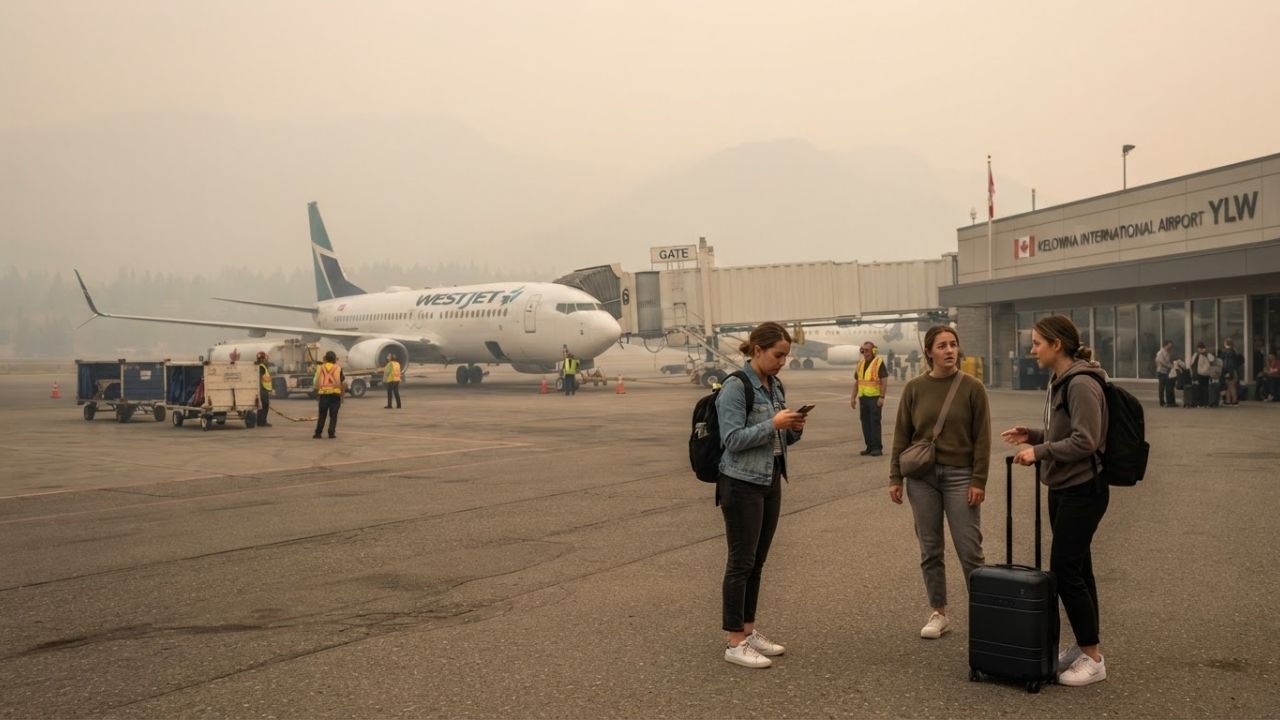
Image generated by AI
Thick wildfire smoke has reduced visibility at Kelowna International Airport in British Columbia, causing widespread cancellations and flight delays.
The Core Transit Update
Atmospheric emergencies and intense seasonal wildfires are disrupting passenger flights and terminal schedules across western Canada. Thick wildfire smoke drifting through British Columbia has reduced visibility levels at Kelowna International Airport (YLW).
While the terminal facility remains open, the low visibility has restricted the use of standard instrument landing approaches for arriving and departing aircraft, prompting commercial airlines to postpone or cancel scheduled services.
Airport Operations & Visibility Specifications
Coordinating travel routes during wildfire disruptions requires monitoring visibility parameters and runway check-in schedules. The following table provides specifications for the ongoing airport emergency.
| Affected Airport | Regional Location | Current Operational Status | Primary Disruption Cause | Affected Landing Procedures |
|---|---|---|---|---|
| Kelowna International Airport (YLW) | British Columbia, Canada | Operational (Open with delays) | Thick wildfire smoke (low visibility) | Instrument landing approaches restricted |
Canadian aviation safety regulations and YLW airport visibility metrics verified in coordination with Nav Canada.
Traveler Logistics Guide
From a ground-level perspective, the best way to navigate this is to verify your aircraft's operational status on the airline's mobile portal before departing for the airport, as smoke densities shift rapidly and flight schedules can be altered without warning. Checking regional advisories is recommended.
To manage your travel through British Columbia during wildfire season:
- Terminal Attendance: If your flight is cancelled, do not proceed to the Kelowna terminal building. Coordinate rebooking options and accommodation vouchers directly through your airline's digital portal or phone support.
- Visual Approach Relying: With instrument landing systems temporarily restricted due to smoke, arriving flights depend on visual approaches. This requires pilots to verify runway coordinates visually, making flights highly weather-dependent.
- Air Quality Precautions: High concentrations of fine particulate matter are present around the airport. Travelers with respiratory conditions should carry protective face masks and remain inside the air-conditioned terminal.
- Connecting flight logs: If you have scheduled transfers at Vancouver (YVR) or Calgary (YYC) airports originating from Kelowna, monitor your connection windows closely to adjust subsequent segments.
Infrastructure Impact Assessment
The transport disruption at Kelowna Airport highlights the vulnerability of regional aviation networks to severe seasonal wildfires. While local airports remain structurally open, the loss of navigation aids like instrument approaches reduces daily flight capacities.
By coordinating with Nav Canada and local emergency networks, YLW operations teams maintain safety parameters, preventing air traffic incidents during poor visibility blocks.
Related Travel Guides
This article is for informational purposes. Flight routes, passenger regulations, visa rules, and transit advisories are subject to change by airlines and aviation authorities. Readers are advised to verify schedules and travel documentation with relevant carriers and border agencies before departure.
Related Stories

Odyssey Residential Cruise Strands 203 Passengers in Sihanoukville Cambodia as Fourfold Fuel Inflation Triggers Vessel Lay-Up

US Embassy Issues Dominican Republic Travel Security Alert Over Dating App Drugging and Robbery Risks