Kazakhstan’s National Park Tourism Revenue Surges Past US$2.6 Million as Visitor Pressure Grows

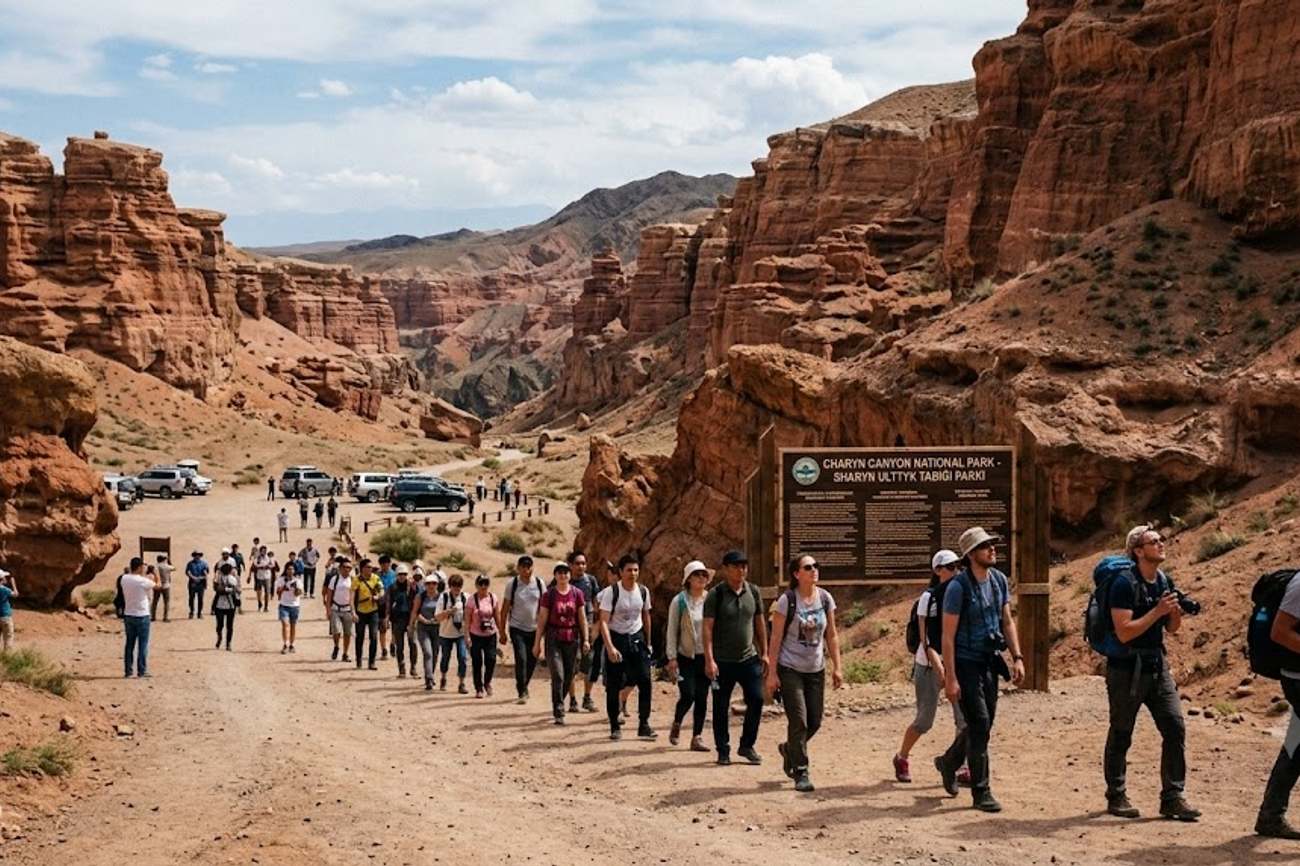
Image generated by AI
The UNDP Biodiversity Finance Initiative reported in 2025 that protected areas in Kazakhstan generated approximately US$2.6 million in ecotourism. In 2024, ecotourism revenue was only US$0.6 million. The increase in revenue was due to the more than 3.7 million visits to Kazakhstan’s protected areas. The visiting public includes people hiking and camping as well as families. Kazakhstan’s national parks are situated across the nation. The question becomes how to manage the increasing visitor numbers to protected areas, which also helps to fund the improvement of visitor services and the protection of the natural environment. There has also been an increase in the number of trails, and the use of electronic ticket sales and other private sector services. Meanwhile, management plans are in place to better control the number of visitors.
Kazakhstan national park tourism has a new revenue story
For years, the familiar story about Kazakhstan’s national parks was that more people were discovering them. The latest figures add another question: how much money does that interest generate for the protected areas themselves?
At a June 2026 regional biodiversity finance meeting, the UNDP Biodiversity Finance Initiative (BIOFIN) reported that revised protected-area fees helped lift Kazakhstan’s ecotourism revenue from US$0.6 million in 2024 to US$2.6 million in 2025. That is more than four times the earlier figure, although BIOFIN does not say in that announcement how the revenue was distributed among individual parks. (BIOFIN)
The rise should be read alongside, rather than confused with, Kazakhstan’s much larger tourism economy. BIOFIN’s figure concerns ecotourism revenue linked to protected areas. It is not a measure of all spending by visitors on hotels, transport, meals and tours.
Kazakhstan’s government reported 2.8 million visits to specially protected natural areas in 2024 and 3.7 million in 2025. The increase of 900,000 visits, or about 32%, helps explain why park funding and visitor management have become pressing questions. (primeminister.kz)
Officially reported measure 2024 2025 What it shows Ecotourism revenue associated with revised protected-area fees, according to BIOFIN About US$0.6 million About US$2.6 million Revenue rose by roughly US$2 million Visits to specially protected natural areas, according to Kazakhstan’s government 2.8 million 3.7 million Visits rose by 900,000
Kazakhstan's national parks have witnessed a significant surge in tourism revenue, with the total revenue exceeding US$2.6 million. According to the Kazakhstan Ministry of Ecology, Geology and Natural Resources, the increase in visitor numbers has put pressure on the country's infrastructure and conservation efforts. The ministry is working to develop sustainable tourism practices to balance the economic benefits with environmental protection.
Source context: The revenue and visit figures come from different official institutions. They should not be combined to calculate an average ticket price: neither source establishes that every counted visit generated revenue within BIOFIN’s measure. (BIOFIN)
Why the parks matter to Kazakhstan’s travel economy
Kazakhstan’s natural attractions range from alpine lakes and mountain trails to forest, steppe and semi-desert landscapes. They give travellers a reason to explore beyond the country’s largest cities, while creating opportunities for guides, accommodation providers and small businesses in surrounding communities.
UNDP says the country has 14 national parks and 10 nature reserves. Its account of Kazakhstan’s conservation work also describes support for local enterprises, including guesthouses, craft businesses and other services connected to nature travel. (United Nations Development Programme)
Interest was building well before the latest revenue increase. A September 2026 government review put visits to state national nature parks at 2.4 million in 2023, rising to 3.7 million in 2025; it reported a further 1.7 million visits in the first half of 2026. These park figures provide a trend, though their scope should be kept distinct from any count of all foreign tourists entering Kazakhstan. (primeminister.kz)
The same review said Kazakhstan’s wider tourism sector contributed 5 trillion tenge to the economy in 2025 and employed more than 600,000 people. Those are national tourism figures, not estimates of national park employment or park income. (primeminister.kz)
The growth in tourism has also led to an increase in passenger traffic at Kazakhstan's international airports, with Almaty International Airport being a major hub for visitors. The airport has implemented various measures to improve passenger experience, including the introduction of new flight routes and the expansion of airport facilities. As the number of visitors continues to rise, the airport authority is working to ensure that the infrastructure can cope with the growing demand.
What changed in park financing
BIOFIN says a new procedure for setting tariffs for paid services was introduced in 2024. Its purpose is to help national parks and nature reserves develop their own sources of income, alongside government funding. BIOFIN describes a target of increasing such revenue sixfold by 2030. (BIOFIN)
The distinction matters. A park needs money whether a visitor arrives on a busy summer weekend or during a quieter season: trails require care, waste must be collected, and staff need the means to manage and protect the site. Revenue can support that work, but the published increase alone does not show which activities received the additional money.
Public finance remains central. BIOFIN says around 74.5% of Kazakhstan’s biodiversity finance comes from government, compared with 3% from the private sector. Park fees are therefore one part of a wider funding effort, rather than a replacement for state conservation budgets. (BIOFIN)
That is the issue at the heart of this story. Kazakhstan has demonstrated that protected areas can generate more income as travel grows. What remains to be established publicly is how much each park keeps, how it is spent and whether it is sufficient for the extra demands created by rising visits.
More routes and easier payments for visitors
The government says 179 tourist routes and 42 ecological trails operate across its protected territories. Such routes can make a park easier to explore while giving managers a clearer way to direct visitors through sensitive landscapes. (primeminister.kz)
To capitalize on the growing interest in Kazakhstan's national parks, the Kazakhstan Tourism National Company has launched various initiatives to promote sustainable tourism and provide visitors with a unique and authentic experience. The company is working with local communities to develop eco-tourism projects and provide training for tourism professionals. By visiting the official website, tourists can plan their trip and book tours and accommodations in advance, helping to support the local economy and conservation efforts.
Entry procedures are also changing. At its June 2026 government session, Kazakhstan said 14 checkpoints in six national parks had been automated, with work continuing at another 11 points during the year. It also said all national parks had been connected to online payment through banking services, with QR codes placed on websites and at information points. (primeminister.kz)
For travellers, these systems can make paying for access more straightforward. For managers, digital checkpoints may provide a clearer picture of movements through a park. They do not, by themselves, establish that every site has enough staff, facilities or capacity for further growth.
The government also said children under 18 received free entry to national nature parks from 2026 as a measure to encourage family travel. Visitors should still check the arrangements for their chosen park and any separately priced activities before setting off. (primeminister.kz)
New facilities bring investment and a conservation test
In June, Kazakhstan’s ecology ministry reported a portfolio of 23 priority private investment projects in 10 regions, with attracted investment exceeding 31.6 billion tenge. The plans cover visitor centres and forms of accommodation including eco-hotels, glamping and campsites. These are reported investment plans, not proof that every proposed facility has opened. (primeminister.kz)
The ministry also outlined work near individual destinations. It reported repairs to a bridge and 32.1 kilometres of road serving the Katon-Karagay area, while a cluster of four accommodation facilities was being prepared for launch. Near Kolsai, the government reported funding for lakeside improvements and construction of a 12-kilometre road towards Kaiyndy Lake. (primeminister.kz)
Better access can help tour operators reach remote places and give local accommodation businesses a wider market. It can also bring more traffic and waste to the very landscapes visitors have come to enjoy. Kazakhstan’s challenge is to assess each development within the limits of its location.
A 2025 legal amendment allows tourism infrastructure in designated zones of limited economic activity without removing the l
FAQ: Kazakhstan’s National Park Tourism Revenue 2026
What is the current entry fee for Kazakhstan's national parks? Answer 1: $10-$20 per person.
Can I book accommodations within the national parks? Answer 2: Yes, through authorized tour operators.
Are guided tours mandatory in Kazakhstan's national parks? Answer 3: No, but recommended for safety.
What activities are allowed in Kazakhstan's national parks? Answer 4: Hiking, camping, and wildlife viewing.
Related Travel Guides
- Middle East Tourism Shifts From Mass Arrivals to High-Value Travel as Muscat and More Cites Drive Visitor Spending
- BART Service Cuts Could Add 43 Minutes to California Journeys as Bay Area Traffic Pressure Mounts
- Africa Reshapes Tourism Corridors as Kigali and More Cities Unlock Secondary Heritage Hubs
This article is for informational purposes. Flight routes, passenger regulations, visa rules, and transit advisories are subject to change by airlines and aviation authorities. Readers are advised to verify schedules and travel documentation with relevant carriers and border agencies before departure.
Related Stories

Zen Awakening Festival 2026: Florida's Transformational Music, Mindfulness, and Arts Gathering in Fruitland Park

Japan International Tourism Hits 30.7 Million Arrivals in 2026 as South Korea and Taiwan Surge