
Bypassing Travel Chaos: Southwest and PSA Airlines Suspend 8 Flights in Kansas City, Triggering Severe Airport Disruptions and National Transit Gridlock: Airline News
Localized travel chaos struck Kansas City International Airport as Southwest and PSA Airlines officially canceled 8 flights and triggered widespread domestic delays.

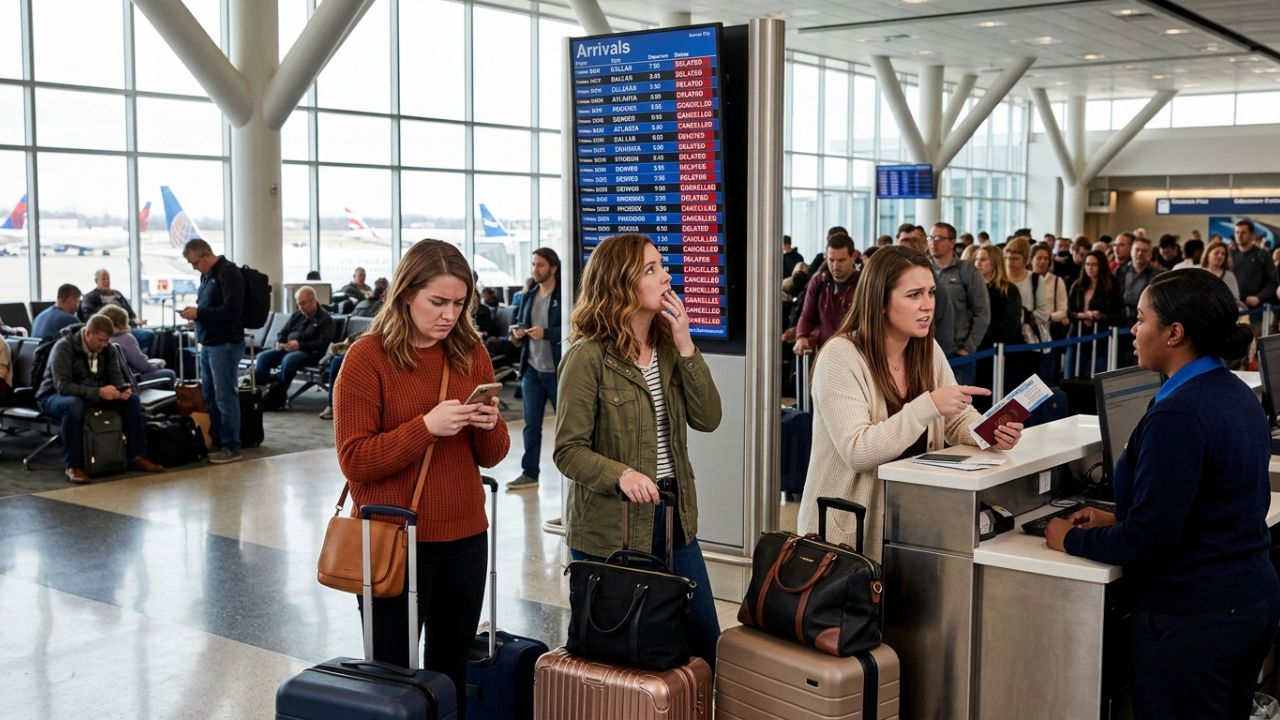
Image generated by AI
In a highly disruptive localized operational breakdown, unexpected travel chaos paralyzed operations at Kansas City International Airport (MCI), stranding hundreds of passengers throughout the Midwest. Reported on June 20, 2026, as travelers frantically monitor the latest airline news for any sign of operational recovery, the airport absorbed a highly concentrated wave of cascading bottlenecks. Recording exactly 8 outright flight cancellations and 58 rolling delays specifically attributed to Southwest Airlines and regional operator PSA Airlines, this intense wave of airport disruptions ruthlessly strangled vital connecting routes destined for massive hubs across the United States. Driven by localized capacity limitations and compounding aircraft rotation failures, this sudden regional gridlock has successfully radiated outward, severing routes to Tampa, Pensacola, Raleigh, Sacramento, Newark, and even international leisure gateways in Mexico. Representing today's most crucial headline in breaking aviation updates, this disruption proves how rapidly localized failures can permanently alter national itineraries.
By introducing direct passenger coordination and dynamic scheduling backups, the regional aviation hubs target growing passenger demand across vital commerce sectors. The choice to coordinate flight departures in phases helps to manage gate capacity, supporting the country's broader regional transportation network.
Context: The Vulnerability of the Midwest Grid
For the highly interconnected US airspace, a targeted disruption at a key midwestern gateway like Kansas City exposes the fragile nature of airline scheduling when a massive low-cost carrier and a legacy regional operator stumble simultaneously.
When Southwest Airlines and PSA Airlines (operating on behalf of American Airlines) cancel 8 combined flights and delay dozens more at Kansas City, the structural resilience of the surrounding transit grid is severely tested. Because Kansas City serves as a vital geographic connector between the East and West Coasts, passengers rely heavily on its efficiency to reach massive connecting hubs like Dallas, Atlanta, and Chicago. PSA Airlines suffered a staggering 36% cancellation rate against its local schedule, meaning over a third of its passengers were instantly stranded without aircraft. Meanwhile, Southwest Airlines, despite absorbing only a 2% cancellation rate, flooded the terminal with 56 rolling delays. When these airlines lose operational rhythm at MCI, passengers are often trapped waiting for scarce replacement aircraft to be flown in from other regions. The sheer density of this congestion event proved that even a relatively small number of cancellations can trigger a massive ripple effect.
To view live flight schedules, verify the active departure status of your specific Southwest or American Airlines itinerary, or to track potential route restorations prior to heading to the airport, travelers must consult official aviation directories. For direct updates regarding how these massive operational failures might impact your current flight cancellations out of Kansas City, travelers should aggressively utilize the official digital portals of their respective airlines. To explore live flight tracking and monitor the exact severity of the cascading bottlenecks paralyzing the broader domestic airspace, passengers can consult the official FlightAware tracking service.
Section-Wise Breakdown: Dissecting the Route Destruction
The Nationwide Sprawl: From Newark to Cancún
The outright cancellations and rolling delays out of Kansas City severed vital economic and tourism arteries across the entire continent. The flight disruptions linked MCI with a massive network, actively suffocating routes to Dallas, Nashville, Boston, Baltimore, Charlotte, Washington, Denver, Detroit, Panama City Beach, Newark, Houston, Indianapolis, New York City, Las Vegas, Los Angeles, Orlando, Chicago, Miami, Minneapolis–Saint Paul, New Orleans, Philadelphia, Pensacola, San Diego, San Antonio, Seattle, San Francisco, Salt Lake City, Tampa, Cancún, Atlanta, Austin, Fort Lauderdale, Raleigh, Sacramento, and Destin–Fort Walton Beach.
The Secondary Impacts: The Texas and Florida Corridors
The operational drag out of Missouri severely choked connecting hubs down the line. Because Dallas serves as a primary destination for both Southwest and American (PSA), the Texas corridor absorbed heavy secondary damage. Dallas–Fort Worth (DFW) experienced 2 cancellations and 4 delays, while Dallas Love Field (DAL)—Southwest's fortress hub—recorded 3 cancellations and 4 delays across affected services. Austin-Bergstrom (AUS) also saw 1 cancellation alongside multiple delays. Furthermore, popular vacation destinations including Orlando, Miami, Las Vegas, Tampa, Cancún, San Diego, Fort Lauderdale, and Destin experienced notable knock-on delays, trapping thousands of vacationers attempting to begin or end their summer itineraries.
Technical Roster: Official Airline Disruption Matrix
To ensure absolute factual accuracy regarding the exact volume of grounded flights and the specific operational damage inflicted by PSA Airlines and Southwest at Kansas City International Airport, the following matrix details the strictly verified flight data:
Official Kansas City (MCI) Airline Impact Matrix
| Operating Airline | Cancelled Flights | Delayed Flights | Local Impact Percentage |
|---|---|---|---|
| PSA Airlines (AAL) | 4 Flights | 2 Flights | 36% Cancellations |
| Southwest Airlines | 4 Flights | 56 Flights | 2% Cancellations |
Data accurately reflects the verified disruption metrics tracking the total 8 cancellations and 58 delays paralyzing operations at Kansas City International Airport on June 20, 2026.
Passenger Impact: Stranded in the Midwest
For the tourists and business travelers physically trapped inside Kansas City International Airport, the immediate impact of this focused disruption wave is severe logistical exhaustion.
Because airlines rely entirely on the precise timing of regional aircraft rotations to maintain their daily schedules, the sudden grounding of 8 flights instantly severed thousands of onward itineraries. Passengers attempting to reach Dallas Love Field or Newark found their entire journeys shattered, forcing a brutal competition for rebooking onto alternate mainline flights out of MCI. Travelers reliant on connecting itineraries involving multiple cities such as Minneapolis, Detroit, or Cancún faced the terrifying prospect of multi-day delays as Southwest struggled to balance its massive Boeing 737 inventory across the national network.
Industry Analysis: The Ripple Effect of Regional Cancellations
Aviation analysts monitoring the operational collapse in Missouri note that cumulative data of this nature provides critical benchmarks for evaluating the vulnerability of regional airline operations.
Analysts emphasize that managing sudden cancellations requires massive ground infrastructure coordination. The disruptions at Kansas City perfectly demonstrate how a relatively small number of flight cancellations (8 flights) can instantly create wider operational challenges across massive hubs in Texas, Georgia, and Illinois. When PSA Airlines suffers a 36% cancellation rate at a single outstation, it proves that regional operators frequently lack the spare aircraft necessary to recover quickly from technical faults or crew shortages. Aviation operators warn that as summer traffic volumes remain elevated, the statistical probability of these localized transit disruptions triggering nationwide delays will only continue to rise.
Actionable Advice for Surviving Kansas City Gridlock
If you are currently trapped inside Kansas City International Airport during a Southwest or PSA operational breakdown, you must execute this strategic survival checklist immediately:
- Exploit Digital Rebooking: If your flight is disrupted, do not wait in the physical line at the Southwest service desk. Immediately monitor official digital display boards and use the Southwest app to rebook. Because Southwest operates an open-seating model on highly frequented routes, grabbing the last spot on a later flight digitally is the fastest route to securing a departure.
- Audit Alternative Transport: If you are trying to reach relatively close regional destinations like Chicago, St. Louis, or Dallas and your direct flight out of MCI is canceled, use your app to aggressively search for alternative ground transport, including long-distance bus services or Amtrak, before waiting 48 hours for an available seat.
- Understand DOT Refund Rights: If an airline cuts your route entirely, you are legally entitled under Department of Transportation regulations to a full cash refund to your original payment method. Never accept an expiring travel voucher for a carrier-initiated cancellation.
FAQ: Kansas City Airport Flight Disruptions
How many flights were canceled at Kansas City International Airport?
Global tracking systems officially recorded exactly 8 flight cancellations and 58 flight delays concentrated between Southwest Airlines and PSA Airlines.
Which airline suffered the highest cancellation rate at MCI?
PSA Airlines (operating for American Airlines) suffered the worst operational rate, canceling 4 flights, which represented a massive 36% of its scheduled operations at the airport.
Which major connecting routes were impacted?
The delays and cancellations heavily impacted crucial domestic routes to Dallas (DFW and DAL), Austin, Chicago, Newark, and international leisure destinations like Cancún.
The Reality of Localized Network Gridlock
The sudden breakdown at Kansas City International Airport proves definitively that regional airports possess a terrifying operational fragility capable of paralyzing national aviation. By effectively recording 8 canceled flights and 58 delays, the cascading failure quickly stranded travelers attempting to cross the United States. Yet, as exhausted tourists frantically attempt to secure rebookings via airline apps or claim DOT-mandated refunds, they must accept a critical new reality: systemic congestion on a primary route into Texas or Florida cannot be fixed quickly. Surviving this level of interconnected travel chaos now demands extreme psychological adaptability, a complete refusal to panic in long customer service lines, and the tactical discipline to instantly execute digital rebooking the exact second a flight cancellation is announced.
Key Takeaways
- Localized Network Collapse: Kansas City Airport suffered severe travel chaos, recording exactly 8 cancellations and 58 delays.
- PSA Airlines Gutted: PSA Airlines absorbed a massive 36% cancellation rate against its local schedule.
- Southwest Delays: Southwest Airlines flooded the terminal with 56 rolling delays, impacting the national network.
- Dallas Corridors Severed: The cancellations heavily targeted the crucial connections between Missouri and Texas (DFW and DAL).
- Survival Strategy: Passengers are strongly urged to instantly rebook via airline apps, utilize alternative ground transport if stranded, and claim mandatory DOT cash refunds.
Related Travel Guides
Massive Travel Chaos Paralyzes Chicago O'Hare with 1,425 Disruptions
Disclaimer
This article is for informational and educational purposes only. It does not constitute legal, financial, or professional advice. While we strive to provide accurate and up-to-date information, travel policies, regulations, and conditions change rapidly. Always verify information with official sources before making travel decisions. Nomad Lawyer makes no representations about the accuracy, reliability, completeness, or suitability of the information provided. Readers should consult qualified professionals for advice specific to their circumstances. The views expressed in this article are those of the author and do not necessarily reflect the views of Nomad Lawyer.
Kunal K Choudhary
Co-Founder & Contributor
A passionate traveller and tech enthusiast. Kunal contributes to the vision and growth of Nomad Lawyer, bringing fresh perspectives and driving the community forward.
Learn more about our team →