
JetBlue Leads Global Flight Cancellations in July 2026 as Stranded Pilots Cite System Failures
JetBlue recorded the highest number of flight cancellations worldwide in July 2026, with pilots blaming internal scheduling outages and management failures over severe weather.

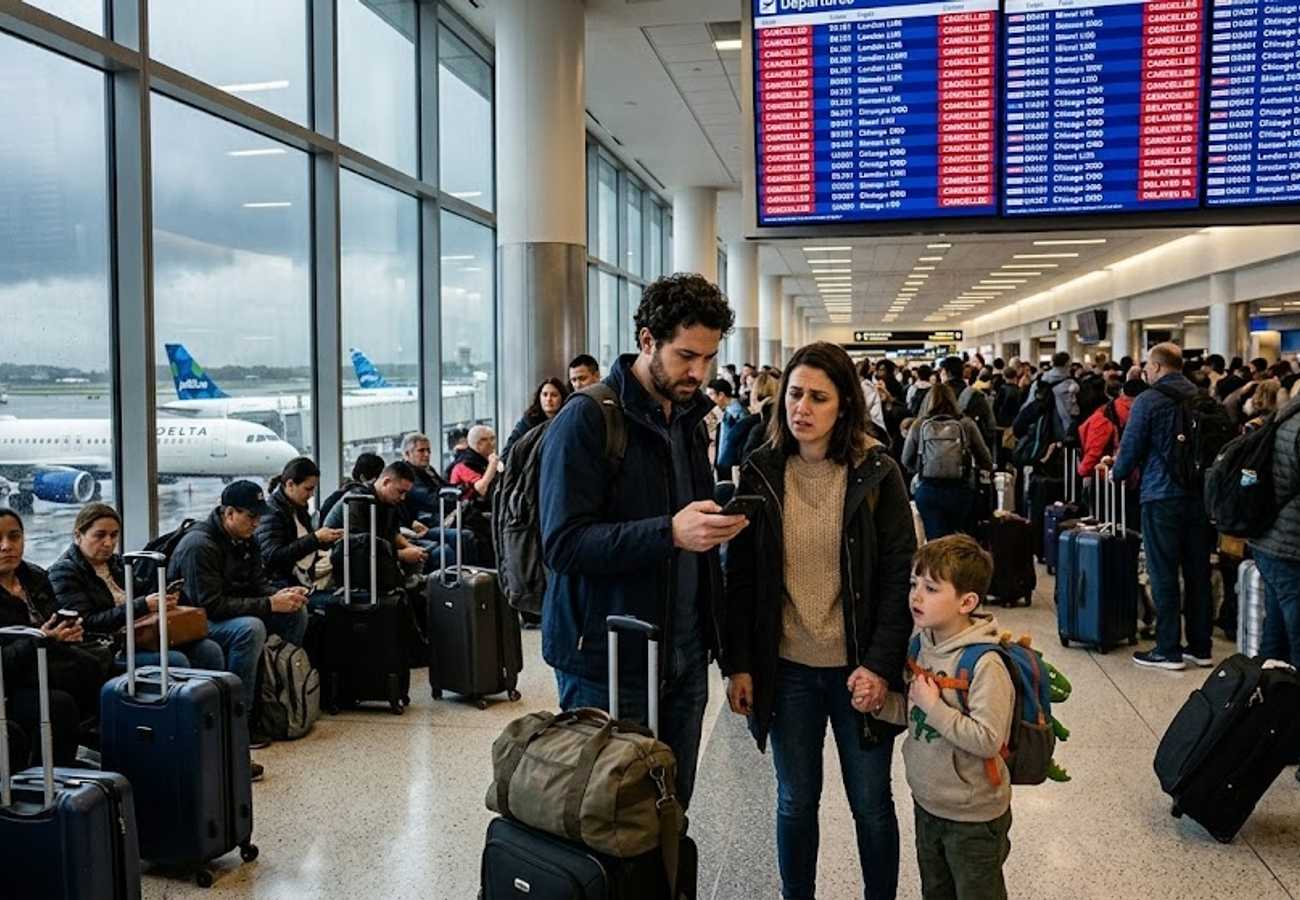
Image generated by AI
[New York, July 23, 2026] — JetBlue has emerged as the airline with the highest volume of flight cancellations globally following a series of systemic collapses that left thousands of passengers stranded and pilots displaced. While the carrier has officially attributed the chaos to severe weather across the Northeast and Mid-Atlantic, internal reports from flight crews suggest that critical scheduling software failures exacerbated the crisis.
The operational breakdown follows a directive from the Federal Aviation Administration (FAA) on Tuesday, July 21, which halted all flight operations at 10 different East Coast airports. This federal ground stop forced major U.S. carriers to implement emergency rebooking strategies, but data indicates that JetBlue suffered a disproportionate impact compared to its competitors.
JetBlue Tops Global Cancellation Lists
Recent flight tracking data reveals a troubling trend for the low-cost carrier. On July 22, JetBlue recorded the highest number of cancellations among all airlines worldwide. The scale of the disruption is evident when compared to other major carriers operating during the same window.
Airlines With The Most Cancelled Flights On July 22
| Rank | Airline | Cancellations |
|---|---|---|
| 1 | JetBlue | 132 |
| 2 | Delta Air Lines | 70 |
| 3 | American Airlines | 61 |
| 4 | Republic | 50 |
| 5 | Saudia | 48 |
The instability was not limited to a single day. According to FlightAware data, JetBlue has cancelled a total of 872 flights over a four-day period starting the previous weekend. The airline consistently appeared at the top of the cancellation rankings, leading the list twice and maintaining a top-three position on other dates.
JetBlue Flight Cancellations Over The Last 4 Days
| Date | Cancellations | Rank |
|---|---|---|
| July 18 | 293 | 2 |
| July 19 | 147 | 1 |
| July 20 | 300 | 3 |
| July 21 | 132 | 1 |
Pilots Report Internal Systemic Failures at JFK
While JetBlue management has pointed to the volatile weather patterns on the East Coast as the primary catalyst, representatives for the flight crews are painting a different picture. Captain Wayne Scales, who serves as the chairman of the JetBlue Master Executive Council and is a member of the Air Line Pilots Association, has publicly challenged the airline's narrative.
Captain Scales indicated that the disruptions were intensified by severe shortcomings in internal operations, particularly at New York's John F. Kennedy International Airport (JFK). According to Scales, the airline reduced its JFK operations by 50% over the weekend, which created a ripple effect of delays across the entire network.
The most critical failure, according to the pilot union, was the collapse of the company's scheduling system. Scales reported that crews were left out of position because the scheduling software suffered ongoing outages. This meant that even if aircraft were available, the qualified pilots needed to fly them were not in the correct cities.
Furthermore, the Captain described a complete breakdown in communication between the crews and the Crew Scheduling department. Pilots reportedly faced hold times lasting several hours when attempting to contact the company. In some instances, flight crews were left stranded at airports without the company providing overnight hotel accommodations.
Passenger Backlash and Compensation Disputes
The operational failure has led to significant frustration among travelers, many of whom claim the cancellations extended to routes completely unaffected by Northeast weather. Passengers have reported a lack of transparency and inadequate compensation from the airline.
One traveler reported a flight from Boston (BOS) to Nashville (BNA) that was cancelled just two hours before boarding, noting that the disruption did not seem weather-related. The passenger expressed frustration over receiving a $12 voucher instead of a full flight credit, eventually spending $500 on a ticket with a different carrier to reach their destination.
Other families reported a total lack of communication. A family of five traveling from Tampa to Westchester County (HPN) on July 21 noted that they received a cancellation email on July 20, but subsequent attempts to contact JetBlue customer service yielded no response.
JetBlue Implements Flexible Rebooking Waivers
In an attempt to mitigate the damage and stabilize its recovery, JetBlue has issued a travel alert offering flexible rebooking for passengers. This waiver applies to flights originally scheduled between Monday, July 20, and Wednesday, July 22, 2026. Affected customers are permitted to rebook their travel through July 26, 2026.
The airline has identified 11 specific East Coast hubs eligible for this flexible rebooking:
- Baltimore, MD (BWI)
- Boston, MA (BOS)
- Long Island/Islip, NY (ISP)
- New York, NY (JFK)
- New York, NY (LGA)
- Newark, NJ (EWR)
- Norfolk, VA (ORF)
- Philadelphia, PA (PHL)
- Richmond, VA (RIC)
- Washington, DC (DCA)
- Westchester County, NY (HPN)
Passengers who do not wish to rebook are eligible for a full refund to their original form of payment. In an official statement, JetBlue maintained that "repeated rounds of severe weather across the Northeast and Mid-Atlantic" were the cause of the disruptions and stated that teams are working around the clock to assist customers.
Why This Matters: The Risk of "Weather-Blaming" in Aviation
This incident highlights a growing tension in the aviation industry between operational resilience and corporate accountability. When an airline cancels nearly 900 flights in four days, the "severe weather" explanation often serves as a legal shield to avoid paying higher compensation levels required for "controllable" cancellations.
However, the testimony from Captain Wayne Scales suggests a critical vulnerability in JetBlue's digital infrastructure. The fact that a scheduling system outage could leave pilots stranded without hotels indicates a lack of redundancy in their crew management software. For the broader industry, this serves as a warning: weather may be the trigger, but systemic fragility is the cause.
If an airline cannot position its crews during a storm, the recovery period is prolonged far beyond the duration of the weather event itself. This "recovery lag" is what leads to the staggering cancellation numbers seen in the FlightAware data. For passengers and legal observers, the distinction between an "act of God" (weather) and "operational negligence" (software failure) is the key to determining passenger rights and potential class-action liabilities.
JetBlue now faces the dual challenge of restoring its technical infrastructure while attempting to regain the trust of both its employees and its customer base.
Related Travel Guides
Disclaimer
This article is for informational and educational purposes only. It does not constitute legal, financial, or professional advice. While we strive to provide accurate and up-to-date information, travel policies, regulations, and conditions change rapidly. Always verify information with official sources before making travel decisions. Nomad Lawyer makes no representations about the accuracy, reliability, completeness, or suitability of the information provided. Readers should consult qualified professionals for advice specific to their circumstances. The views expressed in this article are those of the author and do not necessarily reflect the views of Nomad Lawyer.
Raushan Kumar
Founder & Lead Developer
Full-stack developer with 11+ years of experience and a passionate traveller. Raushan built Nomad Lawyer from the ground up with a vision to create the best travel and law experience on the web.
Learn more about our team →