
JetBlue Repurposes Airbus A320 Fleet for VIP Sports Charters: 2026 Aviation Strategy
JetBlue Airways prepares to convert two Airbus A320-200 passenger jets into dedicated VIP charter aircraft, targeting North American sports teams and corporate groups.

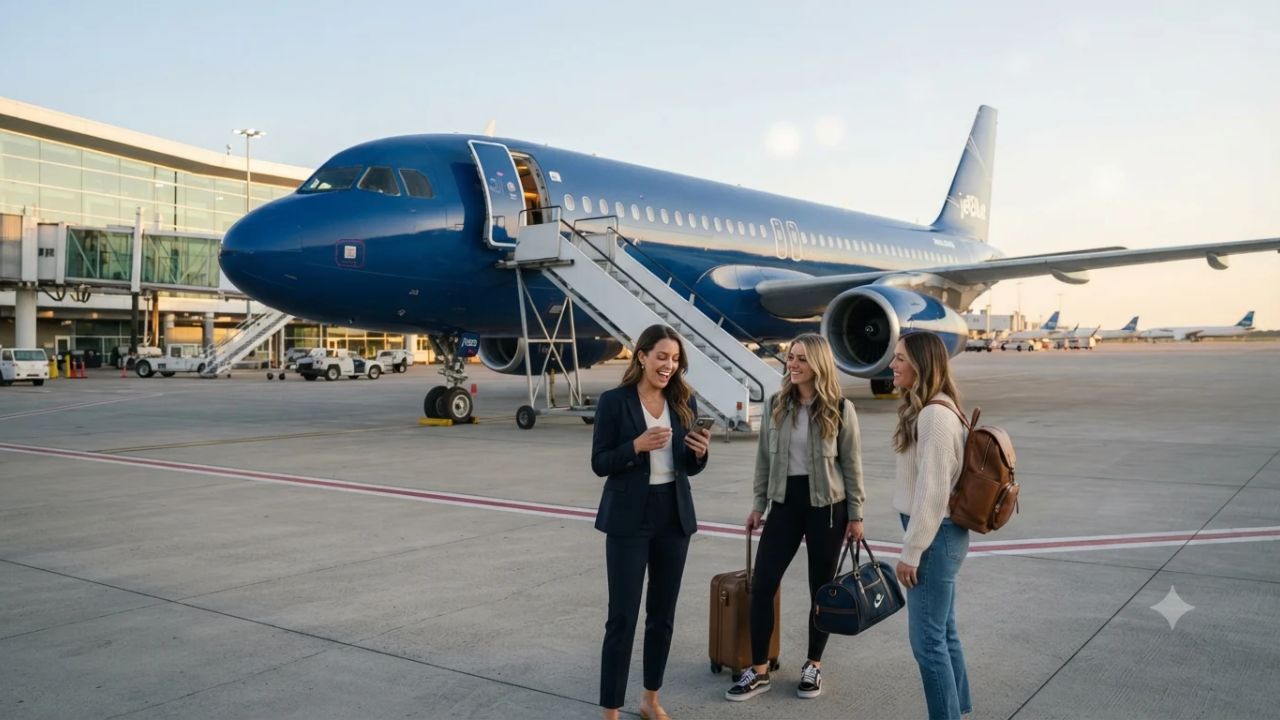
Image generated by AI
While millions of commercial passengers recognize JetBlue by its complimentary blue chips and all-economy seatback screens, the New York carrier is quietly pulling two Airbus A320-200 airframes from scheduled airline rotations to build a dedicated luxury charter division. Across North American professional sports leagues, moving fifty to eighty athletes, athletic trainers, physical therapists, and bulky equipment hampers between back-to-back road games has turned group air chartering into a high-stakes logistical battle. By reallocating existing narrow-body planes from its operating fleet of more than 100 Airbus A320 aircraft, JetBlue positions itself to capture high-margin charter revenue just as the National Hockey League prepares to launch its 2026 competitive season later in September.
This strategic fleet pivot illustrates a growing trend among mainline commercial operators seeking secondary revenue streams without investing billions in brand-new aircraft orders. Rather than letting older narrow-bodies sit idle or sending them to early retirement, converting proven airframes into bespoke flying clubhouses bridges the gap between regional business jets and cost-prohibitive wide-body charters.
How Sports Logistics Are Reshaping Commercial Fleet Deployments
Managing travel for major league hockey and basketball franchises requires logistical precision that standard scheduled commercial aviation cannot provide. Teams cannot risk commercial cancellations, lost baggage, or terminal security lines when playing three games in four nights across diverse climate zones. Chartered flights operate outside standard passenger terminals, taxiing directly to private fixed-base operators where players board directly from team buses.
By withdrawing two Airbus A320-200s from standard commercial routes, JetBlue targets an underserved segment of North American group travel. While the carrier has not officially published the definitive seat count, cabin layout, delivery schedule, or firm customer agreements in initial reports, the physical platform offers distinct advantages. The Airbus A320 cabin fuselage is noticeably wider than legacy competitor models, giving conversion engineers ample room to install spacious business-class seating, custom trainer massage tables, or dedicated film review stations.
Airlines operating under regulatory oversight from the Federal Aviation Administration must balance these custom cabin modifications with rigorous weight, balance, and emergency evacuation standards. For JetBlue, this initiative builds upon its established premium ventures, such as its domestic Blue First seating product and lie-flat Mint seating flown on select Airbus A321 transcontinental routes. Adapting that premium design vocabulary into a self-contained group environment allows sports franchises competing across the National Hockey League and major collegiate circuits to travel with uniform comfort.
What Sets Dedicated Narrow-Body VIP Charters Apart
Private aviation for large groups occupies a unique operational tier. Traditional corporate jets like Gulfstreams or Bombardiers excel at flying eight to twelve corporate directors, but cannot accommodate an entire hockey roster alongside goaltending gear, medical apparatus, and coaching staff. Conversely, wide-body airliners like Boeing 777s carry tremendous fuel burn penalties and face runway length restrictions at secondary municipal airfields.
The Airbus A320 provides a balanced middle ground for short- and medium-haul continental journeys. It features sufficient cargo hold capacity beneath the main deck to store hundreds of pounds of athletic equipment without sacrificing passenger space above. Inside the cabin, removing standard high-density seating allows airlines to configure generous legroom, swivel conference seating, and curated catering galleys capable of serving specialized athlete nutritional regimens.
From a fleet planning perspective, pulling two airframes out of a fleet exceeding 100 Airbus A320 aircraft causes minimal operational disruption to JetBlue's daily commercial schedule. It offers the airline a flexible asset: during peak sports seasons or playoff tournaments, the planes generate premium charter fees; during scheduling pauses, they can serve high-end corporate incentive retreats or major political delegations coordinating travel across the continent.
Visitor Insider Tips
For sports travelers, corporate planners, and aviation enthusiasts following the expansion of charter aviation, understanding the operational mechanics behind specialized flights unlocks practical advantages.
- Track Secondary Airport Hubs: Dedicated team charters rarely touch congested primary passenger terminals. In cities like New York, Chicago, or Los Angeles, charter flights frequently utilize secondary aviation facilities like Westchester County Airport (HPN), Chicago Midway (MDW), or Van Nuys (VNY) to avoid ground congestion and air traffic control delays.
- Coordinate Game Day Itineraries Around Team Travel Rhythms: Visiting fans planning multi-city road trips should note that visiting teams usually arrive in host cities late the evening before a contest and depart immediately following post-game press conferences. Booking flights on identical commercial flight paths often results in packed regional connections.
- Leverage Mainline Premium Amenities: Travelers seeking a similar inflight experience without chartering an entire jet can book JetBlue's Blue First or Mint products on high-frequency domestic routes, which feature enhanced personal storage, priority boarding, and artisanal dining developed in partnership with regional suppliers.
- Monitor Off-Peak Group Charter Availability: Corporate groups organizing seasonal executive conferences can often secure favorable charter rates by planning gatherings in late spring or mid-summer, when professional winter sports leagues are officially in their off-season.
Cultural and Environmental Context
The rise of dedicated sports charters intersects with intense public scrutiny regarding aviation emissions and corporate environmental responsibility. Flying a narrow-body airliner configured with reduced seating produces a higher carbon footprint per passenger mile compared to high-density commercial airliners monitored by the U.S. Department of Transportation. Both athletic leagues and airline operators face increasing pressure from fans and regional municipalities to purchase certified sustainable aviation fuels and participate in verifiable carbon mitigation projects.
At the community level, sports charters generate vital economic support for municipal airports, ground handlers, and regional catering vendors who operate outside the traditional commercial airline terminal ecosystem. These chartered operations support local aviation employment in smaller metropolitan markets that lack frequent mainline service, strengthening economic connections across North American cities during major sporting tournaments.
FAQ: JetBlue VIP Charters and Sports Travel 2026
How many aircraft is JetBlue converting for VIP charter service? JetBlue is reportedly reallocating two Airbus A320-200 aircraft from its active passenger fleet of more than 100 A320 airframes for dedicated VIP charter operations.
Which customers are expected to use these converted charter planes? The primary target market includes North American professional sports franchises, collegiate athletic programs, executive corporate groups, and private delegations requiring coordinated group air travel.
Has JetBlue released the final seating count and cabin layout? The carrier has not publicly published official specifications regarding seat counts, interior floorplans, or confirmed launch dates, treating the initiative as an evolving fleet reconfiguration.
Will this conversion reduce JetBlue's regular commercial flight schedule? Removing two aircraft represents a minor operational fraction of JetBlue's 100-plus A320 fleet, meaning everyday scheduled commercial passenger routes will not experience widespread disruptions.
As major league competition accelerates across the continent, winning begins long before the opening whistle—starting high above the clouds in customized cabin comfort.
Related Travel Guides
Solomon Islands Travel Faces Major Schedule Reset as Flag Carrier Reveals Powerful Route Overhaul
10 Best Private Jet Charter Routes in North America, According To Reddit
Disclaimer
This article is for informational and educational purposes only. It does not constitute legal, financial, or professional advice. While we strive to provide accurate and up-to-date information, travel policies, regulations, and conditions change rapidly. Always verify information with official sources before making travel decisions. Nomad Lawyer makes no representations about the accuracy, reliability, completeness, or suitability of the information provided. Readers should consult qualified professionals for advice specific to their circumstances. The views expressed in this article are those of the author and do not necessarily reflect the views of Nomad Lawyer.
Preeti Gunjan
Contributor & Community Manager
A passionate traveller and community builder. Preeti helps grow the Nomad Lawyer community, fostering engagement and bringing the reader experience to life.
Learn more about our team →