
Japan Travel Hit by Severe Autumn Downpours: Silver Week Disruptions From Nagatoro to Fukuroda Falls

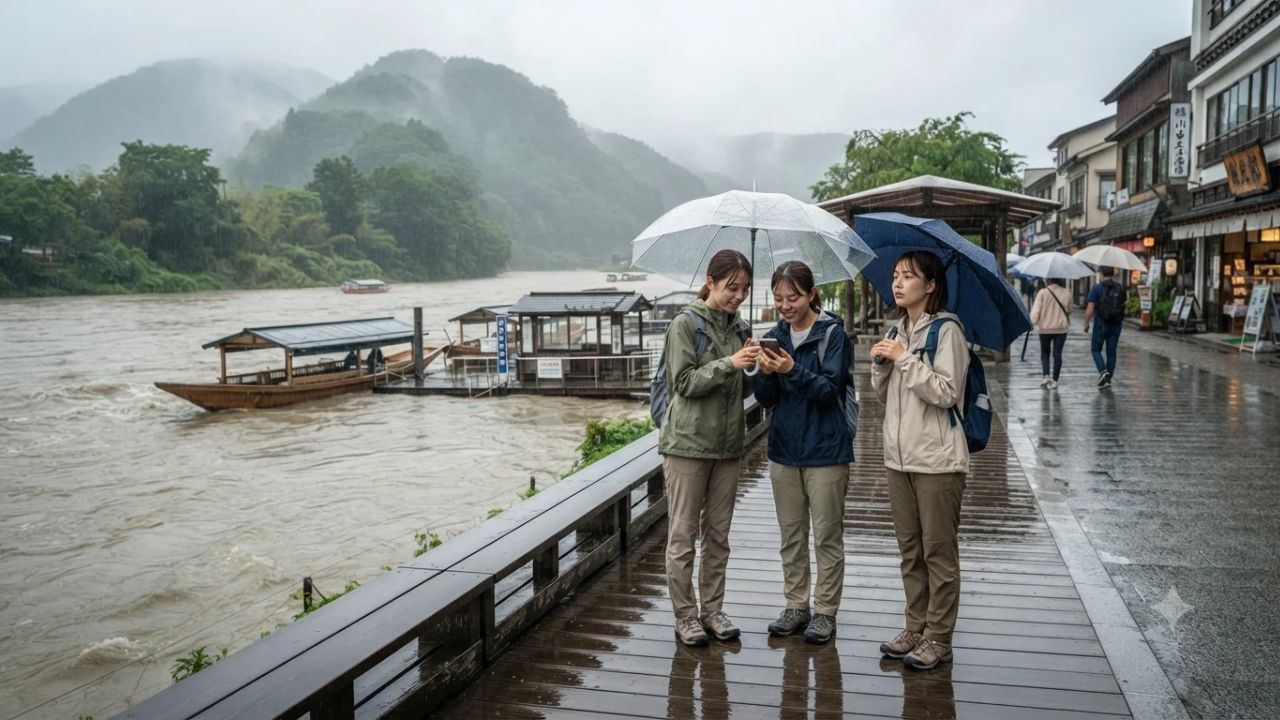
Image generated by AI
Threatening millions of yen in localized hospitality cancellations and halting iconic river cruise operations across eastern Japan, persistent autumn downpours are disrupting travel itineraries ahead of the national Silver Week holiday. As stationary weather fronts saturate mountain basins across Saitama and Ibaraki prefectures, regional tourism businesses that rely on day-trippers escaping Tokyo are rapidly restructuring outdoor activities toward sheltered cultural and culinary experiences to safeguard seasonal revenue.
Atmospheric Stagnation and Autumn Holiday Economics: The Silver Week Pressure Test
Silver Week represents one of Japan's most vital domestic travel periods, concentrating millions of holidaymakers into a compressed window anchored by national observances including Respect for the Aged Day and the Autumnal Equinox. For regional communities situated within a two-hour transit radius of Greater Tokyo, this holiday period generates peak seasonal cash flow for independent inns, excursion boat operators, and agricultural craft markets.
However, a prolonged clash between continental air masses and humid subtropical moisture has anchored stubborn low-pressure troughs directly over eastern and northern Japan. The resulting torrential precipitation, monitored continuously by the Japan Meteorological Agency (JMA), has swelled river systems to flood-stage thresholds, saturated mountain slopes, and triggered localized landslide advisories.
The transport consequences of these weather systems ripple across regional rail and highway corridors. Rail services managed by the East Japan Railway Company (JR East) and private operators have had to enforce reduced speed limits, track stability checks, and temporary suspension of regional sightseeing trains. For urban vacationers who planned outdoor camping, waterway excursions, or canyon hiking, the relentless precipitation has forced sudden cancellations and a scramble for weather-protected alternatives.
Micro-Regional Disruption Breakdown: Nagatoro Rapids to Fukuroda Cascades
The operational impact of this weather pattern is acutely visible across key recreational valleys in the Kanto region. In Nagatoro, a scenic river gorge destination in Saitama Prefecture, the famous traditional wooden boat cruises operated along the Arakawa River by Chichibu Railway have been completely suspended for multiple consecutive days. Dangerously high discharge rates and submerged river obstacles left docking piers deserted, forcing arriving tourists to abandon planned water excursions.
Adjacent leisure facilities face severe financial setbacks. The Nagatoro Furusawa-en barbecue and riverside recreation complex has documented widespread reservation cancellations leading into the holiday weekend. Facility management warns that if clear skies fail to return, cumulative commercial losses will reach millions of yen for individual regional recreation operators.
By contrast, the swollen waterways have transformed other natural attractions into intimidating spectacles. At Fukuroda Falls in Ibaraki Prefecture—historically celebrated as one of Japan’s Three Great Waterfalls alongside Kegon Falls in Nikko and Nachi Falls in Wakayama—surging floodwaters have turned the four-tiered cascade into a thunderous wall of turbulent, muddy water. While some travelers express unease at the ferocious roar and misty spray, the extraordinary display has attracted curious sightseers seeking rare viewings of the swollen monument.
Nearby sheltered businesses have experienced an unexpected surge in foot traffic. Establishments such as Takimotoya Honten, situated near the waterfall viewing platform, report strong retail demand as visitors seek refuge indoors, driving sales of regional culinary specialties such as traditional yuzu miso, even as merchants express anxiety regarding potential autumn typhoons trailing behind the current front.
| Destination / Venue | Primary Tourism Feature | Operational Weather Impact | Business Mitigation Strategy | Traveler Advisory Level |
|---|---|---|---|---|
| Nagatoro Gorge (Saitama) | Chichibu Railway River Cruises | Suspended indefinitely; docks empty | Diverting tourists to indoor craft & noodle workshops | High water hazard; avoid riverbanks |
| Nagatoro Furusawa-en | Riverside barbecue & camp park | Sweeping cancellations; revenue slump | Hand-catching fish activities & sheltered setups | Advance cancellation checks recommended |
| Fukuroda Falls (Ibaraki) | 4-tiered historic waterfall | Swollen turbulent cascades; heavy spray | Enclosed viewing tunnel provides sheltered access | Wet walkways; slip precautions required |
| Takimotoya Honten | Specialty dining & souvenir retail | Spontaneous influx of displaced tourists | Promotion of local foods like artisan yuzu miso | High indoor foot traffic during rains |
| Regional Rail Links | Chichibu Railway & JR East lines | Local speed curbs & weather checks | Real-time digital updates via transit apps | Allow 60–90 min transfer buffers |
To support travelers during severe weather events, the Japan National Tourism Organization (JNTO) maintains multi-language disaster advisories, urging foreign visitors and domestic families to verify regional attraction statuses before boarding outbound transit.
Expert Analysis: Weather Hedging, Indoor Gastronomy Pivots, and Typhoons on the Horizon
From a tourism economics and destination management standpoint, these severe downpours highlight the structural vulnerability of outdoor-dependent regional economies.
The pricing pressure this creates means outdoor attractions face zero cash-flow recovery once a peak holiday weekend is lost to severe weather. Unlike urban hotels that can rely on corporate bookings, rural Japanese attractions operate on tight seasonal margins. When leisure visitors cancel open-air reservations at facilities like Nagatoro Furusawa-en, operators cannot simply recoup those lost millions of yen later in the autumn when colder weather depresses outdoor demand.
To mitigate catastrophic revenue declines, forward-thinking regional operators are aggressively pivoting toward experiential indoor gastronomy. Rather than surrendering to rainy days, merchants in Chichibu and Daigo are promoting hands-on, traditional udon noodle-making classes, sheltered fish-handling activities, and local culinary tastings. For travelers booking this route, the direct consequence is a shift from scenic outdoor photography to deep, tactile cultural immersion that remains insulated from rain and mud.
The secondary danger for holidaymakers is compound storm exposure. Mid-September in Japan represents the convergence of seasonal rain fronts with tropical cyclogenesis across the Philippine Sea. When ground soil is already fully saturated by persistent rains, approaching typhoons can trigger rapid infrastructure shutdowns, including Shinkansen high-speed rail halts and mountain highway closures. Savvy travelers must design fluid itineraries, reserving flexible accommodations and maintaining alternative indoor cultural plans across Tokyo, Saitama, and Ibaraki.
Key Takeaways
- Severe Holiday Weather Impact: Heavy, persistent rainfall disrupts regional tourism across eastern and northern Japan ahead of the high-demand Silver Week holiday.
- Nagatoro Cruises Halted: Chichibu Railway has suspended traditional river excursions in Nagatoro due to dangerous water levels, leaving river docks empty.
- Fukuroda Falls Transformation: Swollen river volumes have transformed Ibaraki Prefecture’s Fukuroda Falls into an intimidating, thunderous muddy cascade.
- Millions in Projected Losses: Riverside barbecue and camping venues report widespread booking cancellations, threatening millions of yen in lost seasonal revenue.
- Indoor Cultural Pivot: Businesses are offsetting outdoor downturns by promoting sheltered activities, including traditional udon noodle-making and regional specialty dining.
FAQ: Japan Heavy Rain Travel Disruptions Silver Week 2026
Why are river cruises in Nagatoro currently suspended?
Chichibu Railway suspended Nagatoro river boat cruises due to persistent heavy rainfall that swelled the Arakawa River to unsafe levels, creating hazardous currents and submerged obstacles.
Is Fukuroda Falls accessible during the heavy rain period?
Yes, the waterfall viewing facility remains open, but the cascade has transformed into an intense, muddy torrent with heavy spray. Visitors access the falls through an enclosed, sheltered tunnel.
What alternative activities are available in regional Japan on rainy days?
Local businesses are offering indoor cultural experiences, including traditional handmade udon noodle-making workshops, local confectionery tastings, and sheltered culinary markets selling specialty items like yuzu miso.
How can travelers check train schedules during severe weather in Japan?
Travelers can monitor real-time operations using official apps and websites from JR East and private railway operators like Chichibu Railway, alongside disaster alerts from the Japan National Tourism Organization.
When autumn storms veil the mountain peaks in mist, Japan’s timeless hospitality proves that true warmth is discovered inside the shelter of a steaming noodle workshop.
Related Travel Guides
This article is for informational purposes. Flight routes, passenger regulations, visa rules, and transit advisories are subject to change by airlines and aviation authorities. Readers are advised to verify schedules and travel documentation with relevant carriers and border agencies before departure.
Related Stories

Copenhagen and Reykjavik Lead 2026 Global Safest Cities Rankings for Holiday Tourism

Typhoon Champi 2026: Taiwan and Japan Flight Cancellations and Passenger Rights Guide
