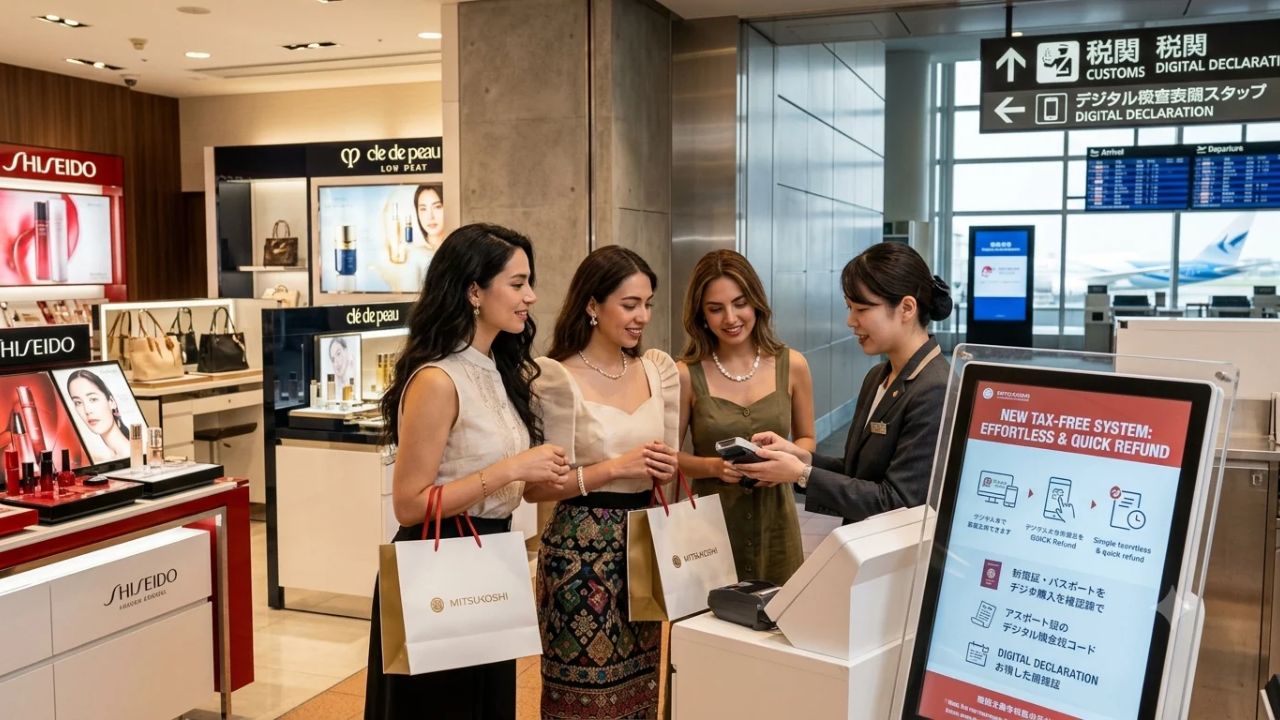
Japan Silver Week Is Now On As More Holiday Travel Drives Busy Skies And Railways For Autumn Escapes

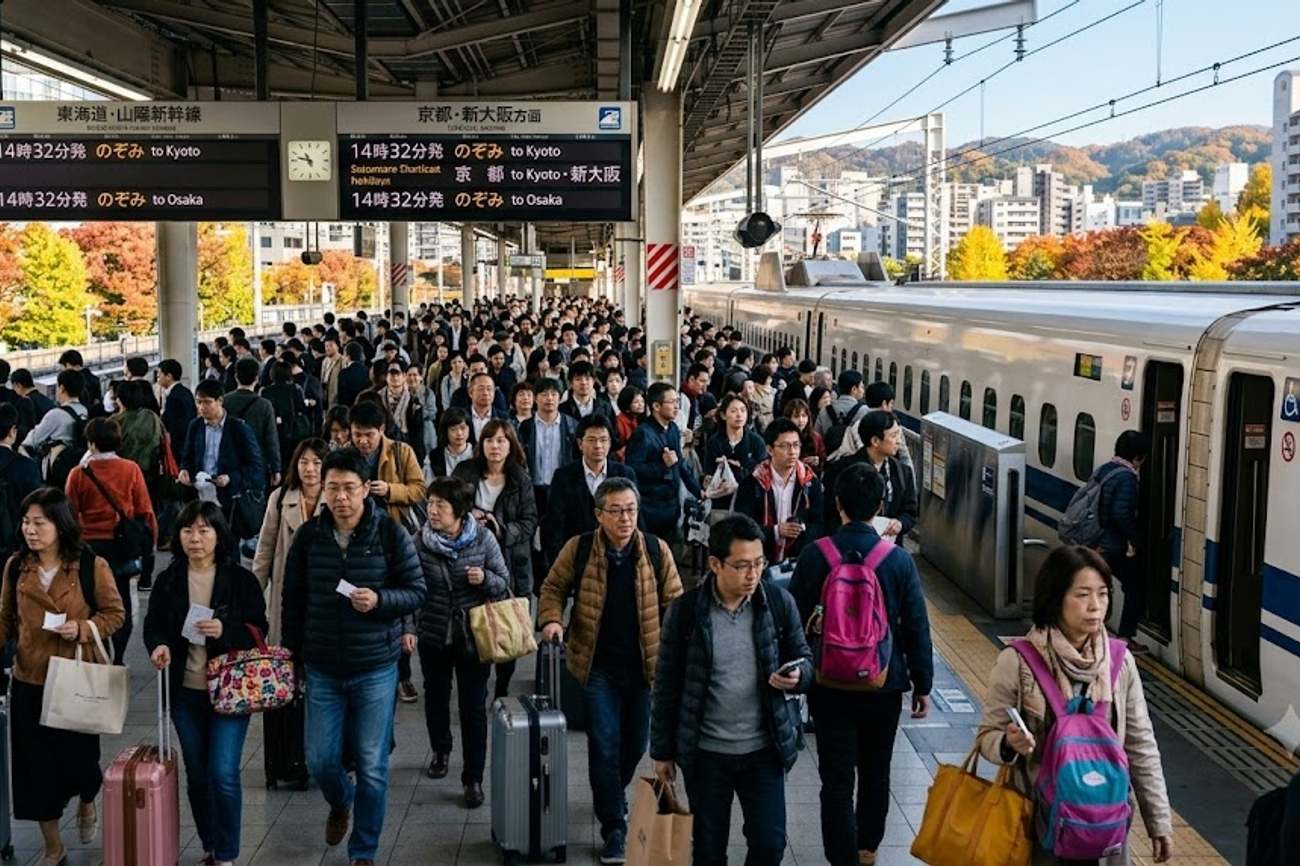
Image generated by AI
A five-day continuous non-working window from 19 to 23 September 2026 has triggered a rare domestic travel surge in Japan, marking the longest comparable autumn break since 2015. This concentrated movement period is the result of a legal alignment where three public holidays converged with a weekend, creating a high-density demand spike across the nation's aviation, rail, and road networks. For the international traveler, this is not merely a local holiday but a systemic pressure event that affects every layer of the Japanese transport ecosystem.
The Legal Architecture of Silver Week 2026
The emergence of this five-day window is not a random occurrence or a temporary government stimulus, but the result of a specific legal mechanism within the National Holidays Act. The sequence begins with the standard weekend of 19 and 20 September. The first official holiday, Respect for the Aged Day, occurs on 21 September, as Japanese law mandates this observance on the third Monday of the month to honor the elderly and celebrate longevity.
The break concludes with Autumnal Equinox Day on 23 September, a date determined by the astronomical equinox rather than a fixed calendar date, intended for honoring ancestors. The critical catalyst for the extended break is Article 3, paragraph 3 of the National Holidays Act. This provision dictates that any weekday sandwiched between two national holidays automatically becomes a public holiday. Consequently, 22 September was legally transformed into a non-working day, bridging the gap and creating a seamless five-day corridor of leisure time.
This legal alignment removes the need for employees to utilize personal annual leave, which historically increases the volume of domestic travelers. Because 60% of this break consists of official public holidays and 40% consists of the weekend, the barrier to long-distance travel is effectively removed for a significant portion of the population.
Transport Logistics and Demand Distribution
The Silver Week surge creates a cascading effect across multiple transport modes. Unlike a standard weekend, a five-day window encourages "multi-node" itineraries—trips that require a combination of urban rail, domestic aviation, and regional buses or ferries.
The following breakdown illustrates the editorial weight of the factors driving this surge based on verified evidence:
| News Component | Story Weight | Verified Finding | Impact on Traveler | Primary Source |
|---|---|---|---|---|
| Public Holiday Calendar | 35% | 5 continuous non-working days (19–23 Sept) | Concentrated travel window | National Holiday Calendar |
| Rail & Ground Transport | 25% | Extensive intercity/regional network | Limited reserved capacity | National Transport Guidance |
| Aviation & Airports | 15% | High connectivity to distant islands/regions | Increased transfer times | Official Aviation Guidance |
| Domestic Tourism | 15% | Capacity for multi-night journeys | Higher hotel/attraction demand | National Tourism Guidance |
| Visa & Passport Rules | 10% | No special holiday concessions | Standard entry rules apply | Immigration Guidance |
For those navigating this period, the pressure is most acute at the "last mile" of the journey. While a primary flight into Tokyo or Osaka may operate on schedule, the subsequent transfer to a regional hotel or a rural attraction via the Japan National Tourism Organization (JNTO) network becomes the primary point of failure. The surge is not limited to a single city but is distributed across any destination with strong transport links or established autumn foliage attractions.
Expert Analysis: The Friction of Concentrated Demand
For travelers booking routes during this window, the direct consequence is a shift from "availability" to "accessibility." In the aviation sector, while aircraft may be flying, the ground-side logistics—check-in queues, security screenings, and baggage claims—will experience peak-load stress. This is particularly true for domestic flights connecting major hubs to distant islands or rural prefectures.
Japan's Silver Week, a cluster of national holidays, has commenced, prompting a surge in travel demand as citizens embark on autumn escapes, with airlines and railways anticipating busy skies and routes, for more information on flight schedules and bookings, visit the Japan Airlines website for the latest updates. As the holidays progress, popular destinations are expected to experience increased tourist activity. Travelers can expect crowded airports, including major hubs like Tokyo's Narita and Haneda airports.
The pricing pressure created by this surge is significant. When a large percentage of the domestic population is liberated from work simultaneously, the demand for reserved-seat carriages on the Shinkansen and boutique ryokans in regional areas skyrockets. For the international visitor, this means that the "flexibility" typically associated with Japan's efficient transport system vanishes. A missed connection during Silver Week is not a minor inconvenience; it is a logistical crisis because the "buffer" capacity—the empty seats usually available on the next train or flight—is non-existent.
Furthermore, there is a critical distinction between operational disruption and capacity saturation. Travelers often mistake a sold-out train or a crowded terminal for a system failure. However, the data suggests that the services remain operational; they are simply operating at 100% utilization. The risk for the nomad or tourist is not that the International Air Transport Association (IATA) standards are being ignored, but that the sheer volume of human movement creates "friction" that slows down every transition point of the journey.
Key Takeaways
- Calendar Lock: The break spans 19 to 23 September 2026, driven by the National Holidays Act's "bridge holiday" provision on 22 September.
- Capacity Crunch: Expect severe limitations on reserved-seat rail and domestic flight availability, as this is the longest autumn break since 2015.
- Logistical Friction: Allow significantly more time for airport transfers and station navigation; congestion should be expected even if flights are on time.
- No Regulatory Changes: No special visa or passport concessions are in place for this period; standard immigration protocols remain active.
- Multi-Node Risk: Ensure that every leg of a journey (e.g., Train $\rightarrow$ Flight $\rightarrow$ Bus) is confirmed, as the final connection is the most likely to be overbooked.
FAQ: Japan Silver Week 2026
Do I need a special visa to enter Japan during the Silver Week holidays? No. The holiday period does not change immigration laws. All visitors must adhere to the standard visa and passport requirements based on their nationality.
Will trains and flights be cancelled because of the holiday surge? Generally, no. Services typically remain operational, but they operate at maximum capacity. "Sold out" does not mean "cancelled," but it does mean you cannot buy last-minute tickets.
How does Silver Week affect international tourists compared to locals? International tourists share the same transport infrastructure. While your international flight may be unaffected, your domestic transfers, hotel check-ins, and local transport will be crowded with domestic travelers.
Is 22 September a public holiday every year? No. It is only a holiday when national holidays fall immediately before and after it, as per Article 3 of the National Holidays Act.
When the law creates a holiday, the infrastructure feels the weight.
Tags: Japan-Silver-Week-2026, National-Holidays-Act-Japan, Japan-Domestic-Aviation, Shinkansen-Capacity-2026, Autumnal-Equinox-Day-Japan
Related Travel Guides
- Vietnam Captures Global Attention As World Travel Awards 2026 Asia Nominations Spotlight Its Tourism Strength
- St. John Follows St. Thomas and St. Croix as Caribbean Winter Escapes Draw Global Travellers
- Tobago Rises With Guadeloupe and More as Nature Lovers Discover Volcanic Lakes, Tropical Jungles and Untamed Island Wonders
This article is for informational purposes. Flight routes, passenger regulations, visa rules, and transit advisories are subject to change by airlines and aviation authorities. Readers are advised to verify schedules and travel documentation with relevant carriers and border agencies before departure.
Related Stories
Typhoon Champi 2026: Taiwan and Japan Flight Cancellations and Passenger Rights Guide

European Mass Protests Disrupt Travel Across France, Italy, Belgium, and Turkey in 2026