
Japan Expands Education Tourism in 2026 with New AI and Sustainability Courses in Tokyo and Osaka
Japan is redefining education tourism in 2026, launching specialized international courses in AI, sustainability, and robotics across Tokyo, Osaka, and regional hubs to attract global talent.
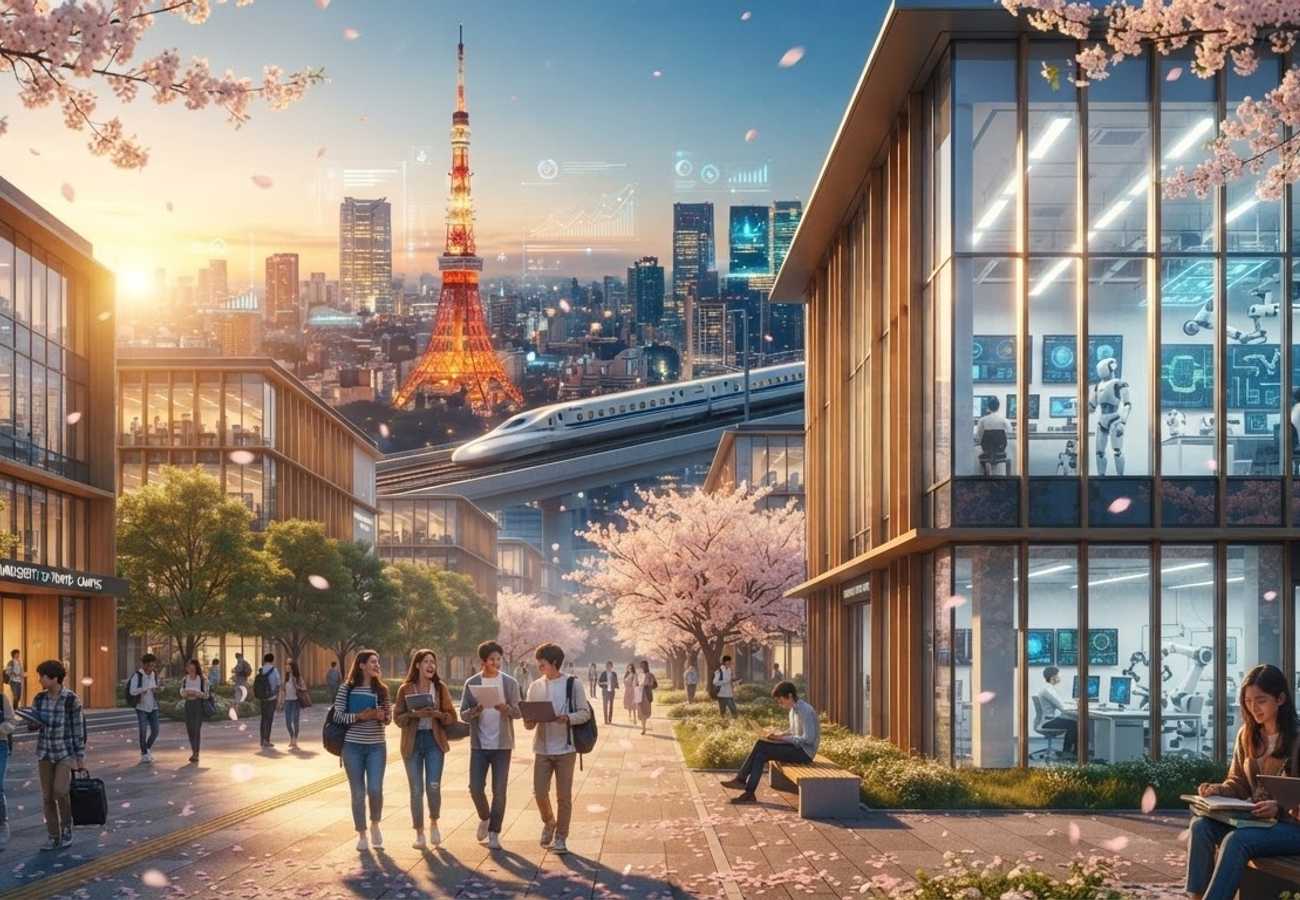
Image generated by AI
Japan is pivoting its national tourism strategy to integrate higher education, launching a network of English-taught programs in AI, robotics, and sustainability across 11 key cities to attract global professionals and students.
The Shift Toward Academic Tourism
Japan is no longer relying solely on sightseeing and culinary appeal to draw international visitors. In 2026, the country is aggressively expanding its "education tourism" model, transforming cities like Tokyo, Osaka, and Fukuoka into hubs for career-focused international study. By aligning academic offerings with global employment trends—specifically in artificial intelligence, biotechnology, and green energy—Japan is positioning itself as a primary destination for long-term intellectual residency.
This strategy moves beyond traditional academic rankings. Instead, it creates a synergy between the classroom and the industry. Students are not just enrolling in degrees; they are entering ecosystems where learning is tethered to Japan's advanced industrial sectors, from the automotive giants of Nagoya to the pharmaceutical clusters of Osaka.
Regional Specializations and Academic Hubs
The 2026 expansion is not centralized in the capital. A strategic distribution of expertise ensures that international talent is spread across the archipelago, supporting regional economies and diversifying the visitor profile.
| Japanese City | Leading Institutions | 2026 Emerging Courses | Primary Study Fields | Strategic Value |
|---|---|---|---|---|
| Tokyo | University of Tokyo, Institute of Science Tokyo, Waseda | AI, Data Science, Digital Innovation | Robotics, Computer Science, Global Leadership | Corporate connectivity and innovation hubs |
| Osaka | Osaka University | International Science & Healthcare | Biotechnology, AI Healthcare, Medical Science | Pharmaceutical and industrial ecosystem |
| Kyoto | Kyoto University, Ritsumeikan | Tech-Traditional Hybrid Programs | Environmental Studies, Cultural Innovation | Blend of heritage and advanced research |
| Nagoya | Nagoya University | Industry-Linked Mobility | Automotive Engineering, Manufacturing Tech | Direct access to the automotive sector |
| Fukuoka | Kyushu University | Asia-Pacific Cooperation | Marine Science, AI, Sustainability | Gateway for international business in Asia |
| Hiroshima | Eikei University of Hiroshima | Social Innovation | SDGs, Global Leadership, Social System Design | Focus on peace studies and transformation |
| Beppu | Ritsumeikan Asia Pacific University | International Management | Tourism, Sustainability, Global Studies | High-density multicultural campus model |
| Sapporo | Hokkaido University | Environmental Research | Climate Science, Food Technology | Natural environment for specialized research |
| Sendai | Tohoku University | Advanced Tech Research | Materials Science, Robotics, Disaster Research | Global postgraduate research hub |
| Okinawa | University of the Ryukyus | Marine & Regional Studies | Marine Science, Tourism Management | Environmental and cultural immersion |
| Akita | Akita International University | International Liberal Arts | Global Studies, Regional Tourism | Immersive rural Japan experiences |
Cultural and Environmental Value
For the visitor, the real impact of this shift is the transition from "observer" to "participant." Education tourism encourages a slower, more intentional form of travel. Rather than visiting a temple for a photo, a student in Kyoto might study the sustainability of traditional wooden architecture, while a researcher in Sapporo engages directly with climate science in the northern wilderness.
This model directly supports regional heritage by bringing young, global perspectives to aging rural communities. In cities like Akita, the expansion of community-based learning means international students are integrating into local life, supporting small businesses, and preserving regional dialects and customs through immersive study.
Visitor Insider Tips
For those looking to integrate education or short-term certifications into their 2026 Japan itinerary:
- Off-Peak Enrollment: Target the spring (April) and autumn (October) intakes. These align with the traditional Japanese academic calendar and offer the best opportunities for cultural integration.
- The "Rural Pivot": While Tokyo is the tech epicenter, consider Beppu or Akita for a more authentic experience. These cities offer a higher ratio of international students to locals, making the transition easier for newcomers.
- Cultural Etiquette: In academic settings, "Kuuki wo yomu" (reading the air) is essential. Observe the hierarchy in the classroom; bowing and formal address are still highly valued in university environments.
- Dining Hack: Utilize university "Shokudo" (cafeterias). They provide the most affordable, nutritionally balanced meals and are the primary social hubs for meeting local students.
Tourism Outlook
The long-term goal of this initiative is the creation of a "talent pipeline." By attracting students in fields like AI and sustainable development, Japan is not just increasing visitor numbers but is securing a future workforce of global experts who have a deep, personal connection to Japanese society. As these programs evolve, expect to see more "hybrid visas" that allow students to transition seamlessly from study to professional employment within the same city.
Education is the new gateway to the Japanese experience.
Related Travel Guides
Disclaimer
This article is for informational and educational purposes only. It does not constitute legal, financial, or professional advice. While we strive to provide accurate and up-to-date information, travel policies, regulations, and conditions change rapidly. Always verify information with official sources before making travel decisions. Nomad Lawyer makes no representations about the accuracy, reliability, completeness, or suitability of the information provided. Readers should consult qualified professionals for advice specific to their circumstances. The views expressed in this article are those of the author and do not necessarily reflect the views of Nomad Lawyer.