
Japan Airlines Delay Compensation Guide 2026: Passenger Rights for US and EU Flights
Travelers facing Japan Airlines delays in 2026 must navigate a complex web of US DOT rules and EU EC261 regulations to secure refunds or cash compensation.

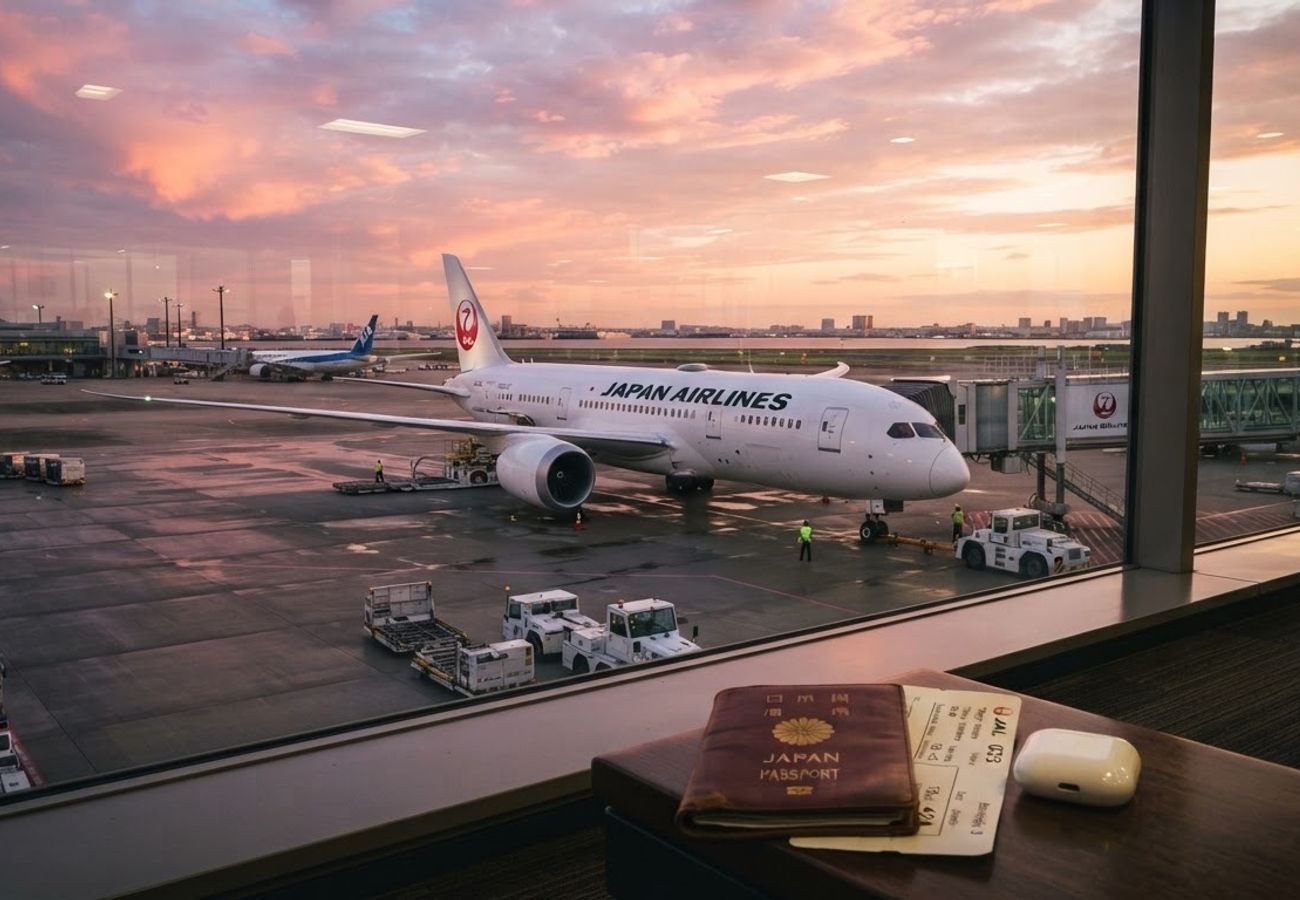
Image generated by AI
Travelers facing Japan Airlines disruptions in 2026 will find that their eligibility for compensation depends entirely on the flight's origin, the cause of the delay, and the specific legal jurisdiction governing the route.
While Japan Airlines maintains a historically strong record for punctuality, recent operational data indicates an increase in disruptions across both domestic and international networks. These delays often stem from a combination of severe East Asian weather patterns, Pacific typhoons, and significant congestion at major hubs including Tokyo Haneda and Tokyo Narita. Additionally, technical glitches and crew scheduling conflicts occasionally trigger ripple effects throughout the carrier's tightly synchronized timetable.
The distinction between "controllable" and "uncontrollable" delays is the primary factor in determining whether a passenger receives a cash payout or merely a rebooking. Weather-related events and air traffic control (ATC) restrictions are typically classified as extraordinary circumstances, which generally exempt the airline from paying cash compensation, though they may still trigger "duty of care" obligations. Conversely, technical failures, staffing shortages, or aircraft rotation issues are usually deemed within the airline's control, opening the door for higher claims in specific regions.
Navigating Japan Airlines Disruptions on US Routes
For passengers flying between the United States and Japan, the legal landscape is significantly different from European standards. There is no federal law in the U.S. that mandates automatic cash compensation for a late arrival. Instead, passenger protections are governed by the U.S. Department of Transportation (DOT) consumer rules and the airline's own customer service commitments.
According to current policies, Japan Airlines is required to notify passengers of delays exceeding 30 minutes via airport displays, its official website, and direct contact channels, typically within 30 minutes of the disruption being identified. For passengers facing significant same-day changes, airport staff are tasked with rebooking travelers on the next available Japan Airlines flight, provided seats are available.
The primary legal lever for U.S. travelers is the right to a refund. Under DOT regulations, if Japan Airlines cancels a flight or implements a "significant schedule change" and the passenger chooses not to travel, the airline must provide a refund for the unused portion of the ticket. The DOT has established specific benchmarks to define what constitutes a "significant change" for both domestic and international itineraries. However, if a traveler accepts the rebooking and completes their journey—even if they arrive several hours late—they have no broad legal right to additional monetary compensation.
EU Regulation EC261 and Enhanced Passenger Rights
The situation shifts dramatically for any Japan Airlines flight departing from an airport within the European Union, Iceland, Norway, or other associated territories. In these instances, EU Regulation EC261 applies regardless of the airline's nationality. Japan Airlines explicitly confirms compliance with these mandates for all departures from EU soil.
Under EC261, the "Right to Care" and financial compensation are triggered by specific thresholds. If a flight is cancelled or delayed such that the passenger arrives at their final destination three hours or more after the scheduled time, they may be entitled to fixed cash compensation. The maximum amount is typically reserved for long-haul flights (such as those from Europe to Japan) where the delay is attributable to the carrier.
The regulation defines "controllable" events as those that could have been avoided with reasonable measures. This includes most technical aircraft faults and operational errors. It excludes "extraordinary circumstances," such as severe weather or ATC strikes. Furthermore, the "Right to Care" mandates that the airline provide:
- Complimentary meals and refreshments.
- Hotel accommodation if an overnight stay becomes necessary.
- Transport between the airport and the hotel.
A critical detail for travelers is the distinction between the marketing carrier and the operating carrier. If a passenger books a ticket through a European partner but the flight is operated by Japan Airlines departing from the EU, EC261 remains applicable, and the operating carrier (Japan Airlines) is generally responsible for the compensation.
Japan Airlines Internal Policies for Cancellations and Rebookings
Beyond statutory laws, Japan Airlines maintains internal "irregular operations" and "involuntary reservation change" policies. When a disruption is caused by the airline, the carrier commits to rebooking passengers on alternate Japan Airlines Group services to their original destination at no additional cost, subject to seat availability.
For those who opt out of traveling due to a cancellation or substantial delay, the airline provides a refund for the unused segment of the ticket. The total amount refunded is contingent upon the original fare rules and whether any portion of the trip has already been completed.
Support services, such as hotel vouchers and meal tickets, are often handled on a discretionary basis depending on the local jurisdiction and the nature of the delay. On international routes, unexpected overnight stays caused by airline-controllable errors typically result in provided accommodation. However, on domestic Japanese routes—especially during typhoon season—support is often limited to rebooking assistance.
For passengers with connecting itineraries under a single booking, Japan Airlines' policy states that if a delay on the first leg causes a missed connection, the airline will rebook the passenger to their final destination for free. If the connection involves a partner airline, the resolution depends on specific interline agreements.
Practical Steps for Claiming Compensation
Industry observers suggest that passengers should first utilize official airline channels to resolve disputes. This involves submitting a formal claim through the Japan Airlines customer support portal, ensuring that the booking reference, flight number, and exact arrival time are clearly documented.
For those flying from the EU, it is vital to keep a record of the reason given for the delay, as airlines may initially cite "extraordinary circumstances" to avoid payment. If the airline denies a claim that the passenger believes is valid under EC261, the next step is typically filing a complaint with the National Enforcement Body (NEB) of the EU member state from which the flight departed.
Why This Matters for the Modern Traveler
From a logistical and legal standpoint, the disparity between U.S. and EU passenger rights creates a "geographic lottery" for travelers. For the passenger, this means that a technical failure on a flight from Tokyo to New York might result in nothing more than a meal voucher, while the exact same technical failure on a flight from Paris to Tokyo could result in hundreds of euros in cash compensation.
This discrepancy underscores the importance of knowing the "Operating Carrier" versus the "Marketing Carrier." In an era of complex codeshare agreements, passengers often book through one airline but fly on another. Legally, the operating carrier holds the bag for EC261 claims. Travelers should meticulously document their arrival times and save all communication from the airline, as these records are the only evidence that can override an airline's internal classification of a delay.
Understanding these jurisdictional differences is the only way to ensure you aren't leaving money on the table after a travel disruption.
Related Travel Guides
Disclaimer
This article is for informational and educational purposes only. It does not constitute legal, financial, or professional advice. While we strive to provide accurate and up-to-date information, travel policies, regulations, and conditions change rapidly. Always verify information with official sources before making travel decisions. Nomad Lawyer makes no representations about the accuracy, reliability, completeness, or suitability of the information provided. Readers should consult qualified professionals for advice specific to their circumstances. The views expressed in this article are those of the author and do not necessarily reflect the views of Nomad Lawyer.
Kunal K Choudhary
Co-Founder & Contributor
A passionate traveller and tech enthusiast. Kunal contributes to the vision and growth of Nomad Lawyer, bringing fresh perspectives and driving the community forward.
Learn more about our team →