
Japan Airlines Boeing 767 Emergency Landing: Flight Diverts to Narita After Severe Tire Failure Out of Haneda
A Japan Airlines Boeing 767 bound for Kagoshima executes a tense emergency landing at Narita Airport following a sudden tire failure during takeoff at Tokyo Haneda.

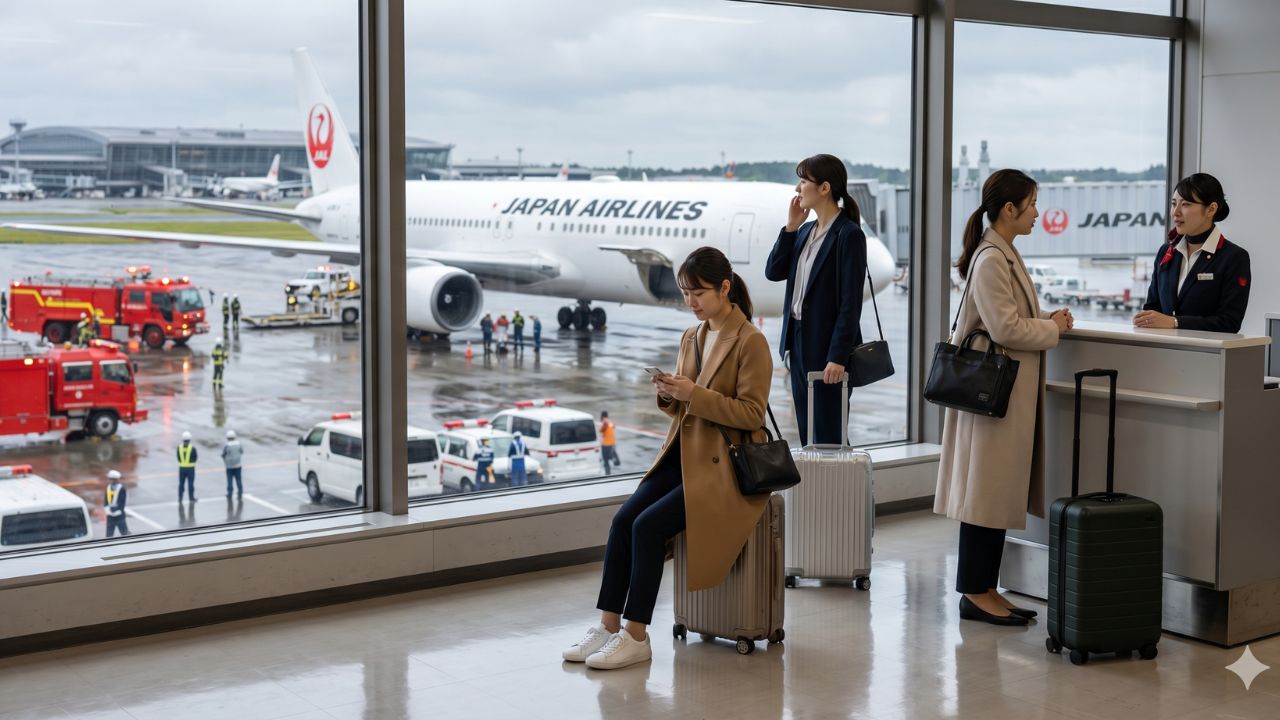
Image generated by AI
Japan Airlines Boeing 767 Emergency Landing: Flight Diverts to Narita After Severe Tire Failure Out of Haneda
The aviation network in Tokyo experienced a shocking disruption on Friday as a major domestic flight was forced to declare an emergency. A Japan Airlines Boeing 767, initially bound for Kagoshima Airport, encountered a sudden and severe tire issue moments after taking off from Tokyo Haneda Airport. Reacting with textbook precision, the flight crew aborted the standard flight path and executed a rapid, precautionary diversion to Narita International Airport.
The Scope of the Aviation Disruption
In-flight mechanical failures during the critical takeoff phase carry immense risk. However, thanks to the swift execution of established aviation emergency protocols, absolute disaster was averted. The flight crew successfully touched the wide-body aircraft down at Narita Airport at approximately 11:55 a.m., ensuring that all 218 passengers and 8 crew members on board walked away completely unharmed.
Despite the safe landing, the sudden mechanical failure triggered an intense domino effect across Tokyo's airspace, shutting down vital runways at two of Japan's busiest aviation hubs while investigators scrambled to secure the tarmac.
Breakdown of the Airport Operations Impact
While the aircraft landed safely, the sheer unpredictability of a tire blowout caused severe logistical headaches for both Tokyo Haneda and Narita airports.
Tokyo Haneda Airport: Debris and Runway Shutdown
The disruption began exactly where the flight originated. Shortly after the Boeing 767 departed, airport ground authorities discovered potentially hazardous debris scattered across Haneda’s Runway D. Fearing a severe risk to subsequent departing flights, authorities immediately closed the runway from approximately 10:30 a.m. until 1:45 p.m. This massive three-hour closure resulted in significant delays as investigators scoured the tarmac, attempting to definitively link the debris to the Japan Airlines aircraft.
Narita International Airport: Emergency Readiness
At Narita, the receiving airport for the crippled flight, emergency response vehicles swarmed the tarmac to assist with rapid disembarkation. Following the tense 11:55 a.m. touchdown, Narita authorities were forced to temporarily shut down Runway A for approximately two hours. This closure was absolutely critical to verify that no residual tire fragments or hydraulic debris were left behind that could threaten other landing aircraft.
Flight Data and Disruption Overview
To fully contextualize Friday's tense mechanical failure, the following data matrix breaks down the specific operational details and airport impacts:
| Flight Metric | Incident Details |
|---|---|
| Operating Airline | Japan Airlines |
| Aircraft Type | Boeing 767 (Twin-engine, wide-body) |
| Original Route | Tokyo Haneda (HND) → Kagoshima Airport (KOJ) |
| Diversion Airport | Narita International Airport (NRT) |
| Emergency Landing Time | Friday, 11:55 a.m. |
| Total Occupants | 218 Passengers, 8 Crew Members |
| Injuries Reported | 0 |
| Haneda Disruption | Runway D closed (10:30 a.m. – 1:45 p.m.) due to debris |
| Narita Disruption | Runway A closed (Approx. 2 hours) for safety inspection |
Passenger Impact: Relief and Logistical Hurdles
For the 218 passengers aboard the Boeing 767, the mid-air diversion was undoubtedly a terrifying ordeal. While immense relief washed over the cabin upon the safe touchdown at Narita, the passengers were left stranded far from their intended destination of Kagoshima. Beyond the immediate shock, the travelers faced severe scheduling disruptions, forced to wait in Narita terminals while Japan Airlines rushed to coordinate replacement aircraft and alternative itineraries.
Simultaneously, the three-hour closure of Runway D at Haneda and the two-hour closure of Runway A at Narita triggered widespread, cascading delays for thousands of other domestic travelers flying through Tokyo.
Industry Analysis: A Troubling Pattern of Tire Failures
Friday’s incident is deeply concerning for Japanese transport authorities, primarily because it is not an isolated event. Just days prior, on Monday, a domestic flight operated by a completely different carrier suffered a severe tire rupture that also prompted an emergency landing at Haneda Airport (with no injuries reported).
This alarming cluster of tire-related mechanical failures is prompting regulators to drastically increase their scrutiny of both aircraft maintenance logs and the physical condition of heavily trafficked runways. Investigators are currently analyzing flight data recorders, examining the debris found on Runway D, and evaluating whether these blowouts are stemming from operational stress, manufacturing defects, or localized runway wear.
What Guests Get
- Commitment to Safety Protocols: The flawless execution of the emergency landing by the Japan Airlines flight crew proves that strict pilot training and real-time monitoring systems are incredibly effective.
- Alternative Routing: Passengers diverted to Narita were provided with immediate ground support and rebooking assistance by Japan Airlines personnel to reach Kagoshima.
- Airport Disruption Containment: By proactively closing Haneda's Runway D and Narita's Runway A, aviation authorities prioritized passenger safety over maintaining on-time departure schedules.
What This Means for Travelers
If you are flying domestically through Tokyo Haneda or Narita in the coming days, you should expect heightened safety inspections. Because transport authorities are actively investigating this alarming trend of tire failures, airlines may initiate unscheduled, preemptive maintenance checks on wide-body aircraft like the Boeing 767. Monitor your flight status closely via your airline's mobile app or platforms like FlightAware, as these enhanced safety protocols could result in minor rolling delays.
FAQ: Japan Airlines Emergency Landing 2026
Why did the Japan Airlines flight divert to Narita? The Boeing 767 suffered a sudden and severe tire problem shortly after taking off from Tokyo Haneda, forcing the crew to execute a precautionary emergency landing at Narita.
Was anyone hurt during the emergency landing? No. All 218 passengers and 8 crew members landed safely at Narita International Airport at 11:55 a.m. with absolutely no injuries reported.
Did this incident cause delays at Tokyo Haneda? Yes. Authorities discovered debris on Haneda’s Runway D, forcing a massive closure from 10:30 a.m. to 1:45 p.m., which caused significant delays for other domestic flights.
Conclusion and Investigation Outlook
The shocking mid-air diversion of a Japan Airlines Boeing 767 is a stark reminder of the inherent risks of commercial aviation—and the absolute necessity of rigorous emergency training. While the sudden tire failure out of Haneda caused major operational disruptions and runway closures across Tokyo's two primary airports, the situation was resolved without a single injury to the 226 people on board. However, with this marking the second major tire failure in Japan in less than a week, transport authorities are aggressively escalating their investigations. Until the root causes are definitively identified, travelers can expect increased scrutiny and enhanced maintenance protocols across the nation's domestic fleets.
Key Takeaways
- Safe Diversion: A Kagoshima-bound Boeing 767 successfully executed an emergency landing at Narita at 11:55 a.m.
- Zero Injuries: All 218 passengers and 8 crew members safely survived the mechanical failure.
- Massive Runway Closures: Haneda's Runway D was shut down for over three hours, while Narita's Runway A was closed for two hours.
- A Troubling Trend: This incident follows a similar tire rupture from a different carrier at Haneda just days prior.
Related Travel Guides
- Portland Jetport Flight Cancellations Trigger Maine Travel Chaos as American, Delta, and United Suffer 14 Delays: Latest Airline News
- Boeing 777X Crew Rest Areas: How Pilots and Cabin Staff Sleep on Ultra-Long Haul Flights
- Denver International Airport Logs 237 Flight Delays and 1 Cancellation Amid Severe Weather
Disclaimer
This article is for informational and educational purposes only. It does not constitute legal, financial, or professional advice. While we strive to provide accurate and up-to-date information, travel policies, regulations, and conditions change rapidly. Always verify information with official sources before making travel decisions. Nomad Lawyer makes no representations about the accuracy, reliability, completeness, or suitability of the information provided. Readers should consult qualified professionals for advice specific to their circumstances. The views expressed in this article are those of the author and do not necessarily reflect the views of Nomad Lawyer.
Kunal K Choudhary
Co-Founder & Contributor
A passionate traveller and tech enthusiast. Kunal contributes to the vision and growth of Nomad Lawyer, bringing fresh perspectives and driving the community forward.
Learn more about our team →