
Boeing 777X Crew Rest Areas: How Pilots and Cabin Staff Sleep on Ultra-Long Haul Flights
The Boeing 777X features hidden crew rest areas allowing pilots and cabin crew to sleep during flights. Here's how these specialized spaces work and why new FAA rules allow occupancy during critical flight phases.

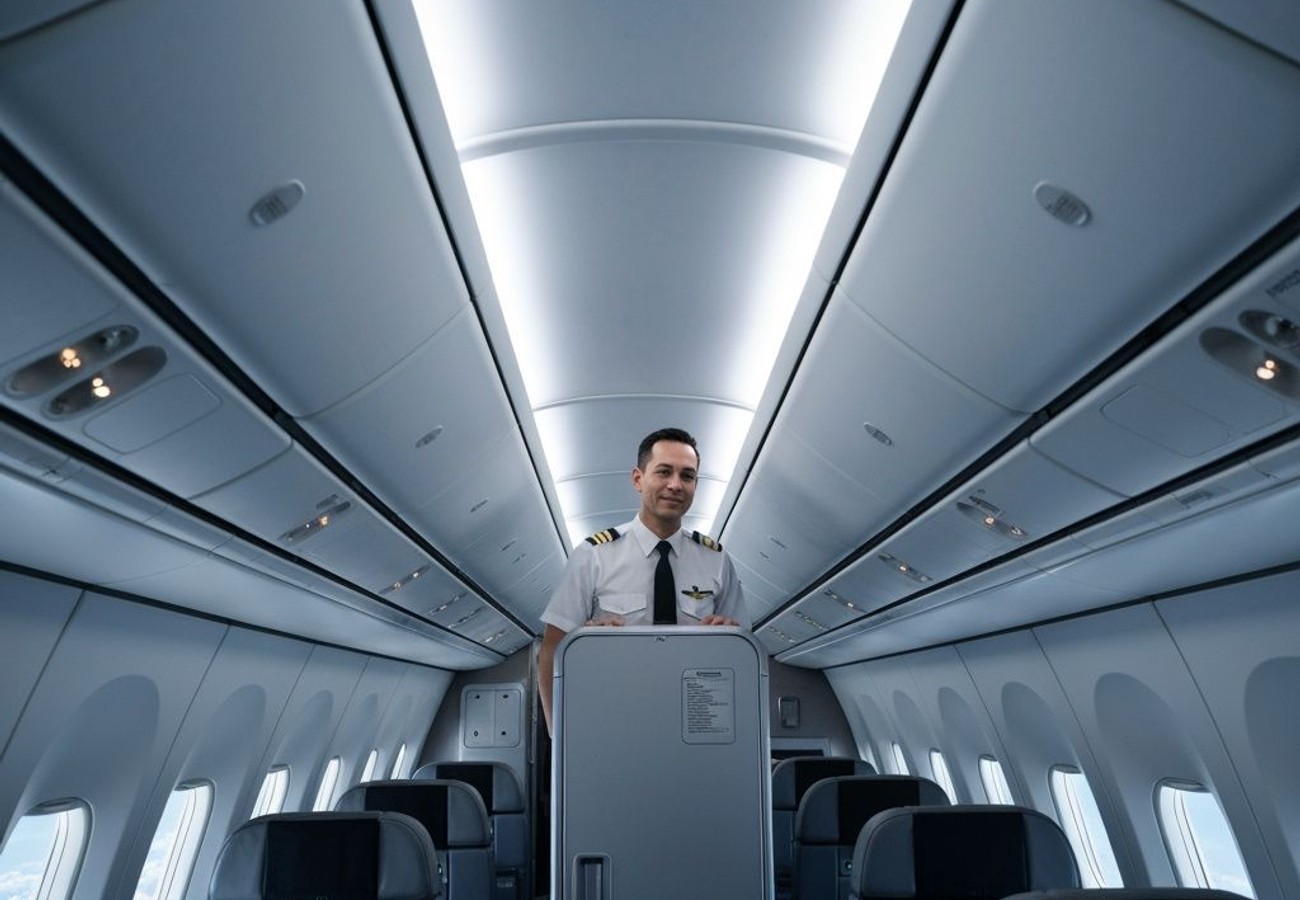
Image generated by AI
When Boeing 777X aircraft finally begin commercial service, they'll carry a secret most passengers will never see. Hidden above the main cabin and tucked behind the cockpit, specialized crew rest areas will allow exhausted pilots and flight attendants to recover during some of the world's longest flights.
But here's what makes the 777X different: for the first time on a commercial jetliner, crews can use certain rest areas during taxi, takeoff, and landing—a dramatic departure from decades of aviation safety protocol.
I spent time reviewing FAA certification documents and speaking with aviation safety experts to understand exactly how these spaces work, why the rules changed, and what this means for passenger safety on ultra-long-haul routes.
The Hidden World Above Your Head
Most widebody aircraft—the Boeing 777, Airbus A380, and Boeing 787 Dreamliner—contain crew rest areas that passengers never see. These aren't luxurious lounges. They're compact, sometimes claustrophobic spaces designed for one essential purpose: allowing crew members to combat fatigue on flights lasting 14, 16, or even 19 hours.
Reddit: "I flew as cabin crew for eight years. The crew rest area was either the best part of my day or felt like a coffin, depending on the aircraft." — r/flying
The Federal Aviation Administration classifies crew rest areas into three types. Class One consists of dedicated bunks with padding and safety equipment. Class Two uses flat-bed business class seats exclusively for flight crew near the cockpit. Class Three employs economy seats, curtained off for cabin crew use.
On the Boeing 777X, the flight crew (pilots) rest above the main passenger deck in a dedicated overhead compartment. The cabin crew uses a larger bunk area at the rear of the aircraft, typically in the lower deck near the tail section.
Where Do They Actually Sleep?
The Boeing 777X's overhead flight crew rest area is accessed through a concealed door and a steep staircase—the kind that feels more like climbing into an attic than entering an airport lounge. Inside, you'll find two bunks and two seats where up to four crew members can rest during flight.
The space itself includes surprisingly thoughtful amenities: a lavatory, sink, storage for cold drinks, and climate controls. Safety equipment is mandatory—smoke detectors, emergency oxygen systems, fire extinguishers, and individual seatbelts on every bunk. An intercom system keeps resting crew connected to the flight deck.
But here's the critical detail: during taxi, takeoff, and landing, only two crew members can occupy this area, and only in the seats—never the bunks. A secondary evacuation hatch opens directly into the main cabin.
For cabin crew, the setup is more generous. The 777X features a dedicated rest area at the rear with approximately ten bunk beds arranged in "coffin-style" configurations—stacked one above the other with minimal legroom. Sound-dampening curtains provide privacy. Blankets, pillows, and individual reading lights are standard.
The Rule Change That Shocked Aviation
Here's where the 777X breaks 60 years of aviation tradition.
On virtually every previous widebody aircraft, crew rest areas were strictly off-limits during critical flight phases: taxi, takeoff, and landing. The reasoning was logical—in an emergency evacuation, reaching an overhead rest area would waste precious seconds.
But the 777X and Boeing 787 Dreamliner changed this. The FAA, under special certification conditions detailed in Boeing's official technical documentation, approved overhead rest area occupancy during these phases—but only in seats, not bunks.
Why the reversal? Modern aircraft offer something older jets couldn't: range. Airlines now deploy augmented crews (additional flight crew beyond the minimum) on ultra-long-haul routes. Without access to rest areas during all flight phases, crew fatigue limits would force costly layovers, making 19-hour flights economically impossible.
The trade-off required extraordinary safety measures. Emergency oxygen must be available in the lavatory, sink area, bunks, and seats. Escape procedures are tested and documented. Airport rescue teams are now trained that the overhead rest area might be occupied during emergency landings. Access points for rescue personnel are built into certain cabin doors.
How The 777X Compares To Other Widebodies
The 777X isn't the only aircraft with hidden crew rest areas. Here's how it stacks up:
Airbus A380: Emirates positions its flight crew rest area above the main passenger cabin—unusual among airlines—rather than near the cockpit. The cabin crew rest area contains 12 bunks underneath the main deck with a dedicated escape hatch. Many aviation professionals consider it among the most comfortable rest spaces in commercial aviation.
Boeing 787 Dreamliner: Like the 777X, its flight crew rest area sits behind the cockpit. The cabin crew rest area is at the rear and can be spotted by a fake overhead locker. Certification for use during critical flight phases, similar to 777X rules, applies here too.
Airbus A350: Features a standard cockpit-adjacent flight crew rest area and a six-bunk cabin crew rest area at the rear. Less spacious than the A380, but still considered comfortable by industry standards.
Boeing 777 (current generation): Contains eight to ten cabin crew bunks at the rear with shared wardrobe space, mirrors, and individual reading lights. More comfortable than older aircraft but lacking the amenities of newer designs.
The A380, A350, and current 787 are generally regarded as offering the most comfortable crew rest experiences—a factor some airlines consider when selecting aircraft for ultra-long-haul routes.
What Makes The 777X Special
When the Boeing 777X finally enters service (after years of delays since its 2013 launch), it will represent a significant leap in long-haul capability. Its cabin is roughly four inches wider than the current 777 family, thanks to composite construction and redesigned sidewalls.
The windows are larger and dimmable. The ceiling is sculpted to create a sense of spaciousness. Cabin altitude is lowered to 6,000 feet—substantially lower than older aircraft—reducing passenger fatigue and improving comfort.
The same engineering that benefits passengers also enables crew rest areas to be more functional. Higher humidity levels and advanced air filtration reduce the stuffiness crew members experienced in older rest areas. Powered by General Electric's GE9X engines, the aircraft can sustain the power-hungry systems that support crew comfort and safety.
Airlines including Lufthansa (the launch customer), Qatar Airways, and others have ordered the aircraft, largely for next-generation routes spanning 14-19 hours non-stop.
The Safety Calculation
Fatigue remains one of aviation's most insidious hazards. A pilot's alertness after 18 hours awake approaches that of someone with a blood alcohol level of 0.08%—legally intoxicated in most jurisdictions. Research from the National Transportation Safety Board consistently identifies fatigue as a contributing factor in accidents.
Crew rest areas directly combat this. But they only work if crews actually use them—and only if they can rest during all phases of flight when ultra-long-haul operations demand it.
The 777X's design, combined with new FAA certification rules, represents a calculated choice: tighter escape procedures and emergency protocols in exchange for the fatigue reduction that enables safe, nonstop flights across the globe's longest routes.
When you board a 777X for a 17-hour journey from New York to Singapore, the pilot and flight attendants resting in those hidden compartments above you won't just be recovering. They'll be following rules that didn't exist five years ago—rules written specifically to keep you safe.
The future of long-haul aviation relies on well-rested crews, hidden infrastructure, and regulations that finally caught up to technology.
Related Travel Guides
Disclaimer
This article is for informational and educational purposes only. It does not constitute legal, financial, or professional advice. While we strive to provide accurate and up-to-date information, travel policies, regulations, and conditions change rapidly. Always verify information with official sources before making travel decisions. Nomad Lawyer makes no representations about the accuracy, reliability, completeness, or suitability of the information provided. Readers should consult qualified professionals for advice specific to their circumstances. The views expressed in this article are those of the author and do not necessarily reflect the views of Nomad Lawyer.
Raushan Kumar
Founder & Lead Developer
Full-stack developer with 11+ years of experience and a passionate traveller. Raushan built Nomad Lawyer from the ground up with a vision to create the best travel and law experience on the web.
Learn more about our team →