Africa Aviation Forecast Projects Demand for 1,640 Aircraft by 2045 as Ethiopia's 110M Bishoftu Mega-Hub Confronts 15% Tax Penalty

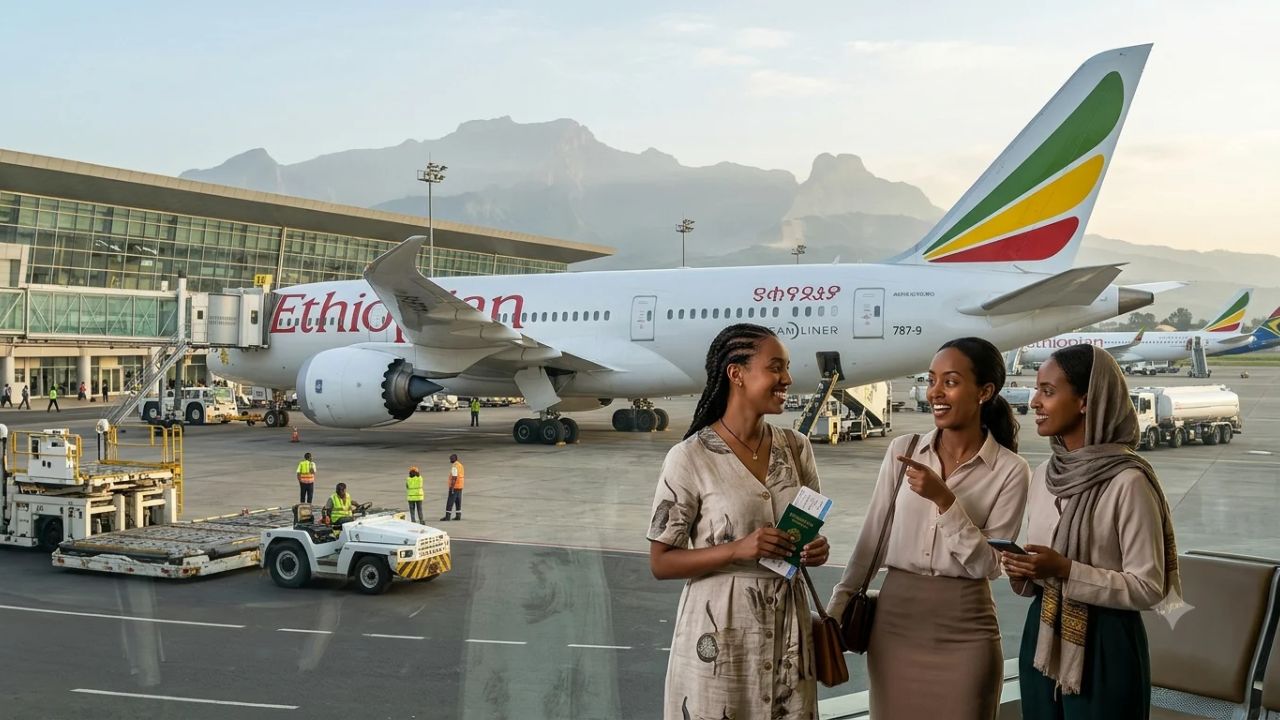
Commercial aviation operations expanding across primary African airport gateways
[ADDIS ABABA, Oct 21, 2026] — A long-term projection forecasting continental demand for 1,640 new passenger aircraft by 2045—paired with Ethiopia breaking ground on a 110-million-passenger mega-airport at Bishoftu—signals an aggressive infrastructural recalibration across African aviation, even as statutory taxes running 15% above global benchmarks continue to constrain ticket affordability. Detailed in manufacturer market assessments published on 13 October 2026 and reinforced by national transport updates on 19 October, the fleet outlook reflects compound annual traffic growth of 4.9% over the next two decades. This trajectory will expand continental passenger volumes by 2.6 times, making Africa the second fastest-growing commercial aviation market in the world behind Asia.
[!NOTE] Quick Overview: African Commercial Aviation Outlook & Infrastructure Targets
- Fleet Expansion Forecast: African airlines will require 1,640 new passenger aircraft deliveries by 2045, comprising 1,310 single-aisle narrowbodies (79.9%) and 330 widebodies (20.1%).
- Accelerated Modernization: The share of latest-generation, fuel-efficient aircraft in African skies will climb from 30% in 2025 to 65% by 2035—a 35-percentage-point leap in fleet efficiency.
- Demographic and Traffic Catalysts: Continental passenger traffic will expand at 4.9% annually, driven by 720 million additional residents, 180 million middle-class consumers, and 4.0% annual real GDP growth.
- Bishoftu Mega-Airport Development: Ethiopia launched construction on 10 January 2026 for a massive hub 40 km southeast of Addis Ababa, targeting 60M capacity in Phase 1 (2030) and 110M at full build.
- Critical Workforce Shortage: Operating this fleet requires training 71,000 certified aviation specialists, including 30,000 mechanics (42.3%), 20,000 commercial pilots, and 21,000 cabin crew members.
- Persistent Structural Obstacles: Nearly two-thirds (~66%) of Ethiopian hub traffic remains transit-only, while ticket taxes averaging 15% above world norms and fragmented airspace restrict intra-continental tourism.
While aircraft manufacturers project an intake of 1,310 single-aisle jets and 330 widebodies alongside a massive recruitment requirement for 71,000 aviation professionals, the translation of airspace capacity into local hotel bookings and tourist expenditure faces severe structural friction. Across primary African hubs like Addis Ababa, nearly two-thirds of international passengers never step foot outside the airport terminal, functioning entirely as transit traffic between North America, Europe, and Asia. Converting long-haul transit passengers into multi-day stopover tourists requires modern surface transit links, harmonized visa protocols, and lower fiscal burdens across regional airport systems.
Core Evidence and Story Emphasis: Analyzing the 2045 Forecast
The long-term outlook for African air travel is anchored in manufacturer projections and sovereign public works projects announced throughout 2026. The table below delineates the empirical findings, assessing their practical significance for international travelers, airlines, and regional hospitality operators:
| Aviation Strategic Dimension | Share of Story Analysis | Officially Verified Finding | Practical Relevance to Air Travellers | Verified Source Document |
|---|---|---|---|---|
| Aircraft Demand & Mix | 45% | Forecast requirement: 1,310 single-aisle (79.9%) and 330 widebody (20.1%) aircraft by 2045 | Points to expanded regional point-to-point routes; no immediate ticket or route commitments | Continental Aviation Assessment (13 Oct 2026) |
| Macroeconomic Assumptions | 20% | Annual real GDP growth of 4.0%; trade growth of 3.9% across Africa through 2045 | Underpins long-term expansion; household disposable income dictates leisure budgets | Manufacturer Global Market Forecast (Oct 2026) |
| Fleet Modernization | 20% | Latest-generation aircraft share rising from 30% in 2025 to 65% by 2035 (35-point increase) | Lower operating fuel burns; replacement deliveries phase out aging aircraft | Manufacturer Fleet Transition Outlook (Oct 2026) |
| Aviation Workforce Deficit | 15% | Continental requirement for 20,000 pilots, 30,000 mechanics, and 21,000 cabin crew | Critical need for certified training academies to maintain flight safety and reliability | Aviation Human Capital Report (13 Oct 2026) |
Calculations from the published data confirm that single-aisle jets represent roughly four out of every five new deliveries (79.9%), reflecting an airline strategy centered on point-to-point regional routes rather than funneling all traffic through crowded intercontinental hubs. Concurrently, the proportion of advanced-generation aircraft will increase by 35 percentage points over a decade. Because replacement deliveries retire older airframes, total aircraft demand cannot be equated with net fleet growth. The forecast also provides no direct guarantee of hotel occupancy or destination revenue, treating tourism gains as secondary potential outcomes.
Fleet Modernization Dynamics and the 71,000-Specialist Workforce Deficit
The fleet composition of 1,310 single-aisle narrowbodies and 330 twin-aisle widebodies demonstrates how African flag carriers and regional airlines intend to restructure their route maps. Narrowbody aircraft such as the Airbus A220, A320neo family, and Boeing 737 MAX allow carriers to establish viable direct frequencies between secondary commercial centers—such as Luanda, Entebbe, Kigali, and Dakar—without routing through traditional European or Gulf transfer points.
| Commercial Aviation Metric | 20-Year Target Horizon (2025–2045) | Historical & Baseline Metric | Strategic Operational Reality & Policy Implication |
|---|---|---|---|
| Total Continental Aircraft Demand | 1,640 New Passenger Deliveries | Fleet expanded 2x between 2005–2025 | 1,310 single-aisle (79.9%) / 330 widebody (20.1%) mix |
| Fleet Modernization Share | 65% Latest-Generation by 2035 | 30% Latest-Generation in 2025 | 35-point efficiency leap; lowers unit operating expenses |
| Annual Passenger Traffic Growth (RPK) | +4.9% Compound Annual Growth | Compounding to 2.6x current volume | Second fastest global expansion rate behind Asia |
| Continental Workforce Requirement | 71,000 Aviation Professionals | 42.3% technical mechanics / engineers | Demands 20,000 pilots, 30,000 mechanics, 21,000 cabin crew |
| Bishoftu Airport Passenger Capacity | 60M (Phase 1, 2030) / 110M (Full Build) | 25M capacity at Addis Ababa Bole (ADD) | Phase 1 is 2.4x Bole; Full build is 4.4x current facility |
| Aviation Tax & Fiscal Burden | 15% Above Global Average | Disproportionate state landing tariffs | Depresses passenger demand on thin regional African sectors |
| National Carrier Passenger Profile | Nearly two-thirds (~66%) Transit | Minor domestic tourism conversion | Mega-hubs function as transit corridors rather than tourism sinks |
Upgrading the continent's operating fleet from 30% latest-generation technology in 2025 to 65% by 2035 will significantly lower carbon emissions and fuel burn per seat-kilometer. However, absorbing 1,640 advanced aircraft requires a parallel investment in human capital. The forecast identifies a deficit of 71,000 certified personnel across three disciplines:
- 30,000 Aircraft Maintenance Mechanics & Technicians: Accounting for 42.3% of total workforce requirements, this group is vital for establishing localized Maintenance, Repair, and Overhaul (MRO) facilities.
- 20,000 Commercial Airline Pilots: Demands substantial expansion of certified flight academies across Sub-Saharan Africa to avoid expensive foreign pilot contracts.
- 21,000 Professional Cabin Crew: Necessary to support service standards across expanding multi-class international flights.
Without certified domestic technical training facilities, African operators will continue outsourcing heavy airframe maintenance to Europe and Asia, draining scarce foreign exchange reserves and raising unit operating costs.
The Bishoftu Mega-Hub: Scaling Beyond Bole Airport's Physical Ceilings
To anchor this anticipated traffic expansion, the Ethiopian government broke ground on Bishoftu International Airport on 10 January 2026. Situated approximately 40 kilometers southeast of Addis Ababa, the project addresses severe physical constraints at Addis Ababa Bole International Airport (ADD), which operates near its annual design ceiling of 25 million passengers.
ETHIOPIAN AVIATION HUB CAPACITY EXPANSION TIMELINE
| CURRENT CAPACITY (BOLE AIRPORT - ADD) |
|---|
| ===================================== |
| [█████████████] 25 Million Passengers / Year |
| BISHOFTU PHASE 1 (TARGET: 2030) |
| =============================== |
| [███████████████████████████████] 60 Million Passengers (2.4x Bole Capacity) |
| BISHOFTU FULL MASTER PLAN BUILD |
| =============================== |
| [█████████████████████████████████████████████████████] 110M (4.4x Bole) |
| SURFACE ACCESS INFRASTRUCTURE: |
| ------------------------------ |
| • 38-Kilometer Dedicated Express Rail Corridor to Central Addis Ababa |
| • Dedicated Multi-Lane Airport Highway Linking Key Logistics Industrial Zones |
Government updates released in June 2026 confirmed a 2030 operational target for Phase 1, engineered to accommodate 60 million passengers annually. Upon full completion of its master plan, Bishoftu will handle 110 million passengers per year, making it the largest airport installation on the African continent.
Demographic projections support the scale of this undertaking. Over the 2025–2045 period, Africa's population will expand past two billion, adding 720 million residents, 180 million middle-class consumers, and 450 million urban inhabitants. Compounding passenger traffic at 4.9% annually will expand demand to 2.6 times current levels, approaching three times its current size. However, planned handling limits must not be confused with active passenger volume, and construction milestones should be assessed independently of long-term traffic forecasts.
The Transit Paradox: Converting Flight Connections into Tourist Spend
Ethiopia's passenger growth highlights a persistent structural dilemma known across the industry as the transit paradox. Operating figures published in October 2026 reveal that nearly two-thirds of passengers carried by Ethiopian Airlines are connecting travelers who never leave the transit lounge.
A passenger transferring between flights generates airport landing fees and duty-free retail purchases, but contributes nothing to local hotel occupancy, car rentals, or cultural site admissions. Consequently, a sixfold expansion in passenger throughput cannot be treated as a sixfold increase in national tourism revenue:
THE AFRICAN AVIATION TRANSIT PARADOX
| CONNECTING AIRLINE PASSENGER (~66%) OVERNIGHT STOPOVER TOURIST (~34%) |
|---|
| =================================== ================================= |
| • Spend: $10 - $35 in terminal retail • Spend: $450 - $1,200 per visit |
| • Direct Hotel Revenue: $0 • Direct Hotel Revenue: 2-4 nights |
| • Local Tour Excursions: 0 • Domestic Air/Rail Spend: High |
| • Economic Retention: Minimal • Economic Multiplier: Extensive |
| CATALYSTS REQUIRED TO UNLOCK TRANSIT CONVERSION: |
| ------------------------------------------------ |
| 1. Frictionless 72-Hour Visa-Free Stopover Permits |
| 2. Commissioning the 38-km Bishoftu Airport Rail Link |
| 3. Coordinated Airline-Hotel Stopover Packages |
| 4. Removal of Punitive Departure Surcharges |
To turn Bishoftu’s planned terminal volume into domestic economic growth, transportation authorities are developing a 38-kilometer express railway and a dedicated highway corridor linking the airport directly with downtown Addis Ababa. Coordinated stopover programs that bundle complimentary transit visas, hotel lodging, and guided excursions are essential for converting passing flight traffic into local tourism receipts.
Taxation Headwinds and the Single African Air Transport Market
A primary reason African aviation has struggled to unlock its full tourism potential is the excessive cost of intra-continental flying. An industry audit published in April 2026 revealed that the aviation tax and charge burden in Africa sits approximately 15% above the global average. High passenger service charges, fuel import tariffs, and airspace navigation fees inflate ticket prices on thin regional routes.
A June 2026 assessment by the African Airlines Association (AFRAA) identified three structural barriers constraining the sector:
- Fragmented National Airspace: Bilateral air service agreements between African states remain restrictive, forcing carriers to fly circuitous routes or limit flight frequencies.
- Capital Access Deficits: African airlines pay significantly higher interest rates for aircraft financing and insurance than competitors in North America, Europe, or the Gulf.
- Delayed SAATM Implementation: The Single African Air Transport Market (SAATM)—launched by the African Union in January 2018 to liberalize skies and remove protectionist restrictions—remains unevenly implemented across key sovereign markets.
Because aviation taxes average 15% above world baselines, a short regional flight within Africa frequently costs more than a long-haul intercontinental flight to Europe or the Middle East. Eliminating these fiscal penalties is essential if African carriers are to make domestic and regional travel accessible to the continent's emerging middle class.
Practical Advisory: Due Diligence Checklist for African Air Travel
Travelers planning journeys across African routes should evaluate confirmed operational realities rather than long-term infrastructure projections. The publication of multi-decade aircraft forecasts introduces no immediate changes to airline timetables, ticketing rules, or visa protocols:
| Flight Planning Dimension | Due Diligence Action Item for Air Travellers | Practical Operational Advisory |
|---|---|---|
| Operating Airport Verification | Check departure and arrival airport codes on e-tickets | Bishoftu is an active construction site; all current Addis Ababa flights use Bole (ADD) |
| Visa & Transit Regulations | Confirm whether your nationality requires a transit visa | Changing planes in Addis Ababa requires no visa if remaining airside under 24 hours |
| Connection Buffer Windows | Book connections with minimum 90-minute buffers | Bole Airport operates at peak capacity; allow ample time for international security re-screening |
| Regional Ticket Pricing | Compare multi-city routes against single point-to-point fares | High taxes make multi-stop regional African itineraries costly; check codeshare alternatives |
| Infrastructure Project Timelines | Treat Bishoftu's 2030 Phase 1 delivery date as provisional | Monitor official government transport bulletins before assuming new surface rail availability |
| Health & Baggage Standards | Verify yellow fever certificates and luggage weight limits | Regional turboprop and narrowbody flights enforce strict baggage dimensions and weight caps |
By verifying operational airport terminals and allowing adequate connection times, international passengers can navigate primary African transit corridors with confidence.
Structural Outlook: Translating Aircraft Forecasts into Sustainable Tourism
The forecast demand for 1,640 new aircraft and the construction of Ethiopia’s Bishoftu mega-hub demonstrate that Africa is positioning its aviation industry to support massive long-term economic growth. Achieving compound annual traffic growth of 4.9% will depend on training 71,000 aviation professionals, modernizing aircraft fleets, and building modern airport infrastructure.
However, the tourism value of this aviation expansion will not materialize automatically. If African nations wish to transform airports from transit corridors into engines of local wealth creation, governments must lower passenger ticket taxes, open national airspace under SAATM frameworks, and invest in high-speed surface transport connections.
By aligning modern aircraft deliveries with liberalized immigration policies and competitive regional airfares, African aviation can fulfill its potential as the primary catalyst for continental tourism, cultural exchange, and economic integration through 2045.
Frequently Asked Questions (FAQ)
How many new aircraft are forecast for delivery in Africa by 2045?
Official manufacturer forecasts project demand for 1,640 new commercial passenger aircraft across Africa by 2045, consisting of 1,310 single-aisle jets (79.9%) and 330 widebodies (20.1%) to support 4.9% annual traffic growth.
What is the planned passenger capacity of Ethiopia’s new Bishoftu International Airport?
Bishoftu International Airport is designed to handle 60 million passengers annually in Phase 1 (targeted for 2030) and 110 million passengers upon completion of its full master plan, compared to Bole Airport’s current 25-million capacity.
Why is there a shortage of aviation professionals across Africa?
The expansion of 1,640 aircraft requires 71,000 certified personnel by 2045, including 30,000 mechanics (42.3%), 20,000 commercial pilots, and 21,000 cabin crew. The deficit stems from a shortage of certified domestic training academies and MRO facilities.
What proportion of Ethiopian Airlines traffic consists of transit passengers?
Approximately two-thirds (~66%) of Ethiopian Airlines passengers are connecting transit travelers who do not clear immigration or stay overnight in Ethiopia, highlighting the need for stopover programs to generate local tourism revenue.
Why are airfares within Africa more expensive than in other global regions?
African commercial aviation faces taxes, security charges, and passenger levies that sit 15% above the global average, compounded by high aviation fuel logistics costs, fragmented airspace, and restricted aircraft financing capital.
Related Travel Guides
Ethiopia Bishoftu International Airport Mega-Hub: 110M Passenger Master Plan and Rail Links
Pan-African Resilience Corridors: Aviation Route Upgrades and Borderless Travel Reforms
10 Essential Addis Ababa Transit and Bole Airport Tips from Reddit Travelers 2026
This article is for informational purposes. Flight routes, passenger regulations, visa rules, and transit advisories are subject to change by airlines and aviation authorities. Readers are advised to verify schedules and travel documentation with relevant carriers and border agencies before departure.
Related Stories

easyJet Launches Direct Liverpool to Reykjavik Flights: Inside the North West's New Winter Gateway to Iceland

British Airways Revives Long-Haul Meal Pre-Orders on Las Vegas Flights: Inside the World Traveller Plus Dining Trial