
Japan Airlines Launches Aircraft Washing Robot at Narita Airport
Japan Airlines Group deploys the Aerowash AW3 robotic aircraft washing system at Narita Airport to automate cleaning and reduce water use by 50 percent.

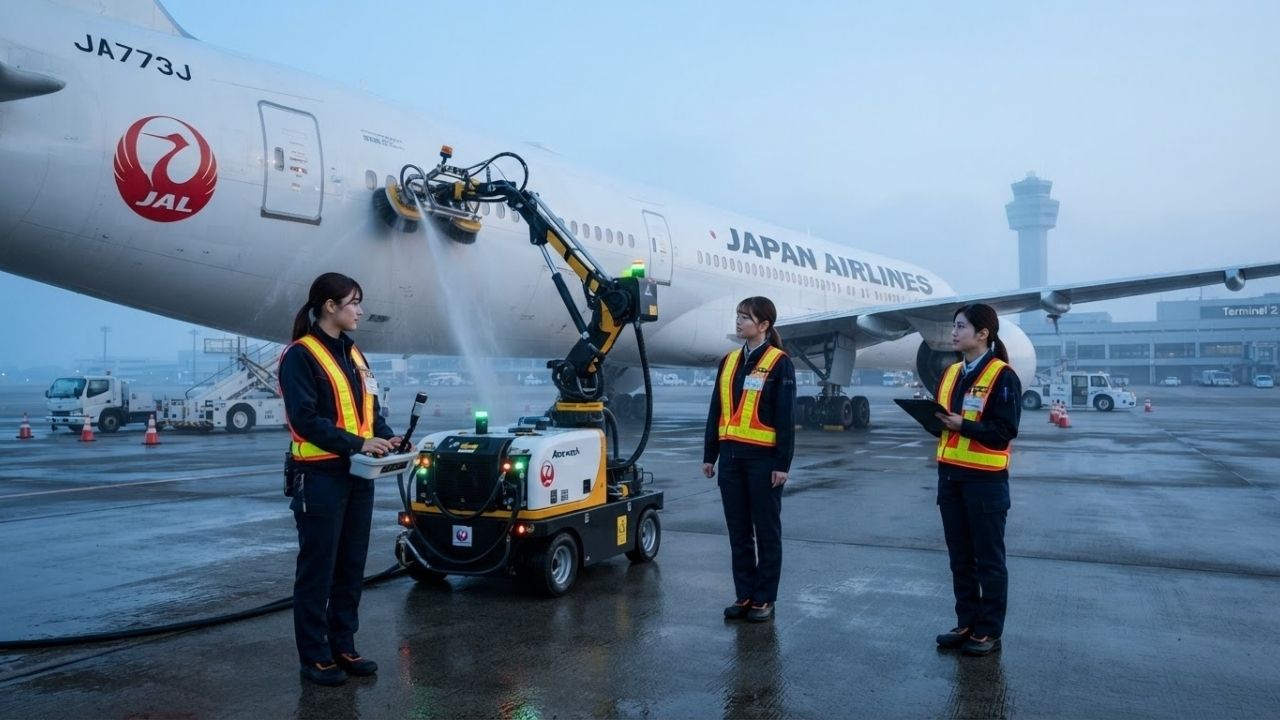
Image generated by AI
Japan Airlines Group has deployed the Aerowash AW3 remote-controlled aircraft washing robot at Narita Airport to automate ground handling cleaning activities. The introduction marks the first domestic airline deployment of an automated positioning aircraft washing robot in Japan, reducing cleaning times by up to 40 percent.
The Local Trend Revealed
Aviation groups are introducing advanced robotics and electric ground support vehicles to improve turnaround times and reduce airport emissions. Monitored by the Narita International Airport Corporation (NAA), this digital transformation shift introduces specific operational enhancements:
- Robot Specifications: JAL is deploying the Aerowash Remote-Controlled Aircraft Washing Robot AW3. The system features automated positioning functions and multi-axis control to clean aircraft surfaces like wings and tails using stored layout coordinate guides.
- Launch Timeline: Operational deployment is scheduled for 2026, following employee training on control systems and safety procedures.
- Cleaning Efficiency: Based on manufacturer parameters, the AW3 can reduce aircraft washing time by up to 40 percent compared to conventional manual cleaning.
- Water Conservation: The robotic system reduces water consumption by up to 50 percent per aircraft.
- Emission Reduction: The AW3 operates using battery-powered electric technology, eliminating direct tailpipe emissions during gate servicing.
- Historical Context: The deployment follows JAL's earlier trial of a wired remote-controlled washing system 30 years ago, which faced operational constraints.
Local Community & Environmental Value
For the traveler, the real impact of supporting green airport initiatives is contributing to local community preservation. Visiting historic areas like Naritasan Shinshoji Temple close to the airport, dining at independent family-run unagi (eel) restaurants along the old temple road, and purchasing wood carvings from local craftsmen ensures that tourism spending stays within community-based economies.
Environmental protection is advanced by choosing sustainable transit. JAL's transition to electric, battery-powered washing robots reduces water use and airport ground emissions. On the ground, travelers can take the Keisei Skyliner train to central Tokyo, which minimizes passenger travel emissions compared to private cars, satisfying guidelines monitored by the Japan National Tourism Organization (JNTO).
Visitor Insider Tips for Narita Transit
Travel and transit specialists recommend the following practices when transiting through Narita:
- Use the Keisei Skyliner: Avoid heavy highway delays. The Keisei Skyliner train connects Narita Airport terminals to central Tokyo (Ueno or Nippori) in just 36 minutes.
- Explore Narita Town on Layouts: Skip the crowded terminal lounges. Take a 10-minute local train from the airport to Naritasan Shinshoji Temple. Explore this spectacular 1,000-year-old temple complex with its three-story pagoda, peaceful parks, and traditional shopping street.
- Observe the Off-Peak Window: Visit Japan during the autumn months of mid-October to November or late May. You will avoid the extreme summer humidity of July and August, spring rainfall, and the crowded cherry blossom rush (March to April).
- Sample Regional Culinary Specialties:
- Taste a hot bowl of soy-sauce Ramen in Narita town.
- Try grilled Unagi served over rice at historic family-run eateries.
- Observe Chopstick Etiquette: Never stick your chopsticks vertically into a bowl of rice, as this resembles a funeral offering. Use the ceramic chopstick rest (hashioki) provided. Say "Itadakimasu" before eating to show appreciation.
- Do Not Tip: Tipping is strictly not practiced in Japan. If you leave extra cash on a table, the waitstaff will chase you down the street to return it.
Tourism Outlook
The long-term impact of JAL's robotic ground handling integration is the transition towards automated, zero-emission airports. By combining water-saving automated cleaning with electric battery ground equipment at Narita Airport, JAL aims to scale these robotics to other domestic Japanese airports, demonstrating how digital transformation can protect local resources as international flight volumes grow.
FAQ: Japan Airlines Aircraft Washing Robot
When will the Aerowash AW3 robot enter operational service? Japan Airlines Group will begin full operational deployment of the washing robot in 2026.
Where will the robotic cleaning system be deployed first? The initial deployment and performance monitoring will take place at Tokyo's Narita Airport (NRT).
What are the primary resource savings of the AW3 robot? The robot reduces aircraft washing times by up to 40 percent and water consumption by up to 50 percent compared to conventional manual cleaning.
How is the washing robot powered? The AW3 operates using battery-powered electric technology, reducing carbon emissions during gate cleaning.
Related Travel Guides
Disclaimer
This article is for informational and educational purposes only. It does not constitute legal, financial, or professional advice. While we strive to provide accurate and up-to-date information, travel policies, regulations, and conditions change rapidly. Always verify information with official sources before making travel decisions. Nomad Lawyer makes no representations about the accuracy, reliability, completeness, or suitability of the information provided. Readers should consult qualified professionals for advice specific to their circumstances. The views expressed in this article are those of the author and do not necessarily reflect the views of Nomad Lawyer.
Raushan Kumar
Founder & Lead Developer
Full-stack developer with 11+ years of experience and a passionate traveller. Raushan built Nomad Lawyer from the ground up with a vision to create the best travel and law experience on the web.
Learn more about our team →