
Japan Deploys AI and Robotic Wolf Deterrents to Protect 42 Million Tourists From Rising Bear Attacks 2026
Japan is integrating AI-powered surveillance and animatronic 'Monster Wolf' robots to curb dangerous bear encounters as international tourism hits record highs in 2026.

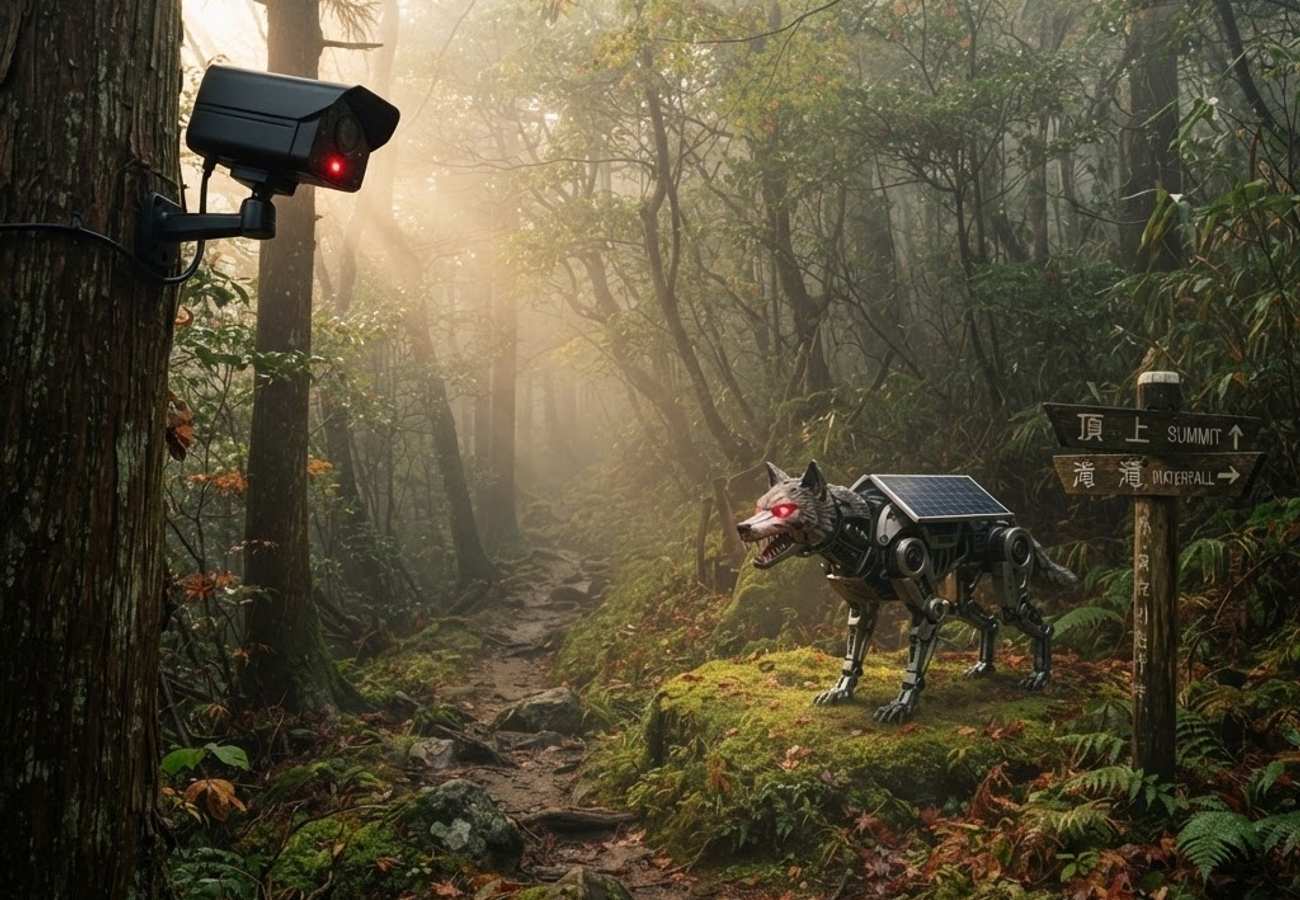
Image generated by AI
Japan is deploying a sophisticated arsenal of artificial intelligence, rapid-response drones, and animatronic "robotic wolves" to protect a record-breaking 42.68 million international visitors from increasing bear encounters. With 13 fatalities and over 220 injuries reported between April 2025 and March 2026, the Japanese government has pivoted toward a high-tech, aggressive management strategy to secure rural and mountain tourist corridors.
A Tourism Crisis in the Japanese Wilderness
What was once viewed as a localized rural wildlife issue has evolved into a significant hurdle for Japan's tourism sector. As international arrivals surpassed the 40 million mark for the first time in 2025, the intersection between human recreation and bear habitats has become more frequent and more dangerous.
The risk peaks during the autumn months. During this period, bears enter a phase of intense feeding to prepare for winter hibernation. When natural food sources—such as nuts and berries—fail due to environmental shifts, bears are driven toward human settlements, roads, and tourist hubs in search of easy calories, often attracted by improperly managed food waste.
The scale of the visitor economy now makes wildlife safety a national priority. With foreign accommodation nights reaching nearly 180 million in 2025, bear activity now directly impacts the viability of hiking trails, cycling routes, and rural ryokan stays. In response, the Environment Ministry has integrated multilingual safety warnings into its national park strategy to ensure non-Japanese speakers are aware of the risks.
Environmental Shifts Driving Bear Incursions
The rise in human-wildlife conflict is not accidental; it is the result of long-term demographic and climatic pressures. Rural depopulation has left vast tracts of farmland abandoned, allowing forests to reclaim land and push bear habitats closer to residential zones.
Climate instability has further disrupted the reliability of natural food cycles. Intelligent and opportunistic, bears have learned to associate human settlements with high-calorie rewards. This behavioral shift has forced the government to move beyond simple coexistence.
In April 2026, the government overhauled its national bear-management guidance. The new framework represents a stark departure from previous policies that focused on population growth or maintenance. The current mandate explicitly authorizes population reduction in regions where bear numbers have become a threat to public safety.
Japan's Bear Management Strategy at a Glance
The following data outlines the current scale of the crisis and the government's aggressive targets for 2030.
| Indicator | Latest Figure / Policy Position | Impact on Travelers |
|---|---|---|
| International Visitors (2025) | 42.68 million | Increased foot traffic in high-risk rural zones |
| Foreign Accommodation Nights (2025) | 179.92 million | Wildlife safety now a core economic factor |
| Bear-Related Deaths (Apr 2025–Mar 2026) | 13 | Confirms elevated lethal risk in wilderness |
| Bear-Related Injuries (Apr 2025–Mar 2026) | 220+ | High frequency of non-lethal but severe attacks |
| Estimated Bear Population | 57,000+ | Massive scale of the management challenge |
| 2030 Population Objective | ~65% in several regions | Significant shift toward population control |
| High-Conflict Capture Target | ~20% of estimated populations | Intensive culling/removal in danger zones |
| Response Workforce Target (FY2030) | ~2,500 personnel | Faster emergency response for tourists |
| Municipal Bear Trap Target | 10,000 units | Increased trapping in residential perimeters |
| Bear Deterrent Spray Target | 20,000 units | Better field equipment for rangers/guides |
The roadmap aims to reduce bear populations in the Kanto, Chubu, and Tohoku regions to approximately 65% of current levels by 2030, while Hokkaido targets a reduction to 70%.
AI-Powered Early Warning Systems
The most immediate benefit for the modern traveler is the deployment of AI-driven surveillance. Various bear-prone prefectures are installing movement-monitoring cameras that use machine learning to distinguish bears from other animals or humans.
Once a bear is identified, the system triggers an immediate alert to local officials. This allows authorities to close specific hiking trails or warn residents before the animal enters a populated area. By transforming wildlife sightings into real-time data, Japan is integrating risk management directly into the trip-planning process.
The Environment Ministry has also launched a centralized public portal. This hub aggregates sighting reports, injury statistics, and capture data, allowing travelers to check the risk level of a specific region before departing.
Rapid Response Drones and Robotic Deterrents
In Hokkaido's Shintotsukawa region, the government has implemented a drone response system capable of launching within 10 minutes of a sighting. These drones allow officials to track a bear's movement from a safe distance, providing critical intelligence without putting human responders in immediate danger.
Parallel to these aerial efforts is the deployment of the "Monster Wolf." This solar-powered animatronic device mimics a wolf's appearance, utilizing a moving head, flashing eyes, and recorded predatory sounds to scare bears away. Based on the principle that bears avoid risks that outweigh potential food rewards, the device has seen a surge in popularity.
While the full-sized Monster Wolf costs approximately $4,000, the manufacturer is developing a "Monster Wolf Mini" for hikers, campers, and fishers, with testing expected to conclude by the end of 2026.
Legal Shifts and Population Control
Technology is only one part of the strategy. In 2024, bears were designated as "specified managed wildlife species" (excluding the endangered Shikoku population), which unlocked significant federal funding for local management.
By September 2025, the legal framework was expanded to allow the emergency use of firearms in inhabited areas under specific conditions. This gives municipal leaders the legal authority to act decisively when a bear poses an immediate threat to life.
The March 2026 roadmap solidifies this approach, prioritizing population monitoring and the expansion of municipal response teams to ensure that the tourism boom does not lead to a spike in wildlife casualties or human deaths.
Why This Matters: The Traveler's Perspective For the international traveler, these developments signal a shift in how "nature" is experienced in Japan. The presence of AI cameras and robotic wolves indicates that rural Japan is no longer a passive landscape, but a managed environment. Visitors should expect more frequent trail closures and a higher presence of uniformed wildlife officers. From a logistical standpoint, the integration of bear-sighting data into public portals means that checking "wildlife weather" will soon be as essential as checking the actual forecast before heading into the mountains.
As Japan blends robotics with conservation, the goal is clear: keeping the tourism engine running without sacrificing human safety in the wild.
Related Travel Guides
Disclaimer
This article is for informational and educational purposes only. It does not constitute legal, financial, or professional advice. While we strive to provide accurate and up-to-date information, travel policies, regulations, and conditions change rapidly. Always verify information with official sources before making travel decisions. Nomad Lawyer makes no representations about the accuracy, reliability, completeness, or suitability of the information provided. Readers should consult qualified professionals for advice specific to their circumstances. The views expressed in this article are those of the author and do not necessarily reflect the views of Nomad Lawyer.
Preeti Gunjan
Contributor & Community Manager
A passionate traveller and community builder. Preeti helps grow the Nomad Lawyer community, fostering engagement and bringing the reader experience to life.
Learn more about our team →