
Jamaica's Tourism Leakage Crisis: How Mega-Resorts Drain Billions from Local Families in 2026
While Jamaica's tourism sector generates billions, a systemic 'leakage' ensures much of that wealth never reaches local farmers and artisans in Ocho Rios and St. Elizabeth.

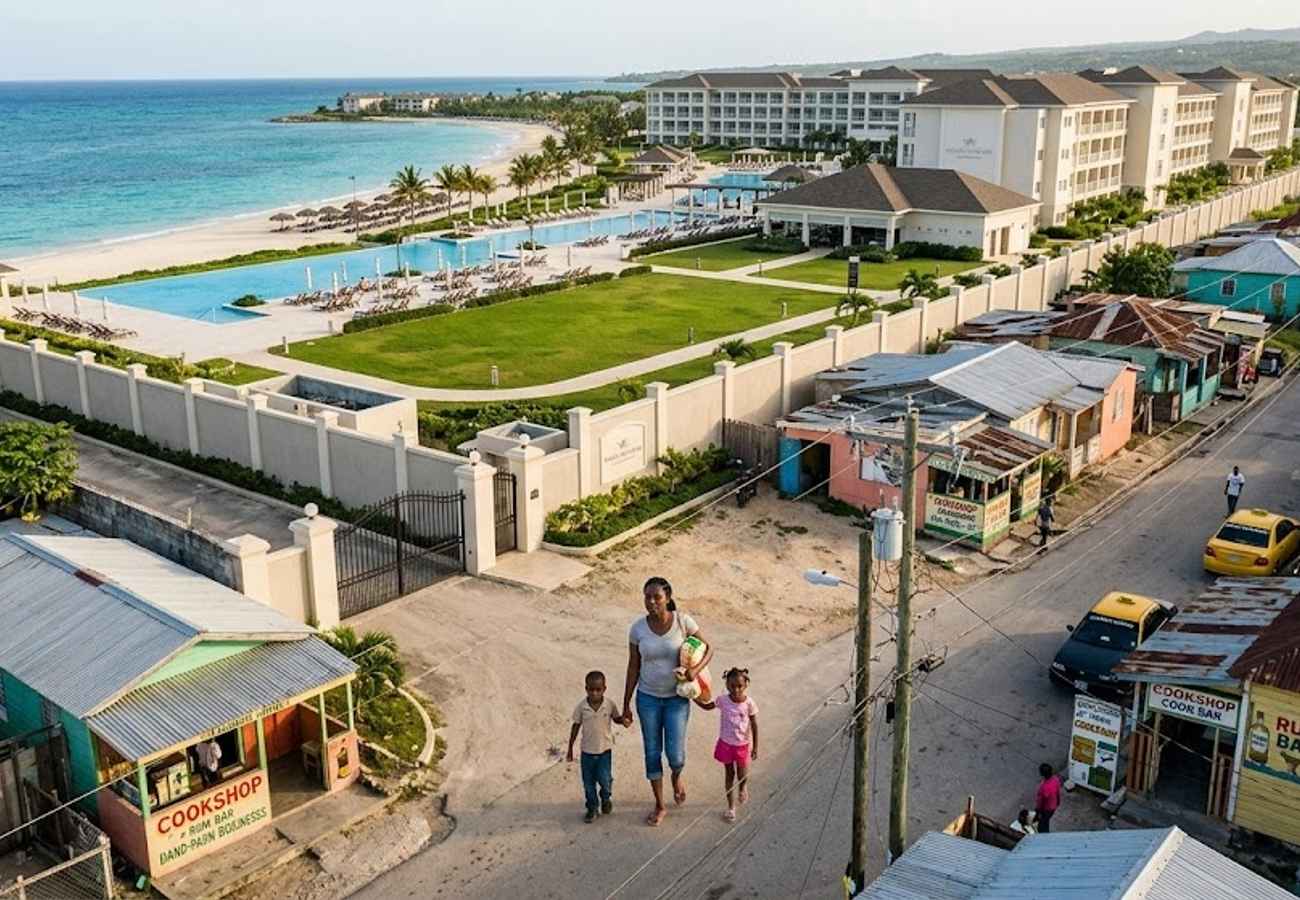
Image generated by AI
Between 50% and 60% of a traveler's total expenditure in Jamaica is often captured by international tour operators, airlines, and booking agencies before the visitor even touches down on the island. This financial interception is the first step in a systemic cycle known as "leakage," where the prestige of the destination does not translate into prosperity for the people living within it. While the world sees the vibrant rhythms of reggae and the turquoise waters of Montego Bay, the economic reality is a complex struggle between global hospitality giants and the local families of parishes like St. Elizabeth and St. Ann.
The Architecture of Isolation: Enclave Urbanism
In the primary tourist hubs of Montego Bay, Ocho Rios, Falmouth, and Negril, a phenomenon called enclave urbanism has taken root. The massive, gated all-inclusive resorts are not merely hotels; they are engineered as self-contained miniature cities. These properties provide every conceivable need—from high-end dining and nightlife to wellness spas—all behind high perimeter walls.
For the traveler, this is convenience. For the local economy, it is a blockade. By eliminating the practical necessity for guests to leave the property, these resorts effectively sever the connection between the visitor and the local township. The independent craft artisans in Falmouth and the family-run eateries in Negril are physically and financially sidelined. When a guest spends their entire vacation inside a gated compound, the "out-of-pocket" spending that typically sustains small-scale local entrepreneurs drops to almost zero.
The Agricultural Paradox in St. Elizabeth and Trelawny
One of the most jarring contradictions in Jamaica is the gap between its fertile soil and the food served in its luxury resorts. Despite a rich agricultural heritage, many mega-resorts in Rose Hall and Runaway Bay continue to import vast quantities of poultry, potatoes, and canned goods from overseas.
This is not due to a lack of local produce, but a failure of systemic alignment. International hotel chains demand rigid delivery schedules, massive volumes, and uniform cosmetic standards that small-scale farmers in St. Elizabeth struggle to maintain. Consequently, the Ministry of Tourism data reveals a staggering reality: annual expenditure leakage from imported manufactured items alone exceeds JMD 65.4 billion. This disconnect means that while a guest may believe they are eating "local" fare, the profit for those ingredients is often flowing back to foreign agribusinesses rather than regional agricultural cooperatives.
Capital Flight and the Executive Drain
The drain of wealth extends beyond the plate and into the boardroom. Historically, the Jamaican government utilized the Hotel Incentives Act and the Income Tax Act to lure foreign investment. While these policies successfully brought global brand names to the shores of Montego Bay, they also created a tax-efficient pipeline for foreign equity holders to repatriate net profits, franchise fees, and management royalties to offshore financial centers.
This capital flight is compounded by labor arbitrage in senior management. While the heartbeat of the resorts—the housekeepers, cooks, and bartenders—are almost exclusively local Jamaicans, the executive directorships are frequently held by foreign expatriates. A significant portion of these high-tier salaries is remitted directly to overseas bank accounts, ensuring that the highest-yielding capital never circulates within the domestic economies of Kingston or St. Ann.
The Fight for Retention: The Tourism Linkages Network
To combat this outflow, the Jamaican government has implemented the Tourism Linkages Network, operating under the Tourism Enhancement Fund (TEF). This initiative serves as a strategic bridge, attempting to connect local manufacturers and farmers directly with the procurement directors of major hotel chains.
The goal is a systematic substitution of foreign imports with high-quality domestic goods. By funding agro-processing hubs, the government is helping local farmers meet the stringent packaging and volume requirements of multinational corporations. Furthermore, business incubation programs are helping small enterprises gain the official vendor certifications required to enter the hospitality supply chain. The ultimate target is ambitious: shifting national retention rates so that more than 50% of every visitor dollar remains within the country.
The Macroeconomic Gap: Gross vs. Net
The statistical footprint of Jamaican tourism presents a striking paradox. On paper, the industry is a powerhouse:
- It generates 9.5% of the national GDP.
- It fuels approximately 53% of all foreign exchange inflows.
- Gross international revenues range between 4.3 billion and 4.5 billion US dollars during peak periods.
However, these "gross" figures are deceptive. Because of structural leakage, the actual national retention rate hovers around 40%. This means that more than 2.5 billion US dollars escape the island every year through foreign debt servicing, imported supplies, and offshore profit remissions. The result is a system where record-breaking visitor numbers do not necessarily build long-term, self-sustaining financial reserves for the broader Jamaican population.
Visitor Insider Tips
For the traveler who wants to ensure their money actually reaches the community, a shift in strategy is required.
- Break the Enclave: Even if you have an all-inclusive package, dedicate at least two days to "off-property" exploration. Venture into the markets of Falmouth or the street food stalls of Negril.
- Source Local: Seek out "Farm-to-Table" certified eateries. When dining, ask specifically where the produce is sourced; prioritize places that mention St. Elizabeth or Trelawny farmers.
- Support Artisans: Avoid the gift shops inside the resort gates. Instead, visit local craft markets where the money goes directly to the creator rather than a corporate middleman.
- Transport Hacks: Use licensed local taxi cooperatives rather than resort-organized shuttles to ensure a larger portion of the fare stays with the driver.
- Timing Your Visit: To avoid the heaviest crowds and support local businesses during their slower periods, consider visiting during the shoulder seasons (May to June or November to early December).
Cultural and Environmental Context
The tension between mega-resort development and local sustainability is a microcosm of a global struggle. In Jamaica, the environmental cost of importing food is often overlooked; the carbon footprint of shipping poultry and produce from North America to the Caribbean is immense. By shifting toward the Tourism Linkages Network's goals, Jamaica isn't just fighting for economic equity—it is fighting for environmental sanity.
Furthermore, the cultural impact of "enclave urbanism" can lead to a sanitized version of Jamaican culture, where reggae and dancehall are performed as "entertainment" within walls rather than experienced as living expressions of the people in the streets. True cultural tourism requires a movement away from the gated perimeter and toward an integrated experience where the visitor is a guest of the community, not just a customer of a corporation.
FAQ: Visiting Jamaica 2026
What is the best time to visit Jamaica? The peak season is December to April, but for a more authentic experience with fewer crowds, visit during the shoulder months of May, June, or November. Be mindful that hurricane season typically runs from June to November.
Do I need a visa to enter Jamaica? Visa requirements depend on your nationality. Citizens of the US, UK, Canada, and many EU countries typically do not need a visa for short-term tourist stays. Always check the official Jamaican Consulate for current regulations.
How do I get to Ocho Rios from Montego Bay? The most common method is via a licensed taxi or private shuttle, taking approximately 1.5 to 2 hours. For a more local experience, look into regional bus services, though these require more navigation.
Is it safe for solo travelers? Yes, provided you exercise standard precautions. Staying in reputable areas, using licensed transportation, and avoiding isolated areas after dark is advised. Local communities are generally welcoming to those who show respect for the culture.
Travel is only as enriching as the impact it leaves behind.
Related Travel Guides
Disclaimer
This article is for informational and educational purposes only. It does not constitute legal, financial, or professional advice. While we strive to provide accurate and up-to-date information, travel policies, regulations, and conditions change rapidly. Always verify information with official sources before making travel decisions. Nomad Lawyer makes no representations about the accuracy, reliability, completeness, or suitability of the information provided. Readers should consult qualified professionals for advice specific to their circumstances. The views expressed in this article are those of the author and do not necessarily reflect the views of Nomad Lawyer.
Raushan Kumar
Founder & Lead Developer
Full-stack developer with 11+ years of experience and a passionate traveller. Raushan built Nomad Lawyer from the ground up with a vision to create the best travel and law experience on the web.
Learn more about our team →