
Jamaica Reclaims National Identity through Architectural Preservation and Adaptive Reuse
Jamaica's historic coastal and urban hubs, from Falmouth to Port Royal, are undergoing structural restorations to drive community-based cultural tourism.
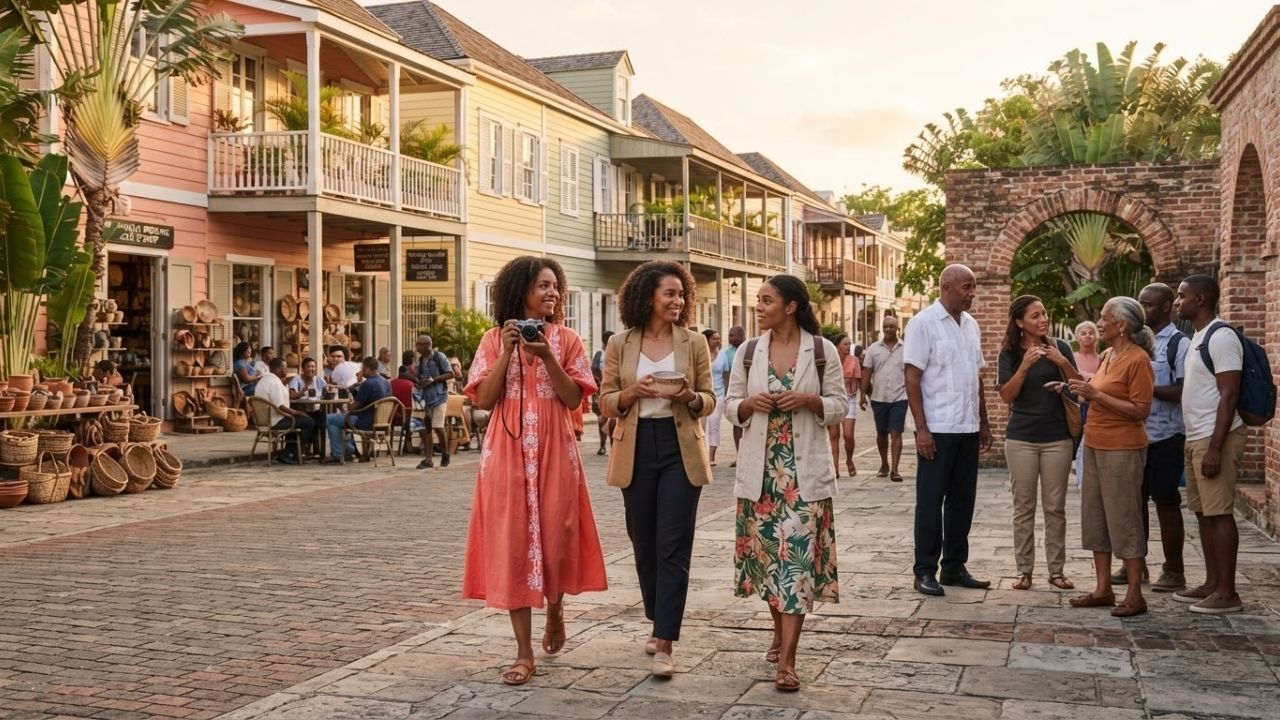
Image generated by AI
A major transition in Jamaica's travel economy was initiated on August 10, 2026, as state-funded heritage schemes began directing visitor fees into restoring historic coastal and urban hubs, creating community-owned businesses outside the traditional resort enclaves.
Falmouth’s Georgian Vernacular and Pedestrian-First Commerce
Located in the coastal parish of Trelawny, Historic Falmouth houses one of the Caribbean’s most intact collections of 18th- and early 19th-century Georgian vernacular architecture. Public-private partnerships led by the Jamaica National Heritage Trust and the Tourism Enhancement Fund are actively restoring historic timber facades, stone-and-brick merchant houses, and civic landmarks like the Falmouth Court House. These structural updates are integrated into pedestrianized walking corridors that connect cruise terminal ports directly with commercial town centers. This urban design encourages onshore heritage spending, ensuring that local artisan vendors and historic shops benefit directly from international cruise passengers.
Beyond facade repairs, the long-term preservation framework focuses on sustainable civic integration and community-led heritage commerce. Local restoration specialists work alongside municipal authorities to ensure that ancient masonry techniques and traditional woodworking styles are maintained. The establishment of dedicated pedestrian zones allows storytellers and local guides to lead educational walking tours without traffic disruptions. Visitors gain an authentic understanding of early trading patterns while supporting small independent businesses operating within these restored historic buildings.
This streetscape revitalization serves as a blueprint for other historic towns across the island. By prioritizing pedestrian access and heritage preservation, Falmouth demonstrates how architectural assets can be leveraged to generate direct economic benefits for resident communities, preventing the leakage of travel revenues.
Port Royal and Kingston Waterfront Renewal
Positioned at the mouth of Kingston Harbour, Historic Port Royal stands as a legendary 17th-century maritime capital famous for its sunken city and preserved military structures like Fort Charles. Modern preservation strategies focus on delicate marine archaeological conservation alongside the structural stabilization of surviving terrestrial brick fortifications and naval facilities. Development plans carefully balance low-impact port facilities with educational museum trails and maritime research hubs that interpret the catastrophic 1692 earthquake. By controlling visitor density and offering specialized guided walking tours, authorities protect delicate submerged ruins while showcasing rich maritime heritage to global travelers.
Directly across the harbor, the Downtown Kingston Waterfront is undergoing urban renewal driven by streetscape paving, facade restoration, and public art initiatives like the Water Lane murals. Designated as a UNESCO Creative City of Music, the capital blends late 19th-century brick arcades and neoclassical civic buildings with street performance venues. Integrating music, art, and urban architecture allows Kingston to position itself as a modern cultural capital. Travelers are drawn into community heritage hubs where live Reggae music and historic architecture offer an immersive journey through national history.
This capital transformation relies on strong public-private partnerships that unite local arts initiatives with municipal urban planning. Historic commercial buildings along the waterfront are being adapted into creative incubators, artisanal galleries, and open-air exhibition spaces. Regular cultural festivals and musical performances take place within pedestrianized avenues, breathing fresh economic energy into older commercial zones and demonstrating how urban architectural preservation serves as the physical foundation for a creative economy.
Spanish Town Civic Squares and Seville Heritage Park
As the original Spanish colonial capital known as Santiago de la Vega, Spanish Town Historic Square in St. Catherine houses monuments including the Old King’s House and Rodney’s Memorial. State preservation schemes focus on stabilizing historic brick ruins and restoring colonial civic spaces that represent centuries of administrative and political history. These conservation efforts protect the tangible links between Taino, Spanish, and British imperial eras that formed modern Jamaican society, providing researchers and heritage tourists with an authentic window into early Caribbean history.
Beyond St. Catherine, Seville Heritage Park in St. Ann is critical to the island's archaeological research pipeline. The site contains multi-layered evidence of Taino settlements, early Spanish encounters, and British plantation life. Securing official UNESCO recognition for Seville Heritage Park and the Sunken City of Port Royal is a key priority. Expanding conservation recognition beyond coastal resorts guarantees that inland heritage assets receive international protection and long-term sustainable funding. Feasibility studies are also evaluating how historic Victorian railway networks can be transformed into scenic rail-trails connecting rural communities.
Specialized conservation teams work to prevent structural decay in fragile brick arches and historic stone monuments while maintaining public accessibility. Outbound research corridors are developed in collaboration with international academic institutions to document the multi-layered histories of these sites. Engaging local residents in site management and historical storytelling initiatives ensures that heritage conservation remains a dynamic driver of regional pride and economic growth.
Transit Insider: Regional Culinary Specialties and Maroon Etiquette
For travelers exploring Jamaica's historic and natural reserves, understanding local customs and culinary options enhances the travel experience:
- Maroon Community Etiquette: When visiting the Blue and John Crow Mountains, inscribed in 2015 as a mixed UNESCO World Heritage Site, respect Maroon autonomy. Always hire a local Maroon guide when visiting sacred sites like Nanny Town or hiking the Blue Mountain Peak Trail, and seek permission before recording traditional music.
- Peak Visit Windows: Plan your heritage tours during the shoulder seasons of May or November. These months offer pleasant weather and lower visitor numbers, allowing for unhurried exploration of historic districts in Kingston and Trelawny.
- Culinary Specialties: Skip the resort buffets and enjoy authentic local dishes. Seek out traditional jerk chicken or pork smoked over pimento wood, or sample the national dish of Ackee and Saltfish. Visit Devon House in Kingston to try their famous local ice cream flavors.
- Supporting Local Craftsmen: Purchase handmade crafts, such as carved wood items or hand-woven baskets, directly from certified local artisans in the restored brick arcades rather than international souvenir shops.
Adaptive Reuse and the Outlook for Sustainable Tourism
Adaptive reuse serves as the primary operational tool to ensure that national historic monuments achieve financial self-sustainability without relying entirely on government subsidies. The celebrated Devon House in Kingston, built in 1881 by Jamaica’s first Black millionaire, George Stiebel, operates as a thriving gastronomic park and boutique retail hub. Commercial rental yields from artisanal shops and restaurants directly fund the ongoing physical maintenance of the historic Great House and surrounding gardens.
Similarly, historic civic buildings across Kingston and Portland are increasingly converted into boutique heritage cafes, creative exhibition spaces, and public bathhouses like Rockfort Spa. Strict architectural guidelines ensure that commercial adaptations preserve original floor plans, historic timber framing, and decorative brickwork. This method successfully converts delicate historic monuments into active community hubs that generate reliable income for structural maintenance.
Ultimately, community-based heritage tourism ensures that financial rewards are distributed equitably while safeguarding living cultural traditions. Empowering local communities to direct their own tourism narrative creates an authentic visitor experience that cannot be replicated by traditional resort packages. By choosing community-focused travel options, visitors play a direct role in securing Jamaica's economic future and preserving its rich cultural identity.
FAQ: Jamaica Heritage Tourism 2026
What is adaptive reuse, and how is it used in Jamaica?
Adaptive reuse involves repurposing historic structures for modern commercial or public use. In Jamaica, sites like Devon House are converted into retail and dining parks, using rental yields to fund structural maintenance.
Why is Falmouth significant to Jamaica's architectural heritage?
Falmouth possesses one of the Caribbean’s most intact collections of 18th- and early 19th-century Georgian vernacular architecture, which is actively preserved through public-private partnerships.
How can travelers support local communities while visiting Jamaica's UNESCO sites?
Travelers can support local communities by hiring indigenous Maroon guides in the Blue Mountains, purchasing crafts directly from local artisans, and staying in locally-owned guesthouses.
Related Travel Guides
Qatar Airways Issues Scam Alert to Warn Passengers Against Fraudulent Accounts
Colombia Magnitude 6.8 Earthquake Shakes Western Region and Triggers Travel Safety Checks
Jamaica National Heritage Trust Outlines Restoration Plans for Victorian Railway Networks
Disclaimer
This article is for informational and educational purposes only. It does not constitute legal, financial, or professional advice. While we strive to provide accurate and up-to-date information, travel policies, regulations, and conditions change rapidly. Always verify information with official sources before making travel decisions. Nomad Lawyer makes no representations about the accuracy, reliability, completeness, or suitability of the information provided. Readers should consult qualified professionals for advice specific to their circumstances. The views expressed in this article are those of the author and do not necessarily reflect the views of Nomad Lawyer.