
Colombia Magnitude 6.8 Earthquake Shakes Western Region and Triggers Travel Safety Checks
A powerful magnitude 6.8 earthquake struck Colombia's western Chocó department, felt across Bogotá, Medellín, and Cali, raising travel safety concerns.
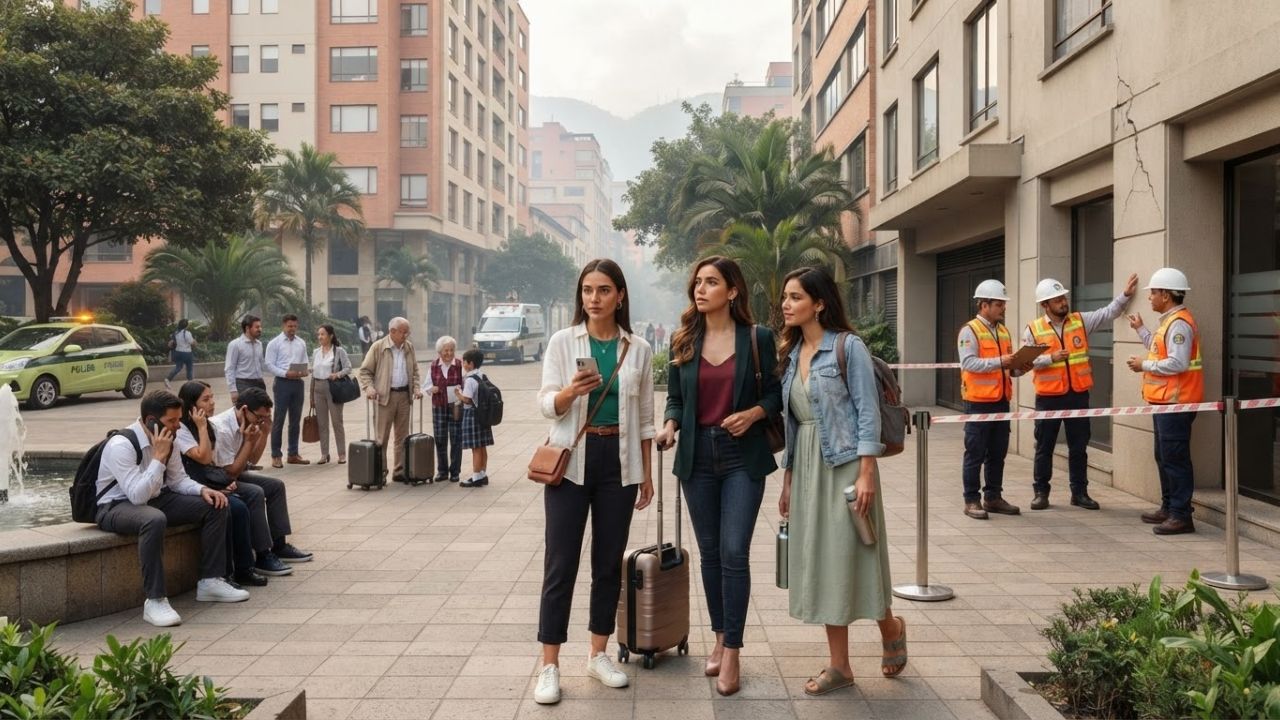
Image generated by AI
A powerful magnitude 6.8 earthquake struck western Colombia on August 10, 2026, shaking major cities including Bogotá, Medellín, and Cali, and prompting emergency inspections of tourist infrastructure and transport hubs.
Strong Tremors Shake Western Colombia and Major Cities
A significant seismic event occurred along Colombia’s Pacific coast, with the strongest shaking recorded near the western Chocó department. The earthquake was measured at magnitude 6.8 by monitoring agencies, including the European Mediterranean Seismological Center (EMSC), which initially registered a higher reading before refining the data. The tremor originated at a depth of approximately 115 kilometers beneath the Earth’s surface, which allowed the energy to distribute over a wider area. Deep earthquakes often travel long distances through the Earth's interior, causing noticeable shaking far from the epicenter.
Residents and international visitors in several major urban centers reported feeling the ground move. In Bogotá, the nation's capital and a primary gateway for arrivals, high-rise buildings swayed, creating panic among residents and hotel guests. Precautionary building checks were quickly initiated by emergency services. In Medellín and Cali, the ground movement was also noticeably felt, putting commercial sectors and hospitality providers on high alert. The municipal transit networks in these metropolitan zones were briefly monitored for track alignments and structural safety, though operations resumed swiftly.
Despite the distance from the epicenter, the shaking in metropolitan centers highlighted the importance of structural safety and emergency protocols. Emergency personnel in Bogotá monitored municipal reports across multiple neighborhoods, confirming that transit networks and critical services remained operational. For travelers, regional transport hubs and tourist facilities are under continuous monitoring as authorities verify that no structural hazards exist. This event served as a major reminder for hotel operators to review their evacuation procedures.
Structural Assessments and Emergency Response in Chocó
The western Chocó department, closer to the epicenter, experienced the strongest impact. Local emergency teams reported injuries and building damage in the region, which is historically vulnerable due to geographical isolation and infrastructure challenges. Responders were deployed to rural and municipal communities to inspect damaged residential areas, public facilities, and regional roads. Emergency command centers were established to coordinate regional rescue efforts and inspect public assets.
The coordinated response involves local municipalities, emergency services, and the Unidad Nacional para la Gestión del Riesgo de Desastres (UNGRD). Teams are prioritizing checks on essential utility lines, such as water and electricity, to ensure that remote communities do not face prolonged service cuts. Because Chocó is characterized by dense rainforest and mountainous corridors, accessing remote areas to confirm structural safety requires careful logistical planning. The response teams have mobilized regional transportation resources to reach isolated towns.
Travelers visiting nature reserves or coastal eco-lodges in the Pacific region are advised to maintain communication with their tour operators. Since aftershocks commonly follow large seismic events, travelers should avoid entering older or visibly damaged structures. Local authorities warn that aftershocks can cause additional damage to weakened structures and trigger minor landslides along rural road networks. Visitors should stay within designated safe zones recommended by regional parks.
Tectonic Complexity of the Colombian Andes
The recent earthquake highlights Colombia’s vulnerability to seismic events due to its position near multiple active tectonic plate boundaries. The country lies in a complex geological zone influenced by the interaction of the Nazca Plate, the Caribbean Plate, and the South American Plate. Along the western coastline, the Nazca Plate subducts beneath the South American Plate, accumulating pressure that is periodically released as earthquakes. These intersecting boundaries make the Andes region seismically active.
Historically, this subduction zone has generated powerful tremors that have impacted the Colombian Andes. According to the Servicio Geológico Colombiano (SGC), monitoring these plates is essential for long-term hazard mitigation and urban planning. Building codes in cities like Medellín and Bogotá have been updated to ensure that modern hotel infrastructure and public buildings can withstand deep seismic movements. This geological framework helps engineers design structures capable of handling high-stress shifts.
Understanding this tectonic setting is key for the travel industry. By supporting seismological research and training hotel staff on evacuation protocols, the tourism sector helps protect visitors. While the country's diverse topography attracts millions of visitors annually, building resilience against natural hazards ensures that tourism remains a safe and sustainable driver of local economies. This proactive stance helps maintain visitor confidence.
Essential Seismic Safety Strategy: Plazas, Dining, and Evacuation
For international travelers visiting Colombia, being prepared for unexpected natural events is an important part of journey planning. The following regional safety guidelines help ensure a safe visit:
- Identify Open Plazas: Familiarize yourself with nearby open spaces. In Bogotá, historical squares like the Plaza de Bolívar or open green spaces like Parque Metropolitano Simón Bolívar offer safe assembly zones. In Medellín, seek out parks like Parque El Poblado or regional open spaces.
- Peak Visit Windows: Travel is most comfortable during the dry seasons from December to March and July to August. These windows reduce the risk of seasonal rain-induced landslides along mountainous roads, which can be triggered by minor tremors.
- Evacuation Protocol: If inside a hotel or restaurant, locate emergency exits immediately upon arrival. During tremors, follow the standard "Drop, Cover, and Hold On" advice, and wait for the shaking to stop before attempting to exit using stairs, never elevators.
- Local Culinary Specialties: While transiting safely, support local food producers. Try Ajiaco, a traditional chicken and potato soup cooked with local corn and guascas herbs in Bogotá, or Bandeja Paisa, a hearty local platter, when visiting Medellín.
- Emergency Apps: Download official alert apps provided by regional disaster management teams to receive real-time updates regarding safety advisories.
Tourism Outlook and Infrastructure Resilience in Colombia
Colombia remains a highly sought-after destination, celebrated for its colonial cities, Pacific ecosystems, and cultural heritage. The travel sector has developed emergency response protocols to manage natural events with minimal disruption. In major tourist areas, hotels, transport operators, and municipal offices coordinate closely to share safety updates and assist visitors.
The long-term impact of this earthquake will focus on upgrading infrastructure in vulnerable regions like Chocó. By improving road connectivity and building materials in rural areas, the government aims to protect communities and tourist corridors alike. Ensuring that local guesthouse owners and guides can operate safely supports regional economies that rely on adventure and eco-tourism.
Ultimately, maintaining traveler confidence depends on transparent communication. By following official emergency channels and respecting local safety directives, international visitors can explore Colombia’s rich heritage with confidence, supporting sustainable local development throughout their journey.
FAQ: Colombia Seismic Safety 2026
What was the magnitude and depth of the Colombia earthquake in August 2026?
The earthquake was recorded at magnitude 6.8 with a depth of approximately 115 kilometers, centered near the western Chocó department along the Pacific coast.
Were major tourist destinations like Bogotá, Medellín, and Cali affected?
Noticeable tremors were felt in Bogotá, Medellín, and Cali. Emergency services conducted precautionary building and infrastructure inspections, and operations remained normal.
How can travelers stay updated on emergency advisories in Colombia?
Travelers should monitor official channels from the Servicio Geológico Colombiano (SGC) and the Unidad Nacional para la Gestión del Riesgo de Desastres (UNGRD) for real-time safety updates.
Related Travel Guides
Qatar Airways Issues Scam Alert to Warn Passengers Against Fraudulent Accounts
Aleppo Airport Record Traffic Anchors Syria’s Aviation Recovery Surge
Disclaimer
This article is for informational and educational purposes only. It does not constitute legal, financial, or professional advice. While we strive to provide accurate and up-to-date information, travel policies, regulations, and conditions change rapidly. Always verify information with official sources before making travel decisions. Nomad Lawyer makes no representations about the accuracy, reliability, completeness, or suitability of the information provided. Readers should consult qualified professionals for advice specific to their circumstances. The views expressed in this article are those of the author and do not necessarily reflect the views of Nomad Lawyer.