
Italy Restores 515 BC Euphronios Krater to Cerveteri Museum as Regional Rail Infrastructure Expands Etruscan Cultural Tourism
The return of the 515 BC Euphronios Krater to Cerveteri anchors Italy's heritage revival as Trenitalia regional transit expands cultural access.

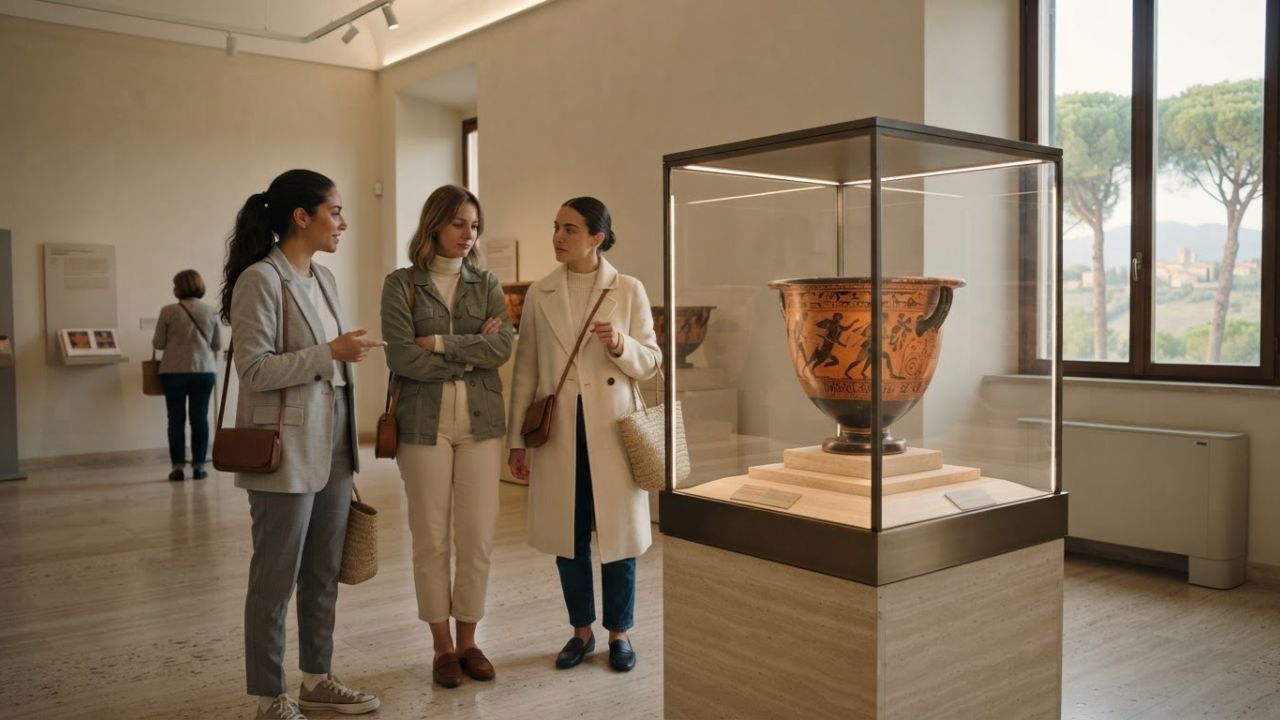
Image generated by AI
The permanent repatriation of the Euphronios Krater—a masterwork created around 515 BC—to the National Archaeological Museum of Cerveteri marks a central milestone in Italy's heritage preservation and regional tourism strategy. Crafted by ancient Greek potter Euxitheos and painter Euphronios, the red-figure vessel is driving increased interest in Etruscan history across Lazio's rail corridors.
Illegally looted from an Etruscan tomb near Cerveteri in 1971, the krater was acquired by the Metropolitan Museum of Art in New York in 1972. Following diplomatic agreements reached in 2006, ownership transferred to the Italian state, culminating in the artifact's physical return in 2008. After initial exhibition at Rome's Villa Giulia Museum, the vessel was permanently housed at Cerveteri, linking the ancient artwork directly to its historical discovery environment.
Restitution Governance and Mediterranean Cultural Exchange
The repatriation framework executed between the Italian Ministry of Culture (Ministero della Cultura) and international museums established a precedent for global heritage restitution. Depicting the death of Sarpedon from Greek mythology, the vessel illustrates ancient trade networks between Greece and Etruscan settlements. Etruscan elites imported Attic pottery across Mediterranean maritime routes, embedding these objects into specialized burial practices.
Connecting recovered artifacts with regional sites outside major metropolitan centers like Rome, Florence, and Venice diverts visitor density toward regional communities. The National Archaeological Museum of Cerveteri (Museo Nazionale Cerite), housed within the 16th-century Ruspoli Castle, provides contextual interpretation connecting the krater to nearby UNESCO World Heritage sites.
Transit Schedule & Heritage Specifications
The structured breakdown below outlines key transit corridors, rail infrastructure, museum access parameters, and historical timelines connecting Rome to Cerveteri:
| Transit / Artifact Parameter | Operating Entity / Institution | Entry Node / Origin | Destination Node | Access Window / Timeline | Historical & Operational Metrics |
|---|---|---|---|---|---|
| Regional Rail Corridor | Trenitalia (FL5 Line) | Roma Termini / Roma Ostiense | Ladispoli-Cerveteri Station | Daily (Frequency: ~30 mins) | Transit time: 40–50 mins; direct link to Lazio coast |
| Local Transit Shuttle | Seatour / Local Transport | Ladispoli Rail Station | Cerveteri Historic Center | Daily Schedules | 15-minute connection to Piazza Santa Maria |
| National Museum Display | Museo Nazionale Cerite | Cerveteri Town Center | Ruspoli Castle Gallery | Year-Round | Permanent exhibition site of Euphronios Krater |
| UNESCO Necropolis Link | Local Shuttle / Taxi Line | Cerveteri Center | Banditaccia Necropolis | Daily | 2 km transit to ancient Etruscan tomb complex |
| Restitution Timeline | MiC / Metropolitan Museum | New York (MET) | Villa Giulia → Cerveteri | 1971 Looted, 1972 MET, 2006 Agreement, 2008 Return | Historic bilateral heritage restitution milestone |
Comprehensive Traveler Logistics Guide
Exploring Cerveteri's Etruscan heritage requires coordinating regional rail connections from Rome with local shuttle networks and museum entry schedules.
Rail Transport from Rome to Cerveteri
Travelers depart Rome via Trenitalia FL5 regional rail line departing from Roma Termini, Roma Tuscolana, or Roma Ostiense stations. Trains run approximately every 30 minutes bound for Civitavecchia or Pisa. Passengers disembark at Ladispoli-Cerveteri Station after a 40 to 50-minute journey. Standard regional rail tickets must be validated at station machines prior to boarding.
Connecting Bus Services to Historic Center and Necropolis
From Ladispoli-Cerveteri Station, local feeder buses operated by local transit routes connect directly to Cerveteri’s main square, Piazza Santa Maria, in 15 minutes. To visit the Banditaccia Etruscan Necropolis—a vast 400-hectare UNESCO World Heritage burial complex situated 2 kilometers outside the town center—travelers can take the dedicated municipal shuttle or arrange local taxi transport. Walking trails also link the town center to the necropolis area.
Museum Ticketing and Integrated Passes
The National Archaeological Museum of Cerveteri located in Piazza Santa Maria houses the Euphronios Krater alongside local Etruscan terra-cotta sarcophagi and gold jewelry. Combined entrance passes covering both the National Archaeological Museum and the Banditaccia Necropolis are available at ticket counters, offering discounted admission for combined single-day visits.
Regional Infrastructure and Cultural Tourism Impact
Relocating high-profile returned antiquities to regional origin sites strengthens local economies across Lazio. Decentralizing tourism away from congested urban centers in Rome encourages extended stays along the Tyrrhenian coast, supporting local hospitality, dining, and transit operators.
The integration of the Euphronios Krater into Cerveteri's museum network demonstrates how heritage protection directly stimulates sustainable travel. By pairing museum collections with physical archaeological sites like the Banditaccia Necropolis, Italy offers visitors an integrated historical experience anchored in authentic regional surroundings.
Frequently Asked Questions
What is the historical significance of the Euphronios Krater returned to Cerveteri?
Created around 515 BC by Greek artists Euxitheos and Euphronios, the red-figure krater depicts the death of Sarpedon and highlights ancient trade exchanges between Greece and the Etruscan civilization in Cerveteri.
How do travelers travel from Rome to Cerveteri by public transit?
Travelers take the Trenitalia FL5 regional train from Roma Termini or Roma Ostiense to Ladispoli-Cerveteri Station (40–50 minutes), followed by a 15-minute local bus connection to Cerveteri's historic center.
Where is the Euphronios Krater currently exhibited?
After returning to Italy in 2008 and initial display at Rome's Villa Giulia Museum, the Euphronios Krater is permanently exhibited at the National Archaeological Museum of Cerveteri (Museo Nazionale Cerite) in Cerveteri.
Can visitors tour both the museum and the Etruscan Necropolis on the same day?
Yes, combined admission tickets permit access to both the National Archaeological Museum of Cerveteri in the town center and the nearby UNESCO World Heritage Banditaccia Necropolis.
Related Travel Guides
Italy Regional Rail Network and Trenitalia FL5 Passenger Transit Guide 2026
10 Best Etruscan Heritage Sites and Archaeological Parks in Central Italy
Disclaimer
This article is for informational and educational purposes only. It does not constitute legal, financial, or professional advice. While we strive to provide accurate and up-to-date information, travel policies, regulations, and conditions change rapidly. Always verify information with official sources before making travel decisions. Nomad Lawyer makes no representations about the accuracy, reliability, completeness, or suitability of the information provided. Readers should consult qualified professionals for advice specific to their circumstances. The views expressed in this article are those of the author and do not necessarily reflect the views of Nomad Lawyer.
Kunal K Choudhary
Co-Founder & Contributor
A passionate traveller and tech enthusiast. Kunal contributes to the vision and growth of Nomad Lawyer, bringing fresh perspectives and driving the community forward.
Learn more about our team →