
Italy Leads Heritage Grain Revolution Preserving Ancient Wheats and Wild Yeast Baking
Culinary tourism is shifting toward heritage grain trails, linking Sicily's antique durum wheats with sourdough and flatbread traditions in Ethiopia, Armenia, and Denmark.

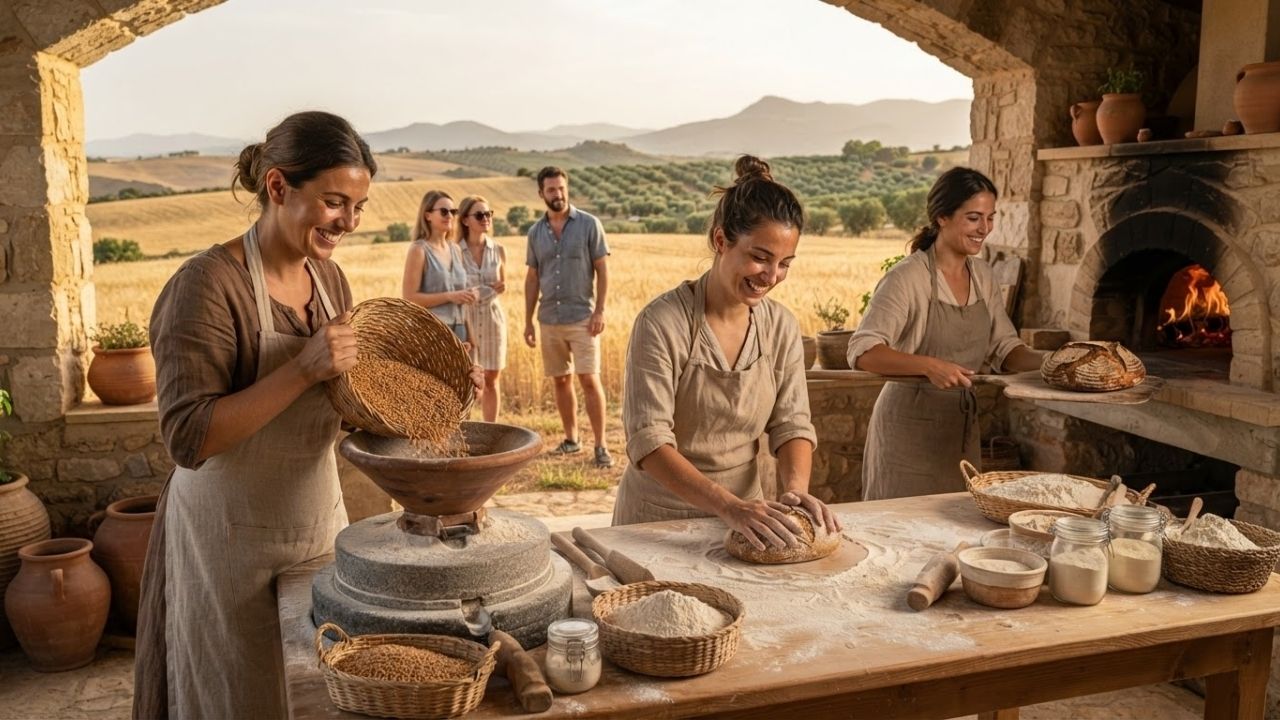
Image generated by AI
Italy is at the forefront of a global culinary movement as travelers trade commercial supermarket bread for heritage grain trails and wild yeast baking. By preserving antique wheat varieties and stone milling techniques, destination regions across Italy, Ethiopia, Armenia, and Denmark are transforming culinary travel.
Sicily Revitalizes Antique Durum Wheats: Timilia and Russello
[ROME, Italy] — Culinary travel is experiencing a profound pivot away from mass-market gastronomy toward agrarian authenticity. In Southern Italy, agricultural visionaries and artisan bakers across Sicily are leading a renaissance in antique durum wheat varieties that once sustained Mediterranean populations.
Rather than relying on high-yield industrial wheat, Sicilian farmers are actively cultivating drought-resistant heirloom grains:
- Timilia & Russello Varieties: Ancient durum wheats known for deep, nutty aromas, rich mineral content, and low glycemic impact.
- Low-RPM Stone Milling: Local micro-mills grind whole grains at low speeds to preserve essential oils and wheat germ nutrients.
- Wild Yeast Sourdough Fermentation: Bakers utilize long, natural fermentation processes that break down complex proteins, creating digestible, crusty sourdough loaves.
Visitors exploring Sicilian farming regions participate in stone milling demonstrations and wood-fired baking workshops, experiencing how regenerative agriculture safeguards crop biodiversity.
Ethiopia's Teff Ersho Fermentation and Armenia's Subterranean Tonir Lavash
The global interest in heritage baking extends to ancient grain routes across East Africa and the Caucasus:
Ethiopia: Teff Grain and Multi-Day Injera Fermentation
In the Ethiopian Highlands, communities preserve an unbroken agricultural tradition centered on teff, a tiny, nutrient-dense, gluten-free grain. Converting teff into spongy injera flatbread requires a multi-day natural fermentation process driven by wild starter cultures called ersho. Travelers participate in communal baking circles, pouring fermented batter onto blistering clay griddles called mitads.
Armenia: Subterranean Tonir Lavash Baking
Armenia maintains an ancient baking ritual officially recognized as a UNESCO Intangible Cultural Heritage treasure. Networks of women gather in village courtyards to stretch simple dough over padded cushions before slapping it against the radiant clay walls of subterranean ovens known as tonirs. This technique bakes paper-thin sheets of lavash flatbread in seconds, which are dried for long-term storage and rehydrated during daily meals.
Nordic Regenerative Agriculture: Danish Einkorn and Wild Sourdough
In Northern Europe, Scandinavian bakers are merging environmental conservation with wild grain foraging:
- Heirloom Scandinavian Cereals: Denmark’s experimental bakeries utilize ancient cereals including einkorn, spelt, and traditional rye grown as cover crops to restore soil health.
- Cold Bulk Fermentation: Micro-bakeries harvest local wild yeasts to drive multi-day cold fermentations, producing dense, caramelized rugbrød loaves.
- Soil Health Focus: Grain production is integrated into circular food economies that protect local watersheds and eliminate synthetic fertilizers.
The table below outlines key countries, featured ancient grains, technical baking methods, and regional cultural highlights:
| Country / Region | Featured Ancient Grain / Cereal | Technical Milling & Baking Method | Core Cultural Highlight |
|---|---|---|---|
| Italy (Sicily) | Antique wheats (Timilia, Russello) | Low-RPM stone milling & wood-fired sourdough | Regenerative farming & rustic bread workshops |
| Ethiopia (Highlands) | Teff (tiny gluten-free grain) | Multi-day ersho fermentation on clay mitads | Communal injera flatbread baking circles |
| Armenia | Local wheat & spring water dough | Subterranean clay tonir oven baking | UNESCO Intangible Cultural Heritage lavash |
| Denmark (Scandinavia) | Einkorn, spelt & heritage rye | Wild yeast foraging & long cold fermentation | Organic rugbrød loaves & soil restoration |
Why This Matters for Passengers and Culinary Explorers
For food-focused travelers, following a heritage grain trail offers a delicious and educational alternative to standardized restaurant dining. Participating in a sourdough workshop in Sicily, watching injera fermentation in Ethiopia, or experiencing lavash baking in Armenia allows travelers to understand the deep connection between living soil, wild yeast microbiology, and human culture. Choosing stone-milled ancient grains supports local farmers who preserve genetic crop diversity.
Frequently Asked Questions
What are heritage grain trails in culinary tourism?
Heritage grain trails are travel itineraries focused on visiting organic farms, stone micro-mills, and traditional bakeries that cultivate and bake with ancient wheat varieties, teff, and heritage rye using wild yeast sourdough fermentation.
What makes Sicilian Timilia and Russello wheats unique?
Timilia and Russello are ancient durum wheat varieties native to Sicily. They are drought-resistant, highly aromatic, rich in minerals, and traditional low-RPM stone milling preserves their natural nutrients and flavors.
Which global baking traditions are recognized by UNESCO?
Armenia's traditional subterranean lavash flatbread baking in clay tonir ovens is officially recognized as a UNESCO Intangible Cultural Heritage practice.
Related Travel Guides
Sicily Complete Food and Vineyard Itinerary Guide
Ethiopia Cultural Heritage and Highland Travel Guide
10 Best Culinary Tourism Destinations in Europe, According to Reddit
Disclaimer
This article is for informational and educational purposes only. It does not constitute legal, financial, or professional advice. While we strive to provide accurate and up-to-date information, travel policies, regulations, and conditions change rapidly. Always verify information with official sources before making travel decisions. Nomad Lawyer makes no representations about the accuracy, reliability, completeness, or suitability of the information provided. Readers should consult qualified professionals for advice specific to their circumstances. The views expressed in this article are those of the author and do not necessarily reflect the views of Nomad Lawyer.
Raushan Kumar
Founder & Lead Developer
Full-stack developer with 11+ years of experience and a passionate traveller. Raushan built Nomad Lawyer from the ground up with a vision to create the best travel and law experience on the web.
Learn more about our team →