
Israel Launches $10 Billion Infra II Tender for Tel Aviv Driverless Metro System in 2026
Israel initiates a $10 billion tender for the Tel Aviv Metro's driverless technology, marking a critical phase in a $60 billion urban transport project designed for 600 million annual trips.
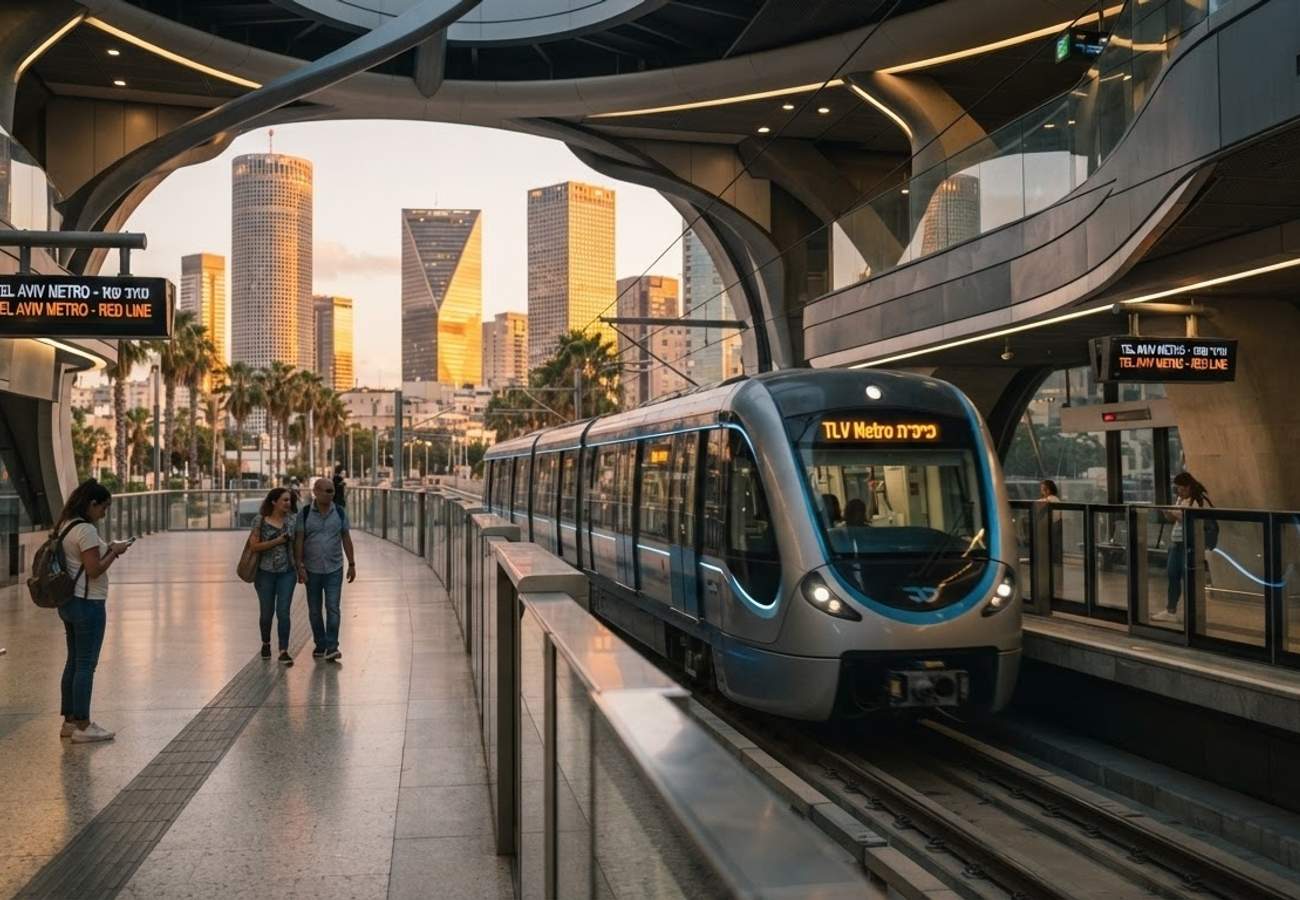
Image generated by AI
Israel has officially entered the technology phase of its largest-ever urban transport initiative. The NTA Metropolitan Mass Transit System Ltd. began the pre-qualification process on 25 August 2026 for the $10-billion Infra II tender, focusing on driverless rail technology and advanced control systems.
The Scale of the Tel Aviv Metro Project
The Tel Aviv Metro is a national-scale infrastructure undertaking with a total valuation of approximately $60 billion. The project is designed to fundamentally alter mobility for residents and international visitors within the Tel Aviv metropolitan region.
The planned network consists of three interconnected metro lines spanning roughly 150 kilometres. This expansive grid will feature 109 underground stations, creating a high-capacity transit backbone for the region.
Our analysis of the project specifications indicates that the network is engineered to accommodate 600 million passenger trips annually, with a daily capacity of approximately 2 million passengers once fully operational.
Infra II Tender: Transitioning from Concrete to Code
While previous phases focused on the physical excavation of tunnels and station shells, the Infra II tender marks a shift toward the digital and mechanical systems required for operation.
The selected contractors will be responsible for the design, construction, and long-term maintenance of the following critical components:
- Rolling Stock: Fully automated, driverless metro trains.
- Control Systems: Automated train control (ATC) and railway signalling.
- Power Infrastructure: Electrification and electrical power systems.
- Integration: System-wide verification and network integration technology.
- Security: Cybersecurity and information protection systems to defend against digital threats.
- Station Systems: Advanced underground station management technology.
Technical Specifications: GOA4 Automation
The Tel Aviv Metro will operate at Grade of Automation 4 (GOA4), the highest global standard for railway automation. This means trains will operate entirely without onboard drivers, relying on a continuous communication loop between the trains, control centers, and safety networks.
Flight and transit tracking logic suggests that this level of automation allows for unprecedented precision. The system is designed to achieve headways of just 90 seconds between trains during peak operational hours.
Global Comparison of GOA4 Systems
| Metro System | Country | Automation Level | Key Feature |
|---|---|---|---|
| Tel Aviv Metro | Israel | GOA4 (Planned) | Fully automated national-scale network |
| Singapore MRT | Singapore | GOA4 | One of the world's largest automated systems |
| Dubai Metro | UAE | GOA4 | Fully driverless urban rail network |
| Vancouver SkyTrain | Canada | GOA4 | Long-running automated rapid transit |
| Paris Metro Line 14 | France | GOA4 | High-capacity automated urban transport |
Passenger Advisory: Impact on Travel and Rights
For the international traveler and business commuter, this shift represents a transition from road-dependent transit to a predictable, software-driven ecosystem.
For the affected passenger, this means:
- Reduced Transit Friction: Direct, high-frequency links between hotels, business districts, and major entertainment zones.
- Enhanced Airport Connectivity: A reduction in reliance on taxis and ride-sharing for regional mobility.
- Predictable Scheduling: The 90-second peak frequency minimizes wait times and reduces the risk of terminal overcrowding.
Rights and Rebooking Guidance: While this is a new infrastructure project, passengers using integrated transit tickets (combining rail and air) should be aware that delays in mass transit systems can impact flight connections. Under most aviation frameworks, such as EU261/2004 (for applicable carriers), delays caused by "extraordinary circumstances" or third-party transit failures may not entitle passengers to monetary compensation. However, we advise passengers to maintain comprehensive travel insurance that covers "missed connections" specifically due to urban transit disruptions.
Industry Analyst View: Beyond Commuting
From an analyst perspective, the Tel Aviv Metro is not merely a commuter tool; it is a tourism gateway. By removing the logistical barriers of road congestion, Israel is positioning Tel Aviv as a more accessible hub for international business and leisure.
The decision to implement GOA4 from the outset—rather than upgrading an existing legacy system—gives Tel Aviv a competitive advantage in operational efficiency and cybersecurity. However, the heavy reliance on connected digital platforms introduces a systemic vulnerability to cyber-attacks, making the "Information Protection" aspect of the Infra II tender the most critical component for long-term stability.
The economic ripple effect is expected to drive significant property development and commercial investment around the 109 planned station hubs, effectively decentralizing the city's economic core.
A software-driven network is replacing the mechanical commute in Israel's commercial heart.
Related Travel Guides
Disclaimer
This article is for informational and educational purposes only. It does not constitute legal, financial, or professional advice. While we strive to provide accurate and up-to-date information, travel policies, regulations, and conditions change rapidly. Always verify information with official sources before making travel decisions. Nomad Lawyer makes no representations about the accuracy, reliability, completeness, or suitability of the information provided. Readers should consult qualified professionals for advice specific to their circumstances. The views expressed in this article are those of the author and do not necessarily reflect the views of Nomad Lawyer.