
Ireland Travel Boom: Wild Atlantic Way Transforms Coastal Journey Into Global Adventure Route
Ireland Travel Boom: Wild Atlantic Way Transforms Coastal Journey Into Global Adventure Route

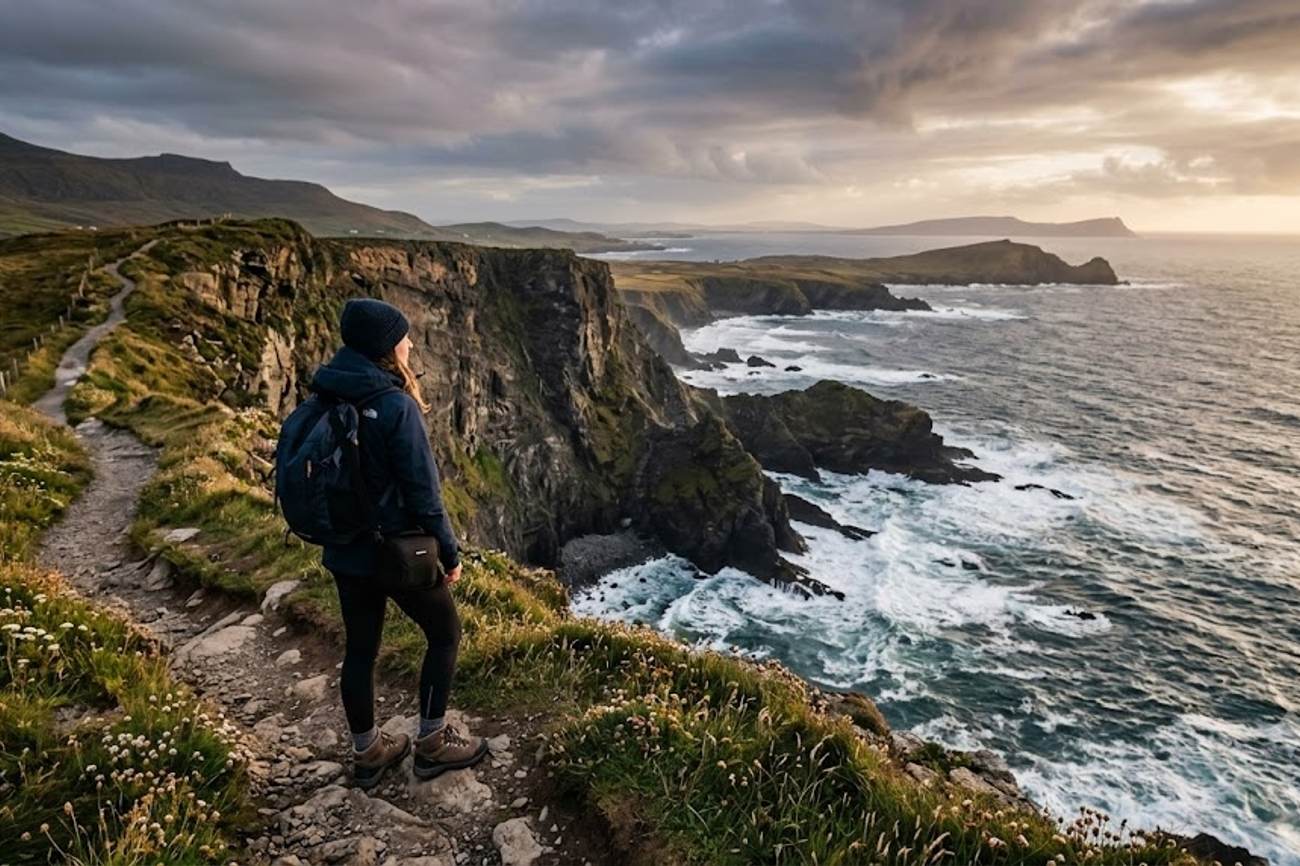
Image generated by AI
2,500 kilometres of coastal infrastructure now serve as the backbone for Ireland's strategic pivot toward "slow travel," moving the economic center of gravity away from urban hubs toward the western periphery. This massive corridor, stretching from Malin Head in County Donegal to Kinsale in County Cork, is no longer just a scenic drive but a calculated economic engine designed to distribute tourism revenue across nine distinct counties. By integrating prehistoric archaeology with modern sustainable infrastructure, the Irish state is attempting to solve a perennial tourism problem: the over-concentration of visitors in a few "bucket list" locations.
The Geopolitics of the Western Coastline
The Wild Atlantic Way is not a single destination but a curated network of experiences spanning Donegal, Sligo, Leitrim, Mayo, Galway, Clare, Limerick, Kerry, and Cork. From a logistical standpoint, the route functions as a decentralized tourism zone. The objective is to transition the traveler from a "sightseer"—someone who visits a landmark and leaves—to a "resident traveler" who spends multiple days in a single village.
This shift is supported by a move toward immersive journeys. Rather than focusing on a checklist of monuments, the route emphasizes traditional music sessions, artisan producers, and small coastal towns. This is a direct response to a global market shift where high-net-worth travelers are increasingly eschewing rushed itineraries in favor of deeper cultural integration. For the Irish government, this means higher per-visitor spend and a reduction in the seasonal volatility that typically plagues coastal economies.
Capital Injection and Infrastructure Scaling
The Irish government is utilizing targeted capital investments to ensure that the increase in visitor volume does not degrade the natural assets that make the region attractive. A primary example is the Shared Island Coast-to-Coast Capital Investment Scheme, which in 2026 allocated €2.7 million toward 13 specific tourism projects. These funds are not merely for aesthetics; they are earmarked for digital interpretation, improved physical access, and visitor facilities that can handle increased capacity without compromising the environment.
The strategy involves creating "anchor attractions" that pull visitors into rural areas they might otherwise bypass. Two primary examples illustrate this model:
| Site | Location | Investment/Traffic | Primary Objective |
|---|---|---|---|
| Céide Fields | County Mayo | €2.6 million+ | Upgrading Stone Age farming site to drive rural regional growth |
| Dún Aonghasa | Inis Mór (Aran Islands) | 125,000+ annual visitors | Balancing heritage protection with digital visitor interpretation |
By investing over €2.6 million into Céide Fields, the state is leveraging Neolithic archaeology to create a sustainable draw for County Mayo. Similarly, the upgrades at Dún Aonghasa address the friction between high visitor volume—exceeding 125,000 people per year—and the fragility of a prehistoric cliff-top monument.
The Wild Atlantic Way has evolved into a premier global destination, driving significant growth in regional tourism and high-end event bookings. According to Tourism Ireland, the route's strategic development focuses on sustainable growth and enhancing the visitor experience across the rugged western coastline.
Expert Analysis: The Economics of the "Slow Travel" Pivot
For the modern traveler, the transition to a "slow travel" model on the Wild Atlantic Way has direct logistical and financial implications. When the Government of Ireland promotes a 10-to-14-day itinerary over a 3-day whirlwind tour, they are effectively altering the demand curve for local accommodation and services.
The direct consequence for travelers booking this route is a shift in availability. As the route encourages longer stays, the traditional "hotel-hopping" model is being replaced by a demand for boutique guesthouses and immersive rentals. This creates a pricing pressure that favors local, small-scale operators over international hotel chains.
Furthermore, the integration of "active tourism"—cycling, kayaking, and surfing—transforms the route from a passive driving experience into a multi-modal journey. This diversification reduces the reliance on car rentals, which have historically been a bottleneck for Irish tourism. By expanding the appeal to adventure travelers, Ireland is tapping into a demographic that typically spends more on specialized equipment and local guiding services.
The risk in this strategy is "over-tourism" at specific nodes. While the €2.7 million investment in 13 projects aims to spread the crowd, the sheer magnetism of sites like the Cliffs of Moher in Clare or the Dingle Peninsula in Kerry creates a gravitational pull that can overwhelm local infrastructure. The success of the Wild Atlantic Way will depend on whether the digital interpretation and improved access mentioned in the 2026 funding can successfully divert traffic to lesser-known gems in Leitrim or Sligo.
Key Takeaways
- Strategic Scale: The route covers 2,500 kilometres across nine counties, linking Malin Head (Donegal) to Kinsale (Cork).
- Financial Stimulus: A €2.7 million investment in 2026 is funding 13 projects via the Shared Island Coast-to-Coast Capital Investment Scheme to improve digital and physical infrastructure.
- Heritage Anchors: Major site upgrades include a €2.6 million investment in Mayo's Céide Fields and enhanced facilities at Dún Aonghasa, which sees over 125,000 annual visitors.
- Itinerary Shift: Official guidance now recommends a minimum of 10 days, with 14+ days suggested for those seeking a "slow travel" experience.
- Diversified Activity: The route has evolved beyond sightseeing to include high-growth sectors like surfing, kayaking, and cycling across regions like Connemara and West Cork.
FAQ: Wild Atlantic Way 2026
How long should I spend traveling the Wild Atlantic Way? While some attempt the route quickly, official recommendations suggest at least 10 days. For a meaningful experience that incorporates local culture and "slow travel" principles, 14 days or more is advised to avoid burnout and support local economies.
Increased international accessibility is fueling this boom, with expanded flight schedules streamlining logistics for global travelers. Passengers can coordinate their arrivals through the daa (Dublin Airport Authority), which manages the primary gateways facilitating entry into the country's coastal regions.
What are the best regions for outdoor adventure? Donegal is ideal for rugged cliffs and remote beaches, while the Dingle Peninsula in Kerry and the coast of West Cork are premier spots for sailing and kayaking. For unique geological landscapes, the Burren in County Clare is the primary draw.
Is the route accessible without a rental car? While primarily a road-trip route, the increase in "active tourism" infrastructure (cycling and walking trails) and improved visitor facilities are making sections of the route more accessible via multi-modal transport, though a car remains the most efficient option.
What makes Céide Fields and Dún Aonghasa significant? Céide Fields in Mayo is one of the world's most important Stone Age farming sites. Dún Aonghasa on the Aran Islands is a prehistoric cliff-top fort. Both have received significant investment to improve how visitors interact with the archaeology.
The shift from landmarks to landscapes marks the beginning of Ireland's era of sustainable, high-value coastal tourism.
Tags: Wild Atlantic Way, Tourism Ireland 2026, Shared Island Coast-to-Coast Scheme, Dún Aonghasa, Céide Fields, Irish Coastal Infrastructure
Related Travel Guides
- Data is Essential Now: How Aviation Leaders Are Using Tech to Drive Smarter Growth and Travel Demand
- [Thailand pivots to ](/thailand-pivots-to-fashion-tourism-to-diversify-cultural-travel-beyond-beaches-and-temples)
- Lincoln Oktoberfest Puts Nebraska at the Heart of an Unforgettable Bavarian Party
Disclaimer
This article is for informational and educational purposes only. It does not constitute legal, financial, or professional advice. While we strive to provide accurate and up-to-date information, travel policies, regulations, and conditions change rapidly. Always verify information with official sources before making travel decisions. Nomad Lawyer makes no representations about the accuracy, reliability, completeness, or suitability of the information provided. Readers should consult qualified professionals for advice specific to their circumstances. The views expressed in this article are those of the author and do not necessarily reflect the views of Nomad Lawyer.
Kunal K Choudhary
Co-Founder & Contributor
A passionate traveller and tech enthusiast. Kunal contributes to the vision and growth of Nomad Lawyer, bringing fresh perspectives and driving the community forward.
Learn more about our team →