
Iran Closes Strait of Hormuz Amid Escalating Missile Strikes Against Kuwait Qatar Bahrain and Oman in 2026
Global aviation and energy markets face severe disruption as Iran closes the Strait of Hormuz following military exchanges and missile strikes across Gulf nations.

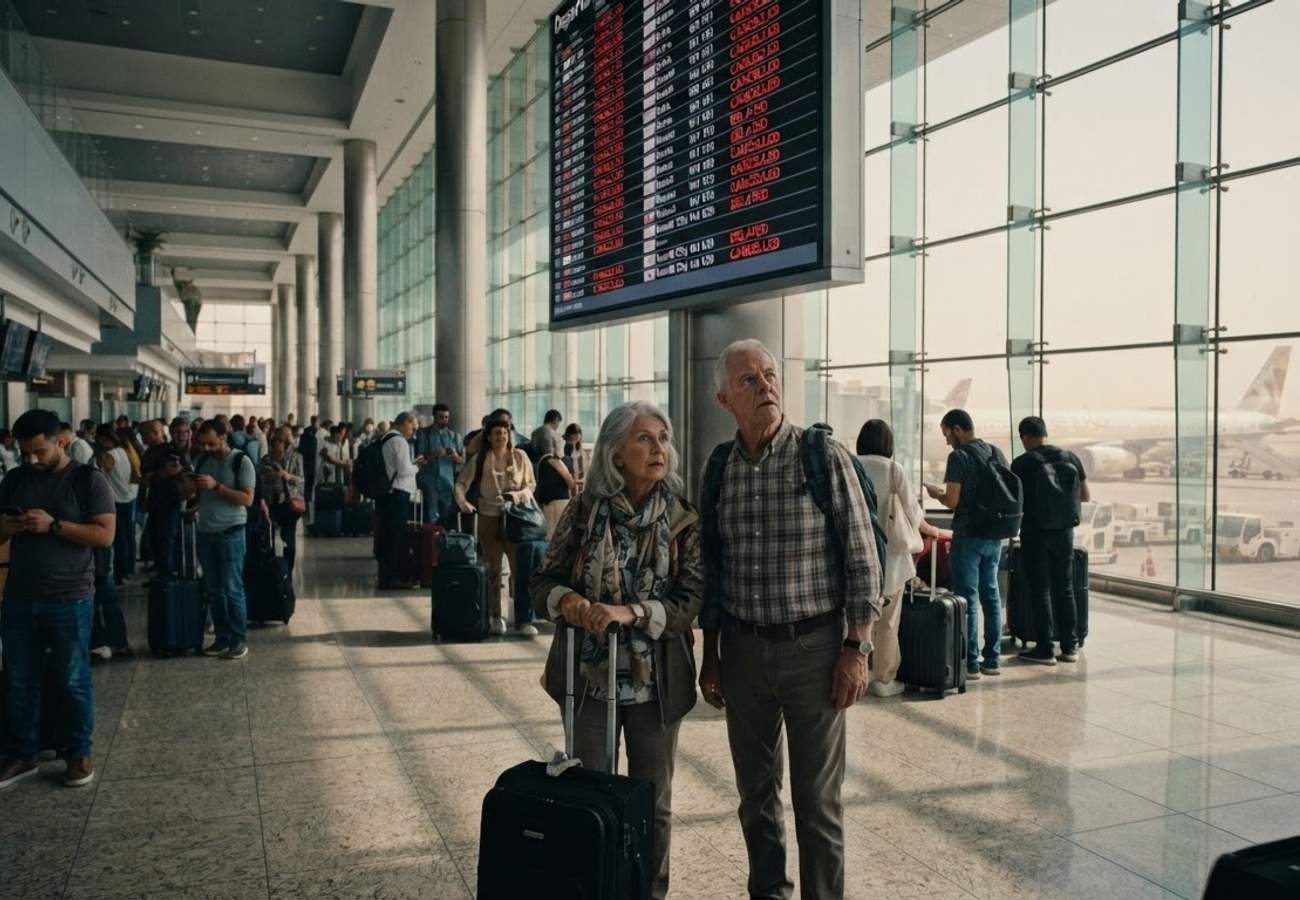
Image generated by AI
[City, Date] — Global transportation networks and energy markets are on high alert after Iran announced the closure of the Strait of Hormuz. This decision follows a series of military exchanges with the United States and expanding missile and drone strikes targeting Kuwait, Qatar, Bahrain, and Oman. The closure of this critical maritime artery, combined with deteriorating airspace security, has created immediate risks for international aviation, cruise operations, and global supply chains.
The escalation marks a significant spike in regional volatility, forcing airlines to rethink flight paths and shipping companies to evaluate the safety of their crews. As missile activity spreads across multiple Gulf states, governments and security agencies are now monitoring the situation to prevent a total collapse of regional mobility and commerce.
Strategic Impact of the Strait of Hormuz Closure
The Strait of Hormuz serves as the primary link between the Persian Gulf and the Gulf of Oman, acting as one of the most vital maritime chokepoints in the world. Because of its role in transporting global energy resources, any restriction on passage has immediate international repercussions.
Industry sources indicate that approximately one-fifth of the world's total oil consumption and a significant portion of liquefied natural gas (LNG) shipments transit through this narrow waterway. The current closure has placed immense pressure on the stability of energy exports and the reliability of international shipping lanes.
Current Maritime and Aviation Status
| Key Area | Current Situation |
|---|---|
| Maritime Route | Iran reports the Strait of Hormuz is closed to normal passage |
| Global Energy Trade | One-fifth of global oil and major LNG shipments affected |
| Commercial Shipping | Operators reporting heightened security risks |
| International Aviation | Airlines actively monitoring regional airspace safety |
| Tourism | Official government guidance advising caution |
Expansion of Missile and Drone Warfare in the Gulf
The conflict has expanded beyond a bilateral confrontation between Iran and the United States. Reports from the weekend indicate that missile and drone exchanges have now impacted several other Gulf nations, significantly broadening the security risk zone.
This widening scope of military activity has created a climate of uncertainty for transport operators. As air defense systems across the region are activated to monitor aerial threats, the potential for accidental disruptions to commercial aviation increases. Regional governments have been forced to strengthen their security protocols to protect critical infrastructure and maintain operational continuity.
Regional Security Risk Breakdown
| Development | Potential Impact |
|---|---|
| Missile and drone exchanges | Escalated regional security concerns |
| Maritime incidents | Increased operational danger for commercial vessels |
| Military activity | Higher uncertainty for transport and logistics operators |
| Diplomatic tensions | Decreased confidence in immediate de-escalation |
Maritime Shipping and Logistics Under Pressure
The shipping industry is currently facing a crisis of operational viability. With the Strait of Hormuz restricted, vessel scheduling is becoming unpredictable. Shipping companies are prioritizing crew safety and exploring alternative routes, though few viable options exist for the volume of cargo typically moved through the Gulf.
Industry observers note that these disruptions are likely to lead to a surge in marine insurance premiums and freight costs. The ripple effect is expected to be felt across global logistics, particularly for cargo moving between Asian markets, Europe, and the Middle East, potentially resulting in significant delivery delays and increased transportation expenses.
Aviation Safety and Travel Industry Response
While commercial flights are still operating in various parts of the Gulf, airlines are in a state of constant operational monitoring. The volatility of the airspace means that flight corridors may be changed on short notice to avoid conflict zones.
Travel experts are urging passengers to rely exclusively on official airline notifications and government travel advisories. There is a strong recommendation to verify flight schedules immediately before departure, as the fluid nature of the conflict makes unofficial online reports unreliable.
Travel Sector Considerations
| Travel Segment | Current Consideration |
|---|---|
| Airlines | Continuous monitoring of flight corridors |
| Business Travel | Intensive risk assessments for Gulf destinations |
| Tour Operators | Strict adherence to government safety advisories |
| Travelers | Verification of schedules via official channels |
Global Energy Market Volatility
The closure of the Strait of Hormuz is not merely a regional issue but a global economic threat. As a critical artery for energy, the interruption of oil and LNG flow is expected to trigger fluctuations in crude oil prices.
Economies in Asia, which are heavily dependent on these imports, are particularly vulnerable. Rising fuel costs directly impact the operational expenses of airlines and the cost of consumer transportation, contributing to broader inflationary pressures worldwide. Market analysts are currently debating whether these disruptions are a temporary tactical move or the start of a prolonged period of instability.
Diplomatic Measures and National Advisories
Governments across the Gulf are focusing on public safety preparedness and the monitoring of aerial threats. Diplomatic missions are working to provide updated guidance to their citizens, urging them to avoid sensitive military installations and comply with local security directives.
Thailand Issues Urgent Travel Warning
The Thai government has issued a specific advisory for its citizens residing in or visiting Gulf countries. Thai authorities are urging travelers to remain vigilant and stay in close contact with Thai embassies. The advisory specifically highlights the need to avoid unnecessary travel to sensitive locations and to follow emergency procedures as dictated by local authorities.
Analysis of Wider Regional Disruption Risks
The current trajectory of the conflict suggests a high probability of further escalation. Defense analysts warn that if attacks on commercial shipping or energy infrastructure continue, it may trigger a wider military response from nations committed to safeguarding international navigation.
Such an escalation would lead to a systemic failure in the regional supply chain. Airlines could be forced to implement massive rerouting, which increases fuel burn and flight times, while shipping firms may be forced to divert vessels to much longer, costlier routes. The combined effect would be a sharp increase in airfares and the cost of imported goods globally.
The global community remains hopeful for a diplomatic resolution to prevent a total shutdown of one of the world's most critical trade corridors.
Related Travel Guides
Disclaimer
This article is for informational and educational purposes only. It does not constitute legal, financial, or professional advice. While we strive to provide accurate and up-to-date information, travel policies, regulations, and conditions change rapidly. Always verify information with official sources before making travel decisions. Nomad Lawyer makes no representations about the accuracy, reliability, completeness, or suitability of the information provided. Readers should consult qualified professionals for advice specific to their circumstances. The views expressed in this article are those of the author and do not necessarily reflect the views of Nomad Lawyer.
Preeti Gunjan
Contributor & Community Manager
A passionate traveller and community builder. Preeti helps grow the Nomad Lawyer community, fostering engagement and bringing the reader experience to life.
Learn more about our team →