
Storms Staffing Woes Cascade Across North American Hubs to Cancun Routes
Spring break travelers from Canada and the U.S. face cascading flight disruptions to Cancun as winter storms and staffing shortages snarl major hubs. Over 400 cancellations hit regional airports in early April 2026.

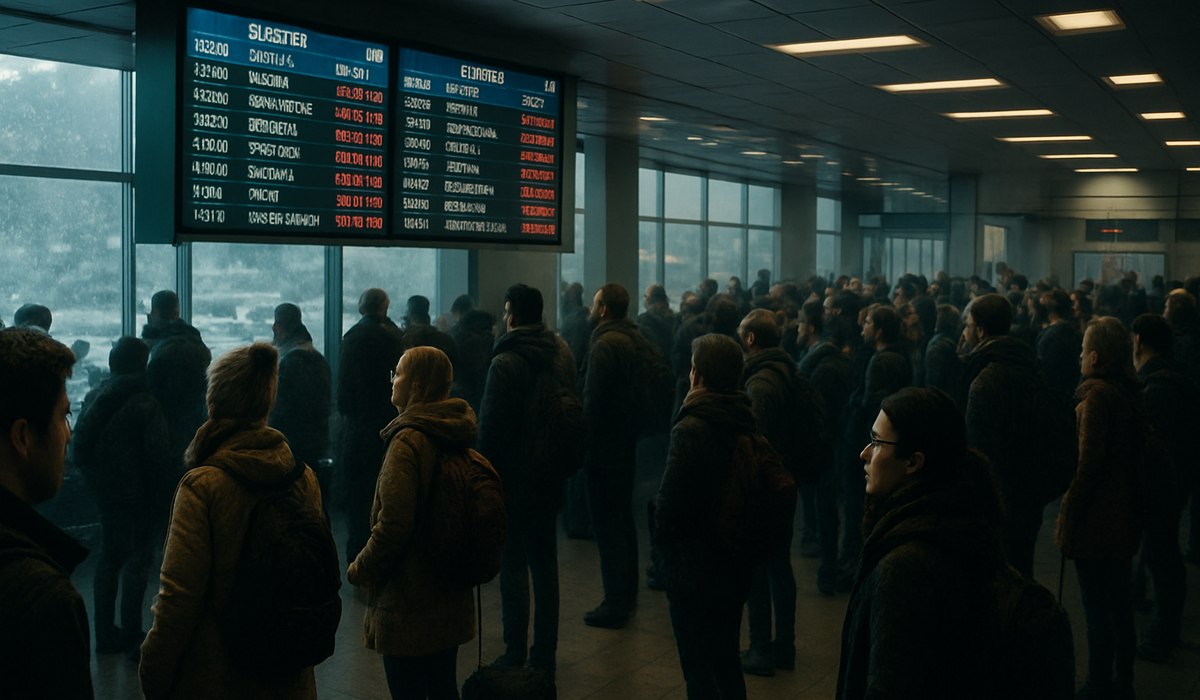
Image generated by AI
Spring Break Travelers Face Record Disruptions to Cancun
Major North American airports are reporting unprecedented cascading delays and cancellations as late-season winter storms collide with airline staffing constraints. Spring break travelers heading to Cancun from Canada and the United States encountered more than 400 confirmed cancellations across Toronto, Montreal, Vancouver, Calgary, and Miami hubs between April 5-7, 2026. The convergence of severe weather systems and depleted crew availability has created a domino effect: when de-icing operations slow at a Canadian gateway, aircraft scheduled for Mexican Caribbean routes depart late or face complete cancellations. With Cancun processing over 2.1 million passengers monthly, even modest operational disruptions ripple across the entire North American network within hours.
Winter Weather Systems Trigger Cascading Delays Across Canadian and U.S. Hubs
Late-season snow and strong winds swept across Canada in early April, disproportionately affecting Toronto Pearson International Airport, which recorded 160+ delays and dozens of cancellations in a single 24-hour period. Montreal and Calgary faced similar pressures as crews struggled with de-icing procedures and reduced runway capacity. South of the border, the FAA implemented ground stops at New York-area airports and issued delay programs across Midwestern and West Coast facilities. On April 7, thunderstorms at Miami International Airport triggered a ground stop that extended disruptions throughout the Florida network, directly impacting connections to Cancun.
The cascade effect operates predictably: aircraft arriving late from domestic routes cannot board on schedule for international flights, creating secondary delays. Airlines managing tight rotations—combining domestic, U.S., and Mexican legs—found themselves unable to absorb these delays without sacrificing downstream operations. Some carriers consolidated or cancelled Cancun services entirely to preserve core domestic and U.S. flights. Track real-time disruptions at FlightAware and official advisories via the FAA.
Staffing Constraints Amplify Operational Challenges at Key Gateways
Beyond weather, airline staffing shortages have intensified disruption severity across major hubs. Gate agents, crew schedulers, and aircraft maintenance technicians are working at maximum capacity, leaving zero buffer for unexpected delays. When storms hit, airlines lack spare crew members to rebrand cancelled flights or operate backup aircraft. This staffing squeeze particularly affects secondary routes: regional Cancun services operate only two to three times weekly from smaller Canadian cities. A single cancellation forces passengers to wait days for the next departure or scramble for connections through Toronto, Montreal, or U.S. hubs—potentially missing their spring break windows entirely.
Staffing woes extend to ground operations. De-icing crews work extended shifts during weather events, increasing fatigue and slowing turnaround times. Rebooking centers handle thousands of calls simultaneously, with hold times exceeding 90 minutes. Some airlines activated temporary staffing surges but recruitment lags remain acute in competitive labor markets. The combination of storms and staffing woes creates compounding operational failures rather than isolated incidents.
Weather in Florida and Beyond Extends Disruptions to Cancun Routes
Florida's role as a major hub for Cancun connectivity amplifies broader storm impacts. Miami and Fort Lauderdale serve as critical transfer points for passengers originating in the Northeast, Midwest, and West Coast. When thunderstorms ground Florida operations—as occurred April 7—passengers miss their Cancun connections regardless of conditions at their departure airport. An arrival hold at Miami adds 2-4 hours to flight times, pushing arrival into Cancun beyond departure windows for continuing flights.
Similar cascades emerged from West Coast disruptions. San Francisco and Los Angeles delays affected connections through Denver and Phoenix to Cancun gateways. Visibility restrictions at these airports forced aircraft to reduce approach speeds and increase separation, lengthening overall flight times. The FAA traffic management programs that issue ground stops and delay programs account for weather severity but cannot prevent the downstream passenger displacement affecting leisure routes.
Northern Mexico's weather also contributed marginally. Although Cancun itself experienced clear conditions April 5-8, isolated storm cells near Mexico City and inland routes occasionally delayed connecting flights. However, North American weather remains the primary disruption vector for Cancun-bound spring break travelers.
What Spring Break Travelers Should Know Now
Spring break passengers face limited compensation options under current regulations. In Canada, passenger rights rules exempt weather-attributed disruptions from cash compensation—a classification airlines invoke extensively during this crisis. U.S. Department of Transportation rules similarly protect airlines from compensation when weather constitutes the primary cause. Travelers should prioritize rebooking on alternative carriers or standby lists rather than expecting monetary payouts. Travel insurance policies with weather-related coverage provide critical protection if purchased before booking.
Real-time status updates require checking airline portals directly rather than relying on outdated social media posts. Rebooking requests submitted via airline apps and websites process faster than phone calls (which face 90+ minute hold times). Passengers with flexible dates should consider rebooking for mid-April when staffing recovers and seasonal weather patterns stabilize. Those with fixed spring break schedules should contact their airlines immediately to explore ground transportation alternatives (buses, rental cars) if flights remain unavailable.
Traveler Action Checklist
-
Check your flight status immediately on your airline's app or FlightAware—do not rely on automated texts or emails for real-time updates.
-
Contact your airline directly via the mobile app rather than phone lines; web-based rebooking options process 40% faster than phone agent calls.
-
Review your travel insurance policy to understand weather coverage and claim deadlines before submitting complaints.
-
Request alternative routings that avoid major hubs: direct flights or connections through secondary airports (e.g., flying through Dallas instead of Miami).
-
Monitor forecast updates for your departure city through April 12, when seasonal weather patterns begin normalizing across North America.
-
Document all disruption details—booking confirmation, original and rebooked flight numbers, times, and expenses—for potential U.S. DOT complaints or insurance claims.
-
File a complaint with the U.S. Department of Transportation at US DOT Airline Consumer Protection if you believe your airline violated compensation rules.
-
Consider ground transportation alternatives (bus, rental car, train) if rebooking availability extends beyond your preferred travel window by more than 24 hours.
Disruption Impact Summary Table
| Metric | Details |
|---|---|
| Peak Disruption Period | April 5-8, 2026 |
| Confirmed Cancellations | 400+ across North American hubs |
| Most Affected Airport | Toronto Pearson (160+ delays, dozens of cancellations) |
| Cancun Monthly Passenger Volume | 2.1+ million (March 2026) |
| Primary Weather Driver | Late-season snow, strong winds, thunderstorms |
| Secondary Factor | Airline staffing shortages amplifying weather impacts |
| Estimated Affected Passengers | 30,000+ across North American-Cancun routes |
| Compensation Eligibility | Limited; weather-attributed disruptions typically excluded |
| Regional Hotspots | Toronto, Montreal, Calgary, Miami, Fort Lauderdale |
| Expected Recovery | April 12-15 as seasonal weather stabilizes |
FAQ: Storms Staffing Woes and Cancun Travel
Q: Will my flight be cancelled if I'm booked April 9-11?
Disruption severity declines significantly after April
Disclaimer
This article is for informational and educational purposes only. It does not constitute legal, financial, or professional advice. While we strive to provide accurate and up-to-date information, travel policies, regulations, and conditions change rapidly. Always verify information with official sources before making travel decisions. Nomad Lawyer makes no representations about the accuracy, reliability, completeness, or suitability of the information provided. Readers should consult qualified professionals for advice specific to their circumstances. The views expressed in this article are those of the author and do not necessarily reflect the views of Nomad Lawyer.
Preeti Gunjan
Contributor & Community Manager
A passionate traveller and community builder. Preeti helps grow the Nomad Lawyer community, fostering engagement and bringing the reader experience to life.
Learn more about our team →