
The INSTC Multimodal Corridor Aims to Connect Russia and India
The 7,200-kilometer International North-South Transport Corridor (INSTC) provides a land-based alternative to traditional Suez Canal maritime routing.
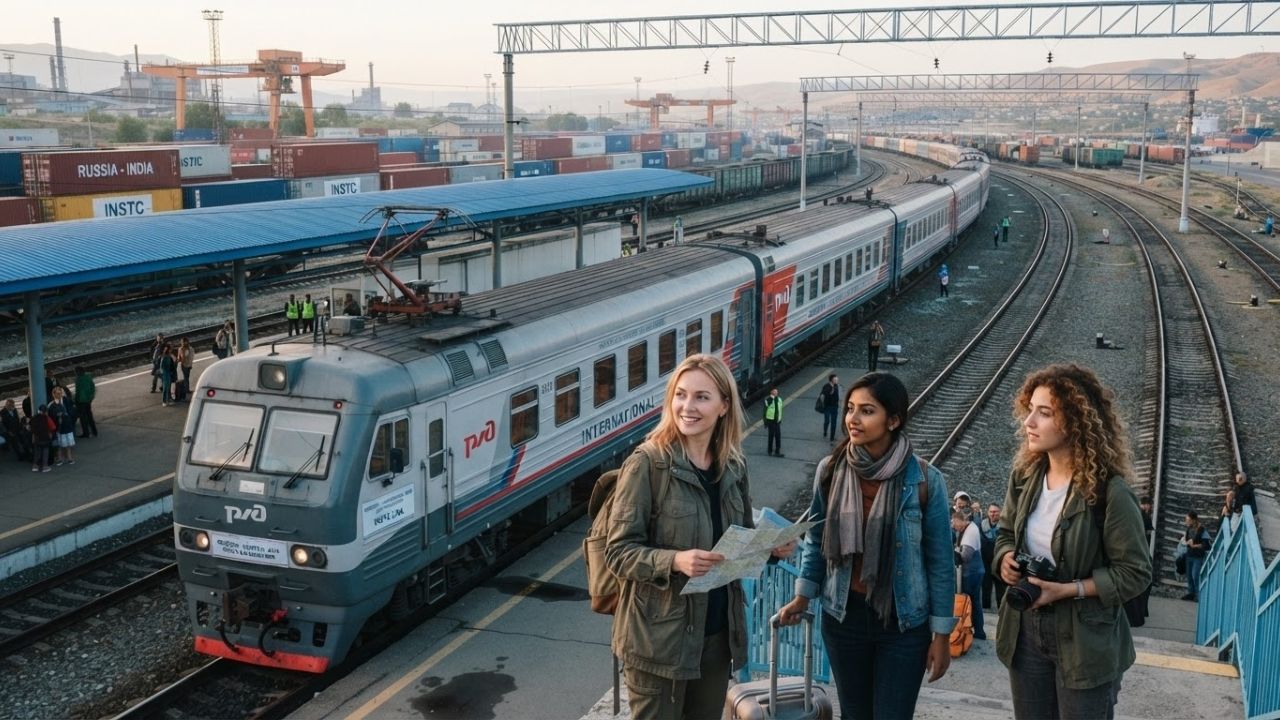
Image generated by AI
The 7,200-kilometer International North-South Transport Corridor (INSTC) provides a land-based multimodal transit option linking Russia and India.
The Core Transit Update
Eurasian supply chain dynamics and transcontinental rail corridors are undergoing a major strategic expansion. The International North-South Transport Corridor (INSTC) has emerged as a 7,200-kilometer multimodal network designed to link the industrial hubs of Russia with growing markets in India.
By integrating existing railways, holidays, and Arabian Sea maritime lanes, the INSTC bypasses traditional chokepoints like the Suez Canal. It establishes a land-based alternative that crosses Central Asia and Iran, carrying essential commodities such as coal, energy products, and heavy industrial materials across sovereign boundaries.
Route Specifications & Operational Feasibility
Evaluating transcontinental connectivity requires analyzing individual transport segments alongside their operational realities. The following tables outline the INSTC's routing layout and compare cargo operations with passenger travel feasibility.
| Corridor Segment | Transit Mode / Infrastructure | Territorial Borders | Operational Cargo Focus |
|---|---|---|---|
| Northern Section | Heavy cargo rail lines | Russia to Kazakhstan | Energy products, coal, metal |
| Central Section | Rail and road networks | Kazakhstan to Turkmenistan | Industrial materials & minerals |
| Southern Section | Rail to maritime port docks | Turkmenistan to Iran (Persian Gulf) | Multi-nation containerized freight |
| Maritime Link | Inbound container vessels | Iran to India (Arabian Sea ports) | General bulk & commodity import |
INSTC 7,200-kilometer multimodal route segments.
| Logistical Parameter | Heavy Freight Operations | Overland Passenger Travel | Key Operational Barrier |
|---|---|---|---|
| Transit Feasibility | Fully operational (commercial runs) | Niche/Theoretical only | Visa changes & custom protocols |
| Customs Protocol | Harmonized international shipping laws | Individual border-by-border checks | Rigid sovereign security checks |
| Travel Duration | Scheduled container block schedules | Several days (multi-nation overland) | Gauge transfers & port connections |
| Route Scope | 7,200-kilometer multimodal lines | 7,200-kilometer overland paths | Lack of single ticket framework |
INSTC operational freight logs vs. passenger transit realities.
Traveler Logistics Guide
From a ground-level perspective, the best way to navigate this is to treat the INSTC as a collection of independent transport systems rather than a single ticketing framework, as a unified passenger service from Moscow to New Delhi remains strictly theoretical. Overland enthusiasts must arrange individual tickets and custom visas for each territory crossed. Checking consular guidelines is recommended.
To plan your overland Eurasian journey:
- Visa and Customs Protocols: Secure entry visas for Russia, Kazakhstan, Turkmenistan, and Iran before embarking. Each transit territory enforces its own customs laws and cross-border security checks.
- Gauge and Transfer Shifts: Be prepared for rail gauge transfers at international boundaries. Central Asian railways operate on standard Russian broad gauge, which differs from Iranian and Indian networks.
- Persian Gulf Crossings: To bridge the maritime gap between Iran and India, secure passage on scheduled passenger vessels or commercial ferries operating out of Bandar Abbas or Chabahar ports.
- Overland Travel Buffers: Budget several weeks for the entire overland journey, allowing ample buffer times for border checkpoints and regional security clearances in Central Asia.
Infrastructure Impact Assessment
The growth of the INSTC strengthens bilateral trade ties between Moscow and New Delhi, providing a reliable buffer against maritime lane disruptions. By coordinating logistics protocols and upgrading railway infrastructure across Kazakhstan, Turkmenistan, and Iran, participating governments reduce shipping times.
This multimodal corridor reshapes regional connectivity, driving investment in Central Asian transport corridors and port terminals while offering a long-term alternative for continental shipping.
Related Travel Guides
American Airlines Flight AA1322 from Dallas to Denver Diverts to COS
Disclaimer
This article is for informational and educational purposes only. It does not constitute legal, financial, or professional advice. While we strive to provide accurate and up-to-date information, travel policies, regulations, and conditions change rapidly. Always verify information with official sources before making travel decisions. Nomad Lawyer makes no representations about the accuracy, reliability, completeness, or suitability of the information provided. Readers should consult qualified professionals for advice specific to their circumstances. The views expressed in this article are those of the author and do not necessarily reflect the views of Nomad Lawyer.