
Boeing 787 Dreamliner's Carbon Fiber Advantage Under Scrutiny as Structural Cracks Emerge in Service
Breaking airline news and aviation industry updates for 2026.

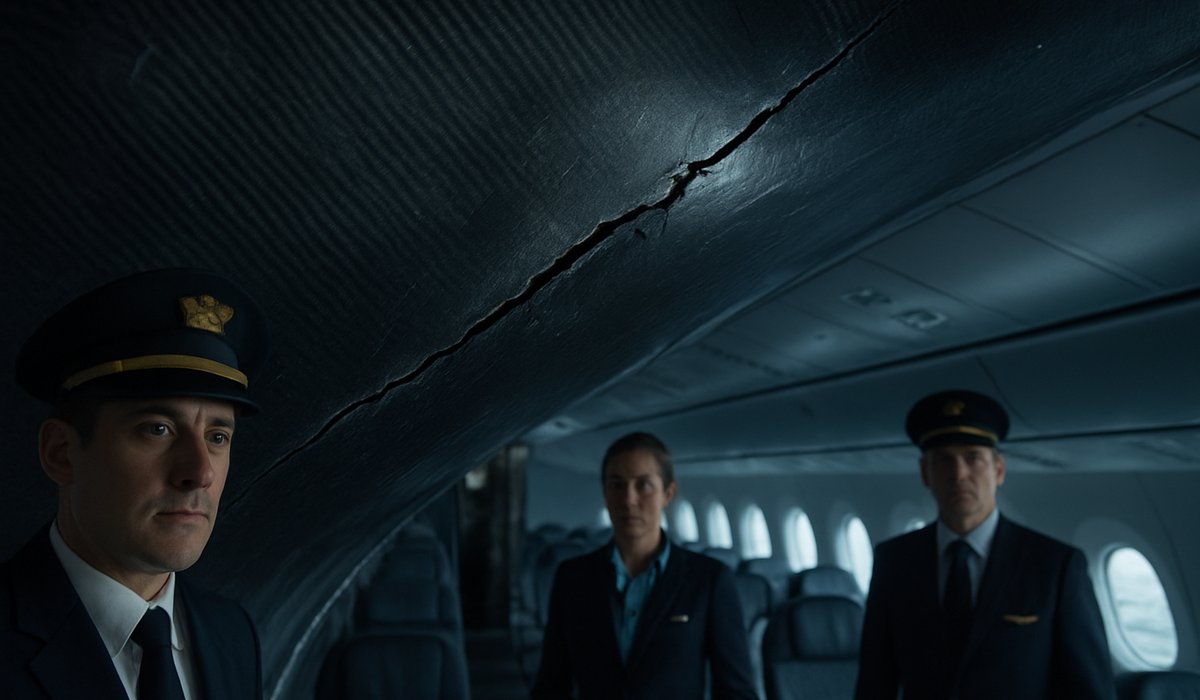
Image generated by AI
Boeing 787 Dreamliner's Carbon Fiber Advantage Under Scrutiny as Structural Cracks Emerge in Service
Revolutionary composite fuselage technology delivers fuel savings but raises durability questions as maintenance issues surface
Breaking News
The Boeing 787 Dreamliner, which revolutionized commercial aviation by becoming the first wide-body jetliner to employ carbon fiber reinforced polymer as its primary structural material, is facing emerging durability challenges that threaten to undermine one of its core competitive advantages. Despite widespread deployment of over 1,200 aircraft across global airlines, structural cracking in the composite fuselage has prompted industry scrutiny into whether the material's long-term performance matches its initial engineering promises.
The Carbon Fiber Gamble
Boeing's decision to construct the 787 primarily from advanced composite materials represented a historic departure from traditional aluminum airframe design. The lightweight carbon fiber reinforced polymer composition was engineered to deliver substantial operational benefits: reduced fuel consumption, lower maintenance expenditures, extended component lifecycles, and enhanced cabin pressurization comfort for passengers on long-haul routes.
The Dreamliner has largely succeeded in meeting fuel efficiency benchmarks, establishing itself among the most economical wide-body aircraft in commercial service. Airlines operating the aircraft have realized measurable reductions in jet fuel costs—a critical metric given the volatile energy markets that impact airline profitability and ultimately passenger ticket prices.
Structural Integrity Concerns
However, reported incidents of fuselage cracking have raised questions about the long-term durability of carbon fiber composites in sustained flight operations. These structural issues, while currently managed within established maintenance protocols, highlight potential gaps between laboratory performance projections and real-world environmental stressors including pressurization cycles, temperature fluctuations, and operational wear.
The cracks represent a divergence from aluminum aircraft behavior, where degradation patterns are well-documented from decades of operational data. Carbon fiber composites, by contrast, remain a relatively newer technology in high-cycle commercial aviation, with long-term performance data still accumulating.
Industry Implications
The durability questions surrounding the 787's composite structure carry broader implications for aviation manufacturing. As Boeing and Airbus develop next-generation aircraft platforms, composite utilization continues expanding. How effectively the 787 program addresses these structural challenges will influence material selection strategies across the industry and potentially affect airline operating costs, maintenance scheduling, and aircraft acquisition decisions.
Boeing has maintained that cracking incidents occur within predictable parameters and remain manageable through established inspection and repair procedures. Nevertheless, the aviation sector is monitoring whether unexpected maintenance requirements could offset the fuel efficiency gains that justified the composite investment.
Frequently Asked Questions
Q: Why does the Boeing 787 experience carbon fiber cracking if composites are superior to aluminum? A: While carbon fiber offers weight and fuel efficiency advantages, composites respond differently to pressurization cycles and environmental stress than aluminum. Long-term durability patterns are still being documented as the fleet accumulates operational hours.
Q: Do carbon fiber cracks pose safety risks to passengers? A: Current cracking incidents are detected through maintenance protocols and managed within established repair procedures. Boeing and regulators maintain that structural integrity remains within safety parameters.
Q: How do fuselage cracks affect airline operating costs? A: Unscheduled maintenance from structural cracking could increase maintenance expenses and reduce aircraft availability, potentially offsetting some fuel savings from the 787's efficiency design.
Q: Will Boeing switch back to aluminum for future aircraft designs? A: No. The aviation industry continues advancing composite technology rather than reverting to traditional materials. The 787 program informs improved composite specifications for future platforms.
Q: How many 787s are currently grounded due to structural issues? A: The cracking incidents are managed through scheduled maintenance rather than causing widespread groundings. Over 1,200 Dreamliners remain in active commercial service.
Related Travel Guides
-
First-Time Business Class Flyers: What Flight Crews Really Notice About You
-
United Airlines Relax Row: Economy Comfort Redefined for 2026
External Resources
Disclaimer
This article is for informational and educational purposes only. It does not constitute legal, financial, or professional advice. While we strive to provide accurate and up-to-date information, travel policies, regulations, and conditions change rapidly. Always verify information with official sources before making travel decisions. Nomad Lawyer makes no representations about the accuracy, reliability, completeness, or suitability of the information provided. Readers should consult qualified professionals for advice specific to their circumstances. The views expressed in this article are those of the author and do not necessarily reflect the views of Nomad Lawyer.
Raushan Kumar
Founder & Lead Developer
Full-stack developer with 11+ years of experience and a passionate traveller. Raushan built Nomad Lawyer from the ground up with a vision to create the best travel and law experience on the web.
Learn more about our team →