
Airbus Supply Chain Crisis Threatens Qantas' Landmark Project Sunrise Ultra-Long-Haul Routes
Breaking airline news and aviation industry updates for 2026.

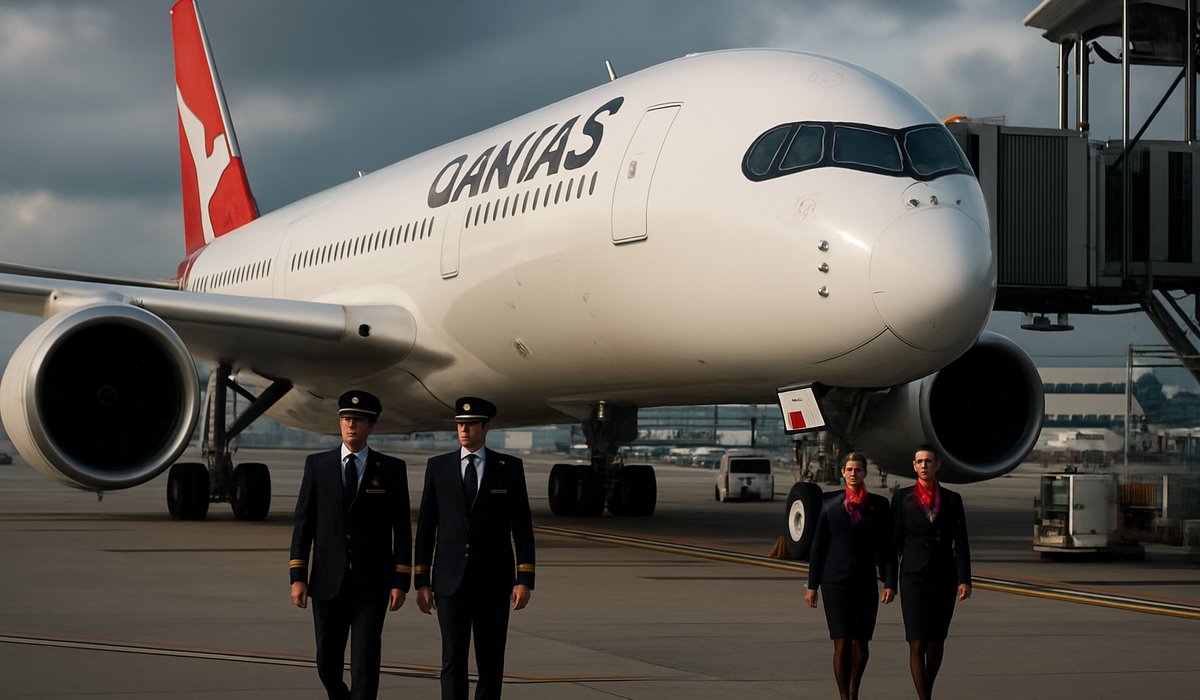
Image generated by AI
Airbus Supply Chain Crisis Threatens Qantas' Landmark Project Sunrise Ultra-Long-Haul Routes
Manufacturing delays jeopardize ambitious non-stop Sydney-London and Sydney-New York services set to revolutionize global aviation
The Vision at Risk
Qantas Airways' Project Sunrise—one of aviation's most transformative initiatives in decades—faces significant jeopardy as Airbus struggles to meet delivery timelines for the specialized aircraft required to operate the world's longest commercial flights. The Australian carrier's audacious plan to inaugurate direct service between Sydney and both London and New York without intermediate stops now confronts a critical bottleneck: the European manufacturer cannot deliver the ultra-long-range A350-1000 jets on schedule.
The venture represents an unprecedented shift in global travel patterns, promising to eliminate layovers that have defined intercontinental journeys since commercial aviation's inception. Yet the project's viability increasingly hinges on resolving Airbus's production complications.
Manufacturing Headwinds Compound Industry Challenges
Airbus has encountered substantial manufacturing constraints that extend far beyond the Qantas contract. The European aerospace giant faces capacity limitations across its production facilities, supply chain disruptions affecting critical components, and workforce capacity challenges that have rippled throughout the aviation sector.
These delays arrive during a period of acute pressure on the airline industry. Elevated jet fuel prices—fluctuating in response to geopolitical tensions and energy market volatility—have compounded airlines' operational costs. Simultaneously, carriers have implemented aggressive fee structures encompassing baggage charges, seat selections, and ancillary services to maintain profitability margins.
For Qantas specifically, the delivery delays underscore the complexity of executing such an ambitious operational model. A 22-hour flight demands aircraft with exceptional range, fuel efficiency, and passenger comfort specifications—parameters the A350-1000 was engineered to meet. Any deferral in aircraft availability cascades through the airline's expansion timeline and revenue projections.
Broader Industry Ramifications
The Airbus production crisis reverberates across the global aviation ecosystem. Airlines worldwide waiting for new-generation aircraft—including the A350, A320neo family, and Boeing 787—face extended delivery schedules. This constraint perpetuates fleet aging cycles and limits capacity expansion precisely when travel demand remains robust.
Qantas has not publicly disclosed updated delivery expectations, though sources suggest meaningful delays extending into subsequent years. The airline's competitive positioning depends on launching these revolutionary routes within a defined window before rivals develop competing ultra-long-haul services.
Industry analysts emphasize that Project Sunrise's ultimate success transcends Airbus's manufacturing timeline. Route profitability, regulatory approvals, crew scheduling protocols, and sustained passenger demand for premium ultra-long-haul travel all present ongoing challenges.
The aviation sector's recovery from pandemic-era disruption continues intersecting with supply chain limitations that constrain growth. For Qantas and other carriers dependent on new aircraft deliveries, patience—and contingency planning—has become an operational imperative.
Frequently Asked Questions
What is Qantas Project Sunrise? Project Sunrise represents Qantas Airways' initiative to establish non-stop commercial service connecting Sydney directly with London and New York, eliminating traditional layovers on ultra-long-haul routes spanning approximately 22 hours.
Why are Airbus deliveries delayed? Airbus faces significant manufacturing constraints including supply chain disruptions, component availability challenges, production facility capacity limitations, and workforce capacity issues affecting delivery schedules across multiple aircraft models.
How do jet fuel prices impact airline operations? Elevated jet fuel prices directly increase operational costs, forcing carriers to implement additional airline fees including baggage charges, seat selection costs, and ancillary service pricing to maintain profit margins.
When will Qantas receive the A350-1000 aircraft? Specific revised delivery timelines remain unconfirmed, though multiple sources indicate meaningful delays extending beyond originally scheduled dates, potentially affecting Project Sunrise launch windows.
What are the competitive implications of these delays? Production bottlenecks limit capacity expansion industry-wide, potentially allowing rival carriers to develop competing ultra-long-haul services before Qantas establishes market dominance on revolutionary direct routes.
Related Travel Guides
External Resources
Disclaimer
This article is for informational and educational purposes only. It does not constitute legal, financial, or professional advice. While we strive to provide accurate and up-to-date information, travel policies, regulations, and conditions change rapidly. Always verify information with official sources before making travel decisions. Nomad Lawyer makes no representations about the accuracy, reliability, completeness, or suitability of the information provided. Readers should consult qualified professionals for advice specific to their circumstances. The views expressed in this article are those of the author and do not necessarily reflect the views of Nomad Lawyer.
Kunal K Choudhary
Co-Founder & Contributor
A passionate traveller and tech enthusiast. Kunal contributes to the vision and growth of Nomad Lawyer, bringing fresh perspectives and driving the community forward.
Learn more about our team →