
IndiGo Implements Comprehensive Tariff Revisions Across Domestic Ancillary Services
IndiGo Implements Comprehensive Tariff Revisions Across Domestic Ancillary Services

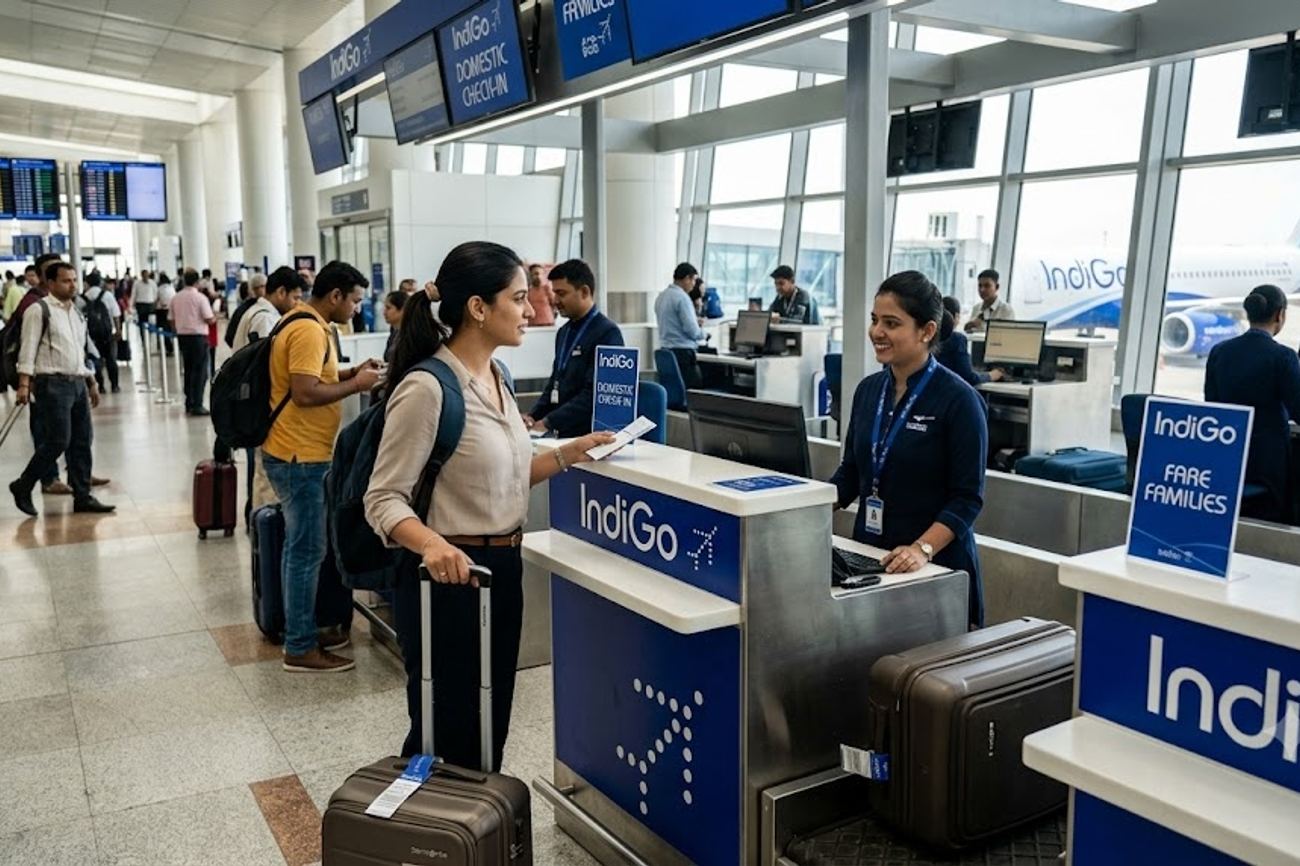
Image generated by AI
title: "Ancillary Revenue Pivot: Analyzing IndiGo's Domestic Tariff Shift" date: 2024-05-20 category: Aviation Economics tags: [IndiGo-Ancillary-Pricing-2024, India-Domestic-Aviation-Costs, Low-Cost-Carrier-Revenue-Models, Excess-Baggage-Tariffs-India]
IndiGo's infant travel fee has surged by 50% in a single pricing cycle, moving from Rs 2,000 to Rs 3,000. This sharp escalation is not an isolated event but a tactical shift in how India's largest carrier manages its operational overheads, signaling a transition toward more aggressive ancillary monetization to offset rising ground handling costs.
The Ancillary Shift in Numbers
The recent tariff revisions by IndiGo highlight a systemic move to increase the cost of specialized services. The most significant impact is felt by families and passengers with heavy luggage, where costs have been adjusted to reflect a higher cost of service delivery.
For infants under two years of age, the fee has risen to Rs 3,000, a substantial increase from the previous Rs 2,000. This indicates a strategic decision to revalue the administrative and operational load associated with infant travel. Similarly, the fee for unaccompanied minors has been set at Rs 5,999, reflecting the high-touch nature of this service.
Luggage policies have also tightened. Excess baggage charges now stand at Rs 800 per kilogram, which is a Rs 100 increase per kilogram over the previous rate. When scaled across a typical 10kg excess load, this adds Rs 1,000 to a passenger's trip cost. Priority services, including check-in and boarding, have been standardized at Rs 650, while travel certificates are now priced at Rs 300.
These figures align with a global trend where Low-Cost Carriers (LCCs) are decoupling the "seat price" from the "travel experience." According to data trends tracked by IATA, ancillary revenues have become a primary driver of profitability for LCCs worldwide, allowing them to keep base fares competitive while capturing value from specific passenger needs.
Comparative Context: Legacy Rates vs. Current Tariffs
To understand the magnitude of these changes, one must look at the year-over-year drift in pricing. The shift from legacy flat rates to granular, cost-reflective pricing is evident when comparing the previous policy framework against the current 2024 mandates.
The following table illustrates the precise financial shift across key ancillary categories:
| Service Category | Previous Tariff (INR) | Current Tariff (INR) | Percentage Increase |
|---|---|---|---|
| Infant Travel Fee | 2,000 | 3,000 | 50% |
| Excess Baggage (per kg) | 700 | 800 | 14.3% |
| Priority Check-in/Boarding | 450 | 650 | 44.4% |
| Travel Certificate Fee | 200 | 300 | 50% |
| Unaccompanied Minor | [Not Specified] | 5,999 | N/A |
This pricing trajectory mirrors broader market movements in the Asia-Pacific region. As airport utility fees and labor costs rise, airlines are moving away from static pricing. By targeting non-essential or specialized features, IndiGo is insulating its base fare from extreme volatility. This allows the carrier to maintain its market share among budget-conscious travelers while extracting higher margins from high-demand auxiliary provisions.
The reliance on these streams is a necessity. As noted in industry reports by OAG, the volatility of fuel expenditures requires airlines to have flexible revenue levers. Ancillary fees act as a financial buffer; they can be adjusted more rapidly than base fares, which are often subject to intense competitive pressure and regulatory scrutiny in the Indian domestic market.
What This Means for Travelers
The data suggests that the "budget" nature of domestic flying in India is becoming increasingly fragmented. The cost of a ticket is no longer the final cost of the journey. For the modern traveler, this requires a shift in booking behavior.
If you are traveling with an infant, the Rs 3,000 fee is now a mandatory budgetary line item. It is critical to ensure all documentation—including birth certificates, vaccination records, hospital discharge summaries, or passports—is ready for passengers aged between three days and two years to avoid boarding delays or additional administrative penalties.
For those carrying luggage beyond the standard allowance, the Rs 800 per kilogram rate makes airport counter payments prohibitively expensive. Data indicates that pre-booking excess baggage online is significantly more economical than settling charges at the terminal. Travelers should audit their luggage weight 48 hours before departure to avoid the peak rates applied at the airport.
Frequent flyers seeking efficiency should note that priority services have increased by 44.4%. At Rs 650, these are now premium add-ons. Travelers should evaluate whether the time saved during check-in justifies the cost, especially on shorter domestic hops where the time delta is minimal.
Revenue Projection and Market Trajectory
Based on current pricing patterns, we can project a continued upward drift in ancillary costs across the Indian aviation sector. The move by IndiGo—the market leader—often sets a benchmark that other domestic carriers follow to maintain their own margins.
We anticipate a move toward "Dynamic Ancillary Pricing," where the cost of priority boarding or excess baggage may fluctuate based on flight load factors or the time of booking. This would mirror the pricing models used by global giants in the LCC space, moving further away from the fixed-fee structures seen in the table above.
Furthermore, as ground handling expenses continue to ascend, we expect to see more "unbundled" services. This means that features previously included in higher fare classes may be stripped out and moved into the ancillary category, forcing passengers to pay a la carte for services that were once standard.
The broader economic goal is to protect the "entry-level" price point. By shifting the cost burden to specialized services (like unaccompanied minors at Rs 5,999), the airline can market a low base fare to attract the mass market while ensuring that the actual revenue per passenger (ARPU) remains high. This strategy is essential for maintaining operational viability in a market characterized by thin margins and high operational overheads.
FAQ: IndiGo Ancillary Tariffs 2024
Will base ticket prices increase because of these changes? Not necessarily. These revisions target auxiliary services specifically to shield base fares from volatility. The goal is to keep the entry price low while increasing revenue from optional add-ons like priority boarding and excess weight.
Is it still cheaper to pay for extra baggage at the airport? No. The current rate is Rs 800 per kilogram. Pre-booking excess baggage through the official website or app remains the most cost-effective method to avoid peak airport counter tariffs.
What documents are needed for the infant fee category? Passengers must provide valid birth certificates, passports, vaccination records, or hospital discharge summaries to verify the infant is between three days and two years of age.
Which services saw the biggest price jump? Infant travel fees and travel certificates both saw a 50% increase, while priority check-in and boarding services rose by 44.4%.
The era of the flat-rate flight is over; the future of aviation is a meticulously unbundled menu of costs.
Related Travel Guides
Disclaimer
This article is for informational and educational purposes only. It does not constitute legal, financial, or professional advice. While we strive to provide accurate and up-to-date information, travel policies, regulations, and conditions change rapidly. Always verify information with official sources before making travel decisions. Nomad Lawyer makes no representations about the accuracy, reliability, completeness, or suitability of the information provided. Readers should consult qualified professionals for advice specific to their circumstances. The views expressed in this article are those of the author and do not necessarily reflect the views of Nomad Lawyer.
Preeti Gunjan
Contributor & Community Manager
A passionate traveller and community builder. Preeti helps grow the Nomad Lawyer community, fostering engagement and bringing the reader experience to life.
Learn more about our team →