
India Prioritises ₹9,000 Crore Rangpo-Gangtok Railway Extension as Sikkim Targets Major Himalayan Tourism Transformation
Indian Railways advances the ₹9,000 crore Rangpo-Gangtok rail link under PM GatiShakti, enhancing access to Sikkim's capital alongside the Sivok-Rangpo project.

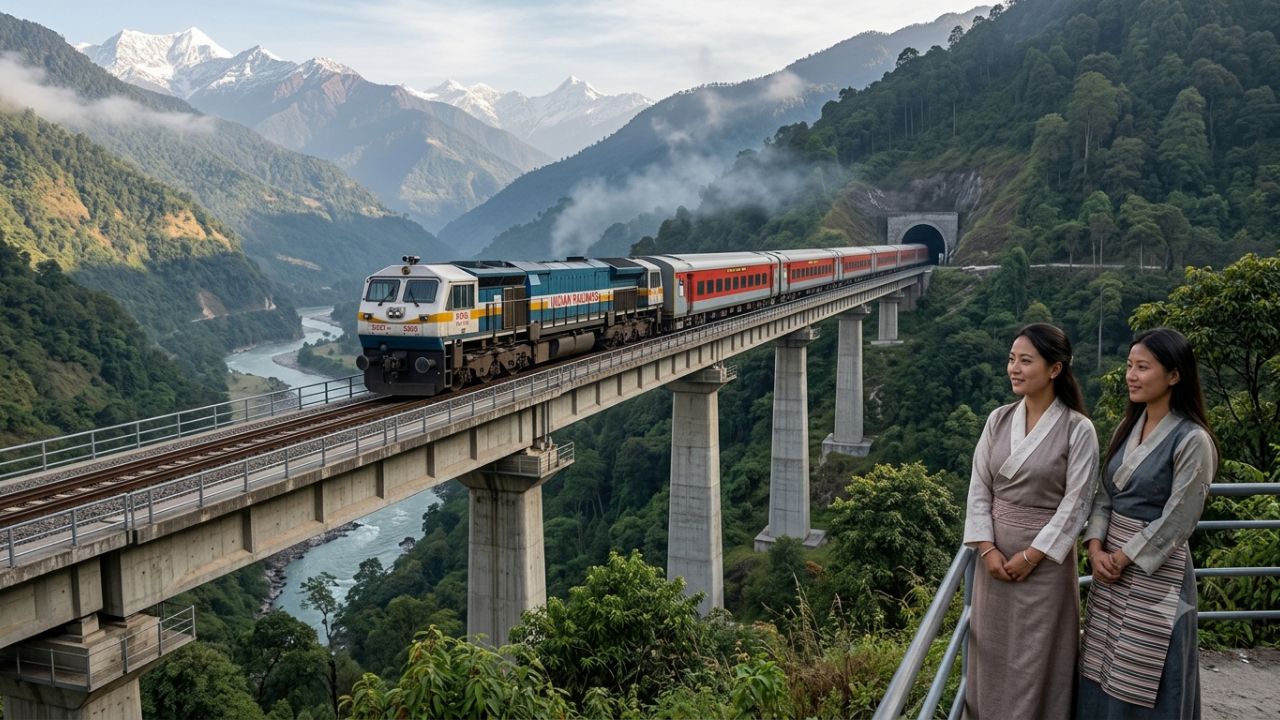
The proposed 34 km Rangpo–Gangtok railway extension will link Sikkim's capital to the national rail network following completion of the Sivok–Rangpo line.
India’s Ministry of Railways has prioritized the proposed 34-kilometer Rangpo–Gangtok rail corridor under the PM GatiShakti National Master Plan, advancing plans to link Sikkim’s capital directly to the national passenger railway grid. The estimated ₹9,000 crore mountain extension represents the crucial second phase of the Himalayan rail network, building upon the 44.96-kilometer Sivok–Rangpo line currently undergoing advanced construction between West Bengal and Sikkim with a targeted completion date of December 2027.
The initiative marks an unprecedented infrastructure leap for the eastern Himalayas, aimed at ending Sikkim’s historic dependence on vulnerable mountain roadways such as National Highway 10. While the Sivok–Rangpo segment is approximately 80% complete, extending rail tracks directly to Gangtok will fundamentally overhaul travel logistics for millions of domestic vacationers and international tourists visiting the state's revered monasteries, alpine passes, and mountain sanctuaries.
Two-Stage Himalayan Railway Alignment Overview
The railway expansion into Sikkim is organized into two distinct civil engineering phases designed to conquer the treacherous terrain of the Teesta River gorge and the Himalayan foothills.
| Project Metric | Phase 1: Sivok–Rangpo Railway | Phase 2: Rangpo–Gangtok Railway Extension |
|---|---|---|
| Geographical Scope | West Bengal (Sevoke) to Rangpo (Sikkim Border) | Rangpo to Gangtok (Sikkim Capital) |
| Route Length | 44.96 km | Approximately 34 km |
| Development Status | Under active construction (~80% complete) | Prioritised under PM GatiShakti review |
| Project Cost | ₹11,775 crore (Ministry baseline) | Estimated ₹9,000 crore |
| Target Completion | December 2027 | Subject to final sanction and clearances |
| Key Civil Engineering | 14 tunnels, 23 bridges, Teesta Bazar station | Deep mountain tunnels, viaducts, terminal facilities |
| Operational Impact | Delivers Sikkim's first-ever railway link | Connects the state capital directly to Indian rail grid |
Phase 1 features extraordinary civil engineering, including 14 major tunnels and 23 viaducts spanning the Teesta river valley. A defining highlight is the underground Teesta Bazar station—one of India's first fully subterranean railway stations constructed inside a Himalayan mountain tunnel.
Surge in Sikkim Tourism Volumes
The push for rail connectivity comes as Sikkim experiences rapid growth in visitor numbers. According to official data from India's Ministry of Tourism and the Sikkim State Tourism Department, tourist arrivals have rebounded sharply following post-pandemic infrastructure upgrades.
| Reporting Period | Domestic Tourist Visits | Foreign Tourist Visits | Total Recorded Visits |
|---|---|---|---|
| Full Year 2025 | 1,654,838 | 68,992 | 1,723,830 |
| H1 2026 (Jan–Jun) | 2,352,725 | 43,734 | 2,396,459 |
The 2.39 million visits recorded in the first six months of 2026 alone surpassed the full-year figures for 2025, underscoring the urgent necessity of providing a high-capacity, weather-resilient transport alternative to NH 10, which routinely suffers from monsoon landslides and seasonal closures.
Transforming Access to Gangtok and Alpine Destinations
A direct railway terminal near Gangtok will redefine travel circuits across eastern India, allowing passengers to travel seamlessly from major hubs like New Delhi, Kolkata, and Guwahati to the Himalayan foothills:
- Gangtok Gateway: Serves as the central staging hub for urban hospitality, cultural landmarks like Do Drul Chorten, and administrative centers.
- Rumtek Monastery: Located just outside Gangtok, the historic Dharma Chakra Centre of Tibetan Buddhism will become significantly more accessible to spiritual pilgrims.
- Tsomgo Lake and Nathula Pass: While visitors will still rely on licensed mountain road vehicles to navigate the high-altitude route (3,753 meters) toward Tsomgo Lake and the Indo-China border at Nathu La, the railhead at Gangtok will slash total transit times from Siliguri.
- West and South Sikkim Circuits: Rail arrivals can easily disperse into regional leisure hubs such as Pelling, Ravangla, and Namchi via local highway links.
Regulatory Guidance and Permits for International Travelers
While domestic and international travelers anticipate future train journeys into Sikkim, authorities emphasize that railway connectivity will not alter established security and permit protocols governing the border state:
- Restricted Area Permit (RAP): All foreign passport holders entering Sikkim must obtain a valid Restricted Area Permit (formerly Inner Line Permit), typically granted for 30 days and obtainable at border checkpoints, designated Indian missions, or via the official Sikkim Tourism web portal.
- Protected Area Permits (PAP): High-altitude destinations beyond Gangtok—including Tsomgo Lake, Baba Mandir, Nathu La, and the North Sikkim circuit (Lachen, Lachung, and Yumthang Valley)—strictly require specialized Protected Area Permits issued through authorized travel agencies in groups of two or more.
- Current Travel Contingency: Passengers are reminded that commercial passenger rail service to Rangpo is targeted for December 2027, with the Gangtok extension to follow. All travel in 2026 and 2027 continues to rely on road corridors via Bagdogra Airport (IXB) or New Jalpaiguri Railway Station (NJP).
Related Travel Guides
- Sweden and Austria Lead European Rail Expansion With Major Infrastructure and Route Investments in 2026
- Costa Serena Makes Maiden Yokohama Call Ahead of 65-Night Grand Voyage From Tokyo to Argentina
- Holland America Unveils Pan Am-Inspired Dining, Historic Tours, and Programming for 2027 Centennial Cruise Aboard Zuiderdam
Frequently Asked Questions
When will Sikkim receive its first operational railway line?
The 44.96-kilometer Sivok–Rangpo railway line connecting West Bengal to Sikkim is currently scheduled for completion in December 2027.
What is the status of the proposed Rangpo to Gangtok railway line?
The 34-kilometer Rangpo–Gangtok railway project is estimated at ₹9,000 crore and has been prioritized under the PM GatiShakti National Master Plan for detailed project evaluation.
Can tourists travel to Gangtok by train today?
No. Gangtok remains accessible solely via road transport from Bagdogra Airport or New Jalpaiguri Station; passenger trains will not reach Sikkim until the Sivok–Rangpo line opens.
Do international travelers still need permits once trains reach Sikkim?
Yes. Railway connectivity does not waive regulatory entry rules; international travelers must continue to obtain Restricted Area Permits (RAP) and Protected Area Permits (PAP) for designated zones.
Disclaimer
This article is for informational and educational purposes only. It does not constitute legal, financial, or professional advice. While we strive to provide accurate and up-to-date information, travel policies, regulations, and conditions change rapidly. Always verify information with official sources before making travel decisions. Nomad Lawyer makes no representations about the accuracy, reliability, completeness, or suitability of the information provided. Readers should consult qualified professionals for advice specific to their circumstances. The views expressed in this article are those of the author and do not necessarily reflect the views of Nomad Lawyer.
Raushan Kumar
Founder & Lead Developer
Full-stack developer with 11+ years of experience and a passionate traveller. Raushan built Nomad Lawyer from the ground up with a vision to create the best travel and law experience on the web.
Learn more about our team →