
Indian Embassy Issues Travel Warning for Iran as UAE, Kuwait, and Jordan Monitor Aviation Disruptions in 2026
The Indian Embassy in Tehran warns citizens to postpone non-essential travel to Iran amid rising regional tensions, affecting aviation hubs across the UAE, Kuwait, Bahrain, and Jordan.

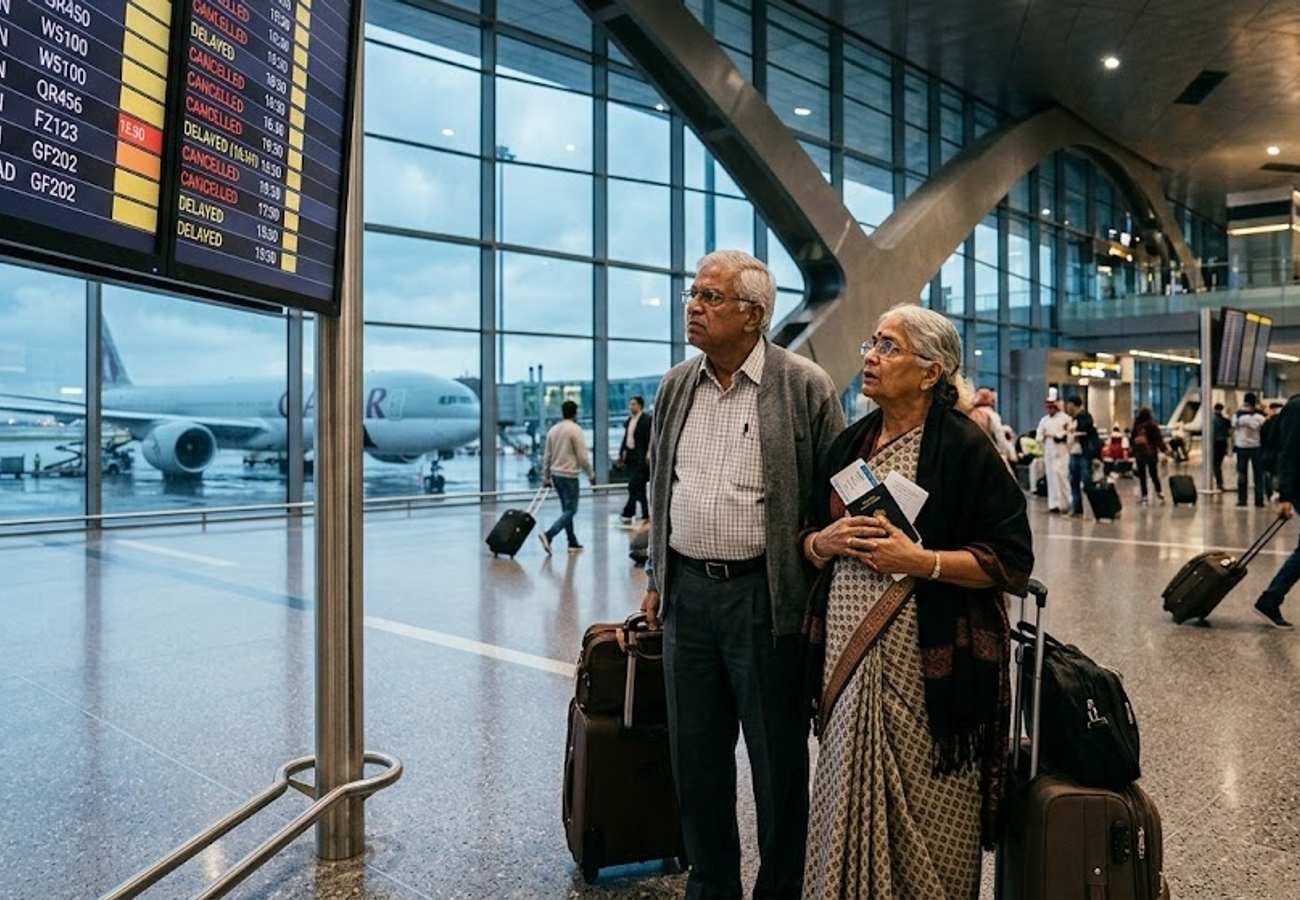
Image generated by AI
The Indian Embassy in Tehran has issued a formal travel advisory urging Indian nationals to postpone non-essential travel to Iran and consider temporary departure. Regional tensions involving Iran and the United States have placed aviation networks in the UAE, Kuwait, Bahrain, and Jordan on high alert.
The Disruption Details
The advisory follows a period of escalating hostilities and deepening security concerns within Iran. The Indian Embassy has specifically recommended that citizens currently residing in Iran evaluate their security situation and utilize existing commercial transport options to exit the country before potential logistics failures occur.
The instability is not confined to Iranian borders. Because of Iran's proximity to critical aviation corridors and shipping lanes, including the Strait of Hormuz, the security situation is creating operational uncertainty for carriers and airport operators across West Asia.
Flight & Airport Impact Breakdown
Our analysis of regional aviation patterns indicates that instability in Tehran creates a ripple effect across the Gulf's primary transit hubs.
- Iran: High risk of flight cancellations, sudden airspace closures, and restricted movement for foreign nationals.
- United Arab Emirates (Dubai/Abu Dhabi): Increased monitoring of flight paths; potential for route diversions to avoid Iranian airspace.
- Kuwait & Bahrain: Heightened security screening and monitoring of regional military activity affecting civilian flight paths.
- Jordan: Indirect pressure on airspace management and border protocols due to regional volatility.
- Operational Risks: Airlines are currently reviewing fuel planning and flight durations to account for longer detour routes.
Regional Impact Matrix
| Country | Potential Travel Impact |
|---|---|
| Iran | Security restrictions and flight uncertainty |
| UAE | Route planning adjustments and passenger confidence shifts |
| Kuwait | Intensive regional security monitoring |
| Bahrain | Implementation of additional safety procedures |
| Jordan | Airspace and border management considerations |
| Qatar | Infrastructure protection and transit monitoring |
| Saudi Arabia | Sensitivity in energy and tourism markets |
Passenger Rights & Advisory (Information Gain)
Travelers currently booked on flights to or through the Middle East should be aware of their legal protections and the steps required to mitigate risk.
Rebooking and Refunds If your flight is canceled or significantly delayed due to security concerns, you are entitled to a full refund or re-routing. Under most international aviation standards and DOT guidelines:
- Involuntary Changes: If an airline cancels a flight due to airspace closure, they must offer a refund to the original form of payment or a confirmed seat on the next available flight.
- Duty of Care: For those stranded in transit hubs (such as Dubai or Doha), airlines are generally expected to provide communication facilities and refreshments.
Travel Insurance Warnings Passengers must review their "Force Majeure" and "War/Terrorism" clauses. Many insurance providers exclude coverage for regions under active government travel warnings. If the Indian Embassy or your national government has issued a "Do Not Travel" or "Postpone Travel" advisory, standard trip cancellation insurance may be void.
Essential Actions for Indian Nationals
- Registration: All citizens in Iran must register with the Indian mission in Tehran to ensure emergency communication.
- Documentation: Maintain physical and digital copies of passports and visas.
- Monitoring: Track flight status via official systems like FlightAware or airline-specific apps for real-time diversion updates.
Industry Analyst View
The strategic location of Iran makes it a critical pivot point for global aviation. The current instability threatens the "hub-and-spoke" model utilized by major Gulf carriers. When airspace is restricted, airlines face a "triple hit": increased fuel burn due to longer routes, higher crew costs due to extended flight times, and a decrease in passenger load factors as travelers avoid the region.
The long-term challenge for the West Asian tourism sector—particularly in the UAE and Saudi Arabia—is the fragility of traveler confidence. While infrastructure is world-class, the perception of regional instability can lead to immediate drops in bookings, regardless of the actual safety levels at the destination airport.
Flight operators are currently prioritizing flexibility in scheduling to manage the unpredictable nature of regional airspace availability.
Related Travel Guides
Disclaimer
This article is for informational and educational purposes only. It does not constitute legal, financial, or professional advice. While we strive to provide accurate and up-to-date information, travel policies, regulations, and conditions change rapidly. Always verify information with official sources before making travel decisions. Nomad Lawyer makes no representations about the accuracy, reliability, completeness, or suitability of the information provided. Readers should consult qualified professionals for advice specific to their circumstances. The views expressed in this article are those of the author and do not necessarily reflect the views of Nomad Lawyer.
Preeti Gunjan
Contributor & Community Manager
A passionate traveller and community builder. Preeti helps grow the Nomad Lawyer community, fostering engagement and bringing the reader experience to life.
Learn more about our team →