
India Powers Sri Lanka Travel Growth As Over One Million Visitors Arrive With Global Markets Driving Tourism Rise
India Powers Sri Lanka Travel Growth As Over One Million Visitors Arrive With Global Markets Driving Tourism Rise

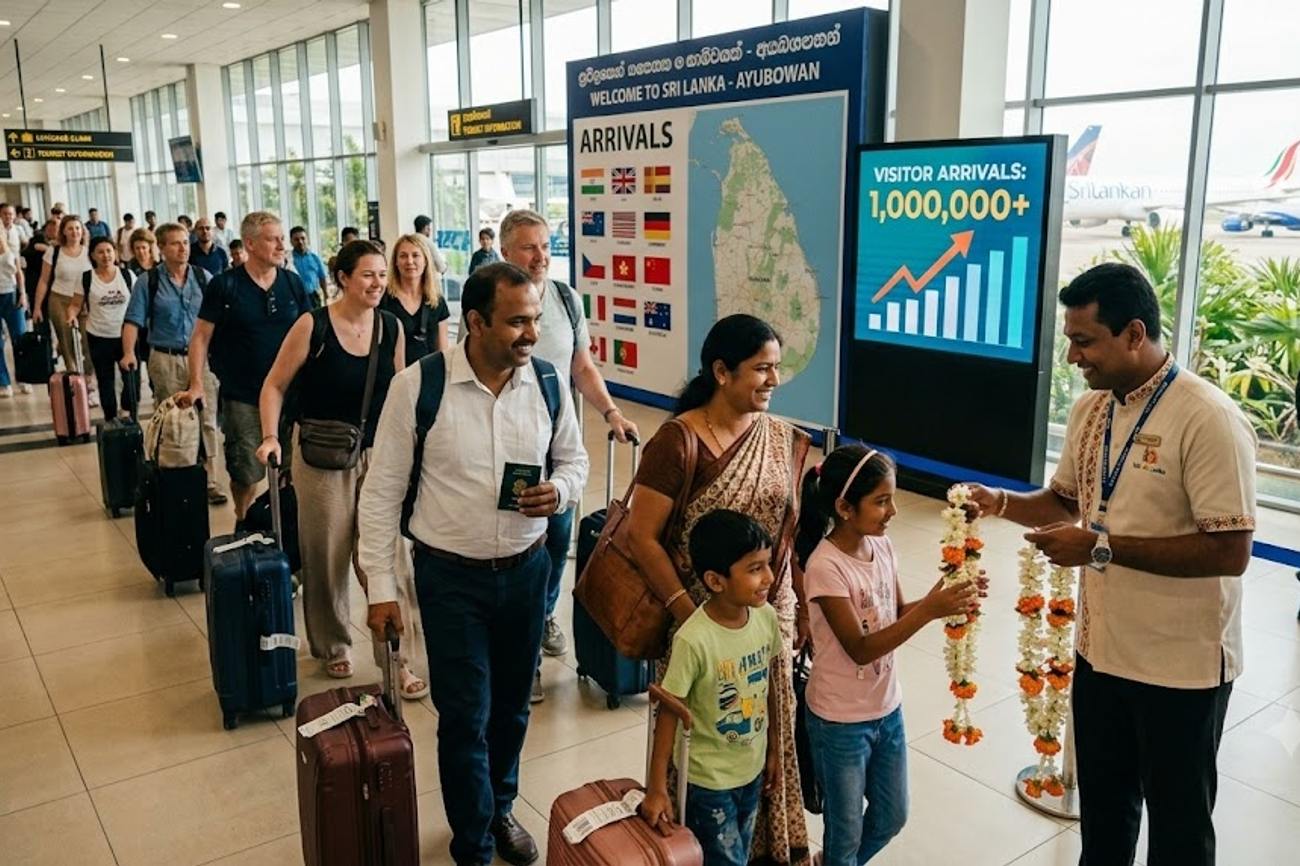
Image generated by AI
title: Sri Lanka Tourism Surge 2026: Passenger Rights and Connectivity Guide date: 2026-09-15 category: Aviation Advisory
A traveler departing from Chennai for Colombo this morning likely noticed a crowded terminal and a surge in flight frequencies, as Indian demand now accounts for over a quarter of all arrivals into Sri Lanka. This spike in regional traffic, while signaling a tourism boom, often leads to operational strain, overbookings, and schedule volatility for those flying into Bandaranaike International Airport (CMB).
Sri Lanka Inbound Surge: The 2026 Statistics
The Sri Lanka Tourism Development Authority (SLTDA) has confirmed a massive influx of international visitors, with total arrivals crossing the 1.6 million threshold. Specifically, the island nation has welcomed 1,609,759 international tourists so far in 2026. This growth is not evenly distributed but is heavily driven by a few key global corridors.
India has established itself as the primary engine of this growth, representing 25.3% of all total arrivals. The trend intensified in early September; during the first 14 days of that month, India provided 22,541 tourist arrivals, which spiked their share of the total entry market to 30%.
Beyond the regional powerhouse of India, long-haul markets have shown significant resilience and growth. The United Kingdom currently stands as the second-largest source of visitors, with 155,798 arrivals. China follows in third place with 105,294 visitors. Other notable contributions include:
- Germany: 94,007 arrivals
- Russian Federation: 81,670 arrivals
- Australia: 80,821 arrivals
- France: 76,631 arrivals
- United States: 44,046 arrivals
- The Netherlands: 40,184 arrivals
- Canada: 32,844 arrivals
Short-term data from the first half of September further illustrates the market distribution. While India led with 30% of arrivals, the UK contributed 8% (5,809 visitors). Australia and China each held approximately 6% of the market, with 4,783 and 4,466 arrivals respectively. Germany followed at 5% with 4,006 visitors. Other contributors in the top ten for this period included France (2,647), the Maldives (2,646), Japan (2,053), Bangladesh (1,983), and Spain (1,892).
Affected Routes and Flights
While the growth is positive for the economy, the concentration of passengers on specific routes increases the risk of delays and cancellations. Travelers on the following corridors should be particularly vigilant regarding their flight status:
- India to Sri Lanka (CMB): High-frequency routes from Chennai, Delhi, Mumbai, and Bengaluru.
- UK to Sri Lanka (CMB): Long-haul connections typically routed through Middle Eastern hubs (Dubai, Doha, Abu Dhabi).
- China to Sri Lanka (CMB): Increasing direct and connecting flights from major Chinese hubs.
- EU to Sri Lanka (CMB): High volumes from Germany and France.
Passengers are strongly advised to monitor their specific flight numbers via FlightAware or FlightRadar24 to spot delays before arriving at the airport.
Your Rights as a Passenger
With the surge in arrivals, the probability of "overbooking" or "technical delays" increases. Depending on your departure point and the airline you are using, different legal frameworks protect you.
1. Flights Departing from the EU or UK If you are traveling from London, Frankfurt, or Paris to Colombo, you are protected by EU261/2004 (in the EU) or the UK261 equivalent. If your flight is cancelled or delayed by more than three hours for reasons within the airline's control:
- Compensation: For flights exceeding 3,500 km (which includes all European flights to Sri Lanka), you are entitled to €600 (or £520) per person.
- Duty of Care: The airline must provide meals, refreshments, and hotel accommodation if an overnight stay is required.
- Right to Refund: If the flight is cancelled, you can choose between a full refund or re-routing to your destination.
2. Flights Departing from India Passengers flying from India are governed by the DGCA (Directorate General of Civil Aviation) guidelines. While not as prescriptive as EU261, the DGCA requires airlines to provide:
- Refreshments and Meals: Based on the length of the delay.
- Alternative Flights: The airline must attempt to rebook you on the next available flight.
- Refunds: If a flight is cancelled and no alternative is acceptable, a full refund of the ticket price is mandatory.
3. Flights Departing from the USA For those traveling from North America, the US Department of Transportation (DOT) rules apply. While there is no fixed "compensation" amount for delays, the DOT recently mandated that airlines must provide automatic cash refunds if a flight is cancelled or significantly changed and the passenger chooses not to travel.
For those struggling to get a response from an airline, platforms like AirHelp can assist in filing formal claims for EU/UK based disruptions.
Rebooking Strategy and Alternatives
When a disruption occurs during a peak travel period like the 2026 surge, the "first-come, first-served" rule for rebooking applies. Do not wait in a long airport queue; use these strategies:
Immediate Digital Action The moment a cancellation notice arrives, open the airline's mobile app and the official flight status page (or the equivalent for your carrier). Often, the app allows you to select a new flight before the gate agents even begin processing the queue.
Alternative Routing for India-Sri Lanka If your flight from India is cancelled, check for availability on competing carriers. If you are flying from Chennai or Madurai, consider alternative regional carriers or check if a flight from a nearby hub (like Kochi) is available.
Long-Haul Pivot Points For travelers from the UK or Europe, disruptions often happen at the hub. If your connection in Dubai or Doha is missed:
- Request a "Rule 240" style re-accommodation: Ask the airline to book you on a competitor if they cannot get you to Colombo within 24 hours.
- Compare Refund vs. Rebooking: If the next available flight is several days away, it may be faster to take a full refund and book a separate ticket on a different alliance.
The "Hidden City" Check In extreme cases of disruption, look for flights to nearby airports or alternative entries into the region, though for an island nation like Sri Lanka, this is limited to ferry options from India (e.g., Tuticorin to Kankesanthurai), which may be a viable emergency fallback for regional travelers.
FAQ: Sri Lanka Travel Disruption 2026
Am I entitled to compensation for a delayed flight to Colombo? Yes, if you departed from the EU/UK and the delay was over three hours (and not caused by "extraordinary circumstances"). Indian passengers are entitled to care and refunds per DGCA rules, but not fixed cash compensation.
Can I get a full refund if my flight is cancelled? Yes. Regardless of the jurisdiction (US, EU, India), if the airline cancels your flight and you choose not to take the offered alternative, you are legally entitled to a full refund of the unused portion of your ticket.
What should I do if the airline offers a voucher instead of cash? You are not obligated to accept a voucher. Under EU261 and US DOT rules, you have the right to a cash refund. Explicitly state that you are requesting a refund to your original form of payment.
How do I track if my flight is actually delayed? Use real-time tracking tools like FlightRadar24. If the aircraft intended for your route is still grounded in another city, you can often predict a delay before the airline announces it, giving you a head start on rebooking.
Stay vigilant with your booking references and always document every communication with the airline to ensure your rights are protected during this record-breaking travel season.
#SriLankaTourism2026 #CMBAirport #EU261 #DGCAIndia #TravelDisruption #InboundTourismStats
Related Travel Guides
- Afghanistan Tourism Gains Momentum As Taliban Reports Thirty Percent Foreign Visitor Rise Attracting Global Travellers
- Nevada Stands Alongside California And More US Travel Destinations As Over 30% Oil Price Climb Transforms Tourism Patterns
- US Overtakes Others as Global City Rankings Reveal New Momentum for Tourism and Urban Travel in 2026
Disclaimer
This article is for informational and educational purposes only. It does not constitute legal, financial, or professional advice. While we strive to provide accurate and up-to-date information, travel policies, regulations, and conditions change rapidly. Always verify information with official sources before making travel decisions. Nomad Lawyer makes no representations about the accuracy, reliability, completeness, or suitability of the information provided. Readers should consult qualified professionals for advice specific to their circumstances. The views expressed in this article are those of the author and do not necessarily reflect the views of Nomad Lawyer.
Naina Thakur
Contributor & Travel Specialist
Travel enthusiast and legal writer covering visa regulations, responsible tourism, and cultural journeys across global destinations.
Learn more about our team →