
Iceland Preserves Aviation Legacy as Iconic Northern Lights Boeing 757 Transitions to Global Collectibles
Iceland transforms the retired Boeing 757 'Hekla Aurora' into global aviation collectibles, blending destination branding with sustainable aircraft recycling.
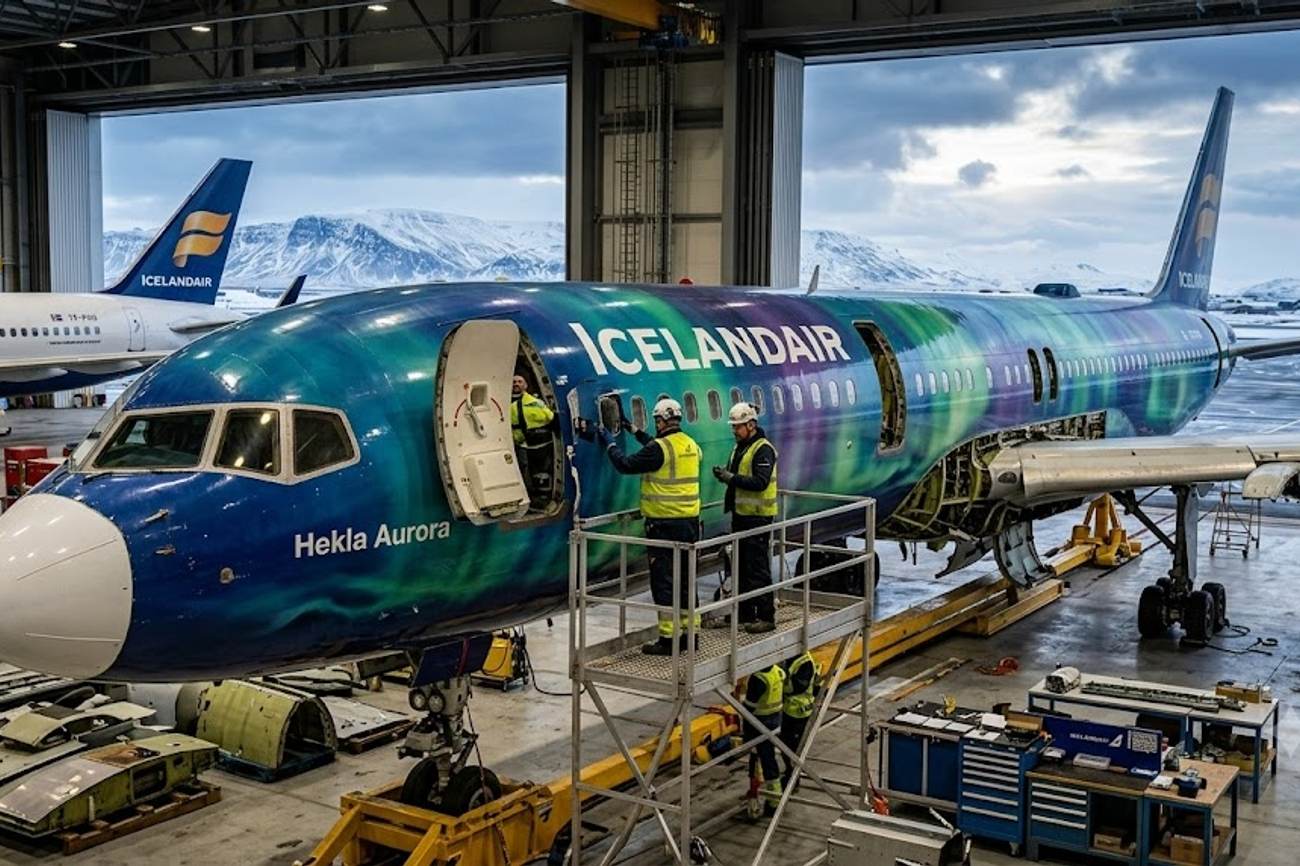
Image generated by AI
REYKJAVIK, September 8, 2026 —
Iceland is redefining the lifecycle of retired aircraft by transforming the farewell of its celebrated Northern Lights Boeing 757 into a permanent piece of global travel heritage. By converting the fuselage of the aircraft into high-end collectibles, the nation is ensuring that the vessel which once marketed its celestial landscapes continues to drive tourism interest worldwide.
The aircraft, registered as TF-FIU and known by the name Hekla Aurora, has officially ceased flight operations. However, its role as a brand ambassador for Iceland persists. Through a partnership with Aviationtag, sections of the aircraft's distinctive livery—inspired by the aurora borealis—were preserved and repurposed, turning a decommissioned machine into a tangible symbol of Icelandic travel identity.
This initiative signals a broader shift in the tourism sector, where the intersection of aviation history, destination marketing, and sustainable decommissioning practices is becoming a primary driver of passenger engagement.
Hekla Aurora Boeing 757 as a Tool for Destination Branding
The Boeing 757 TF-FIU functioned as far more than a transport vehicle; it was a mobile billboard for Iceland’s most lucrative tourism asset: the Northern Lights. In 2014, the aircraft was outfitted with the Hekla Aurora livery, a design specifically engineered to mirror the vivid colors of the Arctic skies.
As the aircraft traversed international corridors connecting North America and Europe, it served as a visual prelude to the Icelandic experience. For many passengers, the sight of the aircraft on the tarmac was the first point of contact with the country's natural beauty, effectively bridging the gap between the transit process and the destination itself.
By integrating the destination's primary attraction into the aircraft's physical appearance, Icelandair strengthened the national image as a hub for adventure and seasonal wonders. This strategy underscores a growing trend where the journey is marketed as an integral part of the holiday, rather than a mere necessity.
Decommissioning TF-FIU in Spain for Global Distribution
Following its final operational mission, TF-FIU was transported to Lleida, Spain, for decommissioning. In a precise industrial process, specific sections of the fuselage were harvested before the remainder of the airframe was dismantled. These materials were then transferred to Aviationtag to be crafted into limited-edition pieces.
A total of 25,000 Aviationtag collectibles were produced from the Hekla Aurora. These items allow aviation enthusiasts and former passengers to maintain a physical link to the aircraft and the memories associated with their trips to Iceland.
This process represents a modern evolution in travel heritage. Traditionally, retired aircraft were either scrapped or placed in static museum displays. The shift toward "fragmented heritage"—where pieces of a plane are distributed globally—allows the story of the aircraft to permeate thousands of homes, extending the reach of the original tourism narrative.
Fleet Modernization and the Shift to Airbus A321LR
The retirement of the Hekla Aurora is not an isolated event but a symptom of a wider systemic change within Iceland’s aviation infrastructure. For decades, the Boeing 757 was the backbone of Icelandair’s operations, prized for its unique ability to handle long-haul routes while remaining efficient enough for mid-range hops. This versatility was essential in establishing Iceland as a premier stopover destination for transatlantic travelers.
However, the industry is currently pivoting toward next-generation aircraft that offer superior fuel efficiency and reduced carbon emissions. Icelandair is actively modernizing its fleet, integrating Airbus A321LR aircraft to replace the aging 757s.
For the passenger, this transition means a shift in the in-flight experience. While the Boeing 757 era is defined by rugged reliability and iconic liveries, the new era focuses on operational sustainability and enhanced cabin technology.
Strategic Impact of Aircraft Branding on Tourism
The use of the Northern Lights livery on TF-FIU provides a blueprint for how airlines can influence destination perception. When an aircraft carries the visual identity of a country, it creates an emotional resonance with the traveler long before they clear customs.
The following table outlines the specific tourism drivers associated with the Hekla Aurora project:
| Tourism Element | Impact on Traveler & Brand |
|---|---|
| Northern Lights Branding | Direct promotion of Iceland's primary natural attraction |
| International Route Network | Increased visibility across North American and European markets |
| Specialized Aircraft Design | Enhanced passenger memory and emotional connection |
| Aviation Collectibles | Extension of destination storytelling beyond the flight |
This approach proves that aviation assets can function as long-term marketing tools, with the "afterlife" of the aircraft providing a secondary wave of brand awareness.
Global Trends in Aviation Preservation
Iceland’s strategy aligns with a burgeoning global movement to preserve the stories of retired aircraft. As the industry phases out legendary models like the Boeing 757 and the Airbus A380, there is an increasing demand to archive the history of these "aviation generations."
For many nations, these aircraft are not merely aluminum and engines; they are symbols of economic growth and the expansion of international diplomacy. By recycling these planes into collectibles or museum pieces, countries can preserve the legacy of their tourism growth.
Why This Matters: The Evolution of the Passenger Experience
For the modern traveler, the story of the Hekla Aurora highlights a fundamental change in how we perceive travel. A vacation is no longer just about the hotel or the sightseeing tour; it is an end-to-end experience that begins the moment a ticket is booked.
From a logistical standpoint, the conversion of TF-FIU into collectibles solves a waste problem while creating a revenue stream. From a psychological standpoint, it transforms a piece of industrial waste into a "memory object." For the traveler, this means that the emotional connection to a destination can be physically preserved, turning a past trip into a lifelong memento. This shift suggests that future airline liveries will be designed not just for current visibility, but for their eventual value as historical artifacts.
Related Travel Guides
Disclaimer
This article is for informational and educational purposes only. It does not constitute legal, financial, or professional advice. While we strive to provide accurate and up-to-date information, travel policies, regulations, and conditions change rapidly. Always verify information with official sources before making travel decisions. Nomad Lawyer makes no representations about the accuracy, reliability, completeness, or suitability of the information provided. Readers should consult qualified professionals for advice specific to their circumstances. The views expressed in this article are those of the author and do not necessarily reflect the views of Nomad Lawyer.