
Iceland Eliminates Travel Chaos with Radical New Tourism Caps and Cruise Restrictions to Prevent Airport Disruptions and Overcrowding: Latest Airline News
As mass tourism triggers severe flight cancellations and global travel chaos, Iceland aggressively pivots to a high-value, sustainable model, capping arrivals and restricting cruise liners to protect its Arctic ecosystems.

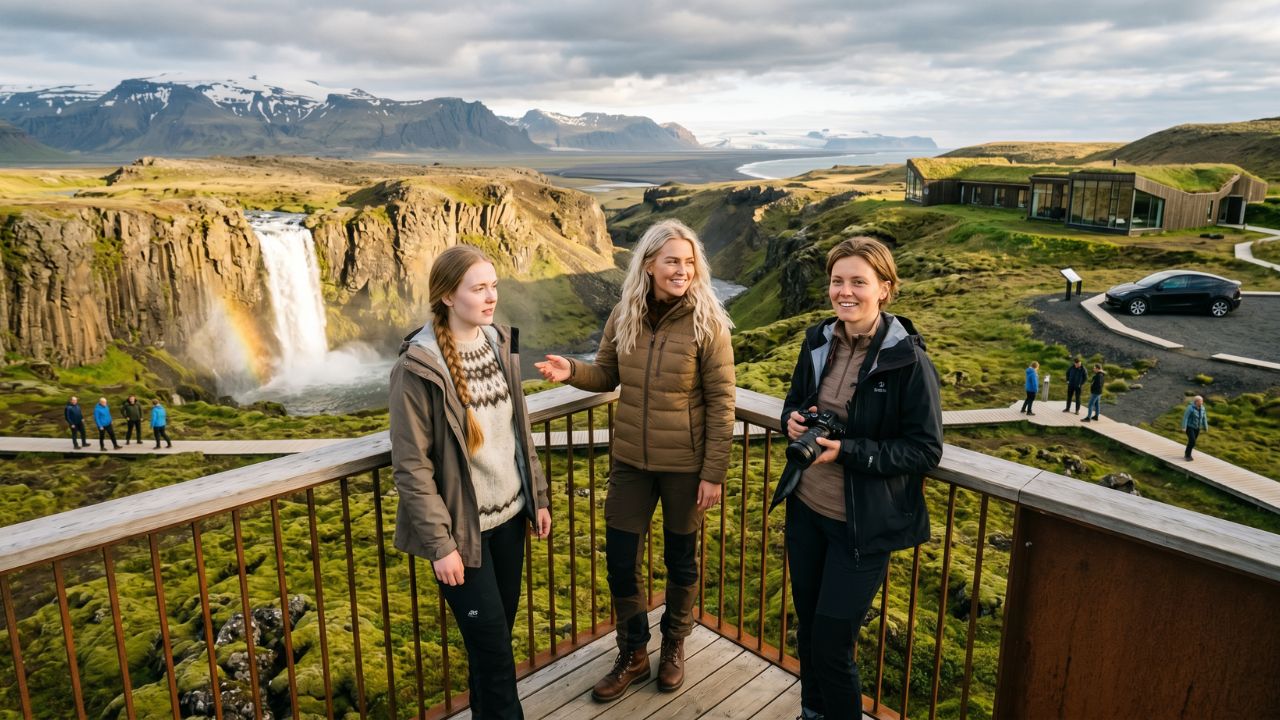
Image generated by AI
In a massive, highly strategic legislative maneuver designed to completely insulate its fragile Arctic ecosystems from the severe travel chaos currently plaguing global mass-market destinations, the Icelandic government has fundamentally rewritten its tourism playbook. As international mega-hubs battle crippling flight cancellations and severe airport disruptions caused by unmanaged peak-season passenger volumes, Iceland is aggressively capping visitor numbers at specific geographic hotspots. Local authorities have explicitly rejected the old model of unchecked expansion, actively pivoting their marketing focus toward affluent, eco-conscious explorers. By reinstating targeted accommodation taxes, strictly restricting massive international cruise liners, and decentralizing domestic flight routes away from the overcrowded southern coast, this revolutionary sustainability blueprint represents the premier headline in today's breaking airline news and essential global aviation updates.
By introducing direct passenger coordination and dynamic scheduling backups, the regional aviation hubs target growing passenger demand across vital commerce sectors. The choice to coordinate flight departures in phases helps to manage gate capacity, supporting the country's broader regional transportation network.
Context: Shielding the Arctic from Commercial Friction
The modern global travel pipeline frequently treats unique natural geographies as infinite commodities. When international airlines land tens of thousands of passengers in a concentrated area, the resulting mass-tourism footprint instantly triggers systemic travel chaos.
Strategic planners in Reykjavik realized that the historic surge in arrivals was actively destroying the delicate Arctic ecosystems that tourists came to see. The continuous, unmanaged foot traffic overwhelmed small communities, clogged rural roads with rental vehicles, and severely degraded volcanic hiking trails. By actively capping numbers and filtering out low-yield commercial traffic, the government ensures that its domestic economy thrives while preventing the localized airport disruptions and infrastructural breakdowns that define modern summer travel in Europe. This structural adjustment forces international travel agencies to entirely rethink how they route passengers into the country.
To view live flight schedules, real-time regional hub maps, or specific sustainability protocols at primary Icelandic gateways, travelers must consult official national directories. For direct booking access to the northern regions and specific eco-travel rules, passengers should check the official Icelandair portal or their respective operating carrier. To explore live flight tracking and monitor the exact status of regional domestic routes, passengers can consult the official FlightAware tracking service.
Section-Wise Breakdown of the Policy Pivot
The Southern Coast vs. The Remote North
National tourism boards are deliberately guiding foot traffic far away from the overcrowded southern coast, actively preventing the highway gridlock and terminal congestion that previously defined Icelandic summers. Instead, untouched areas like the rugged Westfjords and remote North Iceland are now taking center stage. To support this massive geographic dispersion, transport operators are rapidly expanding domestic flight routes to these regional hubs. This brilliant strategy prevents the capital from becoming entirely overwhelmed and distributes wealth evenly across smaller farming and fishing villages.
The Tourist Tax and Eco-Conduct
To fund this massive logistical pivot, the government is aggressively reinstating targeted accommodation levies. Foreign visitors must now pay a small premium, which directly funds the repair of eroded hiking trails and the installation of advanced safety walkways around roaring geysers. Furthermore, travelers must fully adapt to strict new codes of conduct. Off-road driving is completely forbidden, and walking off marked trails in delicate mossy fields carries devastating financial penalties.
Maritime Caps: The Cruise Liner Crackdown
The most aggressive logistical restriction targets maritime operations. Authorities are introducing strict caps on the size and frequency of massive international cruise liners. Because these massive vessels frequently overwhelm small coastal towns and discharge thousands of passengers simultaneously into fragile historical zones, the updated regulations exclusively favor smaller, luxury expedition ships. Ports are also actively installing shore-power capabilities to eliminate toxic diesel engine usage while docked.
Technical Roster: Iceland Sustainable Tourism Matrix
To ensure absolute factual accuracy regarding the specific legislative tools Iceland is utilizing to combat mass-market travel chaos, the following table details the exact operational restrictions defining the new tourism blueprint:
| Legislative Policy / Restriction | Specific Operational Mandate | Global Travel Market Impact |
|---|---|---|
| Regional Flight Dispersion | Expanding Routes to Westfjords | Eradicates terminal congestion and highway gridlock in the south |
| Cruise Liner Caps | Banning Massive Mega-Ships | Protects fragile coastal ports from thousands of simultaneous disembarkations |
| Accommodation Levies | Reinstated Tourism Tax | Generates critical revenue for repairing eroded volcanic trails and infrastructure |
| Eco-Conduct Penalties | Zero-Tolerance Off-Roading | Devastating financial fines for tourists damaging delicate Arctic moss fields |
| Maritime Shore Power | Elimination of Diesel Idling | Forces cruise lines to adapt Northern European itineraries to new green standards |
Passenger Impact: The Era of High-Value Exploration
For the everyday global tourist accustomed to cheap, rapid-fire sightseeing, navigating the new Icelandic travel landscape requires a complete behavioral reset.
Because the government is intentionally filtering out low-yield mass tourism, budget travelers will find accommodations significantly more expensive due to the reinstated levies. However, for the affluent, eco-conscious explorer, this policy pivot guarantees an absolutely flawless, crowd-free experience. Discerning travelers are heavily rewarded for choosing eco-friendly transit options, such as renting electric vehicles to explore the Golden Circle. Luxury accommodation providers have eliminated single-use plastics entirely. For the passenger, the reward for paying the premium tourism tax is exclusive access to beautifully intact, pristine natural spaces completely devoid of the claustrophobic travel chaos found in other European capitals.
Industry Analysis: A Global Blueprint for Survival
Aviation and hospitality industry analysts view Iceland's profound structural pivot as a definitive, long-term commitment to quality over raw commercial quantity.
As highlighted in a recent comprehensive analysis by Forbes, the nation is successfully proving that a destination can remain highly lucrative without sacrificing its ecological soul to mass commercialism. Analysts note that continuous, unchecked flight arrivals effectively act as a destructive force in vulnerable geographies. By treating their unique volcanic terrain as a finite, precious asset rather than an infinite commodity, Icelandic authorities are ensuring long-term economic resilience. This fresh operational philosophy serves as an essential global blueprint for other overwhelmed tourist hubs. Cruise lines and international airlines are now forced to adapt their schedules completely, focusing on high-value, lower-frequency routes rather than dumping massive passenger volumes into fragile ecosystems.
Actionable Advice for Navigating Iceland in 2026
If you are a traveler planning an itinerary to Iceland amidst these massive structural changes, execute this tactical eco-survival checklist immediately:
- Bypass the Southern Coast Completely: To avoid the remaining pockets of travel friction and higher accommodation costs, book domestic connecting flights immediately upon arriving in Keflavik. Route yourself directly to the Westfjords or North Iceland to experience authentic, crowd-free exploration.
- Audit Your Rental Vehicle: The hospitality sector is heavily rewarding eco-friendly transit. Do not rent a standard gas-guzzling SUV. Opt for an electric rental car to explore the Golden Circle, ensuring you comply with the nation's strict new carbon-neutral ethos.
- Sign the National Pledge: Understand that Icelandic conservation officers operate with zero tolerance. Off-road driving or walking on delicate moss carries massive financial fines. Stay strictly on the newly funded safety walkways and marked trails.
- Review Cruise Line Compliance: If you are booking a maritime expedition to Iceland, ensure your operator utilizes smaller, luxury expedition ships equipped for shore-power connectivity. Massive legacy cruise liners are facing strict caps and may have their itineraries abruptly canceled by local port authorities.
FAQ: Iceland Sustainable Tourism Policy 2026
Why is Iceland capping tourist numbers and restricting flight arrivals?
Local authorities are actively capping numbers at specific fragile hotspots to protect the delicate Arctic ecosystems from being destroyed by the unchecked, mass-market foot traffic that causes systemic travel chaos.
What is the purpose of the newly reinstated accommodation tax?
The targeted accommodation levies ensure foreign visitors pay a premium to fund vital conservation projects, specifically repairing heavily eroded hiking trails and building sustainable infrastructure in remote rural areas.
How are cruise ship operations changing in Icelandic ports?
Maritime authorities have introduced strict caps on the size and frequency of international cruise liners, favoring smaller expedition ships and requiring shore-power capabilities to eliminate diesel emissions while docked.
Defending the Arctic Frontier
The sweeping implementation of Iceland's new high-value tourism blueprint proves definitively that a sovereign nation can successfully defend its borders against the destructive weight of global travel chaos. By capping arrivals, taxing accommodations, and strictly restricting massive cruise ships, the government has entirely dismantled the unchecked mass-tourism model that was actively eroding its pristine volcanic terrain. As international airlines re-route flights to the remote Westfjords and travelers adapt to strict eco-penalties, global explorers must accept a highly structured new reality: visiting Iceland in 2026 is no longer about mindless consumption; it is a premium privilege that demands deep, responsible stewardship and absolute respect for the fragile Arctic landscape.
Key Takeaways
- Radical Capacity Caps: Iceland is explicitly rejecting mass visitor expansion, actively capping numbers at fragile hotspots to prevent severe travel chaos and environmental degradation.
- Reinstated Tourism Tax: The government is aggressively utilizing accommodation levies to fund vital conservation projects and repair damaged volcanic trails.
- Maritime Mega-Ship Bans: Strict size and frequency caps on international cruise liners have been introduced to protect small coastal towns from being overwhelmed by massive passenger discharges.
- Geographic Dispersion: Tourism boards are aggressively expanding domestic flight routes to the Westfjords and North Iceland, actively pulling foot traffic away from the crowded southern coast.
- Zero-Tolerance Eco-Rules: Off-road driving and deviating from marked trails now carry devastating financial penalties, forcing modern holidaymakers to become active protectors of the environment.
Related Travel Guides
Global Luxury Travel Market Surges Bypassing Commercial Travel Chaos
Egypt Eradicates Travel Chaos with Radical 15-Day Tourism Visa Reform
Disclaimer
This article is for informational and educational purposes only. It does not constitute legal, financial, or professional advice. While we strive to provide accurate and up-to-date information, travel policies, regulations, and conditions change rapidly. Always verify information with official sources before making travel decisions. Nomad Lawyer makes no representations about the accuracy, reliability, completeness, or suitability of the information provided. Readers should consult qualified professionals for advice specific to their circumstances. The views expressed in this article are those of the author and do not necessarily reflect the views of Nomad Lawyer.
Kunal K Choudhary
Co-Founder & Contributor
A passionate traveller and tech enthusiast. Kunal contributes to the vision and growth of Nomad Lawyer, bringing fresh perspectives and driving the community forward.
Learn more about our team →