
Iceland Tourism Report 2026: 93 Visa-Free Nations, Keflavík Arrivals, Economic Projections, and Key Travel Infrastructure
Iceland's tourism sector is navigating a stabilizing post-pandemic phase in 2026, supported by visa-free access for 93 countries, projected arrivals of 2.24 million, and key airline expansions.

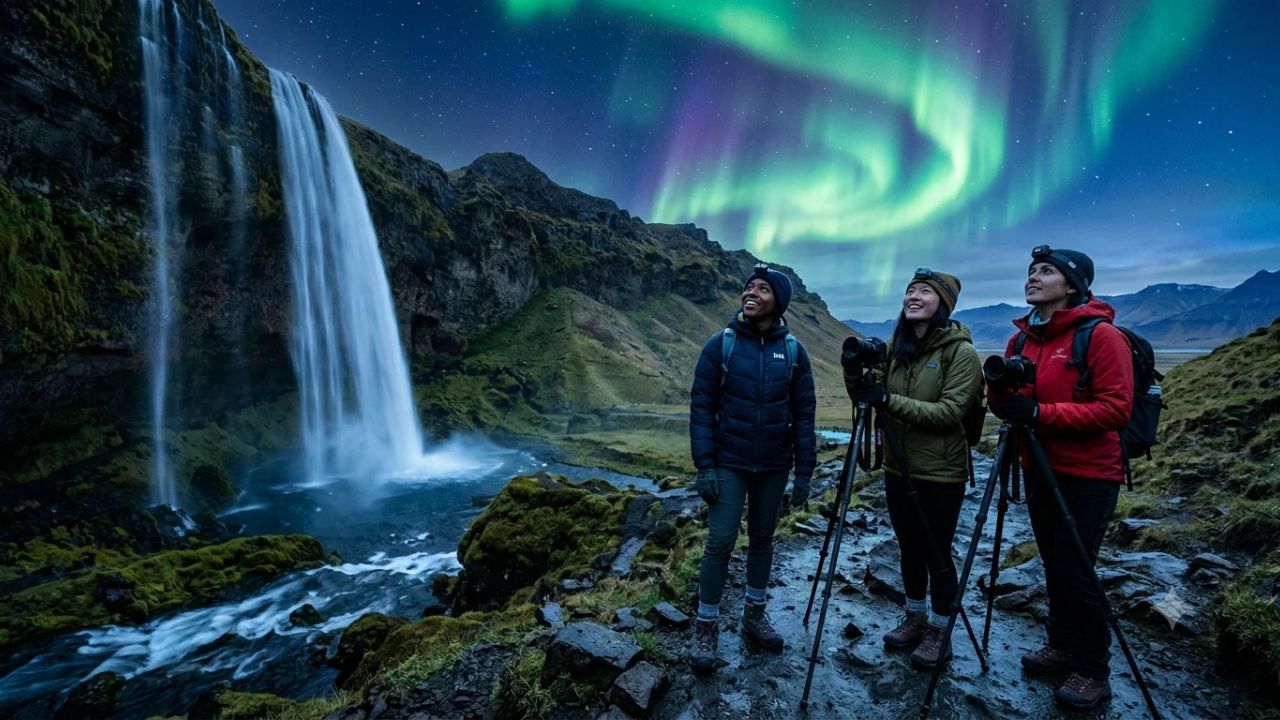
Iceland’s tourism economy is navigating a critical maturation phase in 2026, as visa-free entry for citizens of 93 countries and territories—including Canada, Switzerland, the United Arab Emirates, and the United States—continues to anchor international travel demand amid shifting visitor arrival patterns and macroeconomic recalibration.
Renowned globally for its dramatic juxtaposition of active volcanic systems, vast ice caps, geothermal lagoons, and winter auroral displays, the North Atlantic nation has solidified its reputation as one of Europe’s most distinctive travel destinations. However, after years of rapid expansion, 2026 marks a transition toward volume stabilization and value-driven tourism management.
Government and industry data indicate that while international arrivals have plateaued slightly below record peaks, tourist spending, luxury wellness infrastructure, and regional dispersal beyond the traditional Golden Circle circuit remain central pillars of the national economy.
                  ICELAND TOURISM ECOSYSTEM AT A GLANCE (2026)
                  =============================================

          [ INTERNATIONAL ACCESS: 93 VISA-FREE NATIONS ]
          • North America: United States, Canada, Mexico
          • Europe / Schengen: Switzerland, UK, Germany, France, Nordics
          • Asia-Pacific & Middle East: UAE, Japan, Singapore, South Korea
                                 │
                                 ▼
          [ GATEWAY ARRIVALS & ECONOMIC METRICS ]
          • Jan–Aug 2026 KEF Arrivals: 1,563,893 (-1.0% vs 2025)
          • Full-Year Projected Arrivals: 2.22 Million to 2.24 Million
          • Nominal GDP: US$42.77B – US$43.80B | GDP Per Capita: ~US$107,464
          • Average Hotel Occupancy: 67.4% National | 73.2% Capital Region
                                 │
                                 ▼
          [ AVIATION & REGIONAL DISPERSAL NETWORKS ]
          • Primary Global Hub: Keflavík International Airport (KEF)
          • Domestic Transit Hub: Reykjavík Airport (RKV)
          • Regional Gateways: Akureyri (North), Egilsstaðir (East), Ísafjörður (West)
          • Key Carriers: Icelandair, British Airways, Lufthansa, easyJet, Delta
2026 Tourism Trends: Keflavík Inbound Flows and Seasonal Dynamics
According to official border control counts, Iceland welcomed 1,563,893 international visitors through Keflavík International Airport (KEF) between January and August 2026. This performance reflects a modest 1.0% decline compared to the corresponding eight-month period in 2025, signaling that the post-pandemic rebound has leveled off into a sustainable baseline.
By the close of 2026, total foreign tourist arrivals are projected to settle between 2.22 million and 2.24 million visitors.
Source Markets and Geographic Concentration
Keflavík International Airport processes more than 95% of all foreign tourist arrivals entering the island. The demographic profile of incoming travellers reveals strong geographic concentration:
- United States: Remains the undisputed primary inbound market, contributing approximately one-third of all international visitors.
- United Kingdom: Represents the second-largest feeder market, supported by extensive point-to-point low-cost and legacy flight connections.
- Germany & Northern Europe: Continues to supply steady, high-spending nature enthusiasts and campervan road-trippers.
- China: Highlights rebounding long-haul Asian travel, showing positive growth trends across guided tours and independent photography excursions.
Sharp Seasonal Demand Swings
Seasonality remains a defining operational characteristic of Icelandic tourism. Daily tourist volumes fluctuate dramatically throughout the year:
- January Trough: Averages approximately 23,000 visitors per day, driven primarily by Northern Lights seekers, short city breaks, and New Year holidaymakers.
- August Peak: Climbs to 81,000 visitors per day, stretching hotel inventories, car rental fleets, and popular excursion routes to full capacity.
This seasonal concentration directly impacts accommodation performance. The nationwide average hotel room occupancy stands at 67.4%, rising to 73.2% across the Capital Region (Reykjavík and surrounding municipalities). Regional hotels in the South and West experience peak summer sold-out conditions while offering competitive value during the shoulder and winter months.
September 2026 Airport Snapshot
During September 2026, Keflavík International Airport handled 711,978 total passengers, representing a 5.2% decrease compared to September 2025. Throughout the month, 25 commercial airlines operated direct scheduled services linking Keflavík with 69 international destinations. The three highest-density passenger routes were Copenhagen, London, and New York, emphasizing Iceland’s continued role as an Atlantic aviation crossroads.
Economic Outlook 2026: High-Income Wealth and Sector Headwinds
Iceland’s broader macroeconomic framework provides essential context for its tourism industry. In 2026, Iceland’s nominal Gross Domestic Product (GDP) is projected to reach between US$42.77 billion and US$43.80 billion, representing real annual economic expansion of 1.4% to 1.9%.
With a population of approximately 395,000, Iceland’s GDP per capita stands at roughly US$107,464, firmly establishing the nation among the wealthiest high-income economies worldwide.
                    ICELAND MACROECONOMIC DRIVERS (2026)
                    ====================================

         EXPANSIONARY PILLARS               ECONOMIC CHALLENGES
         ─────────────────────              ───────────────────
         • Geothermal / Hydro Computing     • Weaker Marine Product Exports
           Data Centre Investments          • Slower Domestic Household Spending
         • High-Yield Tourism Services      • Elevated Operating & Labor Costs
         • Rebounding Domestic Consumption  • Plateauing Visitor Volume Growth
Economic growth in 2026 is bolstered by significant capital investment in zero-emission green computing data centres—which capitalize on Iceland’s cheap, abundant geothermal and hydroelectric power—alongside steady services and tourism revenues.
However, the economy faces measurable headwinds:
- Marine Export Contraction: Reduced quotas and softer overseas pricing for marine products have dampened fish export earnings.
- Household Spending Moderation: Elevated interest rates have curtailed domestic retail consumption.
- Tourism Margin Pressures: With tourism arrivals stabilizing rather than surging, operators face rising labor and logistical costs, encouraging a strategic pivot toward premium, high-value experiences over mass volume.
Complete Directory: The 93 Visa-Free Countries and Territories
As of October 2026, citizens from 93 countries and territories enjoy visa-free entry to Iceland for short-term stays, typically up to 90 days within any 180-day window for tourism, family visits, or business meetings.
Because Iceland is a member of the Schengen Area (though not the European Union), travellers entering Iceland can move freely across other Schengen member states without additional border passport controls, provided they stay within their overall 90-day allotment.
| Region / Category | Eligible Visa-Free Countries and Territories (As of October 2026) |
|---|---|
| Western & Northern Europe | Austria, Belgium, Denmark, Finland, France, Germany, Greece, Ireland, Italy, Liechtenstein, Luxembourg, Monaco, Netherlands, Norway, Portugal, San Marino, Spain, Sweden, Switzerland, United Kingdom, Vatican City, Andorra |
| Central & Eastern Europe | Albania, Bosnia and Herzegovina, Bulgaria, Croatia, Cyprus, Czechia, Estonia, Georgia, Hungary, Kosovo, Latvia, Lithuania, Moldova, Montenegro, North Macedonia, Poland, Romania, Serbia, Slovakia, Slovenia, Ukraine |
| North & Central America | Canada, United States, Mexico, Costa Rica, El Salvador, Guatemala, Honduras, Nicaragua, Panama |
| South America | Argentina, Brazil, Chile, Colombia, Paraguay, Peru, Uruguay, Venezuela |
| Caribbean Island States | Antigua and Barbuda, The Bahamas, Barbados, Dominica, Grenada, St. Kitts and Nevis, St. Lucia, St. Vincent and the Grenadines, Trinidad and Tobago |
| Asia-Pacific & Oceania | Australia, Brunei, Hong Kong, Japan, Kiribati, Macao, Malaysia, Marshall Islands, Micronesia, New Zealand, Palau, Samoa, Singapore, Solomon Islands, South Korea, Taiwan, Timor-Leste, Tonga, Tuvalu |
| Middle East & Africa | Israel, Mauritius, Seychelles, United Arab Emirates |
Travellers from these jurisdictions do not require a consular visa stamped into their passport prior to departure. However, they must carry a passport valid for at least three months beyond their intended departure date from the Schengen territory.
Top 5 Airlines Connecting Iceland with Global Markets in 2026
Iceland’s isolated North Atlantic position makes commercial aviation the lifeblood of its visitor economy. Five major carriers lead the nation’s international connectivity in 2026:
                 MAJOR AIRLINES SERVING ICELAND (2026–2027)
                 ==========================================

      [ ICELANDAIR ]       ──► Primary Flag Carrier & Transatlantic Hub
                               Hub: KEF | LHR, CDG, FRA, AMS, JFK, YYZ
                               Transatlantic stopovers connecting EU & North America

      [ BRITISH AIRWAYS ]  ──► Flagship UK Connectivity (London Heathrow)
                               October 2026 Half-Term Avios-Only Special Services
                               Year-round premium leisure and business passengers

      [ LUFTHANSA ]        ──► Central European Gateway Carrier
                               Frankfurt (FRA) direct & Munich (MUC) partner routes
                               High-spending Continental European traveler feeder

      [ EASYJET ]          ──► Low-Cost Regional Point-to-Point Network
                               LGW, Manchester, Bristol, Edinburgh connections
                               NEW Liverpool route launching 2 November 2026

      [ DELTA AIR LINES ]  ──► Premier Transatlantic US Legacy Operator
                               Nonstop NYC JFK route active since 2011
                               NEW Daily Boston (BOS) service launching April 2027
1. Icelandair: The National Flag Carrier and Transatlantic Hub
Operating from its central hub at Keflavík International Airport, Icelandair remains the dominant engine of Icelandic air connectivity. The airline’s unique business model utilizes Iceland's midpoint geographic location to connect secondary and primary European cities with North American urban centres.
- Key Hub Connections: London Heathrow, Copenhagen, Paris Charles de Gaulle, Frankfurt, Amsterdam Schiphol, New York (JFK and Newark), Boston, Chicago, Seattle, and Toronto Pearson.
- Stopover Program: The carrier actively promotes multi-day layovers in Iceland at no extra airfare for passengers travelling transatlantic, funneling hundreds of thousands of guests into Reykjavík hotels, restaurants, and day excursions.
2. British Airways: High-Value Connectivity from London Heathrow
British Airways provides premium scheduled links connecting London Heathrow (LHR) directly with Keflavík. The service caters to both UK leisure holidaymakers and business professionals visiting Iceland’s growing energy and green tech sectors.
Demonstrating strong seasonal demand, the carrier scheduled a dedicated Avios-only flight for the British school half-term break in October 2026, operating an outbound flight on 25 October and returning on 1 November. Through its massive Heathrow hub, British Airways also facilitates smooth one-stop transfers for passengers originating across Africa, India, and the Middle East.
3. Lufthansa: Anchoring the German and Central European Market
German travellers represent one of Iceland’s most lucrative tourism segments, known for extended stays, self-drive campervan rentals, and high expenditure on outdoor guided activities. Lufthansa directly serves this demand through daily rotations between Frankfurt Airport (FRA) and Keflavík.
In addition to its Frankfurt mainline operations, Lufthansa markets flights connecting Munich (MUC) with Keflavík, utilizing partner carriers. This extensive dual-hub network channels visitors from across Germany, Austria, Switzerland, and Central Europe efficiently into Iceland.
4. easyJet: Affordable Access and Regional UK Expansion
Low-cost carrier easyJet plays a central role in democratizing travel to Iceland, providing affordable, direct access from multiple UK population centres outside London. Its network includes regular services from London Gatwick, Manchester, Bristol, and Edinburgh.
Expanding its northern footprint, easyJet announced a new direct route linking Liverpool John Lennon Airport to Reykjavík Keflavík, commencing on 2 November 2026. Operating twice weekly on Mondays and Fridays, the service provides an accessible winter city-break conduit for travellers across Northwest England seeking Northern Lights excursions and weekend spa getaways.
5. Delta Air Lines: Long-Standing North American Transatlantic Links
Delta Air Lines maintains an established presence in Iceland, having operated nonstop service between New York (JFK) and Reykjavík since 2011. The airline featured prominently in Iceland’s summer 2026 transatlantic operations, catering to affluent American nature and adventure travellers.
Looking ahead, Delta has announced a significant network expansion: a brand-new daily nonstop service between Boston Logan International Airport (BOS) and Keflavík, scheduled to launch on 12 April 2027 and operate through 30 October 2027. This route will significantly expand one-stop connectivity for travellers originating across the US Midwest and East Coast.
| Airline | Origin Country | Primary Hub / Departure Cities | Operational Focus & Strategy |
|---|---|---|---|
| Icelandair | Iceland | Keflavík (KEF) Hub | Global network; transatlantic stopovers; North America & Europe connections |
| British Airways | United Kingdom | London Heathrow (LHR) | Year-round premium leisure and business; dedicated Avios-only seasonal flights |
| Lufthansa | Germany | Frankfurt (FRA) & Munich (MUC) | Direct connection to Central Europe; nature-focused traveler feeder |
| easyJet | United Kingdom | Gatwick, Manchester, Bristol, Liverpool | Point-to-point affordable travel; new Liverpool service launches Nov 2026 |
| Delta Air Lines | United States | New York JFK & Boston (BOS from 2027) | Major US legacy network; seasonal daily transatlantic widebody services |
Aviation Infrastructure: Five Key Airports Driving Regional Dispersion
While the overwhelming majority of international travellers arrive via the Reykjanes Peninsula, Iceland’s domestic aviation network provides vital links to remote fjords, northern volcanic wonders, and eastern wildernesses.
                  ICELAND'S REGIONAL AIRPORT TOPOGRAPHY
                  =====================================

                            [ ÍSAFJÖRÐUR (IFJ) ]
                            Westfjords Gateway
                            Dynjandi Waterfalls
                                    ▲
                                    │
                                    │ (Domestic Routes)
                                    │
     [ KEFLAVÍK INT'L (KEF) ] ──► [ REYKJAVÍK (RKV) ] ──► [ AKUREYRI (AEY) ]
     Primary Global Hub           Domestic Capital Hub     North Iceland Gateway
     95%+ Foreign Arrivals        Transfer Center          Mývatn & Whale Watching
                                    │
                                    │ (Domestic Routes)
                                    ▼
                          [ EGILSSTAÐIR (EGS) ]
                          Eastfjords Gateway
                          Hallormsstaður Forest
1. Keflavík International Airport (KEF): The Global Tourism Gateway
Located on the Reykjanes Peninsula approximately 50 kilometres southwest of Reykjavík, KEF handles virtually all long-haul and European commercial passenger traffic. Surrounded by mossy volcanic lava fields, the airport features modern Nordic architectural terminals, duty-free shopping hubs, and direct highway bus shuttles connecting passengers to Reykjavík and the nearby Blue Lagoon.
2. Reykjavík Airport (RKV): The Domestic Transportation Core
Situated just two kilometres from downtown Reykjavík, Reykjavík Airport serves as the central hub for domestic air services. International travellers must note that KEF and RKV are separate facilities located 50 kilometres apart. Arriving at Keflavík requires a 45-minute bus or taxi transfer to reach Reykjavík Airport for onward domestic flights.
From RKV, scheduled regional flights depart daily to remote towns in the North, East, and Westfjords, allowing visitors to bypass multi-day winter driving on the Ring Road.
3. Akureyri Airport (AEY): Gateway to the North
Serving as the capital of North Iceland, Akureyri Airport provides rapid access to attractions along the Arctic Coast Way and the Diamond Circle. Flights from Reykjavík take just 45 minutes, landing minutes from Akureyri’s downtown.
The airport provides direct access to Lake Mývatn, Goðafoss waterfall, Ásbyrgi Canyon, and the global whale-watching hub of Húsavík. The facility is also certified for international charter and scheduled operations, receiving direct winter flights from European hubs.
4. Egilsstaðir Airport (EGS): Gateway to East Iceland
Located in the Fljótsdalshérað valley, Egilsstaðir Airport links eastern Iceland with the capital. The surrounding region is renowned for its tranquil fjords, steep sea cliffs, the vast Hallormsstaður National Forest (Iceland’s largest woodland), and the mythic Lagarfljót lake. Egilsstaðir serves travellers seeking peace, wilderness trekking, and authentic fishing village culture far removed from the heavily trafficked southwest.
5. Ísafjörður Airport (IFJ): The Westfjords Lifeline
Nestled at the base of dramatic, flat-topped fjord mountains, Ísafjörður Airport provides essential access to the remote Westfjords region. Because road travel through the Westfjords involves navigating winding, unpaved coastal roads that can become impassable during winter storms, scheduled air service provides a reliable lifeline. Visitors utilize Ísafjörður to access dramatic hiking trails, coastal sea bird colonies, and the roaring multi-tiered Dynjandi waterfall.
| Airport Name | IATA Code | Geographical Location | Primary Strategic Function |
|---|---|---|---|
| Keflavík International | KEF | Reykjanes Peninsula (50 km from capital) | International entry; handles 95%+ of foreign tourists; transatlantic hub |
| Reykjavík Airport | RKV | Central Reykjavík (Urban Core) | Domestic scheduled network; air ambulance; regional connectivity hub |
| Akureyri Airport | AEY | North Iceland (Eyjafjörður) | Access to Diamond Circle, Mývatn, skiing, and Húsavík whale tours |
| Egilsstaðir Airport | EGS | East Iceland (Lagarfljót Valley) | Gateway to Eastfjords, national forests, and unhurried nature tourism |
| Ísafjörður Airport | IFJ | Northwest Iceland (Westfjords) | Lifeline connection for remote fjord communities and adventure hiking |
Premier Accommodations: Five Flagship Hotels Shaping Icelandic Hospitality
Iceland’s accommodation landscape blends minimalist Nordic architecture with dramatic natural settings, catering to diverse traveller segments from urban luxury to remote geothermal wellness:
                  ICELAND'S DIVERSE HOSPITALITY LANDSCAPE
                  =======================================

      [ URBAN LUXURY & HARBOUR VIEWS ]
      • The Reykjavík EDITION (253 Rooms | Old Harbour | TIDES Restaurant)
      • Hotel Borg (99 Rooms | Austurvöllur Square | Historic 1930 Art Deco)

      [ CONTEMPORARY LIFESTYLE & DESIGN ]
      • Canopy by Hilton Reykjavík (112 Rooms | Converted Furniture Factory)

      [ IMMERSIVE VOLCANIC & NATURE RETREATS ]
      • The Retreat at Blue Lagoon (60 Suites | Reykjanes Lava Fields)
      • Fosshotel Glacier Lagoon (125 Rooms | Skaftafell & Jökulsárlón)
1. The Reykjavík EDITION: Luxury Waterfront Sophistication
Situated on the waterfront adjacent to the Old Harbour and the geometric glass facade of the Harpa Concert Hall, The Reykjavík EDITION represents the pinnacle of modern luxury hospitality in Iceland.
The hotel offers 253 guest rooms and suites featuring custom oak furnishings, Italian limestone bathrooms, and floor-to-ceiling glass windows framing Mount Esja and the Atlantic ocean. The property houses TIDES, an acclaimed restaurant overseen by Michelin-starred chef Gunnar Karl Gíslason, alongside a vibrant rooftop terrace, a subterranean spa with geothermal plunge pools, and expansive corporate meeting spaces.
2. Hotel Borg: Historic 1930 Art Deco Grandeur
Overlooking Austurvöllur Square directly across from the Icelandic Parliament (Alþingi) and Reykjavík Cathedral, Hotel Borg is an architectural landmark founded in 1930 by Icelandic wrestler and circus performer Jóhannes Jósefsson.
Featuring 99 guest rooms and suites, the property is celebrated for its meticulously preserved Art Deco styling, custom nickel fixtures, polished wood paneling, and the tranquil Borg Spa. It remains a preferred choice for cultural travellers and dignitaries seeking historical elegance within walking distance of the city’s finest galleries and restaurants.
3. Canopy by Hilton Reykjavík City Centre: Creative Urban Lifestyle
Located on Smiðjustígur within the heart of downtown Reykjavík, Canopy by Hilton spans six interconnected historical buildings, including a former furniture factory, music club, and arts collective.
The hotel features 112 thoughtfully designed rooms incorporating local slate, volcanic grey hues, and vintage Icelandic vinyl records. Its restaurant, Geiri Smart, highlights seasonal Icelandic culinary traditions using fresh seafood and organic farm produce. Its central location allows guests to walk easily to the shopping street Laugavegur and Hallgrímskirkja Church.
4. The Retreat at Blue Lagoon: World-Class Geothermal Wellness
Located near Grindavík on the Reykjanes Peninsula, The Retreat at Blue Lagoon is an internationally acclaimed 5-star wellness destination carved directly into an 800-year-old volcanic lava flow.
The resort features 60 private suites, with floor-to-ceiling windows looking out over moss-covered volcanic crags. Select Lagoon Suites provide private, direct step-in access to the mineral-rich, milky-blue geothermal waters. The subterranean Retreat Spa offers the signature Blue Lagoon Ritual—incorporating silica, algae, and mineral scrubs—alongside private steam caves and fine dining at the Michelin-recommended Moss Restaurant.
(Travellers should monitor ongoing Reykjanes volcanic and seismic bulletins issued by the Icelandic Meteorological Office regarding road access).
5. Fosshotel Glacier Lagoon: Basecamp for Glacial Exploration
Positioned in Hnappavellir in Southeast Iceland, Fosshotel Glacier Lagoon is situated between the dramatic alpine wilderness of Skaftafell National Park and the iceberg-filled waters of Jökulsárlón Glacier Lagoon.
The 4-star superior hotel features 125 modern rooms designed with natural wood and neutral Nordic palettes. Guests enjoy floor-to-ceiling panoramic windows, an outdoor sauna, hot tubs overlooking open glacial plains, and a gourmet restaurant celebrating regional ingredients. Certified under the Green Key environmental standard, the hotel serves as an ideal base for guided glacier hikes, ice cave tours, and winter Northern Lights viewing.
| Property Name | Location | Capacity & Category | Signature Features & Market Appeal |
|---|---|---|---|
| The Reykjavík EDITION | Old Harbour, Reykjavík | 253 Rooms / 5-Star Luxury | Harpa concert views; TIDES fine dining; rooftop bar; luxury urban stays |
| Hotel Borg | Austurvöllur Square, Capital | 99 Rooms / 4-Star Historic | Authentic 1930 Art Deco heritage; Parliament views; Borg Spa |
| Canopy by Hilton | Downtown Reykjavík | 112 Rooms / Lifestyle Boutique | Converted historic factory; Geiri Smart dining; walkable central location |
| The Retreat at Blue Lagoon | Grindavík, Reykjanes | 60 Suites / Ultra-Luxury Spa | Private geothermal lagoon access; volcanic lava field suites; Retreat Spa |
| Fosshotel Glacier Lagoon | Hnappavellir, Southeast | 125 Rooms / 4-Star Superior | Jökulsárlón ice lagoon proximity; glacier views; Green Key certified |
Top 5 Attractions: Volcanic Formations, Erupting Geysers, and Viking Roots
From geological marvels to archaeological treasures, Iceland’s primary attractions showcase why millions travel to this remote island each year:
1. Snæfellsjökull National Park: Volcanic Summits and Jules Verne Legends
Covering the westernmost tip of the Snæfellsnes Peninsula, Snæfellsjökull National Park is dominated by the majestic, glacier-crowned stratovolcano Snæfellsjökull (1,446 metres).
The mountain achieved literary immortality in Jules Verne’s 1864 classic Journey to the Centre of the Earth, which designated the volcano's crater as the entry portal to subterranean worlds. Visitors can explore rugged basalt sea cliffs at Arnarstapi, black pebble beaches at Djúpalónssandur, the volcanic lava tube of Vatnshellir Cave, and the educational visitor centre at Malarrif.
2. Aðalstræti Settlement Exhibition: Unearthing Viking Age Reykjavík
Situated in downtown Reykjavík at Aðalstræti 10 and 16, the Settlement Exhibition (Landnámssýningin) provides an archaeological window into the earliest Norse settlement of the island.
The museum is constructed directly around the excavated in-situ stone-and-turf foundations of a Viking Age longhouse dating to approximately 871 AD, discovered during construction excavations in 2001 and 2002. Using interactive multimedia projections and volcanic ash (tephra) geological dating, the exhibition reconstructs the daily lives, building methods, iron tools, and hunting implements of the original Norse settlers.
3. The National Museum of Iceland: Centuries of Heritage and Independence
Located near the University of Iceland in Reykjavík, the National Museum of Iceland (Þjóðminjasafn Íslands) houses the country's most comprehensive collection of historical treasures.
Spanning thousands of artifacts from the 9th-century settlement era through modern times, key highlights include:
- The intricately carved 13th-century Valþjófsstaður church door, depicting a knight rescuing a lion from a dragon.
- Intricate Viking-era silver hoards, bronze Thor amulets, and drinking horns.
- Exhaustive documentation of the medieval Commonwealth, foreign Danish rule, and Iceland's peaceful transition to an independent republic on 17 June 1944 at Þingvellir.
4. Reykjavík Maritime Museum: Honoring the Nation's Sea Heritage
Housed in a former fish-freezing facility along Grandagarður in the Old Harbour, the Reykjavík Maritime Museum examines the fishing industry that transformed Iceland from an impoverished agrarian colony into one of the world's most prosperous nations.
Exhibits trace the harrowing evolution from open wooden rowing skiffs to diesel-powered stern trawlers. The premier attraction is the coastguard vessel Óðinn, a 900-ton patrol ship moored directly outside the museum that played an active role in the 20th-century Cod Wars against the British Royal Navy, securing Iceland’s 200-nautical-mile exclusive economic fishing zone.
5. Geysir Geothermal Area: Haukadalur's Erupting Waters
Situated along the Golden Circle sightseeing route in the Haukadalur Valley, the Geysir Geothermal Area is an active hydrothermal field of boiling mud pots, steaming fumaroles, and explosive geysers.
While the Great Geysir—which gave its name to all erupting hot springs globally—remains largely dormant, the neighboring geyser Strokkur erupts reliably every 6 to 10 minutes, blasting boiling water columns 15 to 30 metres into the sky. Visitors must follow designated timber boardwalks, as sub-surface groundwater temperatures exceed 100°C.
Practical Travel Guidance for 2026 Visitors
- Volcanic Advisory Monitoring: Travellers visiting Southwest Iceland must regularly consult official hazard maps from the Icelandic Meteorological Office (Veðurstofa Íslands) and road updates via Road.is regarding seismic activity on the Reykjanes Peninsula.
- Winter Driving Readiness: Travelers renting vehicles between October and April should select four-wheel-drive (4WD) SUVs equipped with studded winter tires and check weather forecasts daily via SafeTravel.is.
- Pre-Booking Popular Sites: Due to strict daily visitor caps, advance reservations are required for thermal spas such as the Blue Lagoon and Sky Lagoon, as well as guided ice-cave excursions in Vatnajökull.
Frequently Asked Questions
Which countries enjoy visa-free entry to Iceland in 2026?
Citizens from 93 countries and territories—including Canada, the United States, the United Kingdom, Australia, Switzerland, the UAE, Japan, Singapore, and European Union member states—can enter Iceland without a consular visa for up to 90 days within any 180-day period for tourism and business.
How far is Keflavík International Airport from downtown Reykjavík?
Keflavík International Airport (KEF) is located approximately 50 kilometres southwest of downtown Reykjavík on the Reykjanes Peninsula. Dedicated airport coaches (Flybus and Airport Direct) and taxis make the trip in roughly 45 to 50 minutes.
What is the projected tourist volume for Iceland in 2026?
Foreign tourist arrivals are projected to reach between 2.22 million and 2.24 million visitors by the end of 2026, following 1,563,893 international arrivals recorded between January and August.
Do travellers need a separate transfer to fly domestically in Iceland?
Yes. International flights arrive at Keflavík Airport (KEF), while scheduled domestic flights to Akureyri, Egilsstaðir, and Ísafjörður depart from Reykjavík Domestic Airport (RKV), situated 50 kilometres away in central Reykjavík. Travelers must allow at least 2.5 to 3 hours between connecting flights to transfer between airports.
Related Travel Guides
- Taphophilia Travel: Exploring Europe’s Grandest Historic Cemeteries and Open-Air Necropolises for Autumn 2026
- Stratford, Ontario Unveils Its Quiet Season: How November Reinvents Cultural Tourism with Riverside Trails, Heritage Museums, and Culinary Adventures
- Thompson, Manitoba Reimagines Northern Shoulder-Season Travel: Grassroots Hockey, Youth Events, and Community Tourism Anchor November 2026
Disclaimer
This article is for informational and educational purposes only. It does not constitute legal, financial, or professional advice. While we strive to provide accurate and up-to-date information, travel policies, regulations, and conditions change rapidly. Always verify information with official sources before making travel decisions. Nomad Lawyer makes no representations about the accuracy, reliability, completeness, or suitability of the information provided. Readers should consult qualified professionals for advice specific to their circumstances. The views expressed in this article are those of the author and do not necessarily reflect the views of Nomad Lawyer.
Kunal K Choudhary
Co-Founder & Contributor
A passionate traveller and tech enthusiast. Kunal contributes to the vision and growth of Nomad Lawyer, bringing fresh perspectives and driving the community forward.
Learn more about our team →