
Exploring Wine Road 290: The Texas Hill Country's Napa-Style Vineyard Corridor in 2026
Discover the 'Tuscany of Texas' along Wine Road 290, where a 30-mile stretch of the Texas Hill Country offers premium Tempranillo and luxury estates rivaling Napa Valley.

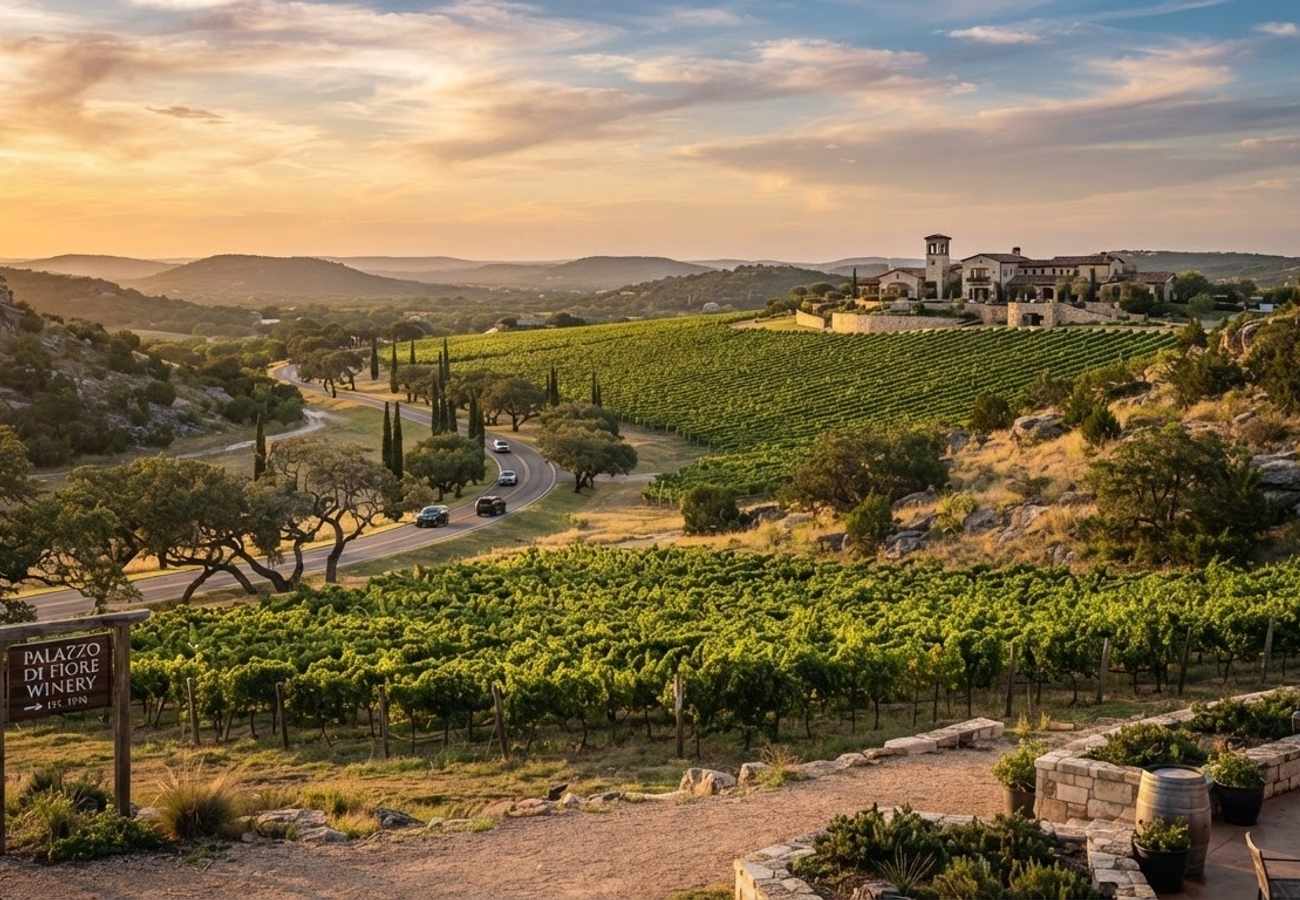
Image generated by AI
The Texas Hill Country AVA spans a staggering 9 million acres, making it the third-largest wine-growing region in the United States. While many associate American viticulture exclusively with the West Coast, this limestone-rich corridor just two hours west of Austin has quietly become the second most-visited wine region in the country, trailing only the legendary Napa Valley.
The Rise of the Texas Hill Country Corridor
What was once a quiet stretch of asphalt has evolved into a high-end destination known as Wine Road 290. This 30-mile stretch connects the historic towns of Johnson City and Fredericksburg, transforming the rugged granite terrain into what locals and visitors now call the "Tuscany of Texas." Since its official designation in 1991, the region has shifted from rustic farm-style operations to a sophisticated circuit of glass-walled tasting rooms and sprawling estates.
The shift in focus is evident in the grapes. While Napa is defined by Cabernet, the Hill Country has carved its own identity through Tempranillo, Viognier, and Mourvèdre. This pivot allows the region to lean into its unique terroir, producing wines that reflect the heat and mineral composition of the Texas soil. For the modern traveler, this represents a luxury experience that mirrors the California coast but remains anchored in the distinct cultural heritage of the Lone Star State.
What Makes Wine Road 290 Different
Unlike many emerging wine regions that rely on a casual, "come-as-you-are" atmosphere, Wine Road 290 has adopted a premium model. The experience is defined by a level of formality and exclusivity that is rare outside of Europe or the West Coast. This is most apparent in the seated tasting experiences, which typically last between 60 and 90 minutes. These sessions aren't just about drinking; they are educational deep dives into the specific geology of the region.
The pricing reflects this upscale trajectory. A standard flight at a mid-range winery now costs between $25 and $35. However, the real draw for connoisseurs is the elevated seated experience or estate tour, which ranges from $55 to $85 per person. These premium tiers often grant access to "library wines"—small-batch productions that are kept away from the general public and never reach the standard tasting room counters.
To navigate this region, visitors should look to the Texas Wine Growers or the City of Fredericksburg for local updates. The infrastructure has grown to support millions of annual visitors, but the intimacy of the tastings remains the primary draw.
Visitor Insider Tips
Having spent time navigating the rhythms of the Hill Country, I can tell you that the biggest mistake visitors make is treating this like a casual road trip. This is a destination of reservations and strict schedules.
The Booking Window: Do not attempt to walk into top-tier estates on a weekend. By 2026, the gold standard for securing a spot at the most coveted tasting rooms is a booking window of two to three weeks.
The Pacing Rule: Palate fatigue is real. While it is tempting to hit every vineyard on the map, the local consensus is to limit yourself to three or four stops per day. A perfect itinerary consists of one morning tasting, a slow lunch at an estate with a full kitchen, and two afternoon sessions.
The 15-Minute Buffer: Timing is everything here. Most premium wineries operate on a rigid schedule; if you arrive more than 15 minutes late, you risk losing your table without a refund. Always factor in a 15-minute buffer between the end of one tasting and the start of your drive to the next to account for weekend congestion on Highway 290.
Transport Hacks: Law enforcement is highly active on this route. A designated driver is mandatory. For those staying in Fredericksburg, the 290 Wine Shuttle is the most efficient option, departing every 10 to 15 minutes. If you prefer a curated experience, private shuttles range from $80 to $120 per person.
Where to Stay: Base yourself in Fredericksburg. The town offers a mix of historic "Sunday Houses" and modern luxury villas. This allows you to enjoy the German-influenced dining scene in the evenings without having to drive back from the vineyards.
Cultural and Environmental Context
The growth of Wine Road 290 is a study in the tension between rapid tourism expansion and heritage preservation. The region's identity is deeply tied to the German settlers who founded Fredericksburg, and the current wine boom has integrated this history into the luxury experience. However, the "premiumization" of the area has led to a stricter set of social norms.
Many of the most prestigious estates, such as Grape Creek Vineyards, now enforce a strict 21-and-over policy. This means infants and children are often excluded to maintain a refined, quiet atmosphere. Similarly, while Texas is generally welcoming to pets, many high-end estates ban dogs to protect their manicured landscaping and maintain an upscale environment.
There is also a logistical ceiling on group sizes. Most tasting rooms, including Signor Vineyards, cap standard reservations at six people. This is a deliberate move to manage noise levels and ensure that the staff can provide the high-touch service that justifies the $85 price point. For those who find these rules too restrictive, the region offers a duality: the high-pressure, exclusive estates and the more laid-back, family-friendly tasting rooms that still welcome walk-ins and larger groups.
FAQ: Visiting Wine Road 290 2026
What is the best time to visit? Autumn is ideal for the harvest atmosphere, but spring offers the most beautiful blooms across the Hill Country. Regardless of the season, avoid arriving without reservations during weekends.
How do I get there from Austin? The region is approximately a two-hour drive west of Austin via U.S. Highway 290. It is highly recommended to rent a car or hire a private transport service for the duration of the trip.
Is it safe for solo travelers? Yes, the region is very safe. Solo travelers often find the seated tastings to be a great way to interact with knowledgeable staff and other wine enthusiasts in a refined setting.
Can I bring my dog to the wineries? It depends. While some casual spots are pet-friendly, most premium estates on the 290 corridor strictly prohibit pets to protect the grounds. Always check the specific winery's policy before visiting.
The Texas Hill Country proves that luxury isn't just a California export—it's a local harvest.
Related Travel Guides
Disclaimer
This article is for informational and educational purposes only. It does not constitute legal, financial, or professional advice. While we strive to provide accurate and up-to-date information, travel policies, regulations, and conditions change rapidly. Always verify information with official sources before making travel decisions. Nomad Lawyer makes no representations about the accuracy, reliability, completeness, or suitability of the information provided. Readers should consult qualified professionals for advice specific to their circumstances. The views expressed in this article are those of the author and do not necessarily reflect the views of Nomad Lawyer.
Kunal K Choudhary
Co-Founder & Contributor
A passionate traveller and tech enthusiast. Kunal contributes to the vision and growth of Nomad Lawyer, bringing fresh perspectives and driving the community forward.
Learn more about our team →