
Hong Kong Airport Unveils Sustainability Report for H1 2026
Airport Authority Hong Kong (AAHK) releases its Sustainability Report 2025/26, highlighting Terminal 2 passenger upgrades, Generative AI, and green projects.

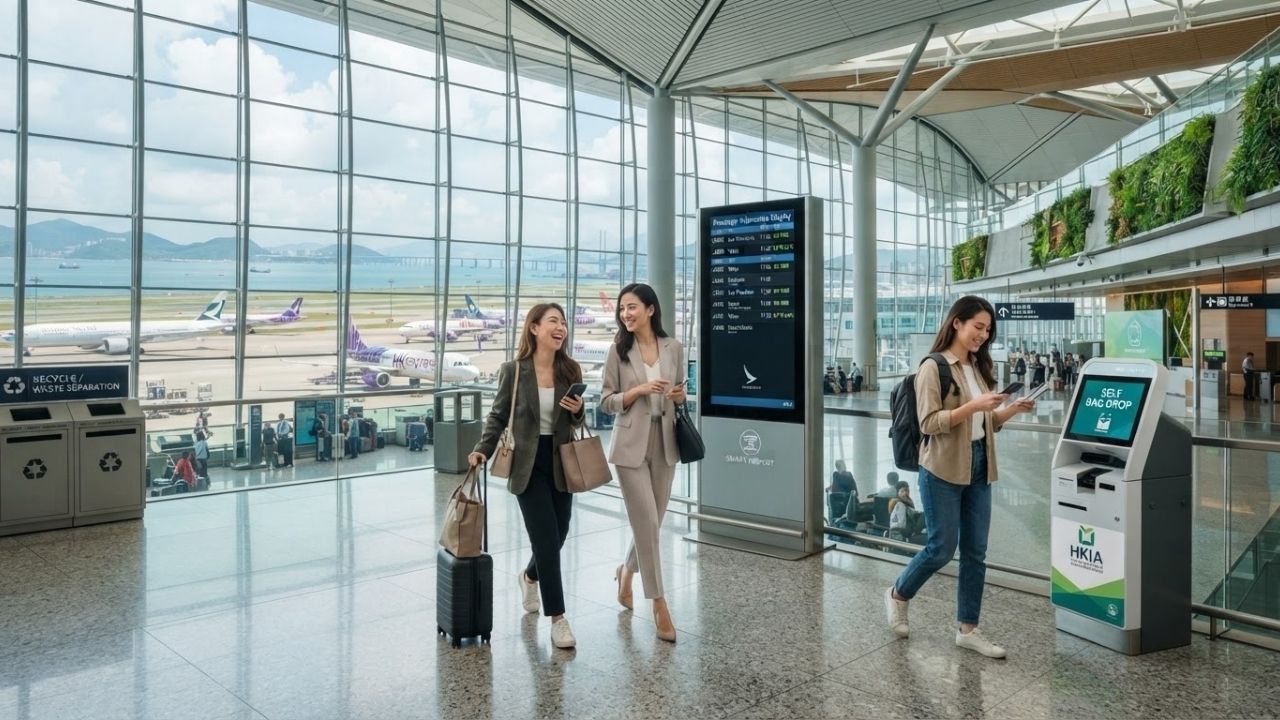
Image generated by AI
Airport Authority Hong Kong (AAHK) has released its Sustainability Report 2025/26, outlining major upgrades to Terminal 2 passenger facilities and green innovations at Hong Kong International Airport. For the fiscal year ending March 31, 2026, the report highlights the implementation of the Ascend sustainability strategy and new artificial reef systems to protect surrounding marine habitats.
The Local Trend Revealed
Aviation authorities are integrating nature-related disclosure policies and advanced artificial intelligence systems to align passenger services with global sustainability standards. Monitored by the Taskforce on Nature-related Financial Disclosures (TNFD), these metrics define the airport's progress:
- Pillar Strategy: AAHK's Ascend strategy covers 24 strategic goals across four key pillars: Environmental Excellence, Operational Excellence, Thriving Economies and Societies, and Thriving People.
- Environmental Achievements: The airport increased its recyclables recovery rate by 25 percent by 2025 against a 2018 baseline. Additionally, 500 additional artificial reef units were deployed in North Lantau waters to restore nursery grounds for marine species.
- T2 Infrastructure Upgrades: AAHK commissioned new passenger departure facilities and the Coach Hall at the expanded Terminal 2 (T2) to meet growing passenger demand.
- Cross-Border Parking: The airport launched "Park & Fly" and "Park & Visit" services, allowing eligible vehicles from Guangdong and Macao traveling via the Hong Kong-Zhuhai-Macao Bridge (HZMB) to access automated parking facilities.
- Digital Aviation Upgrades: AAHK completed Phase 2 of the Digital Apron and Tower Management System, installing eight additional cameras across the Three-runway System (3RS).
- AI & Tech Integration: The airport launched the Arrival Baggage Tracking System at Terminal 1 baggage halls and completed the first phase of a trilingual customer service avatar powered by Generative Artificial Intelligence.
- Drills & Training: The authority conducted 36 drills and exercises, including a full-scale departures trial at T2 and an aircraft crash and rescue exercise, alongside delivering over 94,000 training hours.
Local Community & Environmental Value
For the traveler, the real impact of regional airport sustainability is supporting cultural preservation in local communities. Visiting heritage spots like Tai O Fishing Village on Lantau Island, purchasing traditional handmade shrimp paste directly from fishermen, and dining at independent family-run restaurants keeps tourism revenue inside local hands.
Environmental protection is advanced by choosing sustainable transit networks. Utilizing the electric Airport Express or regional buses reduces passenger carbon emissions compared to private car transfers. AAHK's deployment of 500 additional artificial reef units helps protect and restore Lantau's delicate marine habitats, satisfying guidelines monitored by the Hong Kong Tourism Board (HKTB).
Visitor Insider Tips for Hong Kong Airport Transit
Travel and transit specialists recommend the following practices when traveling through HKIA:
- Utilize the Airport Express: Bypass road traffic. The Airport Express train departs every 10 minutes, connecting the airport terminal to Central (Hong Kong Station) in just 24 minutes.
- Register HZMB Parking Early: If using the "Park & Fly" service from Guangdong or Macao, register your vehicle details 24 hours in advance to secure your automated parking bay.
- Observe the Off-Peak Window: Visit Hong Kong during the autumn months of October to December. The weather is dry, cool (18°C to 24°C), and comfortable, avoiding the heavy monsoons, typhoons, and high humidity of June to August.
- Sample Regional Culinary Specialties:
- Taste Dim Sum (steamed shrimp dumplings or BBQ pork buns) at local tea houses.
- Try a warm Egg Tart paired with a cup of classic Hong Kong-style Milk Tea at local cha chaan tengs (diners).
- Observe Dining Etiquette: When sharing food, always use the public chopsticks (sam gaa) provided to place food on your plate. Tap the table with two fingers when someone pours tea for you to show appreciation. Tipping is not expected at local noodle stalls, but rounding up the bill or leaving a 10 percent tip in mid-range restaurants is standard.
- Explore Under-the-Radar Escapes: Skip the crowded city streets. Take a bus from Tung Chung near the airport to Tai O Fishing Village on Lantau Island. Explore the historic stilt houses, purchase local dried fish, and take a quiet boat ride through the tidal channels.
Tourism Outlook
The long-term impact of HKIA's sustainability upgrades is the transition to a green aviation corridor linking the Greater Bay Area. By adopting Nature-related Financial Disclosure Statements and upgrading digital passenger networks, AAHK aims to attract high-value, environmentally conscious travelers, ensuring that regional growth supports surrounding marine and coastal environments.
FAQ: Hong Kong International Airport Sustainability Report
What is the Ascend sustainability strategy at HKIA? Ascend is AAHK's sustainability framework, targeting 24 goals across four pillars: Environmental Excellence, Operational Excellence, Thriving Economies and Societies, and Thriving People.
How does the "Park & Fly" service benefit regional travelers? The service allows vehicles from Guangdong and Macao traveling via the Hong Kong-Zhuhai-Macao Bridge (HZMB) to park at designated automated facilities next to HKIA for onward flights.
What environmental protection initiatives did the airport implement in 2026? HKIA achieved a 25 percent recyclables recovery rate by 2025 against a 2018 baseline and deployed 500 additional artificial reef units in North Lantau waters.
What technologies were upgraded at HKIA in 2026? Key tech upgrades include Phase 2 of the Digital Apron and Tower Management System, the Terminal 1 Arrival Baggage Tracking System, and a Generative AI-powered customer service avatar.
Related Travel Guides
Disclaimer
This article is for informational and educational purposes only. It does not constitute legal, financial, or professional advice. While we strive to provide accurate and up-to-date information, travel policies, regulations, and conditions change rapidly. Always verify information with official sources before making travel decisions. Nomad Lawyer makes no representations about the accuracy, reliability, completeness, or suitability of the information provided. Readers should consult qualified professionals for advice specific to their circumstances. The views expressed in this article are those of the author and do not necessarily reflect the views of Nomad Lawyer.
Raushan Kumar
Founder & Lead Developer
Full-stack developer with 11+ years of experience and a passionate traveller. Raushan built Nomad Lawyer from the ground up with a vision to create the best travel and law experience on the web.
Learn more about our team →