Copán Flights Take Off: CM Airlines Launches Commercial Service to Río Amarillo Airfield

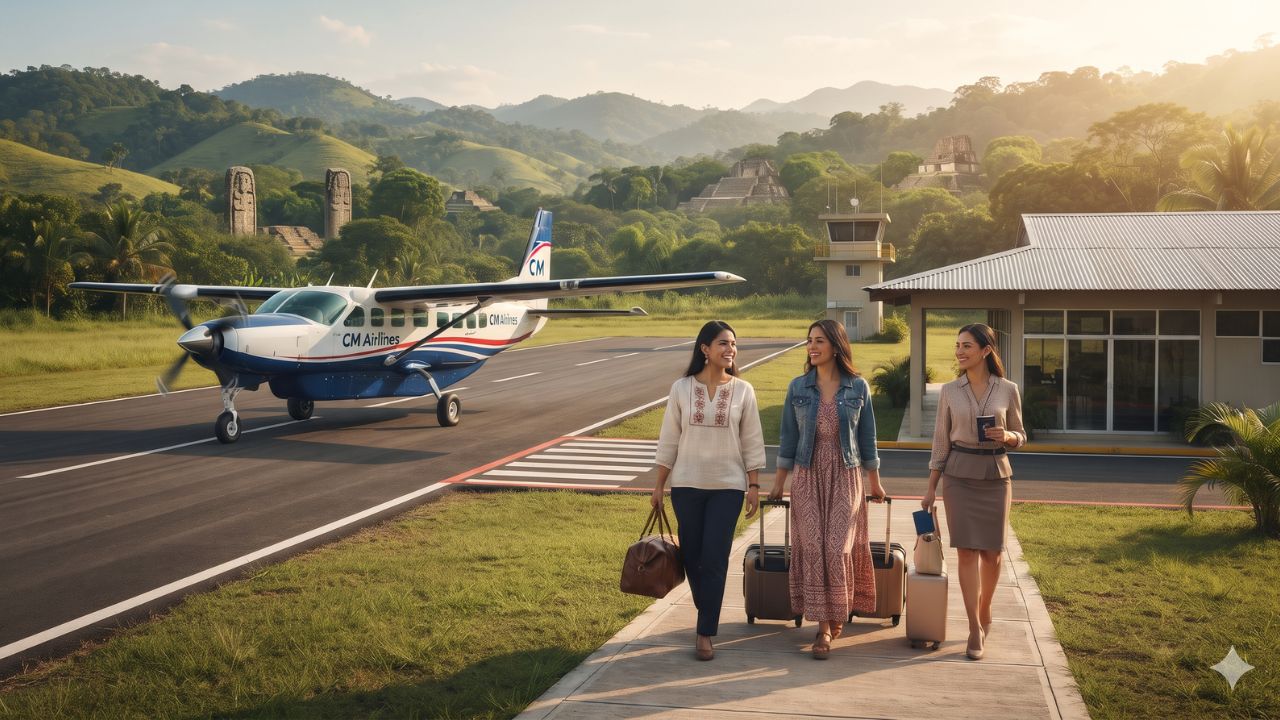
For decades, reaching the ancient stone stelae and hieroglyphic stairways of Copán meant enduring an arduous five-to-six-hour overland journey over winding mountain highways from San Pedro Sula or Tegucigalpa. That travel barrier dissolves on 4 December 2026 as domestic carrier CM Airlines begins scheduled commercial passenger flights into Río Amarillo Airfield. Located in the department of Copán just a short drive from the archaeological epicenter of the southern Maya realm, the restored airfield brings airborne accessibility to western Honduras, transforming cultural tourism and regional connectivity across the country.
Revitalizing Río Amarillo: The 4 December Flight Launch
The formal reinstatement of commercial flights at Río Amarillo was officially confirmed on 29 October 2026 by the Honduran Civil Aviation Agency (AHAC) in coordination with national government authorities and CM Airlines. The launch represents a centerpiece in Honduras’s broader state strategy to rehabilitate domestic airfields, expand tourism corridors outside primary commercial hubs, and stimulate regional economies.
Preparations at Río Amarillo reached approximately 90% completion by late October, with engineering teams finishing runway resurfacing, horizontal and vertical tarmac markings, apron restoration, and the clearance of the surrounding operational safety strip. To ensure rigorous commercial compliance, the civil aviation authority has installed automatic weather stations and conventional meteorological observation instruments, alongside stationing dedicated air traffic controllers during all operational flight hours. While specific departure frequencies, aircraft capacities, and base fares await final tariff filings from CM Airlines, the operational infrastructure is fully primed to receive scheduled passenger flights.
Regional Airfield Rehabilitation and Infrastructure Scope
The table below outlines current operational upgrades at Río Amarillo Airfield and the wider Honduran regional aviation modernization framework:
| Airfield Facility | Administrative Region | Project Status & Target | Operational Upgrades Installed |
|---|---|---|---|
| Río Amarillo Airfield | Copán Department | Commercial launch 4 Dec 2026 | Resurfaced runway, apron markings, weather telemetry |
| Utila Airfield | Bay Islands (Islas de la Bahía) | Active rehabilitation program | Runway maintenance & safety strip restoration |
| Guanaja Airfield | Bay Islands (Islas de la Bahía) | Active rehabilitation program | Pavement rehabilitation & terminal safety checks |
| Tela Airfield | Atlántida Coast | Active rehabilitation program | Regional strip clearance & coastal connectivity |
| Puerto Lempira Airfield | Gracias a Dios (Mosquitia) | Active rehabilitation program | Remote airstrip resurfacing & security improvements |
By modernizing smaller airstrips in the Caribbean Bay Islands like Utila and Guanaja, coastal transit centers like Tela, and remote eastern frontier posts like Puerto Lempira, the Honduran government is assembling an integrated domestic flight network that bridges dense rainforest valleys and coastal waters.
What Makes Copán Experientially Distinct
Copán is often celebrated by historians as the "Athens of the New World" for its extraordinary concentration of high-relief stone sculpture, astronomical markers, and intricate glyphic carvings. Protected as a premier UNESCO World Heritage cultural monument, the Maya Site of Copán features the world's longest preserved pre-Columbian written text: the Hieroglyphic Stairway, boasting over 2,000 individual glyphs carved into 63 stone steps.
Beyond the monumental stone acropolis, the surrounding Copán Valley offers a tranquil highland atmosphere far removed from crowded mass-tourism circuits. The nearby town of Copán Ruinas charms travelers with red-tile roofs, cobblestone streets, and traditional craft markets where indigenous Ch'orti' Maya artisans sell handwoven textiles and carved jade. Just outside town, the Macaw Mountain Bird Park provides a jungle sanctuary dedicated to rehabilitating and releasing the scarlet macaw (Ara macao)—the sacred bird depicted across Copán's royal stelae—back into the canopy above the ruins.
Visitor Insider Tips: Navigating Copán Ruinas, Lodging, and Transit
Visiting Copán through the newly opened Río Amarillo flight corridor requires practical local insight to maximize your stay:
- Time Your Archaeological Entry for Morning Light: The Copán archaeological park opens at 8:00 am. Arrive right at opening to explore the Great Plaza and Ball Court before tour shuttles arrive from the Guatemalan border. Morning sunlight illuminates the intricate high-relief carvings on Stela A and Stela 4 at optimal angles for photography.
- Pre-Arrange Río Amarillo Ground Transfers: Río Amarillo Airfield sits approximately 18 kilometers northeast of Copán Ruinas town. Because local metered taxis do not idle at the airfield gate, coordinate a pre-arranged shuttle or hotel transfer with your accommodation in Copán Ruinas before boarding your flight.
- Neighborhood Lodging Choices: Base yourself in the historic center of Copán Ruinas within walking distance of the central plaza (Parque Central). Historic colonial-style guesthouses offer shaded central courtyards, fountain gardens, and quiet respites from midday tropical heat.
- Sample Authentic Regional Honduran Flavors: Seek out traditional local eateries serving fresh baleadas (handmade thick flour tortillas folded with refried red beans, crumbled salty queso duro, and rich Honduran sour cream) paired with shade-grown specialty coffee cultivated on high-altitude mountain fincas across the Copán department.
Cultural and Environmental Context: Heritage Preservation and Forest Stewardship
The introduction of commercial flights to Río Amarillo marks a turning point for sustainable tourism in western Honduras. While overland travel historically insulated Copán from sudden surges in visitor volume, direct flights allow the Honduran Tourism Institute to promote high-yield cultural travel that benefits community-owned cafes, regional tour guides, and eco-lodges.
However, expanding air transport near ancient stone monuments necessitates strict conservation vigilance. Vibration monitoring and environmental assessments guided by the Honduran Institute of Anthropology and History (IHAH) ensure that low-altitude flight paths avoid sensitive carved limestone structures vulnerable to structural micro-fractures. Protecting the dense secondary pine-oak forests surrounding Copán preserves habitat for native toucans, howler monkeys, and orchids, ensuring that economic development supports local indigenous communities while safeguarding the archaeological integrity of the Maya kings.
FAQ: Visiting Copán and Río Amarillo 2026-2027
When do commercial flights to Río Amarillo Airfield begin operating? Commercial passenger operations by CM Airlines are scheduled to commence at Río Amarillo Airfield on 4 December 2026.
How far is Río Amarillo Airfield from the town of Copán Ruinas? The airfield is situated roughly 18 kilometers from Copán Ruinas, requiring an easy 20-to-25-minute drive along the paved regional highway.
Do I need a special permit to visit the Maya Site of Copán? No special permit is required; entry tickets to the main archaeological park, the underground sculpture museum, and the excavated tunnels can be purchased at the park visitor center.
Which other regional airfields in Honduras are receiving infrastructure upgrades? The civil aviation modernization program includes rehabilitation projects at airstrips in Utila, Guanaja, Tela, and Puerto Lempira.
Touching down amidst the green highland valleys of western Honduras brings travelers face-to-face with the enduring genius and stone artistry of the ancient Maya.
This article is for informational purposes. Flight routes, passenger regulations, visa rules, and transit advisories are subject to change by airlines and aviation authorities. Readers are advised to verify schedules and travel documentation with relevant carriers and border agencies before departure.
Related Stories

Australia Holiday Travel Surge: Melbourne, Sydney, and Brisbane Airport Summer Guide
California Holiday Air Travel Surges 7.3%: Palm Springs and Ontario Lead Regional Airport Boom