Australia Holiday Travel Surge: Melbourne, Sydney, and Brisbane Airport Summer Guide

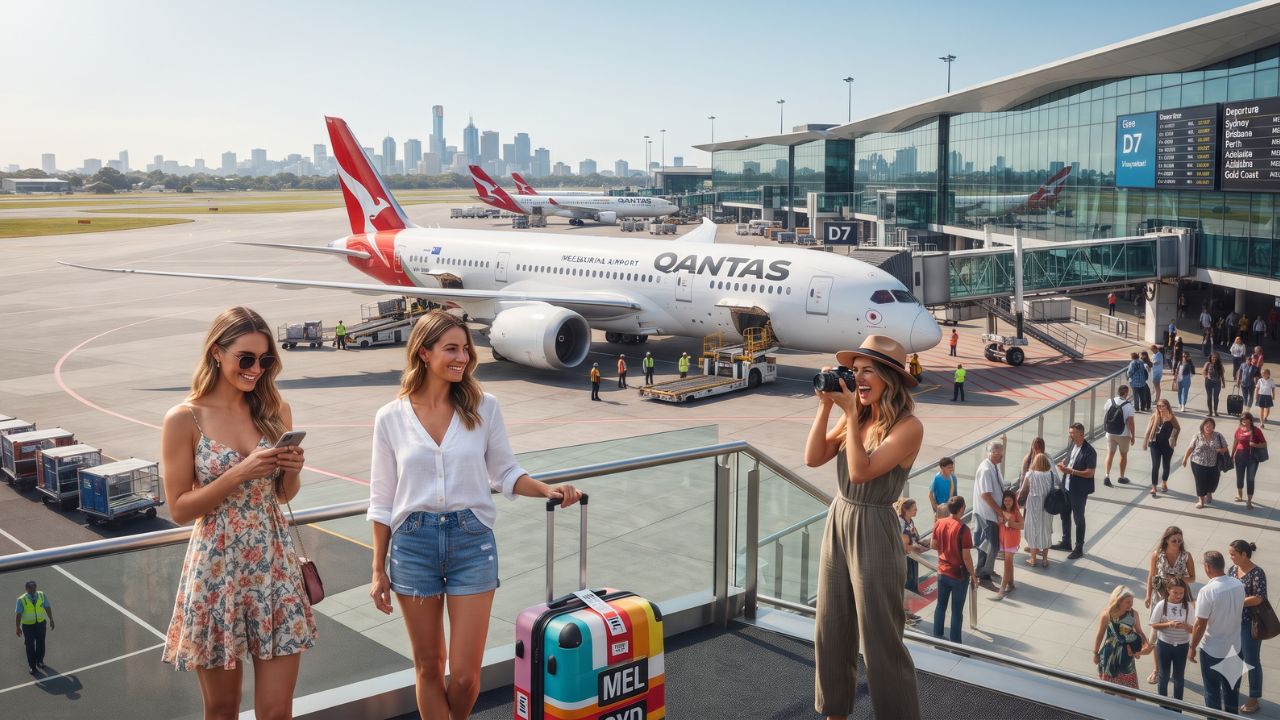
While northern hemisphere airports battle de-icing delays in December, Melbourne Airport operates at maximum capacity under blazing southern sunshine, logging an all-time record 3,421,195 passengers in a single summer month. Fueled by overseas family reunions, coastal holiday getaways, and global tennis enthusiasts traveling to the Australian Open, Australia's primary aviation gateways are absorbing historic traffic volumes. As the country heads toward the 2026–2027 festive travel window, data across Sydney, Melbourne, Brisbane, Perth, and Adelaide reveals how southern hemisphere summer demand reshapes regional economies and strains terminal infrastructure from Botany Bay to the Swan River.
The Southern Summer Migration: Breaking Passenger Records Down Under
The summer festive corridor represents the undisputed peak of Australian aviation. In December alone, the eastern and western gateways of Melbourne, Brisbane, and Perth collectively handled approximately 7.31 million passengers—an increase of 452,480 travelers (+6.6%) compared with the 6.86 million processed the previous December. Melbourne Tullamarine led the surge with a 5.4% expansion, driven by an international passenger jump of 6.5% and domestic growth of 4.9%.
Sydney Airport, the country's busiest international portal, anticipated 5.84 million passengers across its 46-day festive window between 12 December and 26 January, reflecting a 3% forecast increase. Crucially, Sydney projected 2.70 million international travelers (+6.5%), anchored by strong inbound demand from New Zealand, China, the United States, Singapore, and the United Arab Emirates. Meanwhile, Brisbane Airport processed 2,288,895 passengers in December (+7%), with international movements climbing 10.1% on expanded routes linking Queensland with Dallas–Fort Worth, Los Angeles, Kuala Lumpur, Cebu, Hong Kong, Shanghai, and Guangzhou.
Australian Airport Holiday Performance and Growth Metrics
The table below outlines verified passenger traffic, projected holiday numbers, and growth rates across Australia's leading international and regional gateways:
| Airport Facility & State | Primary Passenger Metric | Growth or Shift Rate | Operating Period & Context |
|---|---|---|---|
| Sydney Airport (SYD), NSW | 5.84 million forecast | +3% forecast growth | 12 Dec–26 Jan (2.70M international passengers) |
| Melbourne Airport (MEL), VIC | 3,421,195 actual | +5.4% actual (+6.5% intl) | December; all-time monthly record in airport history |
| Brisbane Airport (BNE), QLD | 3.294 million forecast | +6% forecast (+10.1% intl) | 46-day Christmas period (2.29M actual in Dec) |
| Perth Airport (PER), WA | Approximately 3.1 million | Record holiday forecast | Dec–Jan peak (1.60M in Dec, up 7.7% actual) |
| Adelaide Airport (ADL), SA | 2.439 million actual | +6.4% actual (+26% intl) | Oct–Dec quarter; direct San Francisco & Asia links |
| Gold Coast Airport (OOL), QLD | Over 1.2 million actual | +47,000 net passengers | Dec–Jan peak (126,000+ New Zealand passengers) |
| Sunshine Coast (MCY), QLD | 6,400 daily seats | +3.8% seat capacity | Christmas/New Year holiday schedule |
In Western Australia, Perth Airport registered 1.60 million travelers in December (+7.7%), accumulating 3.22 million passengers across December and January (+5.3%). In South Australia, Adelaide Airport experienced a remarkable 26% surge in overseas travelers during the fourth quarter, reaching 2.439 million total passengers (+6.4%) as direct flights from San Francisco, Hong Kong, Auckland, and Christchurch funneled global visitors into the Barossa and McLaren Vale wine districts. Regional coastal airfields also saw high demand: Gold Coast Airport handled over 1.2 million summer visitors, supported by strong trans-Tasman flows and heavy leisure traffic to Bali, while Sunshine Coast Airport expanded seat capacity to 6,400 seats per day.
What Makes Australian Summer Travel Culturally Distinct
Traveling through Australia during December and January involves stepping into an upside-down festive rhythm. Instead of snow and winter coats, the holiday period revolves around long daylight hours, cricket test matches at the Melbourne Cricket Ground, and open-air seafood feasts. Major sporting events, particularly the Australian Open in Melbourne, transform the city into an international crossroads throughout January, keeping hotel occupancy high long after New Year celebrations conclude.
Geographically, Australia's vast distances make domestic flying an absolute necessity rather than a luxury. The air corridor between Sydney and Melbourne remains one of the busiest passenger air routes on earth. Escaping city heat means catching regional feeder flights to pristine wilderness zones—from the Great Barrier Reef accessible via Queensland's hubs to temperate hiking trails in Tasmania, both preserved under UNESCO World Heritage environmental protections.
Visitor Insider Tips: Navigating Summer Terminal Crowds and Ground Transit
Surviving Australia's summer airport rush requires localized transit know-how and strategic planning:
- Bypass Tullamarine Traffic with the Express Coach: Melbourne Airport has no heavy rail connection. Taking highway taxis or rideshares along the Tullamarine Freeway during afternoon peak hours can take 90 minutes. Instead, board the dedicated express SkyBus from Terminals 1, 3, and 4, which uses dedicated freeway transit lanes to reach Southern Cross Station in downtown Melbourne in 25 to 30 minutes.
- Allow Ample Transfer Time at Sydney Airport: Sydney's domestic terminals (T2 and T3) are separated from the International Terminal (T1) by airport runways. Do not attempt a tight two-hour international-to-domestic self-transfer. Take the T-Bus shuttle or the Airport Link train between terminals, and allow at least three hours to clear Australian border checks, collect luggage, and re-clear security.
- Capitalize on Off-Peak Departure Banks: Domestic flights between Sydney, Brisbane, and Melbourne peak heavily between 7:00 am and 9:00 am, and again after 4:30 pm. Booking mid-day departures (11:00 am to 2:00 pm) yields shorter security screening lines and lower domestic airfares.
- Observe Biosecurity Rules on Domestic Travel: Australia enforces strict internal quarantine laws to protect regional agricultural belts. If you fly domestically from Melbourne or Sydney into Adelaide, Perth, or Hobart, you cannot bring fresh fruit, vegetables, or honey across state borders; dispose of snacks in designated airport quarantine bins before entering baggage claim.
Cultural and Environmental Context: Regional Dispersal and Eco-Tourism Protections
The massive concentration of air travel during the festive window places regional ecosystems under intense public scrutiny. Programs spearheaded by Tourism Australia actively encourage visitors to disperse beyond traditional metropolitan golden triangles into regional coastal and outback communities.
At the same time, environmental management around airport precincts is high priority. Major operators, including Melbourne Airport, are investing in multi-megawatt on-site solar farms and rainwater recycling systems to minimize grid strain during extreme 40-degree Celsius summer heatwaves. Promoting responsible tourism across fragile marine habitats, indigenous cultural heritage lands, and coastal national parks ensures that Australia's summer economic boom supports local communities without degrading the natural environments that draw millions of global travelers south.
FAQ: Navigating Australia Holiday Travel 2026-2027
Which Australian airport handled the highest passenger volume during the holidays? Sydney Airport was projected to lead with 5.84 million passengers across its summer holiday period, while Melbourne Airport set an all-time monthly record with 3,421,195 travelers in December.
Why did Adelaide Airport experience a 26% surge in international passengers? Adelaide's international surge was driven by new and reinstated long-haul and regional routes connecting South Australia directly with San Francisco, Hong Kong, Auckland, and Christchurch.
How do I travel between the airport and downtown Melbourne? Because Melbourne Airport lacks a direct passenger rail link, the SkyBus express coach runs 24/7 to Southern Cross Station in central Melbourne, covering the distance in roughly 25 to 30 minutes.
Are quarantine checks required on domestic flights within Australia? Yes, several Australian states—including Western Australia, South Australia, and Tasmania—enforce strict agricultural quarantine inspections preventing travelers from bringing fresh fruit, flowers, and honey into the state.
Embracing the warm southern skies and easygoing coastal rhythms turns Australia's busy summer travel season into an unforgettable voyage of sun, sport, and discovery.
This article is for informational purposes. Flight routes, passenger regulations, visa rules, and transit advisories are subject to change by airlines and aviation authorities. Readers are advised to verify schedules and travel documentation with relevant carriers and border agencies before departure.
Related Stories

Copán Flights Take Off: CM Airlines Launches Commercial Service to Río Amarillo Airfield
California Holiday Air Travel Surges 7.3%: Palm Springs and Ontario Lead Regional Airport Boom