
Tan Son Nhat Airport Terminal Guide 2026: Navigating Terminals 1, 2, and 3 in Ho Chi Minh City
A comprehensive operational guide to Ho Chi Minh City's Tan Son Nhat Airport (SGN), detailing the critical split between domestic Terminals 1 and 3 and international Terminal 2 to avoid missed flights.

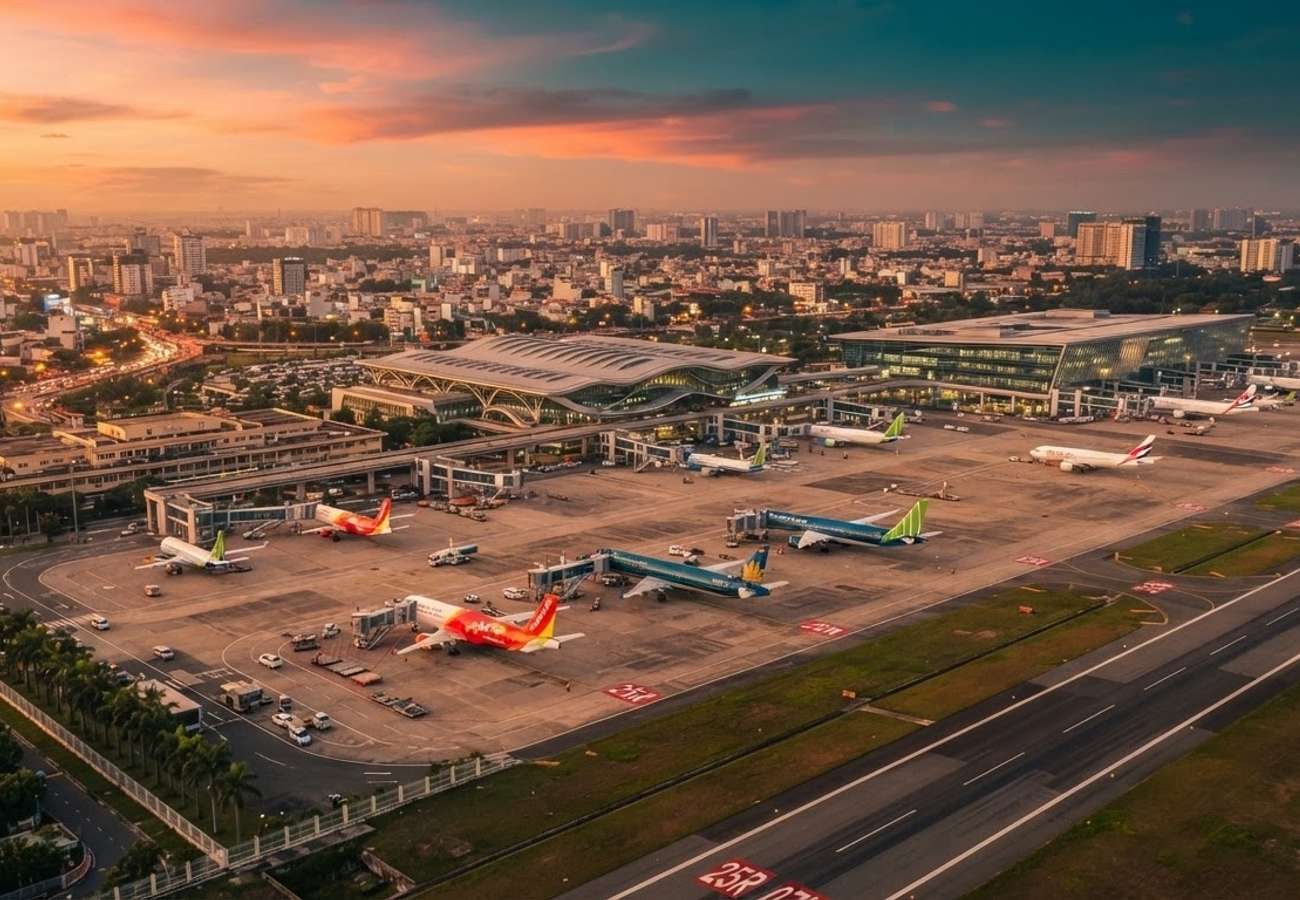
Image generated by AI
Tan Son Nhat International Airport (SGN) has transitioned to a complex three-terminal system that frequently confuses passengers. With the full integration of Terminal 3 for domestic operations, arriving at the wrong building now carries a high risk of missed departures.
The Three-Terminal Operational Split
Tan Son Nhat International Airport, located in the Tan Binh district, serves as the primary gateway to Southern Vietnam. While all three terminals occupy the same campus, they function as independent entities with separate check-in halls, security checkpoints, and boarding gates.
The airport's current distribution is as follows:
- Terminal 1 (T1): Legacy domestic terminal. Primarily serves low-cost carriers (LCCs).
- Terminal 2 (T2): Dedicated international terminal. Handles all arrivals and departures to/from foreign destinations.
- Terminal 3 (T3): Modern domestic terminal. The primary hub for full-service domestic operations.
From a logistical perspective, the most critical distinction is the domestic split. Two passengers flying within Vietnam on the same day may depart from entirely different buildings depending on their chosen airline.
Terminal 1: Low-Cost Domestic Hub
Terminal 1 remains the primary departure point for budget airlines, most notably VietJet. If you are flying domestic routes to Da Nang, Hue, Nha Trang, Phu Quoc, or Hanoi via VietJet, T1 is your designated terminal.
Operational Details:
- Layout: Ground floor for arrivals/baggage; upper floor for departures and security.
- Congestion: High volume, particularly during holiday peaks.
- Recommended Arrival: 90 minutes for seat-only passengers; 120 minutes for those checking luggage.
- Dining: Features chains like Highlands Coffee (45,000–60,000 VND) and Pho 24 (90,000–120,000 VND).
Terminal 2: International Gateway
Terminal 2 is the sole point of entry and exit for all international traffic. This includes full-service carriers (e.g., Emirates, Singapore Airlines) and the international wings of domestic carriers like VietJet and Vietnam Airlines.
Key Features:
- Processes: All immigration and customs clearances occur here.
- Amenities: Duty-free shopping for electronics, cosmetics, and Vietnamese handicrafts.
- Lounges: Higher standard than T1, including the Vietnam Airlines international lounge.
Terminal 3: Vietnam Airlines Domestic Hub
Launched for commercial traffic in 2025, Terminal 3 was designed to alleviate the chronic congestion of T1. Vietnam Airlines has migrated nearly all domestic operations to this facility.
Operational Advantages:
- Infrastructure: Brighter, more spacious architecture with upgraded baggage systems.
- Efficiency: Dedicated self-service kiosks and streamlined bag-drop zones.
- Experience: Enhanced domestic lounges for business class and frequent flyers.
Terminal Allocation Summary
| Terminal | Flight Type | Primary Airlines | Key Note |
|---|---|---|---|
| Terminal 1 | Domestic | VietJet & Small Carriers | Legacy building; high congestion |
| Terminal 2 | International | All International Carriers | Only site for Immigration/Customs |
| Terminal 3 | Domestic | Vietnam Airlines | Newest facility; high efficiency |
Why This Matters: The Logistics of Transfers
For travelers, the real impact of this layout is felt during international-to-domestic transfers. Because these are not "airside" transfers, passengers must physically move between buildings.
Our analysis of the route map indicates a common friction point: a passenger arriving at T2 from an international flight who must then catch a VietJet flight to a domestic city. This requires exiting customs at T2 and relocating to T1.
Transfer Logistics:
- Walking: A 10–15 minute walk is possible via sidewalks, though traffic is heavy and weather can be extreme.
- Transit: Metered taxis or ride-shares typically cost 50,000 to 80,000 VND for the short trip between terminals.
- Risk Factor: Travelers often mistakenly head to T3 for all domestic flights, only to realize their LCC flight is departing from T1.
Industry Outlook
The separation of T1 and T3 reflects a broader trend in Southeast Asian aviation: the bifurcation of terminals based on service model (LCC vs. Full Service) rather than just destination. As Vietnam Airlines continues to optimize T3, we expect other premium carriers to migrate there, potentially leaving T1 exclusively for budget operations. Travelers should no longer assume "domestic" equals a single building at SGN.
Always verify the terminal code on the digital boarding pass, as legacy confirmation emails may still reference outdated terminal assignments.
Related Travel Guides
Disclaimer
This article is for informational and educational purposes only. It does not constitute legal, financial, or professional advice. While we strive to provide accurate and up-to-date information, travel policies, regulations, and conditions change rapidly. Always verify information with official sources before making travel decisions. Nomad Lawyer makes no representations about the accuracy, reliability, completeness, or suitability of the information provided. Readers should consult qualified professionals for advice specific to their circumstances. The views expressed in this article are those of the author and do not necessarily reflect the views of Nomad Lawyer.
Raushan Kumar
Founder & Lead Developer
Full-stack developer with 11+ years of experience and a passionate traveller. Raushan built Nomad Lawyer from the ground up with a vision to create the best travel and law experience on the web.
Learn more about our team →