
Hitachi Activates Digital Rail Signalling at Ciulnița and Fetești Stations to Modernise Romania's TEN-T Corridor 2026
Hitachi Rail completes the digital overhaul of signaling systems at Ciulnița and Fetești stations, enhancing safety and efficiency across Romania's critical TEN-T Corridor 22.

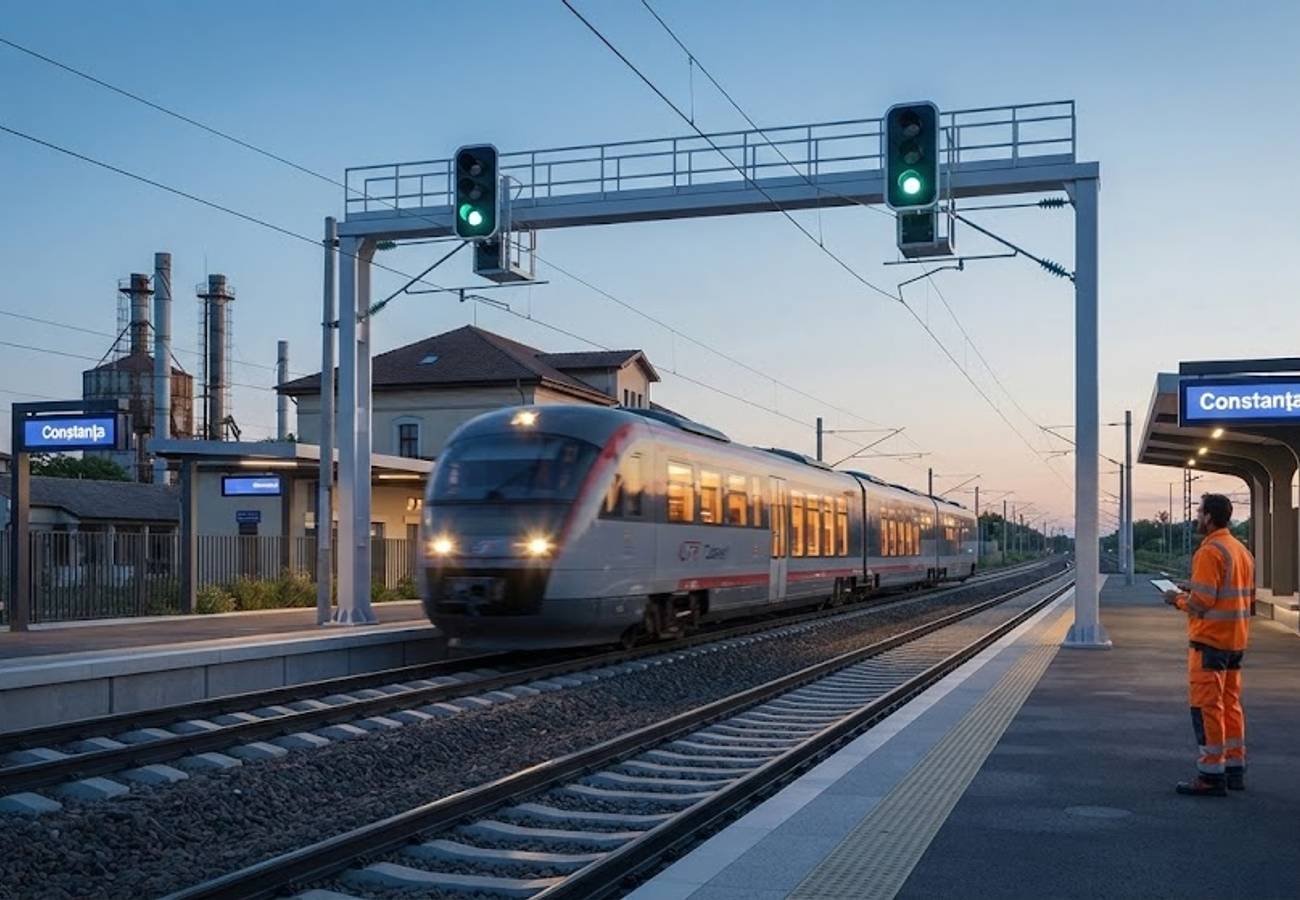
Image generated by AI
The integration of Hitachi Rail’s digital signaling at Ciulnița and Fetești stations marks a pivotal shift for Romania's transport backbone, directly impacting the efficiency of the TEN-T Corridor 22.
The modernization of Romania's rail network has moved beyond simple track repairs. By 2026, Hitachi Rail has completed the replacement of legacy signaling systems at two critical nodes: Ciulnița and Fetești. While these upgrades happen behind the scenes, they are fundamental to the reliability of one of Europe's most strategic transport links, connecting Central Europe to the Black Sea.
The Digital Shift in Eastern European Transit
The core of this transformation is the commissioning of the ESTW/IXL L90 RO electronic interlocking system. For decades, Romania relied on the SELMIS platform; replacing this two-decade-old infrastructure with a digital-first approach allows for real-time railway management and a drastic reduction in operational delays.
These two stations are not isolated upgrades. They sit on the TEN-T Corridor 22 (Pan-European Corridor IV), a vital artery that facilitates the movement of passengers and freight from Germany through Central Europe to the port of Constanța.
Strategic Corridor Connectivity
| Route Segment | Strategic Importance |
|---|---|
| Nürnberg–Prague–Vienna | Central European connectivity |
| Budapest–Curtici | Western access to Romania |
| Simeria–Brașov–Bucharest | National railway backbone |
| Bucharest–Constanța | Connection to Black Sea trade and tourism |
The timeline for this rollout was precise: signaling technology became operational at Ciulnița in December 2025, followed by Fetești in June 2026. This phased approach ensured that the Bucharest–Constanța line—the primary gateway for tourism and trade—remained functional during the transition.
Cultural and Environmental Value: Beyond the Tracks
For the visitor, the real impact is a seamless transition between the urban energy of Bucharest and the coastal appeal of the Black Sea. Historically, rail travel in Eastern Europe has been plagued by unpredictability. The shift to digital interlocking, supported by European CENELEC safety standards, means that "invisible" infrastructure now dictates the quality of the journey.
From an environmental perspective, this is a victory for sustainable mobility. By maximizing the efficiency of existing tracks through smarter signaling rather than solely building new lines, Romania is reducing the carbon footprint of its infrastructure expansion. Better rail reliability directly discourages the reliance on road transport and short-haul flights within the region.
The project, supported by European funding programs and managed by CFR SA, involves more than just software. It encompasses a total rehabilitation of railway infrastructure, including power supply upgrades, overhead contact line works, and modernized passenger information systems.
The Tech Stack Powering the Journey
The competitiveness of a rail network is no longer measured by the speed of the locomotive alone, but by the intelligence of the control room. The Hitachi Rail implementation introduces several high-impact technologies:
- ESTW/IXL L90 RO: Digital control of all railway movements to prevent bottlenecks.
- TAS Platform: A modern architecture for signaling that allows for scalable growth.
- IPR7.0 Software: Advanced operational management for precise scheduling.
- Data Logger: Continuous maintenance monitoring to predict failures before they happen.
- Cyber Security Observer: Digital protection to ensure the network is resilient against external threats.
Visitor Insider Tips
For those planning to travel through southeastern Romania to reach the coast, keep these local insights in mind:
- The Constanța Connection: Use the modernized Bucharest–Constanța line to avoid the heavy summer traffic on the DN3 highway. The digital upgrades make the train a far more reliable option during peak July and August windows.
- Off-Peak Windows: To experience the most efficient transit, travel mid-week. The new signaling systems handle high volumes better, but the "quiet" windows offer the fastest transit times.
- Local Dining: When stopping at regional hubs, look for Mici (grilled minced meat rolls) from local vendors near the stations—a staple of the region's culinary identity.
- Etiquette: While the stations are modernizing, remember that rail staff in regional hubs appreciate a polite "Bună ziua" (Good day) when asking for platform information.
Tourism Outlook
The long-term impact of this digital revolution is an increase in "slow travel" accessibility. As the connection between Bucharest, Transylvania, and the Black Sea becomes more dependable, Romania is positioned to attract a higher volume of international tourists who prioritize rail over rental cars.
By aligning with broader EU digitalization goals, Romania is transforming its railways from simple transport assets into a sophisticated technology platform. This ensures that the gateway to the Black Sea is not just open, but optimized for the next generation of global travelers.
The future of European travel isn't just about the destination, but the invisible intelligence that gets you there.
Related Travel Guides
Disclaimer
This article is for informational and educational purposes only. It does not constitute legal, financial, or professional advice. While we strive to provide accurate and up-to-date information, travel policies, regulations, and conditions change rapidly. Always verify information with official sources before making travel decisions. Nomad Lawyer makes no representations about the accuracy, reliability, completeness, or suitability of the information provided. Readers should consult qualified professionals for advice specific to their circumstances. The views expressed in this article are those of the author and do not necessarily reflect the views of Nomad Lawyer.
Preeti Gunjan
Contributor & Community Manager
A passionate traveller and community builder. Preeti helps grow the Nomad Lawyer community, fostering engagement and bringing the reader experience to life.
Learn more about our team →