
US Navy's Strategic Pivot: Why the F/A-18 Super Hornet Became America's Carrier-Based Air Superiority Solution
Breaking airline news and aviation industry updates for 2026.

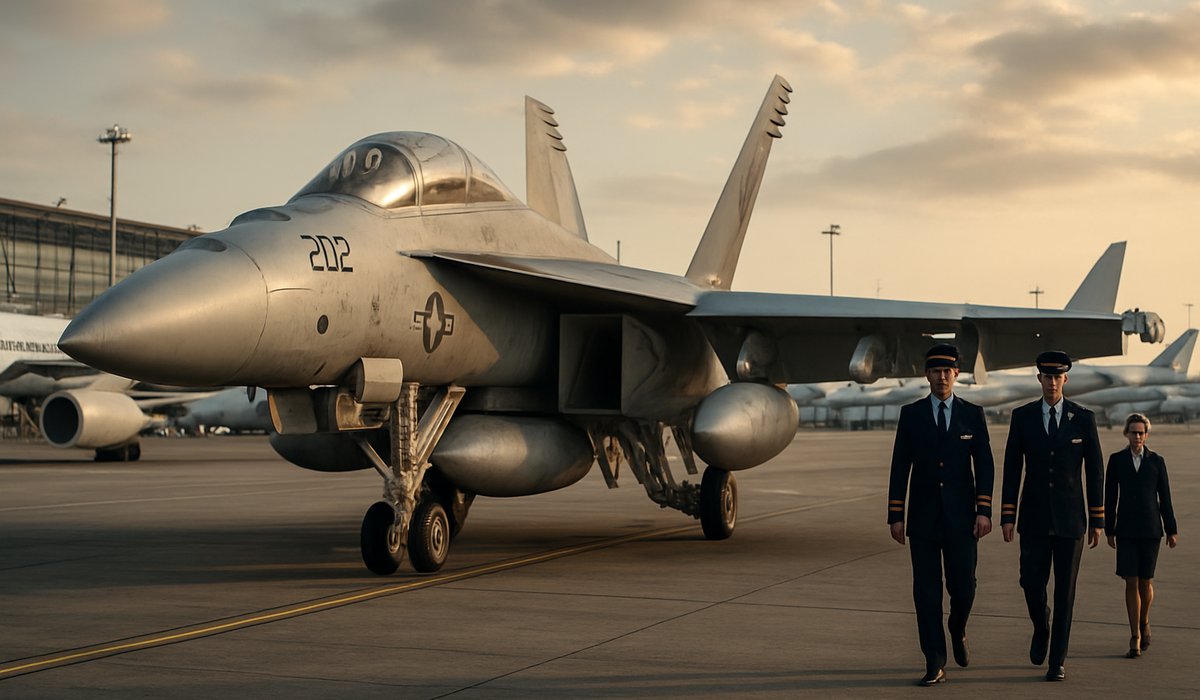
Image generated by AI
US Navy's Strategic Pivot: Why the F/A-18 Super Hornet Became America's Carrier-Based Air Superiority Solution
Military modernization takes a pragmatic turn as budget constraints and geopolitical shifts reshape naval aviation strategy
The End of an Era
The United States Navy has fundamentally transformed its approach to fleet air defense over the past three decades, marking a decisive shift away from purpose-built air superiority platforms toward multi-role combat aircraft. The iconic F-14 Tomcat, which dominated carrier operations for generations, has given way to the versatile F/A-18 Super Hornet—a transition that reflects far broader changes in military strategy, budgetary realities, and evolving threat assessments in the post-Cold War era.
Cold War Legacy Meets Post-1991 Realities
Historically, the Navy maintained dedicated fighter squadrons equipped with specialized air superiority jets designed exclusively for establishing and maintaining control of the skies. The legendary F-14 Tomcat exemplified this doctrine, as did earlier variants of the F-4 Phantom II, which offered single-purpose excellence in dogfighting and long-range interception capabilities.
However, the collapse of the Soviet Union fundamentally altered the Navy's strategic calculus. Military planners faced a radically different threat landscape—one where the likelihood of large-scale aerial combat against peer competitors diminished significantly, at least in the short term.
Budget Constraints Force Difficult Choices
Rather than pursue expensive, single-mission aircraft, Pentagon leadership determined that dedicated air superiority fighters had become an unaffordable luxury. Severe budget constraints throughout the 1990s and early 2000s forced the Navy to prioritize fiscal efficiency, steering the service toward multi-role platforms capable of executing diverse missions from a single airframe.
The F/A-18 Super Hornet Solution
The F/A-18 Super Hornet emerged as the pragmatic answer—a genuinely capable fighter-attack aircraft combining reasonable air-to-air performance with formidable strike capabilities. While not purpose-built for air superiority, the platform proved sufficiently competent across multiple domains to justify its selection as the Navy's primary carrier-based fighter.
The F-35C Integration
Today, the Navy is accelerating the introduction of the F-35C Lightning II, a fifth-generation stealth fighter that promises to restore air superiority capabilities to a level unseen since the Tomcat era. This modernization effort represents a gradual but meaningful return to prioritizing dominance in aerial combat, albeit through dramatically more advanced technology than previous generations.
FAQ: US Navy Fighter Aircraft Strategy
Why did the Navy retire the F-14 Tomcat? The Tomcat's retirement reflected Cold War doctrine becoming obsolete after 1991, combined with fiscal constraints that made maintaining specialized air superiority jets economically unfeasible for the Navy.
How does the F/A-18 Super Hornet compare to the F-14 in air-to-air combat? While the Super Hornet is a capable fighter, the F-14 was specifically engineered for air superiority with superior long-range engagement capabilities. The Super Hornet compensates through greater versatility and modern avionics.
What advantages does the F-35C offer over the Super Hornet? The F-35C features fifth-generation stealth technology, advanced sensor fusion, and superior situational awareness—capabilities that restore dedicated air superiority performance to Navy carrier operations.
How long will the F/A-18 Super Hornet remain in service? The Super Hornet will operate alongside F-35C squadrons for the foreseeable future, likely through the 2030s as the Navy gradually transitions to stealth-based naval aviation.
Did budget cuts permanently eliminate air superiority from Navy doctrine? No—budget constraints forced temporary prioritization of multi-role platforms, but the F-35C acquisition demonstrates renewed commitment to dedicated air dominance capabilities.
Related Travel Guides
- Breaking Airline News: Severe Travel Chaos Paralyzes Charlotte Douglas International Airport as American Airlines and Frontier Suffer Massive Flight Cancellations and Delays
- Flight Cancellations and Rising Delays Restrict Operations at San Francisco International Airport
- Breaking Airline News: American Airlines Airbus A319 Executes Terrifying Mid-Air Diversion to Indianapolis, Plunging Flight AAL1363 into Travel Chaos
Disclaimer
This article is for informational and educational purposes only. It does not constitute legal, financial, or professional advice. While we strive to provide accurate and up-to-date information, travel policies, regulations, and conditions change rapidly. Always verify information with official sources before making travel decisions. Nomad Lawyer makes no representations about the accuracy, reliability, completeness, or suitability of the information provided. Readers should consult qualified professionals for advice specific to their circumstances. The views expressed in this article are those of the author and do not necessarily reflect the views of Nomad Lawyer.
Raushan Kumar
Founder & Lead Developer
Full-stack developer with 11+ years of experience and a passionate traveller. Raushan built Nomad Lawyer from the ground up with a vision to create the best travel and law experience on the web.
Learn more about our team →