
Heathrow's 6.6M Passengers Mask Infrastructure Crisis as Middle East Conflict Reshapes Global Routes
Heathrow Airport handles record 6.6M passengers in March 2026, but Middle East airspace closures force 51% flight cuts while Asia-Pacific surges 31%, threatening Europe's busiest hub.

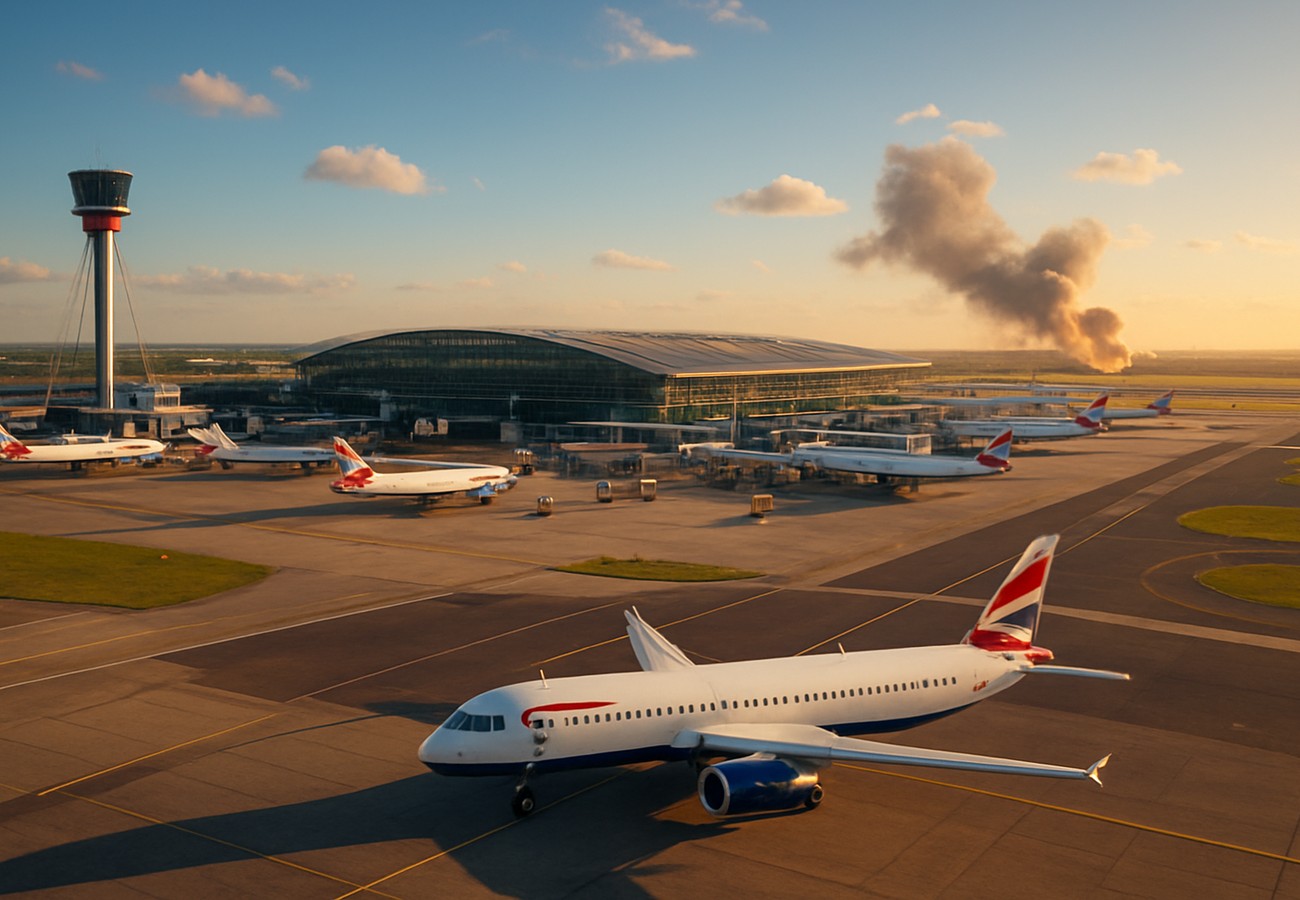
Image generated by AI
Heathrow Airport welcomed 6.6 million passengers in March 2026—a 7% increase from the same period last year—yet the UK's busiest hub faces a critical infrastructure breakdown as geopolitical turmoil reshapes global flight patterns, threatening to hand Europe's crown to faster-adapting rivals like Istanbul Airport.
Why This Matters
The Middle East conflict has triggered a seismic shift in international aviation. Airspace closures over the region have forced airlines to reroute flights through alternative hubs, and Heathrow has become an unintended beneficiary—and victim—of this disruption. While passenger surges typically signal success, they're exposing fatal flaws in the airport's aging infrastructure.
The paradox is stark: record numbers mask a looming collapse. Heathrow's runways are fully booked, transfer capacity is maxed out, and the airport lacks the physical space to absorb the influx without cascading delays. Meanwhile, competitors with spare runway capacity are quietly positioning themselves to steal market share.
Destinations in the Spotlight: The Route Realignment
The geopolitical upheaval has redrawn aviation's map. Flights to the Middle East have plummeted by around 51%, while flights to Asia-Pacific and Africa have surged by 31% and 23%, respectively. Transfer passengers—those connecting through Heathrow—have jumped by 10%, as airlines desperately seek alternative routing options.
| Region | Change | Impact |
|---|---|---|
| Middle East | -51% | Airspace closures force rerouting |
| Asia-Pacific | +31% | Demand surge strains capacity |
| Africa | +23% | Emerging growth market |
| Transfer Passengers | +10% | Connection hub overload |
British Airways, Heathrow's flagship carrier, has already slashed Middle Eastern routes while aggressively expanding services to India and Africa. This realignment reflects industry-wide adaptation to geopolitical uncertainty—but it's happening faster than infrastructure can accommodate.
What Travelers Get
- Rerouted flights: Expect longer journey times and additional layovers if you're traveling to the Middle East; airlines are now routing through Istanbul, Dubai, and Doha instead of direct connections.
- Capacity bottlenecks: Booking windows for Heathrow connections are tightening; reserve seats 4-6 weeks in advance for Asia-Pacific and Africa routes.
- Delayed third runway: The promised expansion won't arrive until 2035—nine years away—leaving the airport dependent on existing infrastructure through the mid-2030s.
- Competitive pressure: Istanbul Airport and other European hubs are absorbing diverted traffic, potentially eroding Heathrow's market dominance.
- Dynamic pricing: Expect higher fares on Asia-Pacific and Africa routes as demand outpaces supply; Middle East routes may see temporary discounts as airlines rebuild confidence.
What This Means for Travelers
Book Asia-Pacific and Africa routes immediately if you're planning travel within the next 12 months—capacity constraints will only tighten as the conflict persists. Avoid tight connection windows at Heathrow; allow at least 3 hours for transfers given current congestion. Monitor British Airways and other carriers for route changes, as the airline industry is in active flux. Consider alternative European hubs like Istanbul for Middle East connections if you're flexible on routing. Finally, expect delays and cancellations to increase if the airport's infrastructure reaches critical saturation; travel insurance with flexible rebooking options is essential.
FAQ: Heathrow Airport Capacity Constraints Middle East Conflict 2026
Q: Will Heathrow's third runway solve the capacity crisis? A: Not immediately. The third runway is not expected to be operational until 2035, leaving the airport dependent on existing infrastructure for the next nine years. By then, global travel dynamics may have shifted entirely.
Q: Which airlines are most affected by the Middle East flight cuts? A: British Airways has reduced Middle Eastern services significantly, while carriers like Emirates, Qatar Airways, and Etihad are rerouting through alternative hubs. Regional carriers serving the Middle East face the steepest operational challenges.
Q: Should I avoid booking through Heathrow right now? A: Not necessarily, but book early and allow extra connection time. Asia-Pacific and Africa routes are experiencing demand surges, so availability is tightening. Middle East routes may offer better availability as airlines rebuild confidence in regional stability.
Related Travel Guides
Disclaimer
This article is for informational and educational purposes only. It does not constitute legal, financial, or professional advice. While we strive to provide accurate and up-to-date information, travel policies, regulations, and conditions change rapidly. Always verify information with official sources before making travel decisions. Nomad Lawyer makes no representations about the accuracy, reliability, completeness, or suitability of the information provided. Readers should consult qualified professionals for advice specific to their circumstances. The views expressed in this article are those of the author and do not necessarily reflect the views of Nomad Lawyer.
Kunal K Choudhary
Co-Founder & Contributor
A passionate traveller and tech enthusiast. Kunal contributes to the vision and growth of Nomad Lawyer, bringing fresh perspectives and driving the community forward.
Learn more about our team →