
Heathrow Asia Traffic Surges 31% While Middle East Routes Plummet 51%: Geopolitical Shift Reshapes Global Aviation in 2026
Heathrow Airport reports dramatic 31% surge in Asia-Pacific traffic and 51% collapse in Middle East routes as geopolitical tensions force global aviation realignment away from Gulf hubs.

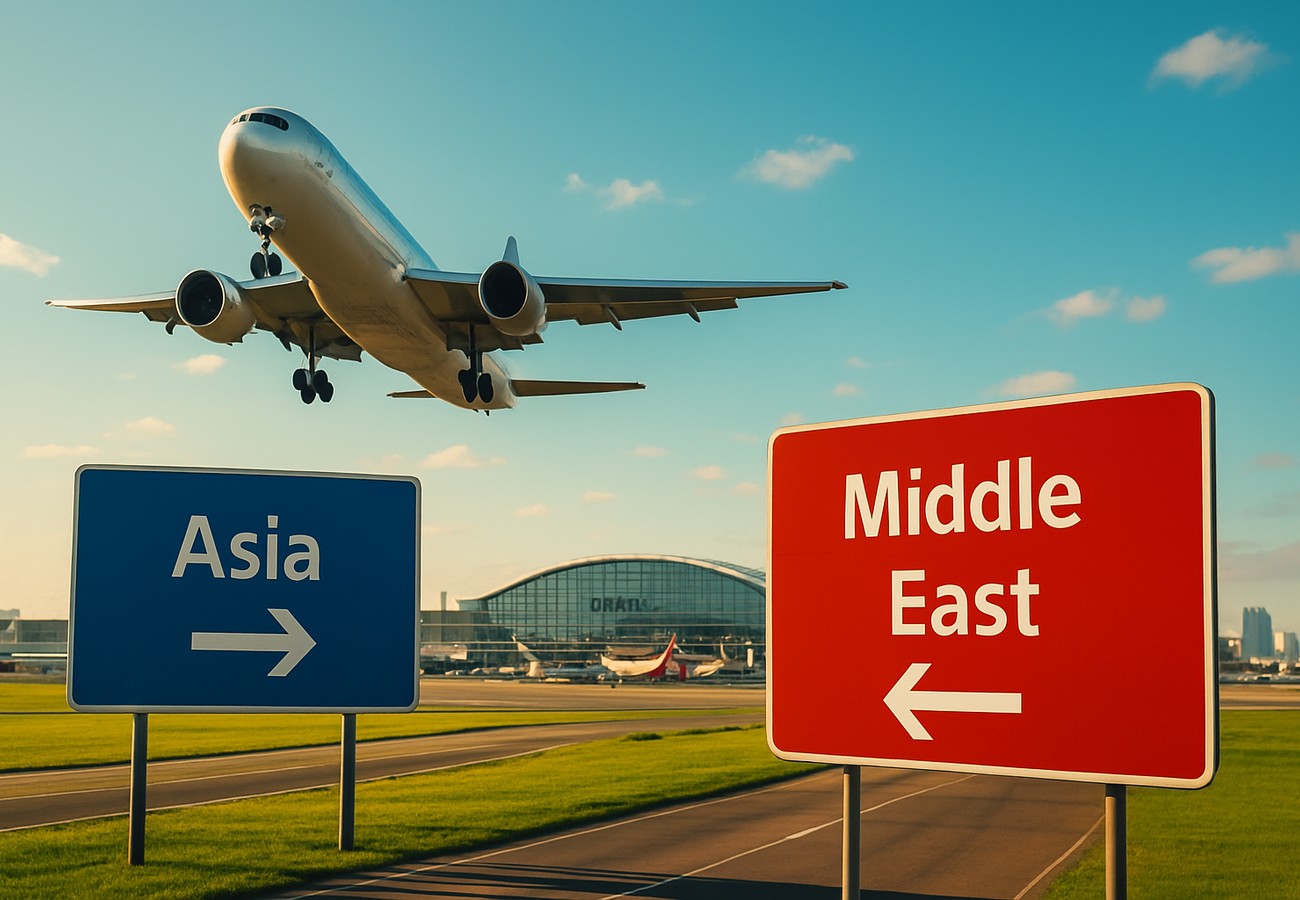
Image generated by AI
London's Heathrow Airport is experiencing a seismic reshuffling of global aviation patterns as passenger traffic to Asia-Pacific destinations explodes by 31% while Middle East routes collapse by over 51%, signaling a fundamental realignment driven by regional instability and airspace concerns.
In a striking departure from traditional aviation networks, Heathrow Airport processed approximately 6.6 million passengers during March 2026—a 7% year-on-year increase overall—but the real story lies in the dramatic geographic redistribution of demand. Travellers are actively abandoning traditional Gulf transit hubs in favor of direct European connections and alternative routing strategies, reshaping decades-old aviation infrastructure patterns.
The surge in Asia-bound traffic represents the most significant shift in global travel corridors this year. Passenger volumes between the United Kingdom and Asia-Pacific markets climbed approximately 31%, making it Heathrow's fastest-growing regional segment. This explosive growth reflects a deliberate passenger preference to bypass Middle Eastern transit points entirely. Routes connecting London to India are particularly benefiting from this reorientation, with airlines rapidly expanding capacity on these corridors as travellers increasingly select direct connections over traditional stopover arrangements in Gulf hubs like Dubai, Doha, and Abu Dhabi.
The corresponding collapse in Middle East traffic tells an equally compelling story. Passenger numbers between Heathrow and the Middle East plummeted by over 51% in March, a decline that underscores traveller anxiety regarding conflict-related operational risks, airspace restrictions, and broader regional uncertainty. Despite major carriers maintaining scheduled operations, demand has weakened substantially. This contraction directly impacts route frequency, seat availability, and pricing dynamics—fewer flights mean reduced capacity and potentially elevated fares on remaining services.
The restructuring extends beyond simple route abandonment. Transit passenger volumes at Heathrow increased approximately 10% as global itineraries were reconfigured, with passengers previously dependent on Middle Eastern hubs now channeling connections through European gateways. This transformation is fundamentally repositioning Heathrow as a critical global transit nexus for long-haul travel between Asia, Europe, and North America—a role that demands substantial operational investment and capacity management.
Airlines are executing rapid strategic pivots in response to these demand shifts. Multiple carriers are simultaneously reducing or restructuring Middle East operations while aggressively expanding capacity on Asia and Africa routes. According to industry tracking via FlightAware, this realignment appears structural rather than temporary, suggesting that if geopolitical tensions persist, the aviation industry may experience lasting network reconfiguration. For passengers, this volatility means route availability will continue fluctuating, with airlines prioritizing regions demonstrating stronger, more predictable demand patterns.
A critical constraint threatens to undermine Heathrow's ability to capitalize on this demand shift: runway capacity limitations. Operating near maximum utilization, the airport cannot accommodate substantial additional flight movements. While a third runway remains under consideration, materialization is not anticipated before the next decade. This capacity ceiling creates a bottleneck that could result in limited seat availability, elevated fares, and congestion during peak travel seasons—directly impacting travellers seeking to exploit improved Asia connectivity.
Reassuringly, fuel supply chains and airport operations remain unaffected despite Middle East tensions. Heathrow has confirmed that petroleum supply disruptions have not materialized, reducing immediate cancellation risks from fuel shortages. However, broader geopolitical uncertainty continues casting shadows over medium-term aviation stability.
What This Means for Travelers
The current aviation realignment presents simultaneous opportunities and challenges for international passengers. Increased demand on Asia routes promises improved connectivity and expanded direct flight options, particularly benefiting travellers from India and other Asia-Pacific markets. However, elevated demand simultaneously pressures ticket pricing, especially during peak travel windows. Strategic booking—reserving flights well in advance and maintaining schedule flexibility—becomes essential for securing competitive fares.
The aviation industry's sensitivity to geopolitical developments has never been more apparent, with travellers rapidly abandoning traditional routing patterns in favor of stability and direct connectivity.
The dramatic divergence between surging Asia-Pacific traffic and collapsing Middle East demand represents one of 2026's most consequential travel trends. For decades, Gulf hubs functioned as indispensable global connection points; this disruption demonstrates how swiftly those patterns can reverse when safety perceptions, airspace restrictions, and traveller confidence deteriorate. Heathrow's experience reflects broader global aviation restructuring, where passengers increasingly prioritize operational stability, direct routing, and alternative transit infrastructure over traditional hub-and-spoke models.
Travellers planning international journeys should adapt by booking early to secure optimal pricing, avoiding tight connections on long-haul itineraries, monitoring airline communications for route modifications, and evaluating alternative transit hubs when constructing complex itineraries. Flexibility and situational awareness have become indispensable travel competencies as global patterns continue evolving.
While Heathrow has successfully absorbed redirected demand, the outlook remains contingent on geopolitical stabilization. Sustained regional tensions could catalyze permanent restructuring of global aviation networks. For now, the pivot toward Asia routes and away from the Middle East stands as 2026's defining aviation narrative, with profound implications for travellers across the United Kingdom, India, and beyond.
Related Travel Guides
Disclaimer
This article is for informational and educational purposes only. It does not constitute legal, financial, or professional advice. While we strive to provide accurate and up-to-date information, travel policies, regulations, and conditions change rapidly. Always verify information with official sources before making travel decisions. Nomad Lawyer makes no representations about the accuracy, reliability, completeness, or suitability of the information provided. Readers should consult qualified professionals for advice specific to their circumstances. The views expressed in this article are those of the author and do not necessarily reflect the views of Nomad Lawyer.
Kunal K Choudhary
Co-Founder & Contributor
A passionate traveller and tech enthusiast. Kunal contributes to the vision and growth of Nomad Lawyer, bringing fresh perspectives and driving the community forward.
Learn more about our team →