Hayling Island Coastal Tourism: Hampshire Island Draws International Visitors Across the Solent and English Channel

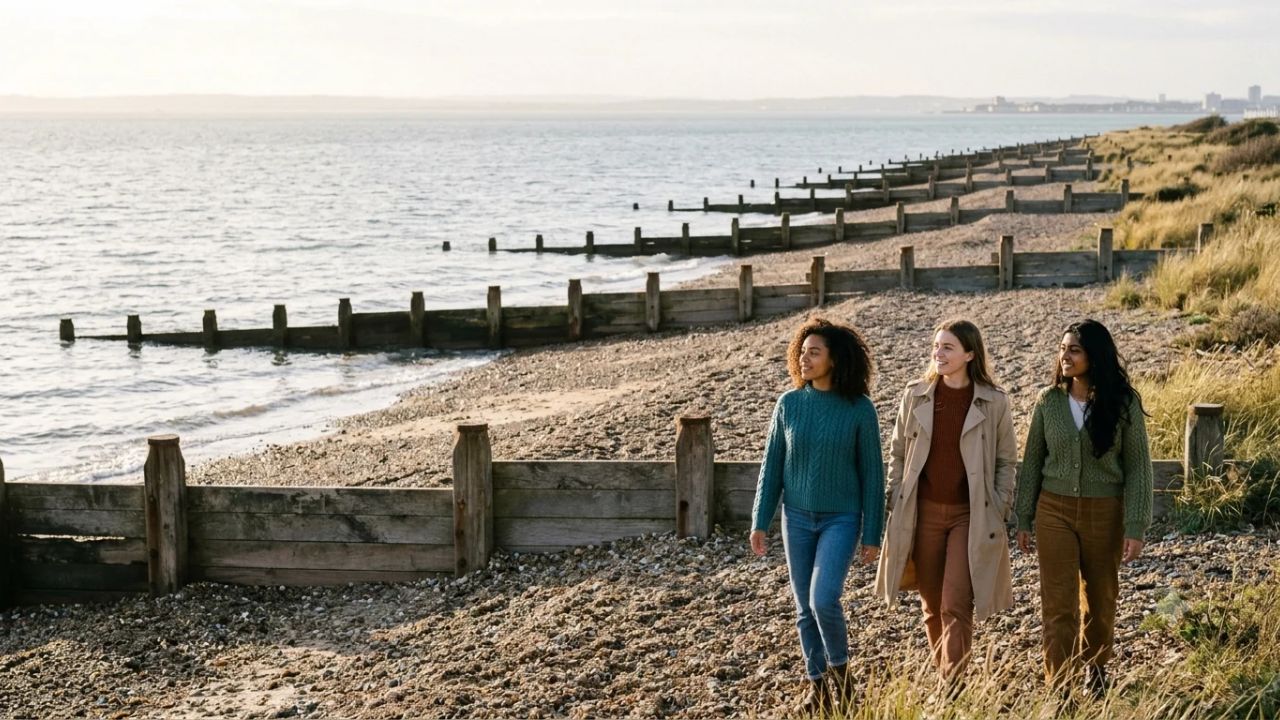
Hayling Island offers three miles of open shingle beaches and protected wetlands off the Hampshire coast, connecting local heritage with quiet coastal recreation
[SOUTH HAYLING, Oct 29, 2026] — Positioned along Hampshire’s Solent coastline between Langstone and Chichester Harbours, Hayling Island is attracting a growing segment of British and international coastal travelers seeking an uncrowded alternative to traditional seaside resorts, combining three miles of shingle beaches, eight decades of traditional seaside heritage at Funland, and protected wetland trails.
[!NOTE] Destination Overview: Covering approximately 30 square kilometres within the administrative boundary of Havant Borough Council, Hayling Island supports an established community of roughly 17,000 residents across its Hayling East and Hayling West wards. Connected to mainland Hampshire via the single-carriageway A3023 road bridge and linked to Portsmouth by a seasonal passenger ferry, the island provides a balanced coastal environment suited for weekend breaks, birdwatching, sailing, and walking holidays.
HAYLING ISLAND GEOGRAPHICAL & RECREATIONAL MATRIX
| Column 1 |
|---|
| [ NORTHERN MAINLAND GATEWAY: HAVANT & LANGSTONE ] |
| - A3023 Road Bridge (Primary vehicular access crossing Langstone Channel) |
| - Historic Hayling Billy Railway Trailhead (Walking & cycling path) |
| +----------------------------+-----------------------------+ |
| v v |
| [ WESTERN FLANK: LANGSTONE HARBOUR ] [ EASTERN FLANK: CHICHESTER HARBOUR ] |
| - Estuarine mudflats & historic oyster beds - Sandy Point natural nature reserve |
| - Hayling Billy 2.3-mile circular route - Eastoke to Sandy Point 5.2-mile walk |
| - Passenger Ferry to Eastney (Portsmouth) - Protected RAMSAR wetland habitats |
| - Beachlands Par 3 & Hayling Golf Club (18 holes) - Sailing anchorages & sheltered bays |
| +-----------------------------+ |
| v |
| [ SOUTHERN COASTLINE: SOUTH HAYLING & THE SOLENT ] |
| - Maritime vistas toward the open English Channel and transatlantic shipping lanes |
Why Hayling Island Appeals to Modern Coastal Travelers
While southern England features numerous famous seaside resorts—such as Brighton, Bournemouth, and Portsmouth’s Southsea—Hayling Island maintains an unhurried, residential atmosphere that appeals to travelers seeking relaxation without commercial noise.
The island’s inverted T-shaped geography spans approximately four miles from north to south and four miles across its southern coastline. This compact scale enables visitors to transition easily between disparate coastal environments: from the open shingle shoreline facing the Solent to the sheltered saltmarshes of Langstone Harbour and the natural sand spits bordering Chichester Harbour.
With an established permanent population of around 17,000 residents, Hayling Island functions as an authentic year-round community rather than a seasonal tourist enclave. Essential retail, independent pharmacies, bakeries, and traditional pubs operate continuously, providing dependable services for domestic holidaymakers and international visitors exploring southern England.
RESIDENTIAL ISLAND COMMUNITY VS. COMMERCIAL RESORT
| Column 1 |
|---|
| COMMERCIAL RESORT CHARACTERISTICS HAYLING ISLAND COMMUNITY CHARACTERISTICS |
| --------------------------------- ---------------------------------------- |
| - High-density concrete promenade hotels - Low-rise residential streets and heritage cottages |
| - Loud corporate amusement arcades - Family-run Funland fairground (80-year heritage) |
| - Seasonal winter business shutdowns - Year-round independent community businesses |
| - Congested multi-lane coastal strips - Natural open shingle beaches and gravel walkways |
| - High turnover of transient party tourism - Slower-paced outdoor exploration & nature travel |
Outdoor activity underpins the local visitor economy. The island is historically recognized as the birthplace of modern windsurfing, with water sports enthusiasts gathering along the open southern beaches to take advantage of consistent Solent breezes. Beachcombers, cyclists, and birdwatchers find accessible open spaces, while couples and families can structure relaxed itineraries without navigating long driving distances.
Additionally, the island's proximity to Portsmouth—located just 15 minutes away by road—allows travelers to pair quiet island exploration with major maritime museums, naval dockyards, and metropolitan rail connections.
Cross-Channel and International Tourism Connections
Data published by the UK Office for National Statistics (ONS) and Havant Borough Council identifies Hayling Island as an administrative district within Hampshire covering roughly 30 square kilometres. Bordered by tidal mudflats and natural harbours on both flanks, its southern coast looks directly out across the Solent toward the Isle of Wight, with the open waters of the English Channel stretching beyond.
Although England represents the primary domestic market for Hayling Island breaks, the destination connects naturally into wider international travel circuits. Portsmouth International Port operates regular passenger ferry services connecting Hampshire to northern France, Spain, and the Channel Islands. International travelers arriving from mainland Europe can integrate Hayling Island as a relaxing initial stopover or a tranquil base for exploring southern England.
REGIONAL & CROSS-CHANNEL TRANSIT CORRIDORS
| Column 1 |
|---|
| [ MAINLAND EUROPE / FRANCE ] |
| Ferry services from Le Havre, Caen, Cherbourg, St Malo -> Portsmouth International Port |
| v (15-Minute Drive via M27 / A27 / A3023) |
| [ HAYLING ISLAND: SOLENT REFUGE ] |
| Uncrowded base for exploring Hampshire, South Downs National Park, and maritime heritage |
| +----------------------------+-----------------------------+ |
| v v |
| [ THE NETHERLANDS & BELGIUM ] [ IRELAND & SCOTLAND ] |
| Channel Tunnel / Ferry via Dover -> M20 / M25 / A3 Flights into Southampton (SOU) |
| Direct coastal motoring touring across Sussex & Hampshire Rail links via Havant Station |
| Origin Nation or Region | Geographical & Transit Connection | Strategic Tourism Opportunity |
|---|---|---|
| England | Hampshire mainland connection via A3023 road bridge | Shingle beach walks, coastal cycling, and family breaks |
| France | Located across the English Channel via Portsmouth ferries | Multi-destination cross-Channel coastal road itineraries |
| Ireland | Connected via direct flights to Southampton and ferry links | Extended British Isles heritage and nature holidays |
| The Netherlands | Accessible via Channel ports and southeastern highway links | Coastal touring combining Hampshire, Kent, and Sussex |
| Scotland | Connected via mainline rail to Havant and domestic air routes | Combined regional holidays linking Highlands, London, and the Solent |
These connections highlight how Hayling Island can serve as a tranquil regional anchor for broader British and European travel itineraries. Visitors arriving from France via Portsmouth can avoid the congestion of London by heading straight to the island's coastline, using it as a starting point to explore historic Hampshire landmarks.
South Hayling: Seaside Heritage and Funland Amusement Park
South Hayling functions as the primary commercial and leisure hub of the island. Extending southward toward the seafront, the settlement features tree-lined residential avenues interspersed with independent grocers, tea rooms, traditional fish-and-chip shops, and convenience stores.
The town preserves a distinctly traditional British seaside character. Unlike large commercialized amusement piers, South Hayling provides an accessible, community-scaled visitor environment where streets lead directly onto gravel promenades and open shingle banks.
SOUTH HAYLING VISITOR ATTRACTIONS & AMENITIES
| Column 1 |
|---|
| [ HISTORIC FUNLAND AMUSEMENT PARK ] |
| - Continuous operation for approximately 80 years along the central seafront. |
| - Classic fairground rides: Bumper cars, roller coasters, carousel, and seaside games. |
| - Indoor arcade and family-friendly dining options providing all-weather entertainment. |
| [ SEAFRONT PROMENADE & SERVICES ] |
| - Dedicated pedestrian walkways and paved cycling paths running behind the shingle ridge. |
| - Public amenities: Council-operated car parks, public toilets, and beachfront cafes. |
| - Traditional dining: Local fish and chip takeaways such as Nobbies; Groves Bar & Tapas for dinner. |
| [ RECREATIONAL GREEN SPACES ] |
| - Beachlands open grass areas suited for family picnics, kite-flying, and open-air games. |
A focal point of the seafront is Funland Amusement Park, an attraction that has welcomed generations of holidaymakers for roughly eight decades. Established in the mid-20th century, Funland retains the charm of classic British seaside entertainment, offering traditional bumper cars, spinning carousels, family roller coasters, arcade games, and candyfloss stalls.
For families traveling with children, Funland provides structured entertainment that complements daytime beach walks. Visitors can spend the morning walking along the shingle shoreline, visit the fairground during the afternoon, and conclude the day with a relaxed meal at a local seafood shop. Operating hours vary across seasons, with full daily operations during summer school holidays transitioning to weekend-only schedules during autumn and winter months.
Hayling Island Beaches: Three Miles of Open Shingle and Solent Views
The southern shoreline of Hayling Island consists of an expansive three-mile sweep of shingle beach, fortified by wooden groynes designed to reduce longshore drift and manage coastal erosion.
The beach offers wide horizons and open sea air, providing a noticeable contrast to the industrial waterways of Portsmouth Harbour. On clear days, the distinctive chalk cliffs and headlands of the Isle of Wight are visible across the Solent, creating an attractive backdrop for photographers and walkers.
HAYLING ISLAND BEACH SAFETY & ZONING GUIDELINES
| Column 1 |
|---|
| [ SHORELINE MORPHOLOGY ] |
| - Steeply shelving shingle bank at high tide; exposed sand flats at low water. |
| - Wooden sea groynes stationed at regular intervals to manage longshore sediment drift. |
| [ SWIMMING & WATER SAFETY PRECAUTIONS ] |
| - NO PERMANENT LIFEGUARD PATROL on Hayling Island Beach. |
| - Strong Solent tidal currents run through the channel, particularly during spring tides. |
| - Swimmers must check tide tables, assess water conditions, and supervise children closely. |
| [ ENVIRONMENTAL & PET REGULATIONS ] |
| - Seasonal dog restrictions apply to designated central bathing zones (typically May to Sept). |
| - Dogs welcome year-round on designated eastern and western stretches of the beach. |
| - Paved eastern promenade provides flat, step-free access for prams and wheelchairs. |
Beach facilities vary along the coast. The central Beachlands section features convenient pay-and-display car parks, public restrooms, and casual food kiosks. Quieter stretches to the east and west offer fewer commercial services, appealing to travelers who prefer undisturbed natural surroundings.
Visitors planning to swim should exercise caution. Hayling Island Beach is not monitored by professional RNLI lifeguards. The waters of the Solent experience strong tidal currents that can challenge inexperienced swimmers, and the shingle shelf drops off steeply into deeper water at high tide. Swimmers should check local tide boards, avoid swimming alone, and supervise children near the water's edge.
Seasonal pet regulations also apply. Havant Borough Council enforces dog bans on designated central bathing beaches between May 1 and September 30, although dogs are permitted year-round along eastern and western beach stretches provided they remain under control.
West Beach and Hayling Bay: Dune Systems, Golf, and Slower Recreation
Curving westward toward the mouth of Langstone Harbour, West Beach presents a more secluded coastal environment than the central seafront. Here, shingle ridges give way to low sand dunes, salt-marsh vegetation, and wide tidal flats that reveal themselves at low tide.
Facilities at West Beach are minimal, making basic preparation essential. Travelers exploring this area should carry drinking water, windproof clothing, and appropriate walking footwear. The reward is a tranquil landscape with views across the harbour mouth toward Eastney Point in Southsea.
WEST BEACH RECREATIONAL INFRASTRUCTURE
| Column 1 |
|---|
| [ NATURAL HABITATS ] |
| - Fragile embryo sand dunes, marram grass, and vegetated shingle communities. |
| - Roosting areas for coastal wading birds; visitors must keep to designated boardwalks. |
| [ SPORTING & GOLF FACILITIES ] |
| - Beachlands Par 3: 9-hole pitch-and-putt course welcoming casual players and families. |
| - Hayling Golf Club: Established 1883; premier 18-hole championship links course. |
| * True coastal links layout set among natural gorse, dunes, and deep pot bunkers. |
| * Welcomes visiting golfers subject to handicap certification and dress regulations. |
| [ SENSITIVE SHORELINE ACCESS ] |
| - Direct access to the Langstone Harbour passenger ferry pontoon. |
| - Unobstructed sunset views over the Portsmouth skyline and Spinnaker Tower. |
Golf forms an established component of West Beach's recreational appeal. The area houses two distinct facilities:
- Beachlands Par 3: A casual nine-hole pitch-and-putt course suited for beginners, families, and casual players seeking an hour of seaside activity.
- Hayling Golf Club: Founded in 1883, this private club operates a historic 18-hole championship links course—the only true links layout on the south coast of England between Rye and Bournemouth. Set among natural dunes and gorse bushes, the course provides challenging seaside play and panoramic Solent views. Visiting golfers are welcome upon prior booking and adherence to club regulations.
Because West Beach supports sensitive coastal vegetation and nesting birds, visitors must respect posted conservation notices, avoid trampling marram grass on dunes, and keep dogs on leads in protected areas.
The Hayling Billy Circular Walk: Heritage Railways and Wetland Ecology
Hayling Island's appeal extends well inland from its beaches, encompassing agricultural fields, saltmarsh estuaries, and protected wetland habitats.
The Hayling Billy Circular Walk provides an accessible 2.3-mile route celebrating the island's railway heritage. The trail follows the path of the former Hayling Billy rail line, which transported passengers and goods between Havant and South Hayling from 1867 until its closure in 1963.
HAYLING BILLY CIRCULAR TRAIL: ROUTE PROFILE
| Column 1 |
|---|
| [ TRAILHEAD: WEST TOWN / STATION ROAD ] |
| Begin along the former railway embankment heading north toward Langstone Harbour |
| v |
| [ LANGSTONE HARBOUR EMBANKMENT & OYSTER BEDS ] |
| - Panoramic views across estuarine mudflats toward Farlington Marshes. |
| - Restored Victorian oyster beds, now managed as an important nature reserve. |
| - Interpretive boards explaining historic oyster cultivation and bird feeding habitats. |
| v |
| [ INLAND AGRICULTURAL RETURN LOOP ] |
| Follow quiet rural lanes and public footpaths across farmland back to West Town |
| KEY WILDLIFE: Brent geese (winter), curlews, oystercatchers, redshanks, and egrets. |
The route passes along the shoreline of Langstone Harbour, where travelers can view the historic oyster beds. Established in 1819, these stone bunds were once among the most productive oyster fisheries in the United Kingdom. Today, the restored lagoons are managed as a nature reserve, providing breeding and roosting grounds for coastal birds.
During autumn and winter, the harbour attracts thousands of dark-bellied Brent geese migrating from Arctic Siberia, alongside curlews, redshanks, dunlins, and little egrets. The flat, compacted gravel surface of the trail makes it suitable for walking, running, and family cycling, offering an appealing nature experience away from the busier seaside.
Eastoke to Sandy Point: The Eastern Shoreline and Chichester Harbour
For walkers seeking a longer coastal trek, the 5.2-mile route between Eastoke and Sandy Point explores the island's eastern headland bordering Chichester Harbour.
This trail forms part of the England Coast Path network, taking walkers along shingle beaches, residential promenades, and the protected headland of Sandy Point.
EASTOKE TO SANDY POINT ROUTE: 5.2-MILE CIRCUIT
| Column 1 |
|---|
| [ DEPARTURE: EASTOKE PROMENADE ] |
| Paved sea defences, vibrant beach huts, and views across the eastern Solent |
| v |
| [ SANDY POINT HEADLAND NATURE RESERVE ] |
| - Sensitive vegetated shingle spit at the mouth of Chichester Harbour. |
| - SSSI-protected coastal heathland supporting rare lichens and specialist flora. |
| - Views across the harbour entrance toward West Wittering and the South Downs. |
| v |
| [ CHICHESTER HARBOUR TIDAL SHORELINE ] |
| Follow sheltered creek paths past moored sailing yachts, boatyards, and saltmarshes |
| CONSERVATION RULE: Strictly observe fenced nesting sanctuaries and posted boundary notices. |
Chichester Harbour is an Area of Outstanding Natural Beauty (National Landscape) and an internationally designated RAMSAR wetland site. The mixing of marine tides with fresh river water creates rich mudflats supporting diverse invertebrates, which in turn feed vast flocks of wintering wildfowl and waders.
Sandy Point itself is an environmentally fragile headland. The area features vegetated shingle and heathland supporting rare plant species, including the sea spurge and yellow horned-poppy. Visitors must remain on marked public rights of way and respect seasonal boundary fencing erected to protect ground-nesting birds.
| Walking Trail | Distance | Terrain & Accessibility | Primary Scenic Highlights | Best Visiting Season |
|---|---|---|---|---|
| Hayling Billy Circular Walk | 2.3 miles | Flat gravel track and field paths; easy walking | Historic railway path, Langstone Harbour, Victorian oyster beds | Year-round; winter for migrant geese |
| Eastoke to Sandy Point | 5.2 miles | Shingle beaches, promenade, and coastal paths | Chichester Harbour mouth, sandy spit, views of West Wittering | Spring through autumn |
| South Hayling Promenade | ~3.0 miles | Flat paved seawall path; wheelchair accessible | Open Solent vistas, Isle of Wight views, Funland fairground | Summer for sea air; autumn for sunsets |
Transit and Accessibility: Connecting Portsmouth, Southampton, and London
Hayling Island’s southern location makes it convenient for travelers exploring Hampshire, West Sussex, and the wider south coast of England.
HAYLING ISLAND TRANSIT & ACCESS OVERVIEW
| Column 1 |
|---|
| [ BY ROAD: PRIVATE MOTORING ] |
| - From Portsmouth: Take M27 east -> A27 -> A3023 south across bridge (~15-20 minutes). |
| - From London: Take A3 south via Hindhead Tunnel -> A27 -> A3023 (~75 miles / 1.5 hours). |
| - Bottleneck Consideration: The single-carriageway A3023 road bridge can experience peak delays. |
| [ BY RAIL: NATIONAL NETWORK ] |
| - Havant Railway Station (Mainland hub on London Waterloo to Portsmouth line). |
| - Direct fast trains from London Waterloo (75 minutes) and London Victoria (90 minutes). |
| - Onward transit: Local Stagecoach Bus 30/31 from Havant station directly into South Hayling. |
| [ BY WATER: HAYLING PASSENGER FERRY ] |
| - Operates between Eastney Point (Portsmouth) and Ferry Point (Hayling Island). |
| - Crossing time: Approximately 3 minutes across Langstone Harbour mouth. |
| - Excellent option for cyclists and foot passengers linking Portsmouth Southsea with the island. |
| [ BY AIR: REGIONAL GATEWAYS ] |
| - Southampton Airport (SOU): ~25 miles northwest (~30 minutes via M27/A27). |
| - London Gatwick (LGW): ~60 miles northeast (~1 hour 15 minutes via A27/A23). |
For motorists, the island is reached via the A3023 road bridge crossing Langstone Channel. Driving time from Portsmouth is approximately 15 minutes under normal conditions. However, because the bridge represents the sole vehicular access point to the island, peak summer weekend departures and morning commuter hours can generate traffic queues. Motorists should check live traffic updates before traveling.
For travelers using public transport, Havant railway station on the mainland provides direct, frequent train services to London Waterloo (75 minutes), London Victoria, Brighton, and Southampton. From Havant station, local Stagecoach bus services (routes 30 and 31) run regularly down the spine of the island to South Hayling, with journey times of approximately 25 to 30 minutes.
A popular alternative for foot passengers and cyclists is the historic Hayling Ferry. This small passenger ferry operates across the narrow mouth of Langstone Harbour, connecting Eastney in Portsmouth with Ferry Point on Hayling Island in roughly three minutes, offering a convenient, scenic shortcut for visitors exploring the Solent coastline on two wheels.
| Travel Mode | Origin / Route | Approximate Duration | Key Operational Planning Consideration |
|---|---|---|---|
| Car from Portsmouth | Via M27 / A27 / A3023 | Approximately 15 minutes | Single bridge access; allow extra time during peak hours |
| Taxi from Portsmouth | Direct private transfer | 15–20 minutes | Confirm fares; useful when carrying beach or sailing equipment |
| Car from Southampton Airport | Via M27 east and A27 | Approximately 30 minutes | Convenient for regional and European flight arrivals |
| Bus from Portsmouth | Local bus network via Havant | Approximately 1 hour | Requires connection at Havant bus station |
| Hayling Passenger Ferry | Eastney Point to Ferry Point | Approximately 3 minutes | Foot passengers and bicycles only; check seasonal schedules |
| Train from London Waterloo | South Western Railway to Havant | 75 minutes | Fast mainland mainline access; connect to island bus |
Local Hospitality, Dining, and Accommodation Options
The island's food and hospitality offerings reflect its maritime setting and community character. Visitors can spend multiple days exploring without needing to travel to the mainland for dining or entertainment.
Traditional fish and chips remain an integral part of any British coastal break. Local venues such as Nobbies Fish & Chips in South Hayling provide classic freshly battered cod, haddock, and chips for takeaway dining on the beachfront.
HAYLING ISLAND DINING & HOSPITALITY SPECTRUM
| Column 1 |
|---|
| [ CASUAL COASTAL BITES & TRADITIONAL SEAFOOD ] |
| - Nobbies Fish & Chips: Classic takeaway dining enjoyed along the promenade seawall. |
| - Beachfront Tea Rooms: Traditional cream teas, freshly baked scones, and coffee. |
| [ RELAXED EVENING DINING ] |
| - Groves Bar & Tapas: Mediterranean sharing plates, craft beers, and regional wines. |
| - The Inn on the Beach: Panoramic beachfront dining overlooking the Solent and Isle of Wight. |
| - Traditional Village Pubs: Historic alehouses serving regional cask beers across North Hayling. |
| [ ACCOMMODATION SECTOR ] |
| - Newtown House Hotel: 18th-century manor property offering boutique hotel lodging. |
| - Coastal Holiday Parks & Chalets: Self-catering family accommodation along the southern coast. |
| - Independent B&Bs and Guesthouses: Intimate, owner-run bed-and-breakfasts near the beaches. |
For evening dining, establishments like Groves Bar & Tapas offer relaxed settings with Mediterranean-inspired sharing dishes, craft beers, and wine selections. Another popular venue is The Inn on the Beach, positioned directly on the shingle ridge, where guests can enjoy fresh seafood while watching the sunset over the Solent.
Accommodation options cater to diverse preferences and budgets:
- Heritage Hotels: The Newtown House Hotel, an 18th-century manor house in South Hayling, provides boutique accommodations with manicured gardens, traditional lounges, and an on-site restaurant.
- Holiday Parks: The southern coastline features several family-friendly holiday villages and chalet resorts offering self-catering units, indoor swimming pools, and evening entertainment.
- Bed & Breakfasts: Independent guesthouses throughout South Hayling and West Town provide friendly, owner-operated lodging close to walking trails and beaches.
Visitors traveling during school breaks, bank holiday weekends, and summer months should book accommodations several weeks in advance to ensure availability.
Regional Itineraries: Pairing Hayling Island with Portsmouth and Chichester
Hayling Island functions effectively as part of a wider Hampshire and West Sussex regional itinerary. Its location allows visitors to balance quiet coastal relaxation with urban history and architecture.
HAMPSHIRE COASTAL TRIANGLE ITINERARY
| Column 1 |
|---|
| [ HAYLING ISLAND (1-2 DAYS) ] |
| - Three miles of shingle beaches and relaxed promenade cycling. |
| - Hayling Billy wetland walk and Chichester Harbour birdwatching. |
| - Fresh seafood and traditional seaside fairground entertainment at Funland. |
| +----------------------------+-----------------------------+ |
| v (15 Mins West) v (20 Mins East) |
| - Portsmouth Historic Dockyard (HMS Victory, Mary Rose) - 900-year-old Chichester Cathedral |
| - Spinnaker Tower panoramic harbour views - Roman Palace at Fishbourne |
| - Gunwharf Quays designer waterfront shopping & dining - Independent boutiques & art galleries |
To the west, Portsmouth offers rich naval heritage. A short drive or ferry journey takes visitors to the Portsmouth Historic Dockyard, home to Nelson's flagship HMS Victory, King Henry VIII's restored Tudor warship the Mary Rose, and the Victorian ironclad HMS Warrior. Visitors can also browse designer outlet shops at Gunwharf Quays or ascend the Emirates Spinnaker Tower for views across Portsmouth Harbour and the Solent.
To the east, the historic city of Chichester provides a cultural contrast. Dominated by its 900-year-old medieval cathedral with its distinctive detached bell tower, Chichester features Georgian streets, independent boutiques, and cultural venues like the Chichester Festival Theatre. Nearby Fishbourne Roman Palace houses the largest collection of in situ Roman mosaic floors in Britain.
Combining these three destinations provides a varied holiday, blending open-air beach walks, maritime naval history, and cathedral architecture within a compact 20-mile radius.
Environmental Stewardship and Sustainable Coastal Recreation
The long-term appeal of Hayling Island depends on the responsible management and preservation of its natural ecosystems. The island's intertidal mudflats, vegetated shingle ridges, and coastal sand dunes face ongoing environmental pressures from climate change, rising sea levels, and seasonal visitor footfall.
Coastal erosion represents an enduring challenge. Havant Borough Council and the Environment Agency manage defensive groynes and periodic beach replenishment schemes to safeguard residential communities from winter storm surges along the open Solent.
RESPONSIBLE COASTAL VISITOR CODE OF CONDUCT
| Column 1 |
|---|
| 1. RESPECT SENSITIVE HABITATS |
| - Keep to marked trails and gravel footpaths along Sandy Point and the Hayling Billy route. |
| - Avoid walking on fragile vegetated shingle and sand dunes to prevent root damage. |
| 2. PROTECT COASTAL BIRDLIFE |
| - Observe migrating Brent geese and waders from designated public hides and viewpoints. |
| - Maintain distance from feeding flocks; avoid flushing birds during winter feeding periods. |
| 3. ADHERE TO PET REGULATIONS |
| - Observe seasonal dog exclusion zones on central bathing beaches between May and September. |
| - Keep dogs on short leads around harbour saltmarshes to protect ground-nesting birds. |
| 4. PRACTICE PACK-IT-IN, PACK-IT-OUT |
| - Take all personal litter, plastic packaging, and fishing lines home. |
| - Participate in local community beach cleans to keep the Solent free of marine plastics. |
Visitors play an important role in sustaining these coastal landscapes. Following established trails prevents erosion on fragile dunes, while observing pet restrictions shields nesting ringed plovers and wintering Brent geese from disturbance.
By practicing sustainable travel habits—such as using the passenger ferry, cycling along the former railway line, and patronizing locally owned independent businesses—travelers help preserve Hayling Island's natural beauty and community charm for future generations.
Why This Matters: Practical Traveler Takeaways and Expert Perspective
From an itinerary design and travel planning perspective, Hayling Island offers practical advantages for anyone organizing a holiday along the south coast of England.
STRATEGIC TRAVELER PLANNING RECOMMENDATIONS
| Column 1 |
|---|
| [ OPTIMAL TRAVEL TIMING ] |
| - Late Spring (May-June) & Early Autumn (Sept-Oct): Mild weather, open amenities, few crowds. |
| - Winter (Nov-Feb): Ideal for birdwatching (Brent geese migration) and quiet walking breaks. |
| [ LOGISTICAL EFFICIENCIES ] |
| - Base yourself on the island to enjoy lower accommodation rates than downtown Portsmouth. |
| - Use the Hayling Ferry to commute into Portsmouth for day trips, avoiding urban traffic jams. |
| - Schedule bridge crossings outside 8:00-9:00 AM and 5:00-6:30 PM commuter rush hours. |
| [ PACKING ESSENTIALS ] |
| - Sturdy footwear for walking on shifting shingle beaches and gravel harbour paths. |
| - High-quality binoculars for birdwatching across Langstone and Chichester Harbours. |
| - Windproof layers: Solent breezes can drop ambient temperatures quickly even on sunny days. |
For the traveler, this means:
- Cost-Effective Coastal Lodging: Accommodation and dining on Hayling Island often provide greater value than premium hotels in central Portsmouth or the Isle of Wight, making it an attractive base for budget-conscious families and couples.
- Multi-Modal Flexibility: The availability of the Hayling Ferry allows visitors to explore Portsmouth’s historic naval dockyards by day before returning to a quiet seaside dinner on the island in the evening.
- Year-Round Appeal: While swimming and fairground rides peak in midsummer, the island's birdwatching, golf links, and walking routes provide satisfying experiences throughout autumn and spring.
By planning around bridge traffic patterns, packing appropriate windproof clothing, and respecting protected nature reserves, visitors can enjoy one of Hampshire’s most distinctive and refreshing coastal destinations.
Frequently Asked Questions (PAA)
Where is Hayling Island located and how is it connected to the mainland?
Hayling Island is situated off the Hampshire coast in southern England, immediately east of Portsmouth. Covering approximately 30 square kilometres, it is bordered by Langstone Harbour to the west and Chichester Harbour to the east. The island is connected to mainland Havant by the A3023 road bridge and linked to Portsmouth via the seasonal Hayling Passenger Ferry operating between Ferry Point and Eastney.
What are the main attractions in South Hayling?
South Hayling features an expansive three-mile shingle beach overlooking the Solent, the 80-year-old Funland Amusement Park with traditional rides and arcades, beachfront cafes, independent shops, and local dining spots such as Nobbies Fish & Chips and Groves Bar & Tapas.
Can you swim safely at Hayling Island Beach?
Swimming is possible when water conditions are calm, but visitors must exercise caution because the beach is not monitored by lifeguards. The Solent experiences strong tidal currents, and the shingle bank shelves off steeply into deep water at high tide. Swimmers should always check local tide times and supervise children closely.
What are the best walking trails on Hayling Island?
The two most popular walking routes are the Hayling Billy Circular Walk (a gentle 2.3-mile route following the historic railway embankment along Langstone Harbour) and the Eastoke to Sandy Point trail (a 5.2-mile walk following the England Coast Path along the eastern shoreline bordering Chichester Harbour).
What wildlife can visitors observe around Hayling Island?
The harbours surrounding Hayling Island are protected wetland reserves that support thousands of coastal waders and wildfowl. Winter visitors can observe large flocks of migrating dark-bellied Brent geese from Siberia, alongside curlews, redshanks, dunlins, oystercatchers, and little egrets feeding on the intertidal mudflats.
Related Travel Guides
This article is for informational purposes. Flight routes, passenger regulations, visa rules, and transit advisories are subject to change by airlines and aviation authorities. Readers are advised to verify schedules and travel documentation with relevant carriers and border agencies before departure.
Related Stories

Europe’s Premier Destinations Reshape Tourism: Barcelona, Venice, and Canary Islands Impose New Caps, Fees, and Housing Rules

Antigua and Barbuda Lead Caribbean Luxury Tourism with Expanded American Airlines Flights, Island-Hopping, and 7-Day Guide