Hawaii Officials Warn Tourists to Avoid Kauai Following Devastating Hurricane Lowell Impact in 2026

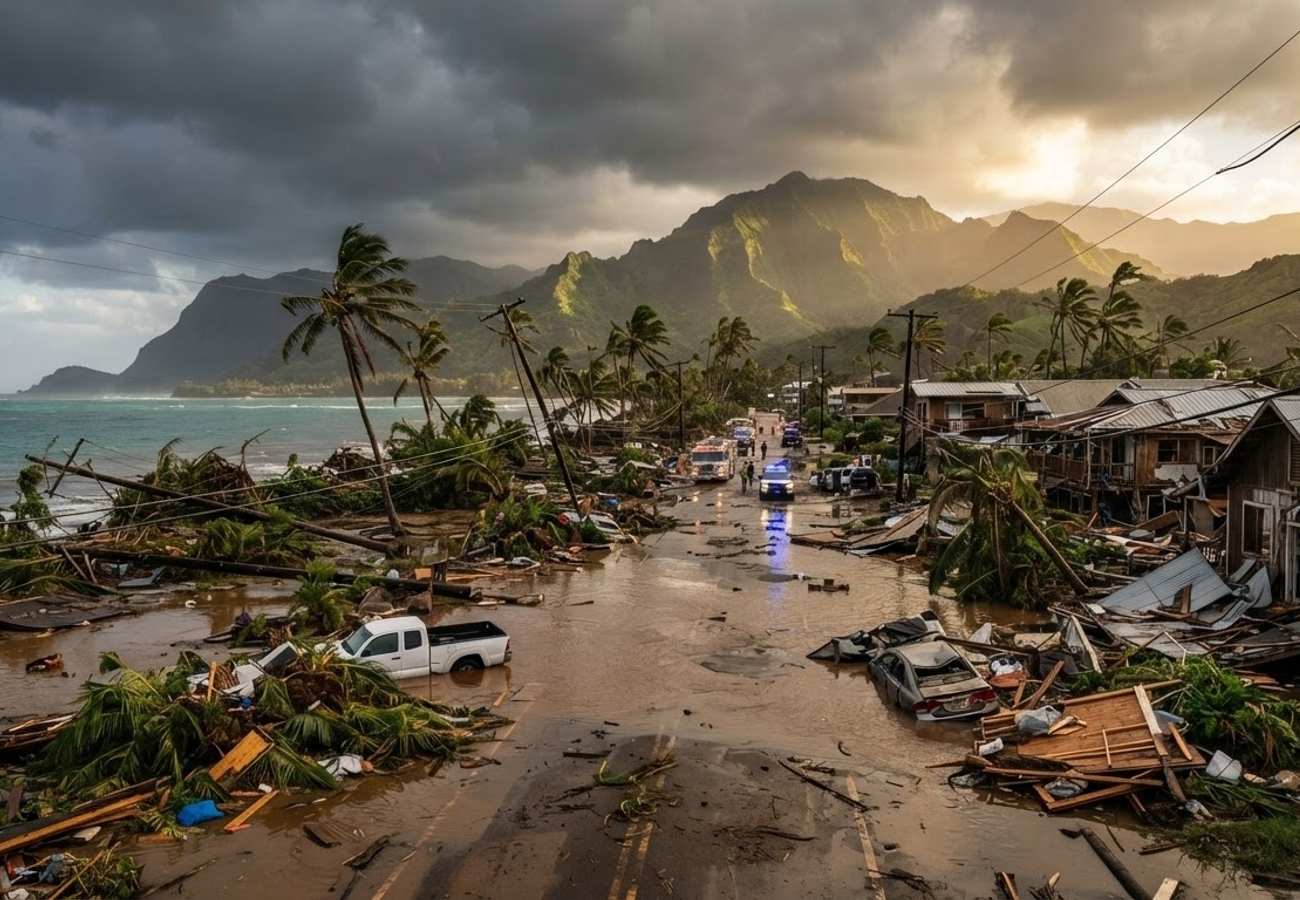
Image generated by AI
[Kauai, September 13, 2026] — Tourism officials in Hawaii are formally requesting that travelers avoid visiting Kauai to allow the island to recover from the catastrophic impact of Hurricane Lowell. The Level 4 storm, which followed closely behind Hurricane Lala, has left a trail of flooding, infrastructure failure, and widespread power outages across the region.
The Hawaii Tourism Authority (HTA) is urging visitors with upcoming reservations to pivot their itineraries to other islands rather than canceling their Hawaii vacations entirely. Caroline Anderson, the interim president and CEO of the Hawaii Tourism Authority, emphasized that while Kauai needs space to rebuild, the state's broader economy still relies heavily on visitor spending.
Infrastructure Collapse and Power Failures
The immediate cause of the travel warning is the severe degradation of basic services and infrastructure. Hurricane Lowell triggered massive flooding that inundated residential neighborhoods, primary roadways, and luxury resorts. According to reports from Hawaii News Now, approximately 33,000 residents were stripped of electrical power during the height of the storm.
While the storm has moved away from the archipelago, the recovery phase is proving slow. Cleanup crews are currently working to clear debris from critical transit arteries, and many local businesses remain closed as they assess water damage to their facilities.
Aviation Disruptions at Lihue Airport
Air travel to and from the island remains volatile. Lihue Airport, the primary gateway to Kauai, experienced a total power failure on Tuesday. The situation was exacerbated when one of the facility's two backup generators failed, forcing the entire airport to operate on a single power source.
The Hawaii Department of Transportation (HDOT) reported that this power instability caused several critical operational failures:
- Security Bottlenecks: The Transportation Security Administration (TSA) was forced to reduce security screening to a single line.
- System Resets: Frequent power drops required TSA personnel to repeatedly reboot security systems, causing significant passenger backups.
- Flight Spacing: To prevent terminal overcrowding, airlines have been spacing out departures further apart, extending flight schedules late into the night.
Although HDOT confirmed that full power was restored to the airport by Thursday evening, traveler reports indicate that the backlog persists. Passengers on Friday reported arriving four to five hours before their scheduled departures to navigate long lines at security and baggage claim.
Who Is Affected
The current crisis impacts a wide range of travelers and service providers. The following table outlines the specific disruptions across different sectors:
| Affected Group | Primary Impact | Current Status |
|---|---|---|
| Incoming Tourists | Advisories to reschedule or divert to other islands | Active Warning |
| Departing Passengers | Extreme wait times at Lihue Airport | High Congestion |
| Hotel/Resort Guests | Flooding in facilities and power instability | Partial Recovery |
| Short-term Renters | Non-refundable bookings for damaged properties | Dispute Phase |
| Airline Operators | Spaced-out departure schedules to manage TSA flow | Operational but Slow |
What This Means for Travelers
For those currently holding bookings for Kauai, the situation has created a "catch-22" where government officials advise against visiting, but private corporations are refusing to refund the costs of the trip.
The Passenger Impact: If you have a flight or hotel booked for Kauai in the coming weeks, you are likely facing a conflict between official safety warnings and strict cancellation policies. Many travelers report that while platforms like Airbnb may allow cancellations, airlines—specifically Alaska Airlines—have reportedly refused to refund tickets or allow transfers to other islands without steep penalties.
Similarly, guests at resorts such as Pono Kai and those using VRBO have reported that their reservations remain non-refundable, despite the island's current state of emergency. Travelers are essentially being asked to choose between losing their money or visiting an island that is actively struggling to restore basic utilities.
Recovery Timeline and Next Steps
The transition from emergency response to full recovery is expected to take several weeks. While the airport is now powered, the "last mile" of infrastructure—local roads and residential power grids—remains fragile.
Travelers are advised to take the following steps immediately:
- Direct Negotiation: Contact airlines and hotel managers directly rather than using third-party apps. Request travel credits or date changes instead of cash refunds, as these are more likely to be granted.
- Insurance Audit: Review travel insurance policies for "trip interruption" or "natural disaster" clauses.
- Credit Card Protection: Check if the credit card used for the booking offers built-in travel insurance that covers weather-related cancellations.
- Official Monitoring: Continuously monitor the Federal Aviation Administration (FAA) and HDOT updates for real-time airport status.
FAQ: Kauai Hurricane Recovery 2026
Should I cancel my trip to Kauai right now? Officials are asking tourists to reschedule or move their stay to a different Hawaiian island. While the airport is open, many local services and accommodations are still recovering from Hurricane Lowell's damage.
Is Lihue Airport currently operational? Yes, the airport is open and power has been restored. However, expect significant delays and long TSA lines. It is recommended to arrive at least 4-5 hours before your flight.
What should I do if my hotel or airline refuses a refund? Try requesting a travel voucher or a date change for a future visit. If that fails, check your travel insurance policy or the benefits provided by your credit card company for disaster-related cancellations.
Are all Hawaiian islands affected by Hurricane Lowell? No. The primary impact and the current travel warning are focused on Kauai. Other islands remain open, and officials encourage diverting your itinerary there to support the state's economy.
Travelers are urged to prioritize local recovery efforts over leisure itineraries until further notice.
Related Travel Guides
This article is for informational purposes. Flight routes, passenger regulations, visa rules, and transit advisories are subject to change by airlines and aviation authorities. Readers are advised to verify schedules and travel documentation with relevant carriers and border agencies before departure.
Related Stories

Anchorage Direct Tokyo Flights and Three Summer Routes Launch for 2027: Alaska Travel Logistics and Insider Guide

Warm US Winter Travel Guide 2026–2027: Nine Sunshine Escapes from the Florida Keys to Hawaii