
Guyana Tourism 2026: Exploring Kaieteur Falls, Iwokrama Rainforest and Rupununi Savannahs
Guyana is emerging as a premier South American destination for high-impact nature tourism, centered on the 226-metre Kaieteur Falls and community-led rainforest expeditions.

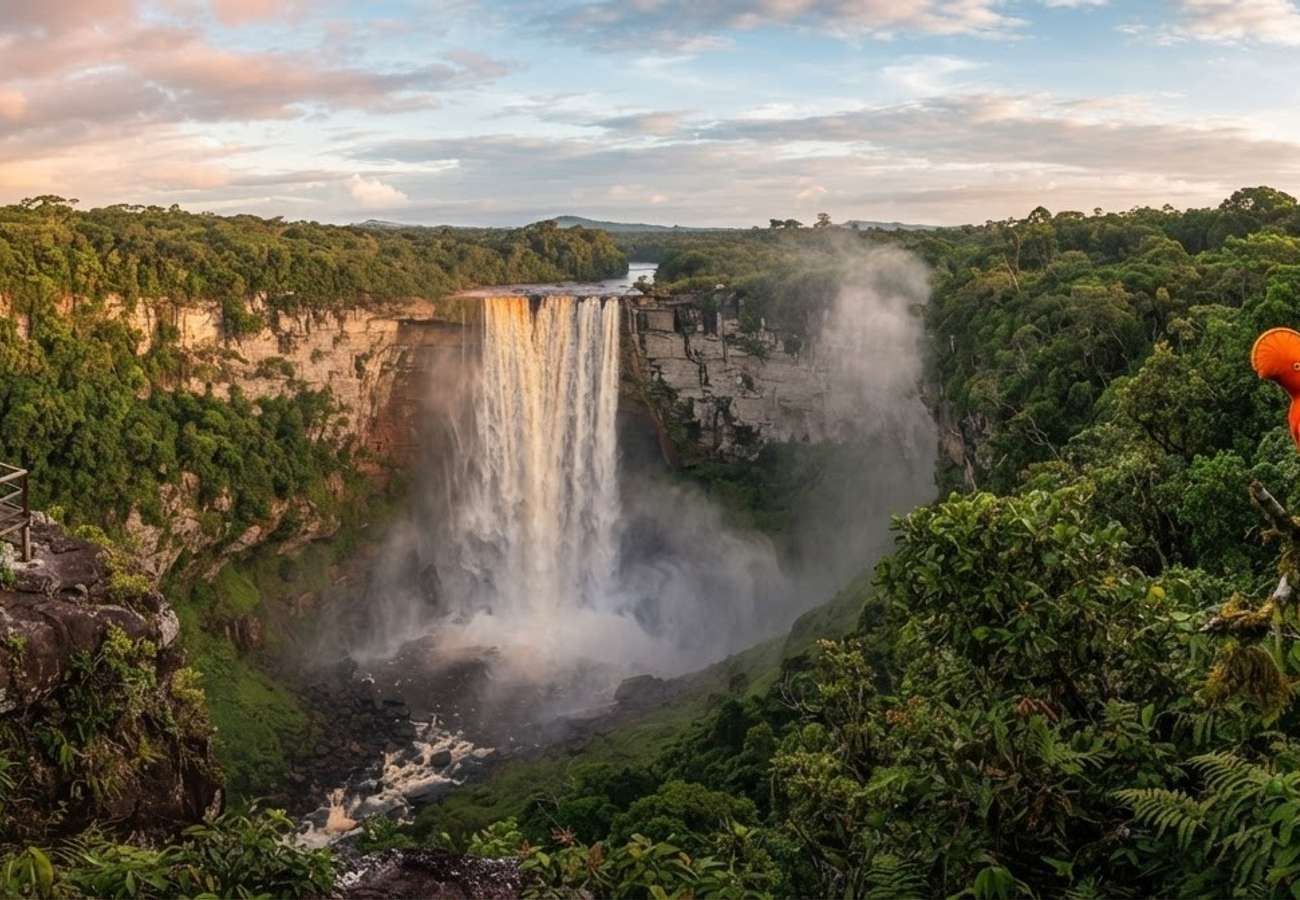
Image generated by AI
Guyana is pivoting toward a "wild tourism" model, eschewing mass-market resorts in favor of high-value, low-impact nature expeditions. The strategy focuses on the country's untouched rainforests, Indigenous community partnerships, and the massive scale of Kaieteur Falls.
The Shift to Purpose-Driven Adventure
Unlike the crowded tourist hubs of neighboring South American nations, Guyana is positioning itself as a destination for "adventure with purpose." The tourism infrastructure is intentionally designed around eco-lodges and community-led businesses rather than large-scale hotel chains.
English serves as the official language, removing a significant barrier for North American and European travelers. While geographically South American, the country maintains a distinct Caribbean identity reflected in its music, cuisine, and cultural heritage.
The Gateway: Georgetown
Most international itineraries begin in Georgetown, the North Atlantic coastal capital. The city serves as the primary logistical hub for those preparing to enter the interior.
- Architectural Landmarks: St George’s Cathedral, noted for its massive wooden structure.
- Cultural Hubs: Stabroek Market and the National Museum.
- Sports Culture: The Bourda Cricket Ground, reflecting the deep national passion for the sport.
From a logistical perspective, spending one to two nights in Georgetown is essential for organizing guides and securing supplies before departing for remote rainforest lodges or the Rupununi region.
High-Impact Natural Sites
Kaieteur National Park
The centerpiece of Guyana's tourism appeal is Kaieteur Falls. Located on the Potaro River, the falls feature a main drop of 226 metres.
- Access: Most visitors fly from Georgetown’s Ogle Airport (approximately one hour).
- Peak Season: September to November offers the most powerful water flow following the rains.
- Key Species: The Guianan cock-of-the-rock and the Kaieteur Golden Rocket Frog.
Iwokrama Rainforest
For those seeking deep jungle immersion, the Iwokrama Rainforest provides a comprehensive ecosystem of tall canopy trees and river networks.
- The Canopy Walkway: A critical asset for birdwatchers and photographers to view the forest from above.
- Wildlife Potential: Jaguars, caimans, giant river otters, sloths, and Harpy Eagles.
- Accommodation: Eco-lodges in Atta, Surama, and Rewa serve as the primary bases for guided excursions.
The Rupununi Region
Contrasting the dense rainforest, the Rupununi consists of open grasslands, wetlands, and ranch lands. This region is often more conducive to wildlife spotting than the thick jungle.
- Target Species: Giant anteaters, capybaras, black caimans, and tapirs.
- Community Impact: Tourism in Yupukari, Karanambu, Surama, Rewa, and Lethem directly supports Indigenous livelihoods.
- Conservation Focus: Sites like Caiman House in Yupukari integrate tourism with active wildlife protection.
Specialized Birdwatching Sector
Guyana is leveraging its diverse habitats—from coastal wetlands to highland savannahs—to attract the global birdwatching market. This niche is a significant revenue driver because specialist birders typically stay longer and utilize professional guides.
Prime Birding Windows:
- September to early December
- January to late April
Must-See Species: The Hoatzin (National Bird), Harpy Eagles, Red Siskins, and Sun Parakeets.
Logistics and Travel Requirements
Traveling in Guyana requires a flexible mindset due to the remoteness of the interior. Domestic flights are the most efficient way to reach Lethem and Kaieteur.
| Requirement | Detail |
|---|---|
| Passport | Must be valid for at least six months |
| Health | Malaria prevention and vaccine consultation recommended |
| Documentation | Yellow fever proof may be required from risk countries |
| Insurance | Comprehensive medical cover is highly advised for remote areas |
Why This Matters: Industry Analysis
From a market perspective, Guyana is executing a "scarcity" strategy. By avoiding the "giant resort" model, they are protecting the very asset that attracts high-spending eco-tourists: authenticity.
For the travel industry, this represents a shift toward Regenerative Tourism. When visitors utilize licensed local providers in the Rupununi or Iwokrama, the economic benefit flows directly to the protectors of the land. This creates a financial incentive for local communities to maintain the rainforest rather than pivot to extractive industries like mining or logging. For the traveler, the "Information Gain" here is clear: Guyana is not a place for a rushed holiday, but a destination for those seeking a slower, more personal encounter with nature.
Forward Outlook
Expect Guyana to further integrate its community-led lodges into global booking platforms while maintaining strict limits on visitor numbers to prevent over-tourism. As the "wild tourism" brand strengthens, the country will likely see an increase in specialized expedition cruises and high-end photography tours targeting the rare wildlife of the interior.
The future of South American travel is shifting from the beach to the backcountry.
Related Travel Guides
Disclaimer
This article is for informational and educational purposes only. It does not constitute legal, financial, or professional advice. While we strive to provide accurate and up-to-date information, travel policies, regulations, and conditions change rapidly. Always verify information with official sources before making travel decisions. Nomad Lawyer makes no representations about the accuracy, reliability, completeness, or suitability of the information provided. Readers should consult qualified professionals for advice specific to their circumstances. The views expressed in this article are those of the author and do not necessarily reflect the views of Nomad Lawyer.
Kunal K Choudhary
Co-Founder & Contributor
A passionate traveller and tech enthusiast. Kunal contributes to the vision and growth of Nomad Lawyer, bringing fresh perspectives and driving the community forward.
Learn more about our team →