
Guyana Eco-Tourism: Rainforest Adventures and Kaieteur Falls
Guyana is positioning itself as South America's premier eco-tourism destination, leveraging the 226-meter-high Kaieteur Falls and Amerindian-led forest reserves.

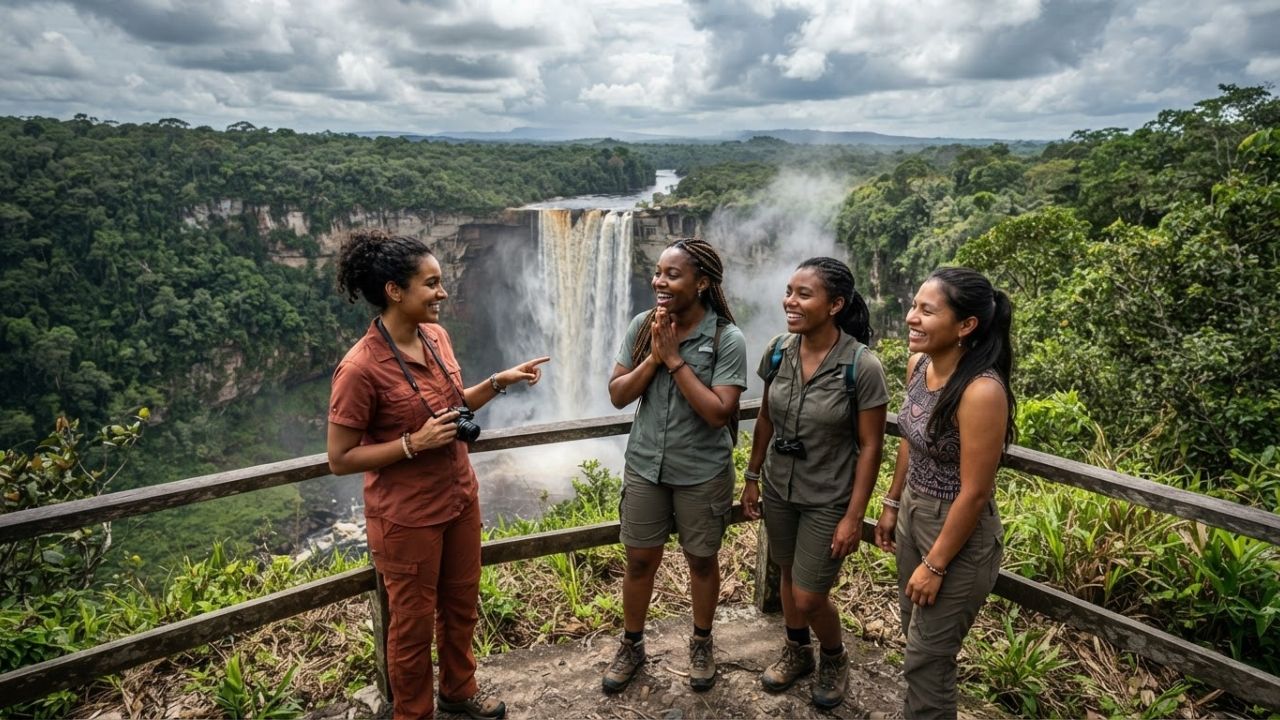
Image generated by AI
Guyana is positioning itself as South America’s premier eco-tourism destination, leveraging the 226-meter-high Kaieteur Falls and Indigenous-led rainforest reserves. The country's tourism model focuses on low-impact, small-scale travel that directly supports Amerindian conservation economies.
The Local Trend Revealed
Travelers are shifting away from large coastal resorts in favor of carbon-neutral wilderness expeditions and community-owned lodging. Monitored by the Guyana Tourism Authority (GTA), this transition is structured across several key regions and attractions:
- Georgetown Gateway: Most journeys begin in the capital city, featuring St. George's Cathedral (one of the tallest wooden churches globally), Stabroek Market, the National Museum, and Bourda Cricket Ground.
- Kaieteur Falls drop: Located in Kaieteur National Park on the Potaro River, this single-drop waterfall is 226 meters high. Access is typically via a one-hour flight from Georgetown's Ogle Airport, followed by a two-hour guided walk.
- Iwokrama Rainforest: Co-managed by the Iwokrama International Centre for Rain Forest Conservation and Development, this reserve offers walks on the Iwokrama Canopy Walkway and guided boat safaris to spot jaguars, caimans, giant river otters, sloths, and Harpy Eagles. Lodging is centered in eco-lodges near Surama, Rewa, and Atta.
- Rupununi Savannahs: An open region of grasslands and wetlands south of the forest, offering wildlife safaris to view giant anteaters, capybaras, and tapirs. Key community properties include Caiman House in Yupukari, Karanambu, and Lethem.
- Specialized Birdwatching: Guyana attracts birdwatchers targeting the Hoatzin (national bird), Red Siskins, and Sun Parakeets. The peak seasons run from September to early December and January to late April.
Local Community & Environmental Value
For the visitor, the real impact of traveling in Guyana is the preservation of Indigenous autonomy. Staying at Amerindian-owned properties like Surama Eco-Lodge or Caiman House in Yupukari directly funds local schools, solar energy systems, and conservation research, ensuring tourism revenue supports community livelihoods.
Environmental protection is integrated through low-impact travel formats. Choosing walking tours on the Iwokrama Canopy Walkway and participating in non-lethal research projects (such as the black caiman tracking program at Yupukari) protects the fragile Amazonian basin. Using solar-powered eco-lodges minimizes energy footprints, supporting conservation benchmarks managed by the Ministry of Tourism, Industry and Commerce of Guyana and the South Rupununi Conservation Society (SRCS).
Visitor Insider Tips for Guyana Travel
Travel specialists recommend the following practices for travelers:
- Book Propeller Flights in the Morning: Flights to Kaieteur Falls depart from Ogle Airport (EGL). Schedule morning departures because afternoon cloud cover and rainfall are more common and can ground small aircraft.
- Prepare for 4WD Overland Travel: If traveling by road to the interior via the unpaved Linden-Lethem road, expect journey times of 12 to 15 hours and secure a high-clearance 4WD vehicle.
- Observe the Off-Peak Window: Visit during the dry shoulder windows of late September to November or early March. Forest roads are drier, yet rivers and falls are still flowing forcefully from the preceding rainy seasons.
- Sample Regional Culinary Specialties:
- Taste Amerindian Pepperpot (a rich, slow-cooked meat stew flavored with cassareep—a dark cassava root extract—and cinnamon, eaten with dense plait bread).
- Try Chicken Curry served with fresh, flaky Roti in Georgetown.
- Observe Indigenous and Wilderness Etiquette: When visiting Amerindian villages, seek permission from the village council or Tushaou (village chief) before photographing residents or entering communal lands. Tipping of 10 percent is customary for local guides.
- Explore Under-the-Radar Spots: Skip the main river routes and book a quiet morning canoe paddle along the Mahaica River near the coast to spot the prehistoric-looking Hoatzin bird nesting in the wild.
Tourism Outlook
The long-term impact of Guyana's eco-tourism strategy will establish it as a global benchmark for community-led conservation. By directing visitor flows toward low-impact forest lodges and seasonal birdwatching programs, the country aims to protect its remaining forest cover while providing viable economic alternatives to logging and mining.
FAQ: Guyana Eco-Tourism and Travel
How high is Kaieteur Falls? Kaieteur Falls features a single drop of 226 meters, making it about four times higher than Niagara Falls.
What is the best way to travel to the interior of Guyana? Scheduled small-plane flights from Georgetown's Ogle Airport are the most efficient way to reach Kaieteur Falls, Lethem, and remote rainforest lodges.
When are the best months for birdwatching in Guyana? The peak birding periods are from September to early December and from January to late April, following the region's green seasons.
Is English spoken in Guyana? Yes, English is the official language of Guyana, making communication and travel coordination straightforward for international visitors.
Related Travel Guides
Disclaimer
This article is for informational and educational purposes only. It does not constitute legal, financial, or professional advice. While we strive to provide accurate and up-to-date information, travel policies, regulations, and conditions change rapidly. Always verify information with official sources before making travel decisions. Nomad Lawyer makes no representations about the accuracy, reliability, completeness, or suitability of the information provided. Readers should consult qualified professionals for advice specific to their circumstances. The views expressed in this article are those of the author and do not necessarily reflect the views of Nomad Lawyer.
Raushan Kumar
Founder & Lead Developer
Full-stack developer with 11+ years of experience and a passionate traveller. Raushan built Nomad Lawyer from the ground up with a vision to create the best travel and law experience on the web.
Learn more about our team →