
Gulf Airports Face 678 Delays and 83 Cancellations Across Hubs

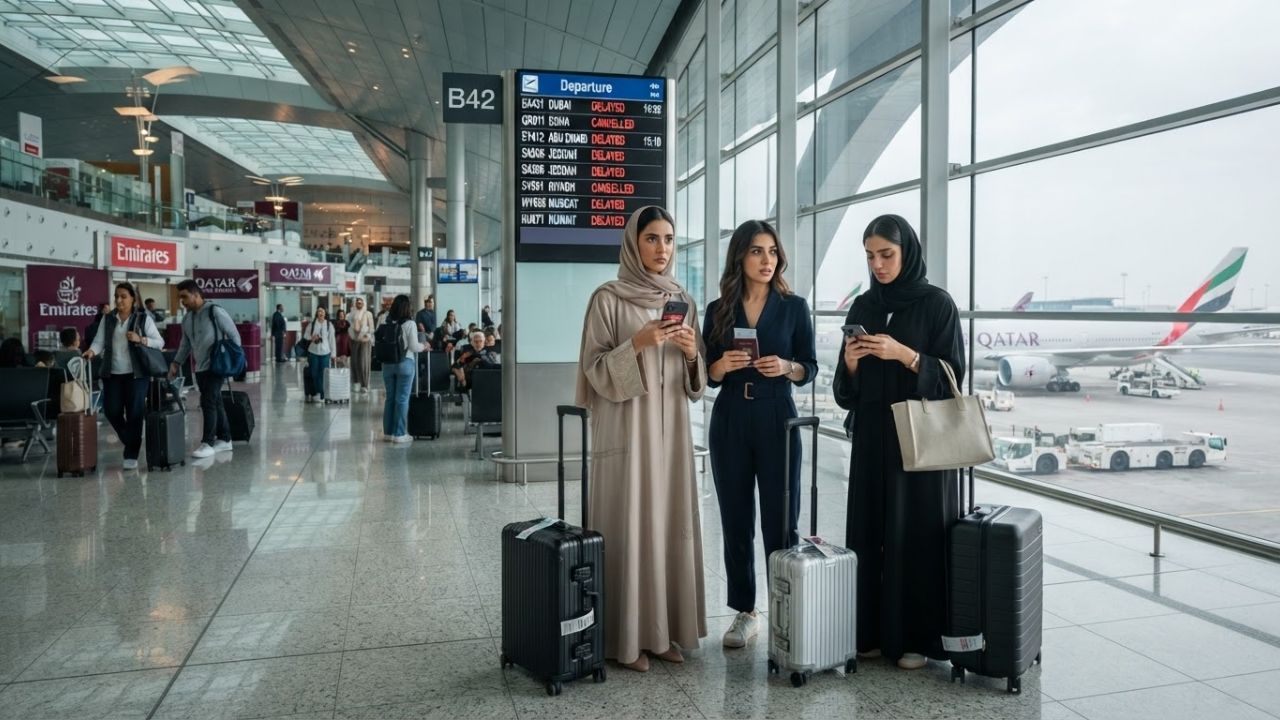
More than 678 flight delays and 83 cancellations rippled across premier Middle Eastern aviation hubs on September 8, 2026, stalling connecting itineraries at Dubai International, Hamad International in Doha, Abu Dhabi International, and major Saudi Arabian gateways. With key network carriers absorbing delay rates as high as 25%, international transit passengers transferring between Europe, Asia, Africa, and North America face significant gate holds and rescheduling adjustments.
A confluence of operational bottlenecks, airspace capacity pressures, and rotational aircraft scheduling has placed unusual strain on the Gulf Cooperation Council (GCC) aviation network. Verified flight tracking data recorded at 5:05 p.m. ET on September 7, 2026 (1:05 a.m. GST on September 8, 2026) via FlightAware indicates that intercontinental transfer corridors across the United Arab Emirates, Saudi Arabia, Qatar, Oman, and Kuwait are managing uneven operational flow, complicating long-haul journeys across the Eastern Hemisphere.
Operational Disruption Across Major Gulf Aviation Hubs
The impact across primary regional gateways highlights the systemic reach of the disruption, with the United Arab Emirates and Saudi Arabia recording the highest aggregate volume of delayed aircraft:
- Dubai International Airport (DXB, UAE): Leading all regional hubs in total disruptions, Dubai recorded 174 delays alongside 12 cancellations (origin cancellation rate 0%, destination cancellation rate 1%). As the central long-haul interchange for Emirates, schedule friction here creates secondary arrival delays across connecting European and Australasian routes.
- Hamad International Airport (DOH, Qatar): Qatar’s primary hub logged 109 delays and 8 cancellations (both origin and destination cancellation rates at 0%). Its home carrier, Qatar Airways, logged 102 individual flight delays (a 16% delay rate) and 7 cancellations (a 1% cancellation rate).
- Abu Dhabi International Airport (AUH, UAE): The UAE capital’s flagship gateway registered 105 delays and 1 cancellation. Operating carrier Etihad Airways recorded 83 delayed departures, translating to a 25% delay rate—the highest percentage among all profiled carriers—while maintaining strong cancellation containment at just 1 flight (0% cancellation rate).
- King Abdulaziz International Airport (JED, Jeddah, Saudi Arabia): Serving as Saudi Arabia's principal western gateway and primary Red Sea transit point, Jeddah recorded 95 delays and 20 cancellations, with both origin and destination cancellation rates registered at 2%.
- King Khalid International Airport (RUH, Riyadh, Saudi Arabia): The kingdom's capital facility logged 61 delays and 14 cancellations (1% origin and 1% destination cancellation rates).
- Sharjah International Airport (SHJ, UAE): The regional low-cost hub registered 40 delays and 2 cancellations.
- Kuwait International Airport (KWI, Kuwait): Kuwait's main commercial airfield registered 32 delays and 1 cancellation.
- Seeb International Airport (MCT, Muscat, Oman): Oman's primary hub reported 29 delays and 2 cancellations, while national carrier Oman Air logged 8 delays (8% delay rate) and 2 cancellations (2% cancellation rate).
- King Fahd International Airport (DMM, Dammam, Saudi Arabia): The Eastern Province gateway recorded 26 delays and 2 cancellations.
- Southern Saudi Regional Gateways: Severe localized pressure concentrated across southwestern Saudi Arabia. Abha Regional Airport (AHB) logged 7 delays and 8 cancellations (9% cancellation rate for both origin and destination). Gizan Regional Airport (GIZ) reported 0 delays but 9 cancellations, representing a severe 57% destination cancellation rate and 71% origin cancellation rate. Najran Domestic Airport recorded 0 delays and 4 cancellations.
Carrier-Specific Performance and Network Balancing
The data reflects differing operational management across Gulf flag carriers under supervision from authorities like the UAE General Civil Aviation Authority (GCAA), Saudi General Authority of Civil Aviation (GACA), and the Arab Air Carriers' Organization (AACO):
| Airline | Home Country | Flight Cancellations | Cancellation Rate | Flight Delays | Delay Rate |
|---|---|---|---|---|---|
| Saudia | Saudi Arabia | 29 | 5% | 51 | 9% |
| Qatar Airways | Qatar | 7 | 1% | 102 | 16% |
| Emirates | United Arab Emirates | 5 | 0% | 75 | 14% |
| Etihad Airways | United Arab Emirates | 1 | 0% | 83 | 25% |
| Oman Air | Oman | 2 | 2% | 8 | 8% |
Across the United Arab Emirates, Dubai and Abu Dhabi together generated 279 delays and 13 cancellations. In Saudi Arabia, the collective operations across Jeddah, Riyadh, Dammam, Abha, Gizan, and Najran accounted for 189 delays and 57 cancellations, demonstrating that while UAE hubs absorbed time-based congestion, Saudi airports handled a larger volume of grounded flights.
Cultural & Environmental Value: Protecting Heritage and Eco-Hubs Amid Transit Growth
While Gulf hubs routinely handle immense passenger volumes, airport authorities continue balancing expanded capacity with sustainability and heritage preservation:
- Indoor Eco-Sanctuaries and Biophilic Architecture: At Doha's Hamad International Airport, the indoor tropical garden known as "The Orchard" incorporates sustainable water recycling and energy-efficient climate control, providing eco-friendly green relaxation zones for stranded transit travelers. Similarly, Dubai International and Abu Dhabi's Zayed International terminals integrate advanced LED energy management and graywater reclamation.
- Sustaining Regional Coastal Ecosystems: Regional conservation initiatives, backed by entities such as the Environment Agency – Abu Dhabi (EAD) and Saudi Arabia’s National Center for Wildlife, actively restore coastal mangrove forests and marine reserves along the Arabian Gulf and Red Sea, offsetting the ecological footprint of expanding aviation infrastructure.
- Promoting Gulf Hospitality Traditions: Rather than viewing long layovers purely as logistical delays, Gulf transit terminals celebrate regional heritage. Travelers experiencing extended waits encounter traditional Arabic hospitality, from complimentary Saudi gahwa (cardamom-infused coffee) and premium dates in Riyadh to interactive cultural displays at Hamad International curated by Qatar Museums.
Visitor Insider Tips: Navigating Gulf Transit Delays and Airport Amenities
- Monitor Connecting Minimum Connection Times (MCT): If your scheduled layover in Dubai (DXB) or Doha (DOH) is under 75 minutes, immediately alert cabin crew before landing or visit the carrier's transit transfer desk upon deplaning. Delays exceeding 30 minutes can jeopardize onward intercontinental boarding gates.
- Terminal Transfer Navigation at DXB: Dubai International spans multiple vast concourses (A, B, C in Terminal 3, and Terminal 1 Concourse D). Allow at least 25 to 35 minutes when transferring via the automated people mover train and moving walkways between Concourses A and C.
- Culinary Delights During Extended Holds: Skip generic fast food and seek out local Middle Eastern cuisine. At Hamad International, enjoy spiced Karak chai paired with fresh saffron-infused pastries. At Abu Dhabi or Dubai, sample slow-cooked chicken machboos or organic date shakes from regional artisan cafes.
- Off-Peak Rest Zones and Quiet Lounges: Avoid crowded main concourse seating during morning and late-night departure banks (typically 11:00 p.m. to 3:00 a.m. and 6:00 a.m. to 9:00 a.m.). Look for designated complimentary rest areas with reclining chaise lounges tucked behind gate clusters B20–B28 at DXB or near the Orchard at DOH.
- Rebooking Protections for Disrupted Travelers: Under GCC passenger consumer guidelines and international carriage conventions, passengers delayed over four hours on international connections are entitled to airline-provided meal vouchers, complimentary lounge access where available, and hotel accommodation if delays require overnight layovers. Keep digital boarding passes and baggage claim tags stored securely in airline mobile apps.
Tourism Outlook: Strengthening Long-Haul Resilience Across Middle Eastern Gateways
As Gulf airports reinforce their position as the primary global crossway between East and West, incidents of widespread schedule friction underline the necessity for adaptive air traffic management. Collaborative regional airspace coordination and next-generation automated baggage sorting will remain pivotal as Saudi Arabia's Vision 2030 tourism targets and the UAE's expanded terminal master plans come into full fruition.
Related Travel Guides
Disclaimer
This article is for informational and educational purposes only. It does not constitute legal, financial, or professional advice. While we strive to provide accurate and up-to-date information, travel policies, regulations, and conditions change rapidly. Always verify information with official sources before making travel decisions. Nomad Lawyer makes no representations about the accuracy, reliability, completeness, or suitability of the information provided. Readers should consult qualified professionals for advice specific to their circumstances. The views expressed in this article are those of the author and do not necessarily reflect the views of Nomad Lawyer.
Raushan Kumar
Founder & Lead Developer
Full-stack developer with 11+ years of experience and a passionate traveller. Raushan built Nomad Lawyer from the ground up with a vision to create the best travel and law experience on the web.
Learn more about our team →