Greece Witnesses Tourism Surge As International Travellers Drive Strong July Gains Across Hotels And Destinations

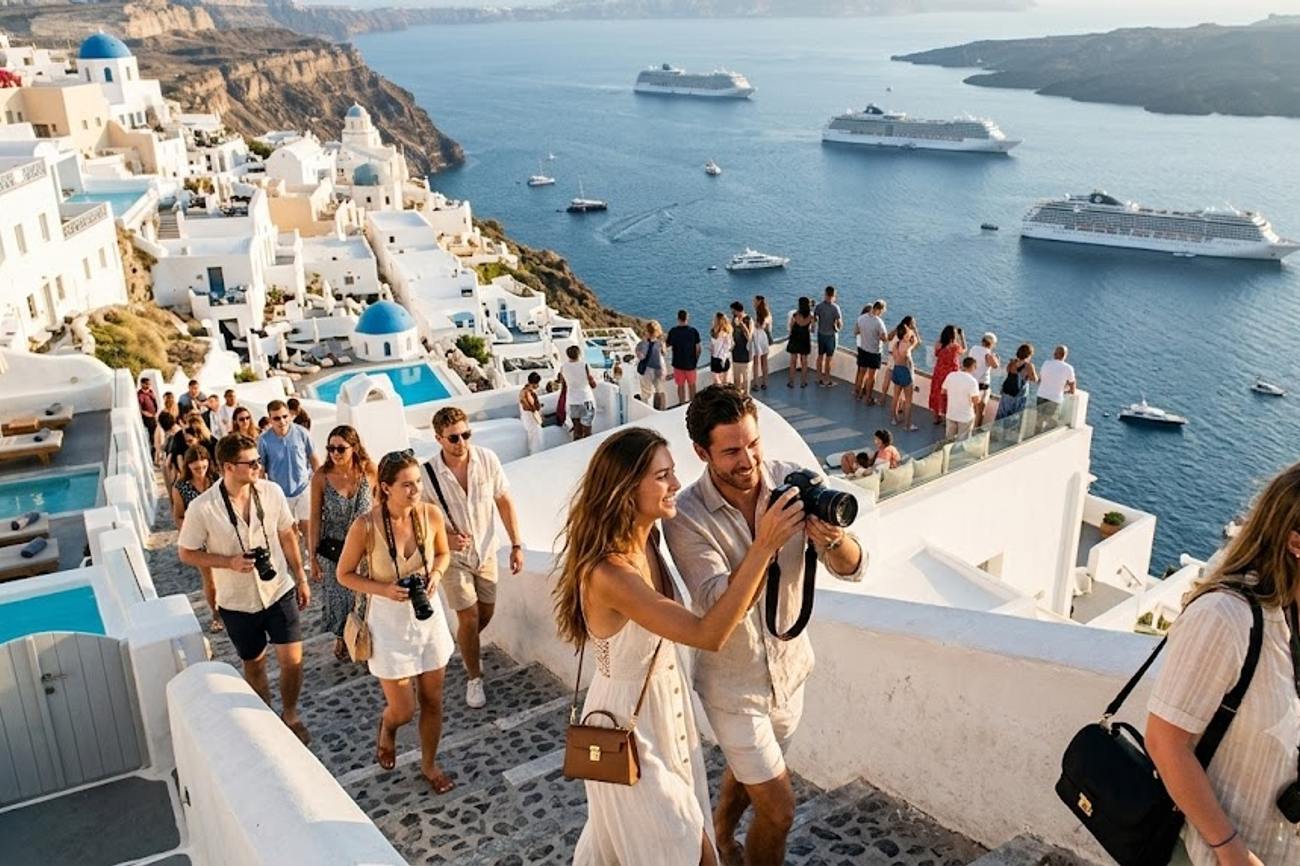
Image generated by AI
[Athens, July 2026] — Greece recorded a significant surge in tourism for July 2026, with total accommodation arrivals reaching 6,608,128 and overnight stays climbing to 31,701,467.
Provisional data released by the Hellenic Statistical Authority (ELSTAT) confirms a continued upward trajectory for the Greek hospitality sector. The figures represent a 2.5% increase in arrivals and a 2% rise in overnight stays compared to July 2025. International travelers are the primary catalyst for this expansion, accounting for 80.3% of all arrivals and 87.6% of all overnight stays recorded during the peak summer window.
The July 2026 Demand Spike
The growth is attributed to a sustained global appetite for Greek coastal regions, historic urban centers, and the islands. When compared to the same period in 2025, the country saw an additional 158,486 arrivals and an increase of 624,020 overnight stays. While domestic tourism showed marginal improvement, the heavy lifting was performed by overseas markets, which expanded at a faster annual pace than local travel.
Arrivals from foreign visitors grew by 2.9% year-on-year, and their overnight stays rose by 2.2%. In contrast, Greek residents showed more modest growth, with arrivals increasing by only 0.8% and overnight stays by 0.4%. This disparity underscores the Greek economy's heavy reliance on the international travel market to sustain its summer peak.
Market Distribution and Passenger Impact
The surge is distributed across various lodging types, though the concentration of international guests varies by sector. The following data breaks down the arrivals and overnight stays by accommodation category:
| Accommodation Type | Foreign Arrival Share | Foreign Overnight Share | Domestic Arrival Share | Domestic Overnight Share |
|---|---|---|---|---|
| Hotels | 81.1% | 89.3% | 18.9% | 10.7% |
| Short-Term Rentals | 79.6% | 85.6% | 20.4% | 14.4% |
| Campsites | 60.2% | 55.9% | 39.8% | 44.1% |
The data reveals a stark contrast in behavioral patterns between domestic and international visitors. Foreign tourists are opting for longer durations of stay, averaging 5.2 days across all accommodation types. Greek residents, conversely, averaged only 3 days.
In the short-term rental market—which has seen a rise in popularity among global nomads—foreign guests stayed an average of 5.4 days, while domestic travelers stayed 3.5 days. In traditional hotels and campsites, the gap remained wide, with international guests staying 5.2 days compared to 2.8 days for locals. Despite these variations, the overall average stay for all visitors in July 2026 remained flat at 4.8 days, identical to the July 2025 figure.
Practical Traveler Advisory and Strategic Insights
For passengers currently booking or planning travel to Greece, these statistics translate into several practical realities. The high volume of arrivals—specifically the 5.30 million foreign visitors compared to 1.30 million domestic travelers—indicates that peak-season capacity is being pushed to its limits.
Availability and Pricing: With hotel overnight stays dominated by foreign guests (89.3%), travelers should expect limited last-minute availability in primary tourist hubs. The high demand for short-term rentals (where foreign guests generate 85.6% of nights) suggests that pricing for Airbnbs and similar platforms will remain elevated through the end of the summer season.
Booking Strategy: The data suggests a shift toward longer stays for international visitors. Travelers should prioritize booking "long-stay" packages or multi-city itineraries early to avoid the volatility of the peak-season market. Those seeking more budget-friendly or flexible options may find better availability in campsites, which maintain a more balanced distribution of domestic and international guests.
Infrastructure Pressure: With over 31.7 million overnight stays in a single month, pressure on local transport, including ferries and regional airports, will be extreme. Travelers are advised to coordinate with the Hellenic Ministry of Tourism or official port authorities to manage transit expectations between the mainland and the islands.
The Path Toward August and Beyond
The July data serves as a benchmark for the final stretch of the 2026 summer season. The dominance of the international market is clear: foreign visitors are not only arriving in higher numbers but are staying longer and spending more nights in traditional hotel settings.
Greece has seen a significant surge in tourism, with international travellers driving strong gains across hotels and destinations in July, according to official data from the Greek National Tourism Organization, which provides insights into the country's tourism industry. The increase in tourist arrivals has been attributed to the lifting of travel restrictions and the resumption of flights by major airlines. As a result, hotels and resorts across popular destinations such as Mykonos and Santorini have reported high occupancy rates.
The growth in short-term rentals indicates a diversifying lodging landscape. International travelers are increasingly moving away from centralized hotels in favor of decentralized, short-stay accommodations, which may lead to further regulatory scrutiny regarding residential zoning in popular Greek cities.
As Greece moves into August, the industry will be watching to see if the 2.9% growth in foreign arrivals can be sustained or if the market has reached a saturation point. The reliance on overseas demand remains a central pillar of the economy, making the sector highly sensitive to global economic shifts and aviation capacity.
FAQ: Greece Tourism 2026
Is it still possible to find affordable accommodation in Greece during the peak season? While hotels and short-term rentals are seeing record demand from international visitors, campsites offer a more balanced visitor mix and are generally more accessible and affordable for budget-conscious travelers.
How long should I expect to stay in Greece based on current trends? The average international visitor is now staying approximately 5.2 days. If you are booking short-term rentals, the trend is slightly higher at 5.4 days.
Are domestic travelers still using Greek hotels in July? Yes, but they are a minority. Greek residents account for only 18.9% of hotel arrivals and just 10.7% of total overnight stays, as the market is heavily driven by the 5.30 million foreign arrivals.
Which accommodation type is the most popular for international tourists? Hotels remain the dominant choice, with international guests generating nearly 90% of all overnight stays in the hotel sector.
Greece continues to cement its status as a global tourism powerhouse, though its heavy reliance on international arrivals leaves it exposed to global travel volatility.
Related Travel Guides
This article is for informational purposes. Flight routes, passenger regulations, visa rules, and transit advisories are subject to change by airlines and aviation authorities. Readers are advised to verify schedules and travel documentation with relevant carriers and border agencies before departure.
Related Stories

Malaysia Tourist Fares Hike: 30-80% Rise in Ground Transport Costs and Hotel Taxes for International Visitors in 2026

European Mass Protests Disrupt Travel Across France, Italy, Belgium, and Turkey in 2026