Greece Joins Italy And More As Athens Unveils Heritage Events To Connect Travellers With Living Culture

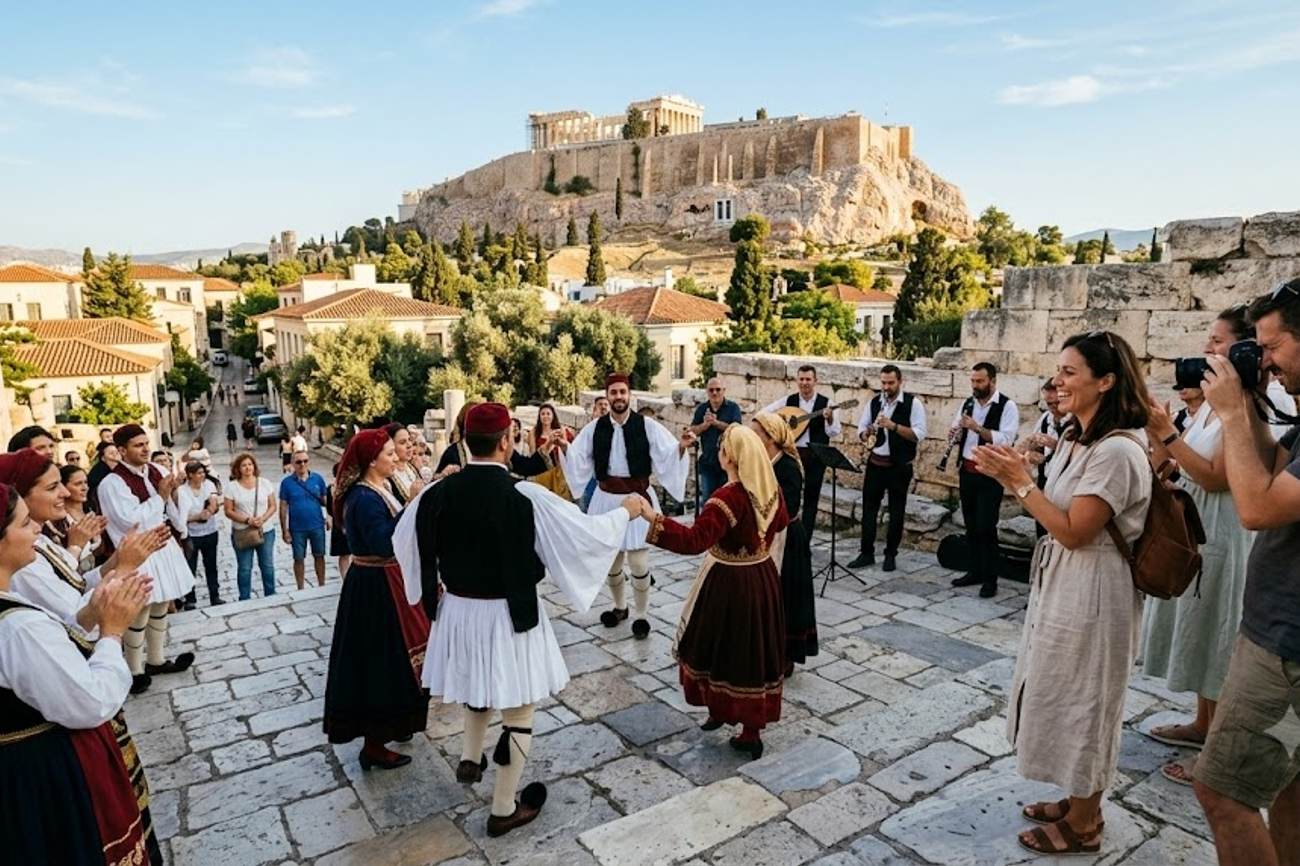
Image generated by AI
September 24 to 30 marks the window where Athens transforms its urban geography into a living laboratory for the European Heritage Days, shifting the tourist gaze from static ruins to active cultural preservation. This strategic pivot allows the city to move beyond the "museum-city" trope, integrating the Acropolis and the Lyceum with the oral histories of Piraeus and the industrial landscapes of Sounion. By diversifying the heritage offering, Greece is attempting to decouple its tourism brand from purely archaeological sightseeing, instead positioning the Attica region as a center for intangible heritage and contemporary conservation science.
The Shift Toward Intangible Heritage
The traditional Greek travel itinerary is dominated by "stone and marble" tourism—a focus on the physical remnants of antiquity. However, the current programming indicates a deliberate shift toward what the UNESCO framework defines as intangible cultural heritage. This is evidenced by the "Let the Language Begin…" event at the Piraeus Group Cultural Foundation in Tavros, which launched the week on September 24. By prioritizing Greek dialects and traditional songs, the city is signaling to the high-value cultural traveler that the "Greek experience" is found in linguistic memory and intergenerational knowledge rather than just the Parthenon.
This expansion into the "living" city extends to neighborhoods like Psyrri and Monastiraki. The Museum of Modern Greek Culture's focus on the urban and architectural evolution of Monastiraki serves as a case study in how Athens manages the tension between being one of the world's oldest continuously inhabited areas and a modern European capital. For the visitor, this means the city is no longer presented as a series of isolated monuments, but as a continuous timeline where 20th-century urban development in Psychiko is as relevant to the cultural narrative as the Minoan scripts explored at the Hellenic Children’s Museum.
Data Breakdown: Heritage Experience and Geographic Reach
The scale of this initiative is best understood through the distribution of its activities, which move the center of gravity away from the city center and into the broader Attica landscape.
| Heritage Experience | Location | Strategic Travel Significance |
|---|---|---|
| Archaeological Education | Lyceum | Bridges the gap between classical philosophy and modern pedagogy |
| Monument Conservation | Acropolis | Exposes the logistical fragility of global landmarks |
| Oral History | Goulandris Foundation | Shifts focus from state history to community memory |
| Traditional Music | Museum of Greek Folk Musical Instruments | Documents the diaspora and regional identity (Epirus) |
| Modern Greek Culture | Monastiraki | Integrates historical residential patterns with modern commerce |
| Historic Architecture | Psychiko | Highlights the evolution of 20th-century Greek urbanism |
| Traditional Craft | National Historical Museum | Transitions the visitor from observer to participant |
| Archaeological Landscapes | Sounion and Lavreotiki | Connects ancient ruins with environmental and industrial history |
Expert Analysis: The Economics of Preservation Tourism
For the sophisticated traveler, the most significant aspect of this program is the "behind-the-scenes" access to conservation. When the Acropolis opens its doors to secondary students to discuss monument risks, or the Municipal Gallery of Athens demonstrates the terminology of artwork restoration, they are practicing "transparency tourism."
The direct consequence for the traveler is a shift in value perception. By highlighting the professional labor required to maintain the marble sculpture "Eve" or the structural integrity of the Lyceum, Athens is justifying the high costs of site maintenance and the necessity of strict visitor regulations. This educational layer transforms a simple walk-through into a lesson in risk management.
Furthermore, the integration of climate-risk assessment into the heritage conversation is a calculated move. The two-day scientific conference focusing on bioclimatic design and "digital twins" (virtual replicas used for monitoring) shows that Greece is aligning its tourism strategy with the International Council on Monuments and Sites (ICOMOS) standards. For travelers booking routes to Sounion or Lavreotiki, the narrative is no longer just about the view of the Aegean, but about how these sites survive rising sea levels and temperature volatility. The use of Internet of Things (IoT) sensors to monitor historic buildings proves that Athens is treating its heritage as a data-driven asset, not just a postcard image.
The pricing pressure created by this shift is subtle but real. As Athens moves toward "experience-based" tourism—such as the gravity-fed irrigation tours in Kaisariani—it moves away from the mass-market "bucket list" model. This allows the city to attract a demographic of travelers who stay longer and spend more on specialized, guided cultural journeys rather than quick-stop tours.
Greece has officially launched a series of heritage events in Athens, aiming to connect travellers with the country's rich living culture, following in the footsteps of Italy and other European nations. For the most up-to-date information on these events and to plan a trip, visitors can check the official Greek National Tourism Organization website for details on schedules, venues, and ticketing. This initiative is expected to boost tourism, offering a unique experience for travellers from around the world.
Key Takeaways
- Diversified Geography: The program expands the tourist map beyond the city center to include Piraeus, Sounion, and the Attica landscapes, reducing congestion at primary sites.
- Conservation Transparency: Visitors are granted insight into the actual tools and technologies (including digital twins and IoT sensors) used to prevent the decay of ancient marble.
- Intangible Focus: There is a systemic push to promote "living history," including oral traditions, Greek dialects, and the musical legacy of figures like Petro-Loukas Halkias.
- Environmental Integration: Climate change is now a core part of the visitor narrative, linking ancient irrigation systems in Kaisariani to modern sustainability.
- Educational Pivot: Targeted programming for children and students at the National Archaeological Museum suggests a long-term strategy to build a new generation of heritage advocates.
FAQ: Athens Cultural Heritage 2024
Can international tourists participate in the European Heritage Days events? Yes. The program is designed for a broad audience, including general visitors, specialists, and families. Many events, such as the guided walks in Monastiraki and the exhibitions at the Goulandris Foundation, are open to the public.
What is the difference between "tangible" and "intangible" heritage in Athens? Tangible heritage refers to physical objects and sites, like the Acropolis or sculptures. Intangible heritage refers to living expressions, such as the traditional songs and dialects explored at the Piraeus Group Cultural Foundation.
How does climate change affect the monuments in Athens? Environmental shifts cause the deterioration of marble and ancient structures. The city is currently using bioclimatic design and digital monitoring to assess risks and implement protective conservation strategies.
Which sites outside the city center are included in the program? The program extends to the coastal landscapes of Sounion and Lavreotiki, as well as the suburbs of Psychiko and the community of Kaisariani.
The transition from viewing ruins as relics to seeing them as active participants in urban survival marks the new era of Greek tourism.
Tags: Athens-European-Heritage-Days-2024, Acropolis-Conservation, Attica-Cultural-Tourism, Monastiraki-Urban-History, Greece-Intangible-Heritage
Related Travel Guides
- Greece Moves With Egypt as Aegean Airlines Starts Direct Thessaloniki Cairo Flights Driving Travel Growth
- Switzerland Joins Netherlands And More As Explora Expands Luxury River Cruising Across Europe
- UK Tourism Strengthens Economy as Travel Industry Generates £88.5 Billion and Creates 1.4 Million Jobs Nationwide
This article is for informational purposes. Flight routes, passenger regulations, visa rules, and transit advisories are subject to change by airlines and aviation authorities. Readers are advised to verify schedules and travel documentation with relevant carriers and border agencies before departure.
Related Stories

New Zealand Visa Changes Delayed to Nov 23 2026 Amid South Island Weather Warnings

Spain Tourism Boom 2026: US Spending Surges 13% as Madrid and Barcelona Anchor Visitor Economy